
Staying active shouldn’t require hours at the gym, expensive gear, or even leaving your apartment. For people juggling work, family, and personal responsibilities, finding time to exercise often feels impossible. Yet physical activity is essential—not just for fitness, but for mental clarity, energy levels, and long-term health. The good news? You can build strength, improve endurance, and boost metabolism with simple, effective workouts that require zero equipment and less than 20 minutes a day.
These routines use only your body weight and can be done in a small space—your living room, bedroom, or even a cleared hallway. Whether you have five free minutes between meetings or a 30-minute window before dinner, these strategies make fitness accessible, sustainable, and adaptable to real life.
Why No-Equipment Workouts Work
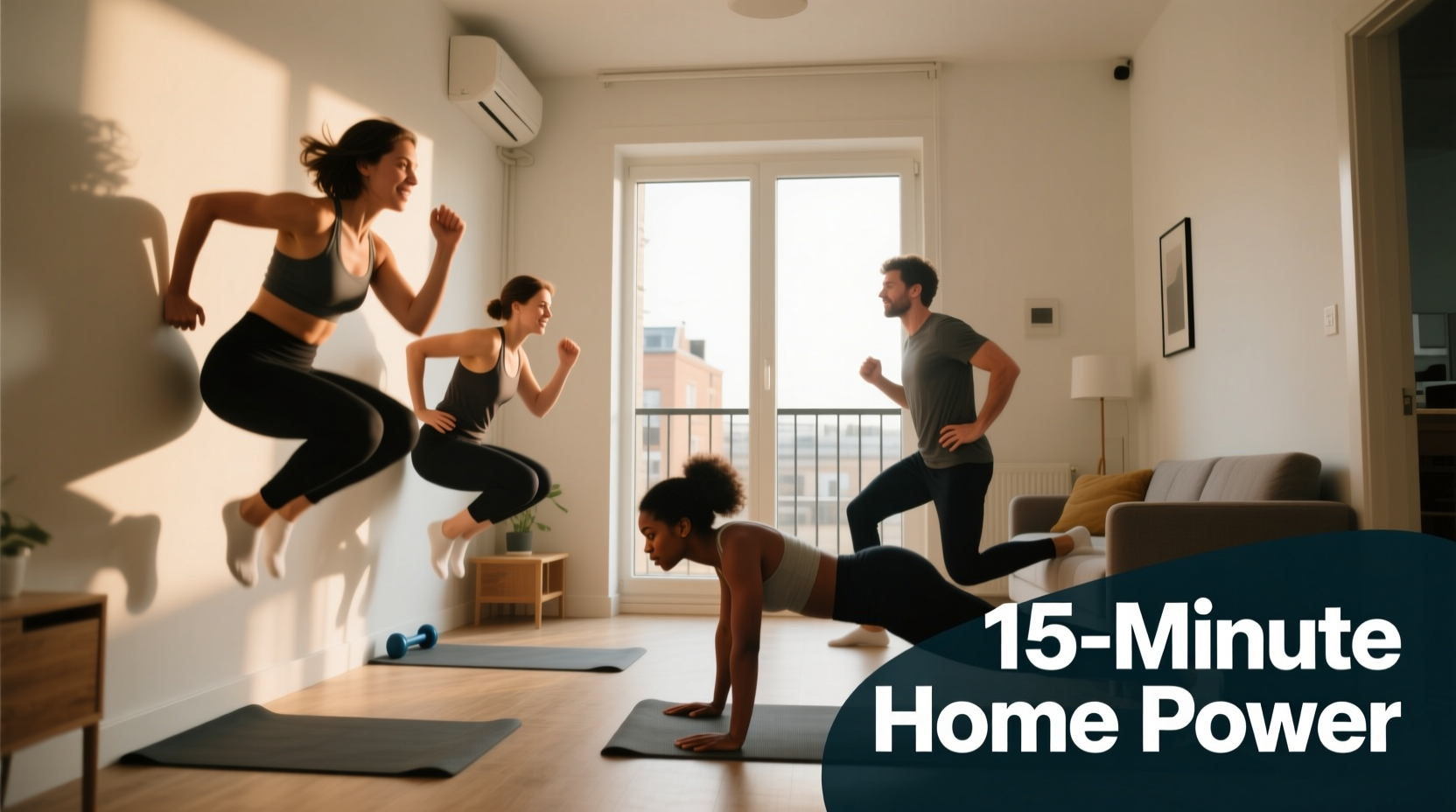
Bodyweight exercises are not just convenient—they’re scientifically proven to deliver results. Movements like squats, push-ups, lunges, and planks engage multiple muscle groups simultaneously, increasing calorie burn and building functional strength. According to research published in the *Journal of Strength and Conditioning Research*, bodyweight training can improve muscular endurance and cardiovascular fitness as effectively as traditional gym-based programs when performed consistently.
The absence of equipment removes common barriers: no need to commute, wait for machines, or invest in memberships. More importantly, it eliminates decision fatigue. When the routine is simple and familiar, you're more likely to stick with it—even on chaotic days.
“Consistency beats intensity. Ten minutes of focused movement every day creates more lasting change than one hour once a week.” — Dr. Lena Patel, Exercise Physiologist
Designing Workouts for Minimal Time, Maximum Impact
The key to success with short, no-equipment routines lies in structure. A well-designed session should elevate heart rate, challenge major muscle groups, and finish efficiently. Below is a step-by-step framework for building effective workouts that fit into tight schedules.
Step-by-Step Guide: Building Your Daily Routine
- Choose a time block: Identify a consistent window—even 10 minutes—to dedicate daily. Morning sessions increase energy and reduce procrastination.
- Select 4–6 exercises: Pick movements targeting different areas (lower body, upper body, core, cardio).
- Determine format: Use circuits (repeat all exercises back-to-back) or timed intervals (e.g., 30 seconds on, 15 off).
- Set duration: Start with 10–15 minutes; gradually increase to 20–25 as stamina improves.
- Track progress: Note how many rounds you complete or how you feel post-workout. Progress isn’t always reps—it’s consistency and recovery.
Sample Routines for Different Time Frames
Not every day allows the same amount of time. Flexibility ensures you never skip entirely. Here are three scalable routines based on available minutes.
7-Minute Express Routine (Great for mornings or lunch breaks)
- Jumping jacks – 45 seconds
- Bodyweight squats – 45 seconds
- Push-ups (on knees or toes) – 45 seconds
- Plank – 45 seconds
- Mountain climbers – 45 seconds
- Glute bridges – 45 seconds
- Standing oblique twists – 45 seconds
Perform each exercise for 45 seconds with 15 seconds rest in between. Complete one full round.
15-Minute Full-Body Circuit (Ideal 3–4 times per week)
- Squats – 40 seconds
- Push-ups – 40 seconds
- Lunges (alternating legs) – 40 seconds
- Plank – 40 seconds
- Butt kicks – 40 seconds
- Bicycle crunches – 40 seconds
Rest 20 seconds between exercises. Repeat the circuit twice.
20-Minute Endurance Builder (Best 2–3 times weekly)
Complete 3 rounds of the following:
- High knees – 30 seconds
- Wall sit – 30 seconds
- Triceps dips (using a sturdy chair) – 30 seconds
- Side plank (each side) – 30 seconds
- Standing calf raises – 30 seconds
- Forearm plank – 30 seconds
Do’s and Don’ts of Home Bodyweight Training
| Do’s | Don’ts |
|---|---|
| Warm up for 2–3 minutes (marching in place, arm circles) | Start cold—risk of strain increases without preparation |
| Focus on form over speed or reps | Rush through movements with poor technique |
| Breathe steadily—exhale on exertion, inhale on release | Hold your breath during effort |
| Modify exercises as needed (e.g., knee push-ups) | Push through pain or discomfort |
| Stretch for 3–5 minutes post-workout | Stop abruptly and sit down immediately |
Making It Stick: Real-Life Example
Sarah, a 34-year-old project manager and mother of two, struggled to find time for herself. Her days began at 6 a.m. with school drop-offs and ended after 8 p.m. with bedtime routines. She tried early gym sessions but found them unsustainable. After reading about micro-workouts, she committed to a 10-minute evening routine after putting the kids to bed.
She started with the 7-minute express plan and added stretching. Within three weeks, she progressed to two rounds of the 15-minute circuit three times a week. She noticed improved posture, reduced lower back tension, and increased energy by midday. Most importantly, she felt a sense of accomplishment—proof that even fragmented time could yield results.
“I used to think I needed an hour and a treadmill,” Sarah said. “Now I realize movement is cumulative. Ten minutes today is better than waiting for the perfect 60.”
Essential Tips for Staying Consistent
Success doesn’t come from perfection—it comes from persistence. Use these practical strategies to integrate workouts seamlessly into your life.
- Anchor workouts to existing habits: Do squats after each bathroom break or planks during coffee brewing.
- Use timers: Set a phone alarm labeled “Move Now” as a non-negotiable reminder.
- Create a dedicated zone: Even a 4x4 foot area marked by a towel signals “this is workout space.”
- Involve others: Challenge a partner or child to join for 5 minutes—it builds accountability and fun.
- Track streaks: Mark an X on a calendar for each day completed. Chain seven in a row, and it becomes a habit.
Frequently Asked Questions
Can I really build strength without weights?
Yes. Bodyweight resistance, especially when combined with tempo control (slow lowering phases) and progressive overload (increasing reps or difficulty), stimulates muscle growth. Exercises like single-leg squats, incline push-ups, and extended planks increase intensity over time.
What if I have joint pain or mobility issues?
Modify movements to suit your body. Perform seated marches instead of jumping jacks, or do wall push-ups instead of floor versions. Focus on controlled motion and consult a physical therapist if pain persists. Movement within comfort range still delivers cardiovascular and muscular benefits.
How soon will I see results?
Noticeable changes in energy and mood can occur within two weeks. Physical improvements—like better posture, reduced stiffness, or clothing fitting differently—typically appear in 4–6 weeks with consistent effort. Track non-scale victories: climbing stairs without fatigue, improved sleep, or sustained focus.
Putting It All Together: Your Action Checklist
To get started today, follow this checklist:
- ✅ Choose one routine (7, 15, or 20 minutes) that fits your current schedule
- ✅ Pick a consistent time to perform it (morning, midday, or evening)
- ✅ Clear a small space in your home (no equipment needed)
- ✅ Set a timer or use a free interval app (e.g., Interval Timer, Seconds)
- ✅ Perform the workout with focus on form, not speed
- ✅ Stretch for 3–5 minutes afterward (neck rolls, shoulder stretches, hamstring reach)
- ✅ Mark completion on a calendar or in your notes
“The best workout is the one that gets done. Make it so easy to start that saying no feels harder than doing it.” — James Reed, Fitness Behavior Coach
Conclusion: Small Efforts, Big Results
Fitness doesn’t demand grand gestures. It thrives on repetition, resilience, and realistic planning. Simple home workouts with no equipment remove the friction that stops most people before they begin. By embracing brevity, consistency, and self-compassion, anyone—regardless of schedule or experience—can build a sustainable practice.
You don’t need more time. You need better use of the time you already have. Ten minutes of intentional movement is a win. Twenty is a triumph. And doing it tomorrow? That’s how lasting change begins.




 浙公网安备
33010002000092号
浙公网安备
33010002000092号 浙B2-20120091-4
Comments
No comments yet. Why don't you start the discussion?