
Hard-boiled eggs are a kitchen staple—packed with protein, easy to prepare, and endlessly versatile. Whether you're making deviled eggs, slicing them onto salads, or packing them for a quick snack, one challenge remains consistent: getting the shell off cleanly. Too often, peeling turns into a frustrating game of tug-of-war, leaving pockmarked whites and wasted time.
The good news? With a few small adjustments to your technique, you can achieve smooth, perfectly peeled hard-boiled eggs every single time. It’s not about fancy equipment or complicated steps—it’s about understanding egg chemistry and using smart, repeatable methods.
Why Some Eggs Are Harder to Peel Than Others
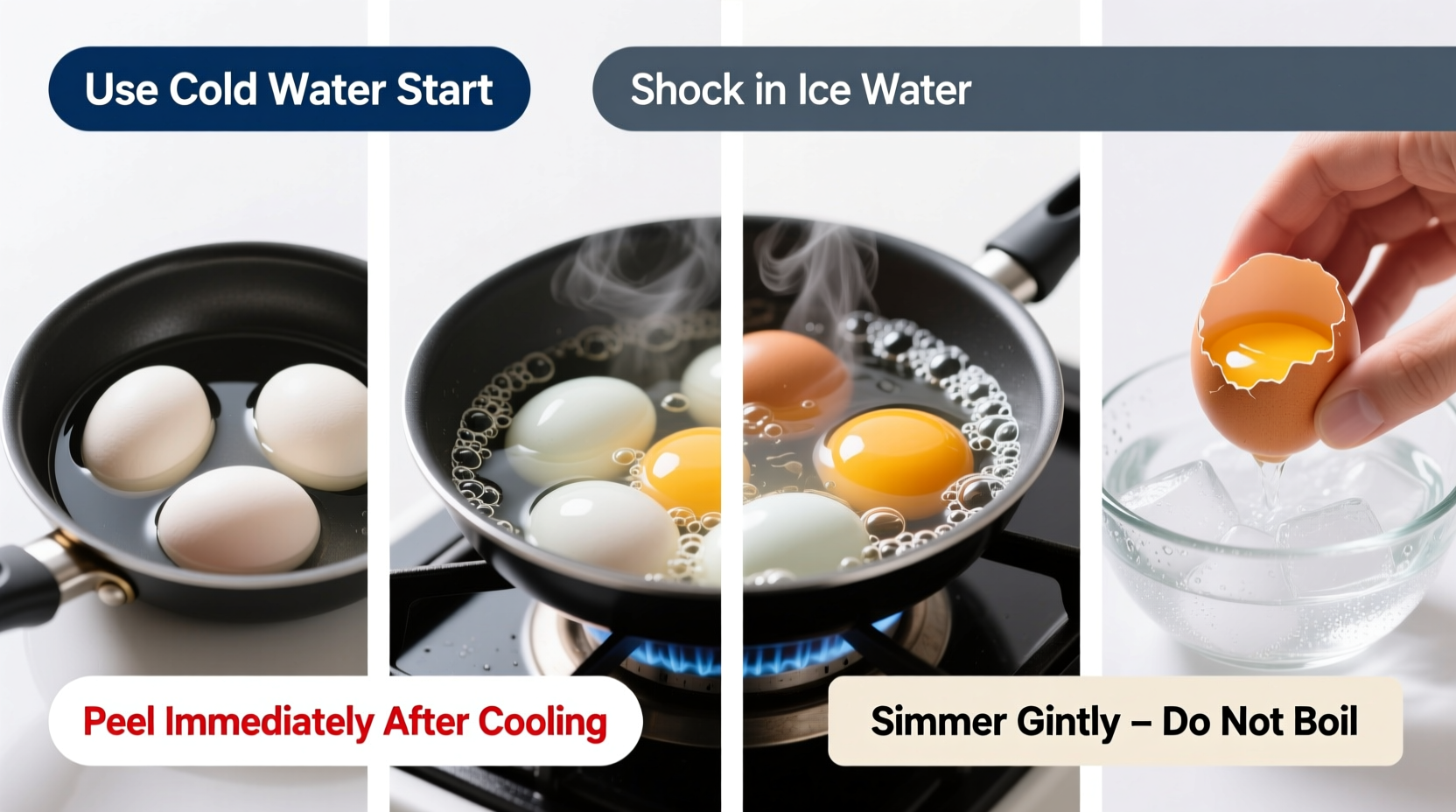
Freshness plays a surprising role in how easily an egg peels. Fresh eggs have a lower pH, meaning the albumen (egg white) is more acidic and tends to bond tightly to the inner membrane beneath the shell. As eggs age, they naturally lose carbon dioxide through tiny pores in the shell, raising their pH and reducing that sticky adhesion.
This means older eggs—typically those 7 to 10 days old—are actually better candidates for hard boiling than ultra-fresh ones straight from the farm. Supermarket eggs are usually already several days old by the time you buy them, which works in your favor.
“Don’t reach for the freshest eggs in the carton when you’re planning to hard-boil. A week-old egg will almost always peel cleaner.” — Dr. Catherine Donnelly, Food Microbiologist and Egg Science Expert
Step-by-Step Guide to Perfectly Peeling Hard-Boiled Eggs
Follow this detailed process to consistently produce hard-boiled eggs that peel effortlessly:
- Select the right eggs: Use eggs that are at least 7 days old. Avoid using eggs straight from the fridge; let them sit at room temperature for 20–30 minutes before cooking to reduce thermal shock.
- Start with boiling water: Bring a pot of water to a rolling boil before adding the eggs. This helps the outer layer of the egg white set quickly, minimizing sticking.
- Gently lower eggs into boiling water: Use a spoon to lower each egg one at a time to prevent cracking. Add a teaspoon of vinegar or baking soda to the water—vinegar helps coagulate any leaking whites, while baking soda raises the pH and loosens the membrane.
- Boil for 9–12 minutes: For fully set yolks without the green ring, 10 minutes is ideal. Adjust based on egg size—large eggs typically need 10 minutes, extra-large may need 11–12.
- Immediately transfer to an ice bath: Prepare a large bowl of ice water. After boiling, remove eggs and submerge them completely. Let them chill for at least 10–15 minutes. Rapid cooling contracts the egg inside the shell, creating a gap between the membrane and the white.
- Crack and roll: Gently tap the egg on a hard surface to crack the shell all over, then roll it between your palms to loosen it further.
- Peel under running water: Start peeling from the wider end, where the air pocket is located. Running water helps flush away shell fragments and assists in separating the membrane from the egg.
Alternative Methods That Work
While the stovetop method is classic, there are other effective ways to cook hard-boiled eggs that also promote easy peeling.
Steaming Method
Place a steamer basket in a pot with 1 inch of water. Bring to a boil, add eggs in a single layer, cover, and steam for 12 minutes. Immediately plunge into ice water. Steaming provides gentler, more even heat, reducing the risk of cracked shells during cooking.
Instant Pot Method
Add 1 cup of water to the Instant Pot. Place eggs on the trivet, seal, and cook on high pressure for 5 minutes. Quick-release the pressure, then transfer eggs to an ice bath for 15 minutes. This method yields consistent results and is ideal for large batches.
| Method | Cook Time | Peel Success Rate | Best For |
|---|---|---|---|
| Boiling (start in boiling water) | 10–12 min | High | Everyday use, small batches |
| Steaming | 12 min | Very High | Preventing cracks |
| Instant Pot | 5 min + release | High | Large batches, hands-off cooking |
| Boiling (start in cold water) | 10–12 min | Low–Medium | Not recommended for easy peeling |
Checklist for Foolproof, Easy-to-Peel Hard-Boiled Eggs
- ✓ Use eggs that are 7–10 days old
- ✓ Bring eggs to room temperature before cooking
- ✓ Start eggs in boiling water (not cold)
- ✓ Add 1 tsp baking soda or vinegar to water
- ✓ Boil for exactly 10 minutes (adjust for size)
- ✓ Cool immediately in ice bath for 15 minutes
- ✓ Crack, roll, and peel under running water
- ✓ Store peeled eggs in water in the fridge for up to 5 days
Real Example: How a Meal Prep Cook Solved the Peeling Problem
Sarah, a home cook who prepares weekly lunches for her family, used to dread making hard-boiled eggs. “I’d spend 20 minutes peeling six eggs and end up with half of them looking like craters,” she said. She tried everything—older eggs, vinegar, different cook times—but still had inconsistent results.
After switching to the steaming method and ensuring a full 15-minute ice bath, her success rate improved dramatically. “Now I can peel all 12 eggs in under 5 minutes, and they come out smooth every time. The key was stopping the cooking instantly and letting them cool completely.”
She now preps a batch every Sunday and stores them peeled in a container of water in the fridge. “It saves so much time during the week. I throw them on grain bowls, slice them into salads, or just eat them plain with a pinch of salt.”
Common Mistakes That Make Peeling Difficult
Avoid these pitfalls to ensure clean, hassle-free peeling:
- Using very fresh eggs: As mentioned, freshness increases stickiness. Wait a few days after purchase before boiling.
- Skipping the ice bath: Cooling slowly traps the membrane against the egg. Rapid chilling is essential.
- Peeling too soon: Even if the egg feels cool on the outside, the interior may still be warm. Wait at least 15 minutes.
- Starting with cold water: This gradual heating causes the egg to expand slowly, increasing adhesion to the shell.
- Not cracking thoroughly: Light tapping isn’t enough. You need to create a network of cracks across the entire surface.
FAQ
Can I refrigerate hard-boiled eggs before peeling?
Yes, but only after they’ve been cooled in an ice bath. Unpeeled hard-boiled eggs can be stored in the fridge for up to one week. However, if you plan to peel them later, it’s best to do so within a few days, as moisture loss can make peeling harder over time.
Why do some yolks turn green around the edge?
A greenish-gray ring forms when eggs are overcooked or cooled too slowly. It’s caused by a reaction between sulfur in the white and iron in the yolk. While safe to eat, it’s unappealing. To avoid it, limit boil time to 10–12 minutes and cool eggs quickly in ice water.
Can I freeze hard-boiled eggs?
It’s not recommended to freeze whole hard-boiled eggs—the whites become rubbery and watery upon thawing. However, you can freeze just the yolks (crumbled) for use in sauces or as toppings. For best quality, consume hard-boiled eggs fresh or refrigerated within a week.
Final Thoughts
Perfectly peeled hard-boiled eggs aren’t a matter of luck—they’re the result of smart, science-backed techniques. By choosing the right eggs, controlling the cooking environment, and cooling them properly, you eliminate the guesswork and frustration.
Whether you prefer boiling, steaming, or pressure cooking, consistency is key. Once you find the method that works best for your kitchen, stick with it. Over time, making flawless hard-boiled eggs will become second nature.




 浙公网安备
33010002000092号
浙公网安备
33010002000092号 浙B2-20120091-4
Comments
No comments yet. Why don't you start the discussion?