
Drawing a lion might seem intimidating at first, especially with its complex mane and expressive face. But with the right approach, even complete beginners can create a compelling and accurate sketch. This guide breaks down the process into manageable steps, focusing on proportion, structure, and detail. By following this method, you’ll build confidence in your drawing skills while producing a recognizable and satisfying lion illustration using only basic tools and patience.
Why Drawing Lions Builds Foundational Art Skills
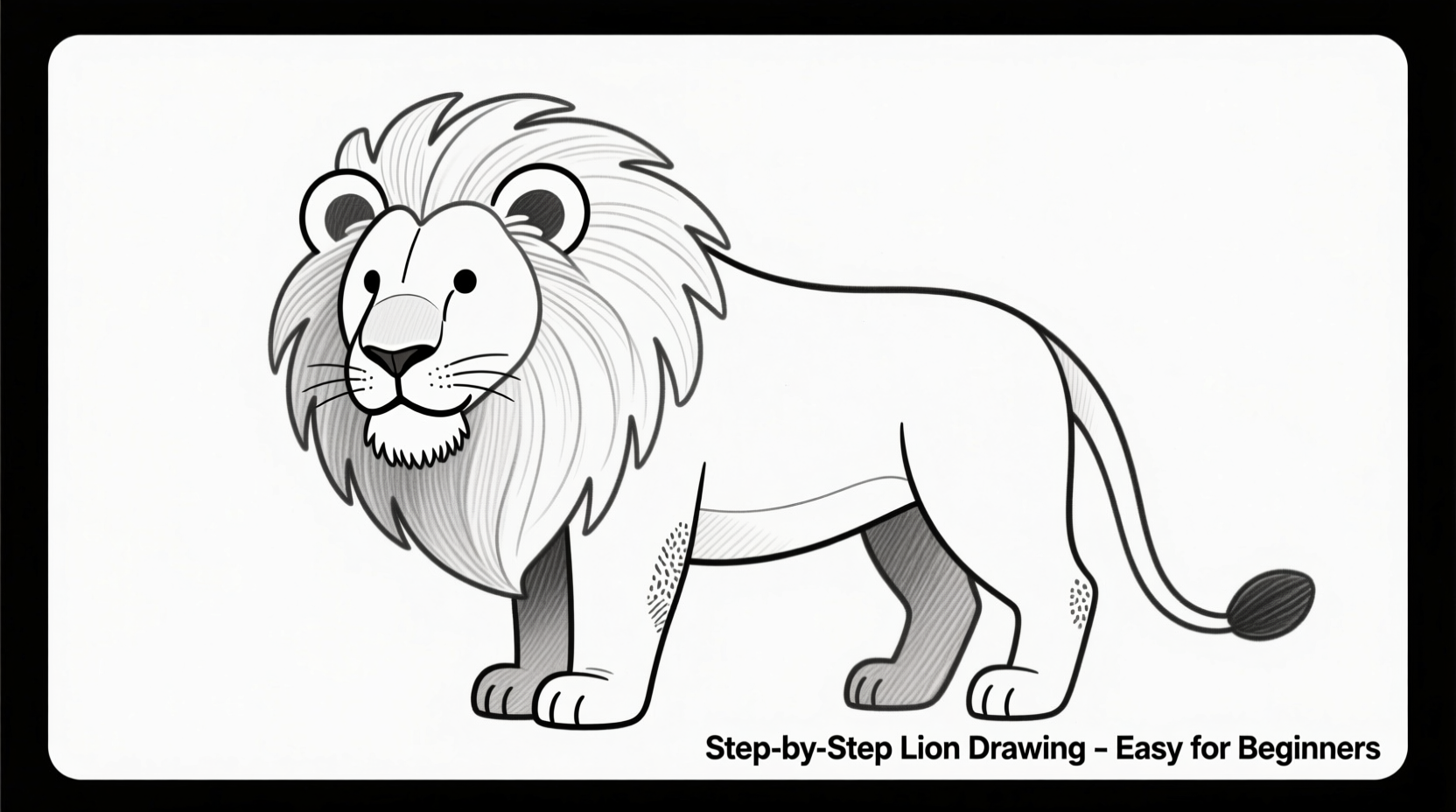
Lions are more than just impressive subjects—they’re excellent for learning core drawing principles. Their form combines geometric shapes, texture variation, and facial expression, making them ideal for practicing observation and hand-eye coordination. Unlike abstract or stylized art, realistic animal drawing teaches precision, symmetry, and attention to detail.
Beginners often struggle with capturing likeness and proportion, but animals like lions offer clear reference points: the circular head, triangular ears, and flowing mane provide natural guides. Mastering these elements improves your ability to draw other animals and even human portraits later on.
Materials You’ll Need
You don’t need expensive supplies to begin. A few basic tools are enough to produce quality results:
- Pencil: Use an HB for sketching and a 2B for darker lines and shading.
- Eraser: A kneaded eraser is ideal for lifting graphite without damaging paper.
- Paper: Any standard sketchbook or printer paper works well.
- Ruler (optional): Helpful for aligning facial features during construction.
- Reference Image: Choose a clear side or front-facing photo of a lion.
Keep your workspace well-lit and comfortable. Natural daylight is best for seeing contrast and detail accurately.
Step-by-Step Guide to Drawing a Lion
This timeline walks you through each phase of the drawing, from initial shapes to final details. Work slowly and allow time for adjustments.
- Draw the Basic Head Shape
Start with a large circle for the back of the head. Below it, add a smaller intersecting circle for the snout. These two forms establish the skull structure and jawline. - Add Guideline Lines
Cut a vertical line down the center of the face to ensure symmetry. Then, draw a horizontal line across the main circle—this marks where the eyes will sit. Another line across the snout indicates the nose position. - Outline the Ears and Jaw
Sketch two rounded triangles on top of the head circle for the ears. Extend the lower part of the snout into a gentle curve to form the chin and jaw. Keep lines light and adjustable. - Define the Mane
Using soft, wavy strokes, draw an irregular oval around the head to represent the mane’s outer edge. Don’t make it perfectly round—it should feel wild and textured. Think of it as a cloud surrounding the face. - Place Facial Features
On the horizontal eye line, draw two almond-shaped eyes near the vertical center. Add small circles for pupils. Between the snout circles, draw a wide, upside-down triangle for the nose. Below it, sketch a short curved line for the mouth. - Refine the Structure
Go over your initial shapes with more confident lines, defining the neck, shoulders, and chest if including body. Erase unnecessary construction lines carefully. - Add Fur Texture and Shading
Use short, directional strokes to suggest fur around the cheeks, chin, and mane. Darken areas under the chin, behind the ears, and along one side of the face to create depth. The mane should have varied density—thicker near the neck, thinner toward the forehead. - Finalize Details
Enhance the eyes with highlights and darkened rims. Add whisker dots and subtle lines above the eyes for expression. Deepen shadows where the mane overlaps the face.
Common Mistakes and How to Avoid Them
Even experienced artists make errors when drawing animals. Recognizing these pitfalls early helps you improve faster.
| Mistake | Why It Happens | Solution |
|---|---|---|
| Symmetry issues | Focusing too much on one side of the face | Use center guidelines and frequently flip your reference image horizontally to spot imbalance. |
| Flat-looking mane | Treating the mane as a solid shape instead of layered fur | Build up texture gradually with overlapping strokes; leave some white spaces for highlights. |
| Over-detailing too soon | Adding fur before establishing correct proportions | Stick to the step-by-step process—details come last. |
| Hard, rigid lines | Pressing too hard or using only straight strokes | Use varied pressure and curved lines to mimic organic growth patterns. |
“Drawing animals isn’t about copying every hair—it’s about capturing the essence of movement, weight, and life.” — Daniel Reyes, Wildlife Illustrator
Checklist: Before You Begin Your Lion Drawing
- ✅ Choose a high-quality reference photo (clear lighting, good angle)
- ✅ Gather pencils, eraser, and paper
- ✅ Warm up with quick gesture sketches of circles and curves
- ✅ Set up proper lighting to avoid glare or shadows on your page
- ✅ Commit to working in layers: start light, finish dark
A Beginner’s Real Progress: A Mini Case Study
Sophie, a 28-year-old office worker with no prior drawing experience, decided to try sketching animals after watching a wildlife documentary. She started with lions using this exact method. Her first attempt was rough—the eyes were uneven, and the mane looked like a lopsided halo. But she didn’t erase everything. Instead, she studied her mistakes, compared them to the reference, and repeated the exercise three days later.
By her fourth drawing, Sophie had mastered the eye alignment using center guidelines and began adding soft shading to create volume. Within two weeks, she posted her progress online, where fellow beginners praised her improvement. “I didn’t think I could draw anything,” she said, “but breaking it down into steps made it possible.”
Her story shows that consistency matters more than talent. With structured guidance and regular practice, visible progress happens quickly.
Frequently Asked Questions
How long does it take to learn to draw a lion realistically?
With daily 20–30 minute sessions, most beginners produce a recognizable and balanced lion sketch within 1–2 weeks. Mastery takes longer, but early results are encouraging and motivating.
Should I draw the full body or just the face?
Start with the face. The lion’s head contains the most complexity and character. Once you’re comfortable with facial proportions and fur texture, extend to the shoulders and chest. Full-body drawings require knowledge of animal anatomy and perspective.
What if my lion doesn’t look like a lion?
Early attempts rarely match expectations—and that’s normal. Focus on what went wrong: Was the eye placement off? Was the snout too short? Compare each element to your reference. Improvement comes from analysis, not perfection.
Conclusion: Start Sketching Today
Drawing a lion doesn’t require innate talent—just patience, structure, and the willingness to learn from mistakes. This step-by-step method gives you a reliable framework to follow, turning a daunting task into a series of achievable actions. Each line you draw strengthens your observational skills and artistic confidence.




 浙公网安备
33010002000092号
浙公网安备
33010002000092号 浙B2-20120091-4
Comments
No comments yet. Why don't you start the discussion?