
In the endless rotation of closet decisions, few choices are as quietly impactful as the battle between the simple top and the statement top. One promises versatility and ease; the other, boldness and personality. But when it comes down to actual wear—how often each piece leaves the hanger and sees daylight—which wins? The answer isn’t just about style preference. It’s about function, frequency, adaptability, and long-term value in your wardrobe.
After analyzing personal styling habits, retail trends, and consumer behavior across seasons, a clear pattern emerges: simplicity often outlasts spectacle. But that doesn’t mean statement tops are obsolete. It means understanding their role—and how to balance both types—can transform not only your outfit frequency but also your confidence and daily dressing experience.
The Case for the Simple Top
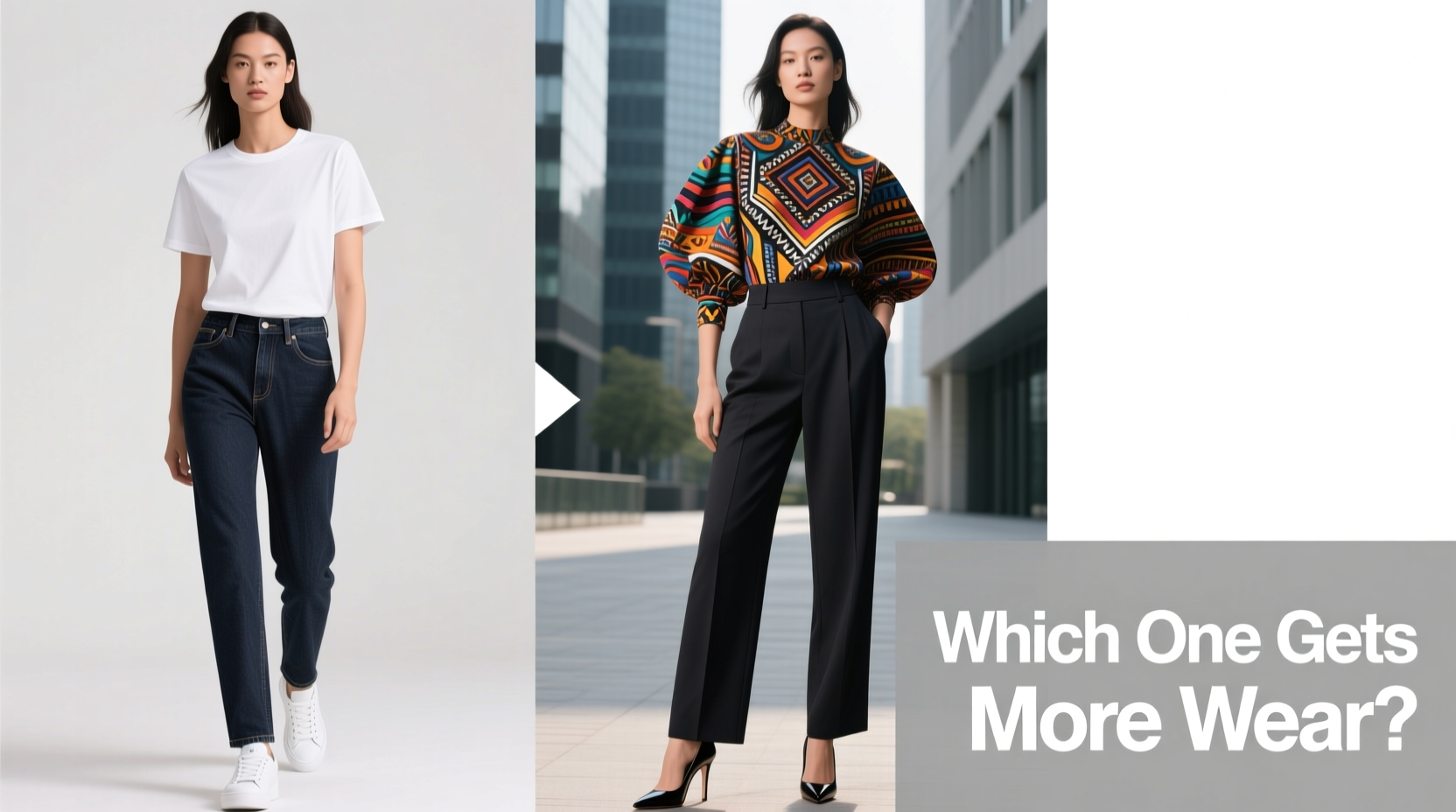
A simple top—a solid-colored tee, a neutral tank, a classic button-up—is the backbone of most functional wardrobes. Its strength lies in its neutrality. It pairs effortlessly with jeans, skirts, blazers, and even layered under sweaters. Because it doesn’t demand attention, it allows other pieces to shine while still contributing to a polished look.
According to a 2023 wardrobe audit by *The Style Report*, the average person wears their simplest tops 3–5 times per month during peak seasons, compared to once every 4–6 weeks for statement pieces. Why? Because simple tops require less mental energy to style. They’re “go-to” items on rushed mornings, travel days, or when you're unsure what to wear.
Why Statement Tops Often Sit Unused
Statement tops—those with bold prints, dramatic sleeves, sequins, cutouts, or exaggerated silhouettes—are designed to stand out. They catch eyes at parties, make Instagram-worthy moments, and express individuality. But their very strength is also their limitation: they dominate an outfit.
This dominance makes them harder to pair. A sequined halter top may clash with workwear, feel excessive for errands, and be too flashy for casual dinners. As a result, many end up worn only for specific occasions—sometimes just once before being retired.
Fashion psychologist Dr. Lena Patel notes: “We buy statement pieces for aspiration, not utility. We imagine ourselves in vibrant social settings, but our daily lives are often quieter. That mismatch leads to underuse.”
“We buy statement pieces for aspiration, not utility. We imagine ourselves in vibrant social settings, but our daily lives are often quieter.” — Dr. Lena Patel, Fashion Psychologist
Comparing Wear Frequency: A Real-Life Example
Consider Sarah, a 32-year-old marketing professional in Chicago. Over six months, she tracked her top usage using a wardrobe app. Her closet included:
- 8 simple tops (white tees, black tanks, beige blouses)
- 5 statement tops (a leopard-print blouse, a ruffled neon top, a metallic crop, etc.)
Results after 26 weeks:
| Type | Total Pieces | Avg. Wears Per Piece | Most-Worn Item | Least-Worn Item |
|---|---|---|---|---|
| Simple Top | 8 | 14 | White cotton tee (22 wears) | Beige linen blend (7 wears) |
| Statement Top | 5 | 3.2 | Leopard-print blouse (6 wears) | Neon ruffled top (1 wear) |
Sarah’s experience mirrors broader trends. Simple tops averaged over four times more wear than their bolder counterparts. Even the most loved statement piece couldn’t match the frequency of the basic white tee.
Maximizing Use: How to Make Statement Tops Work Harder
This isn’t a condemnation of statement tops—it’s a call for smarter integration. With intentional styling, even the boldest top can earn its place in regular rotation.
The key is de-escalation. Pair a dramatic piece with neutral, understated bottoms. Wear a sequined top with dark jeans and sneakers for a balanced weekend look. Layer a sheer printed blouse under a tailored blazer for work-appropriate flair. The goal is to tone down the intensity so the top fits more contexts.
- Style Down, Not Up: Avoid pairing multiple standout pieces. If your top has volume, keep pants slim. If it’s brightly colored, choose muted accessories.
- Recontextualize Occasions: Can a party top work for brunch? Try it with denim cutoffs and sandals.
- Seasonal Repurposing: Layer statement tanks under cardigans in cooler months to extend wear beyond summer.
- Accessorize Strategically: Swap bold earrings for minimal studs to soften a look for daytime.
The Balanced Wardrobe Formula
Instead of choosing between simple and statement, aim for proportion. A well-balanced wardrobe follows a ratio: 70% foundational (simple), 30% expressive (statement). This ensures daily wearability without sacrificing personality.
Think of simple tops as your canvas and statement tops as your brushstrokes. You don’t paint the entire surface—but a few strategic strokes bring the whole picture to life.
When shopping, ask: “Can I wear this at least three different ways?” If the answer is no, reconsider. A statement top should have at least two non-event uses to justify its space.
📋 Wardrobe Balance Checklist:- ✅ Do I have at least 5 versatile simple tops in core colors?
- ✅ Are my statement tops wearable outside of parties or nights out?
- ✅ Can I style each statement top with at least two different bottom types?
- ✅ Have I worn each statement piece at least twice in the past year?
- ✅ Are my simple tops made from durable, comfortable fabrics?
When to Choose Which: A Practical Guide
Use this decision framework based on your lifestyle and calendar:
| Situation | Recommended Top Type | Reason |
|---|---|---|
| Work (office or hybrid) | Simple | Professionalism and repeatability matter more than flair. |
| Weekend errands | Simple | Comfort and ease take priority. |
| Date night | Statement (if toned down) | Opportunity to express personality without overdoing it. |
| Travel | Simple | Space-efficient and mix-and-match friendly. |
| Special event | Statement | Designed for impact—this is their moment to shine. |
FAQ
Can a statement top become a staple?
Yes—if it’s versatile in color or design. A black top with subtle texture or a classic stripe pattern can bridge both categories. The key is moderation in drama.
How many statement tops should I own?
For most people, 3–5 well-chosen statement tops are sufficient. Rotate them seasonally and retire those worn less than twice a year.
Are simple tops boring?
Only if styled poorly. A simple top paired with interesting accessories, layering, or unique bottoms can be just as dynamic as a loud print—without overwhelming the look.
Conclusion: Wear What Works, Not Just What Wows
The truth is, the top that gets the most wear isn’t always the most exciting one. It’s the one you reach for without thinking—the soft white tee, the perfectly fitted black tank, the breathable linen blouse in oatmeal. These pieces form the rhythm of your daily life.
That doesn’t mean abandoning statement tops. They have emotional value, creative expression, and moments where they’re irreplaceable. But optimizing your wardrobe means recognizing that wearability trumps novelty in the long run.
Build around simplicity. Accent with statements. And track your actual usage—not just your aspirations. When you do, you’ll find that the quiet pieces often speak the loudest through consistent presence.




 浙公网安备
33010002000092号
浙公网安备
33010002000092号 浙B2-20120091-4
Comments
No comments yet. Why don't you start the discussion?