
The choice between a single button and double button dress may seem minor, but it can dramatically alter your silhouette, posture, and overall impression. While both styles have enduring appeal in tailored fashion, their impact on proportion, balance, and visual harmony varies significantly depending on body shape, height, and personal style. Understanding the structural and aesthetic differences between these two closures allows you to make intentional wardrobe choices that enhance your natural form rather than compete with it.
Understanding the Structural Differences
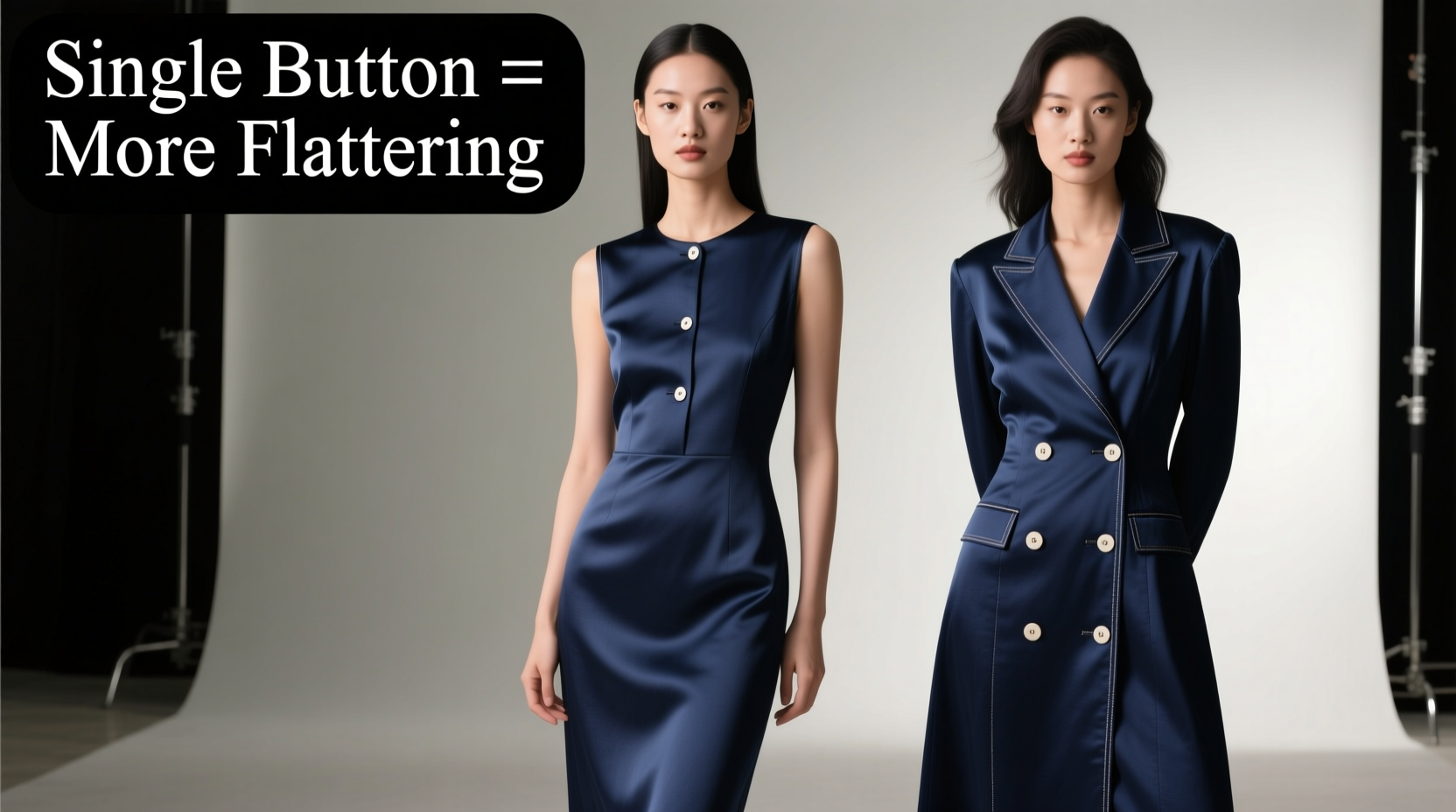
A single button dress typically features one closure at or near the natural waistline, allowing the rest of the garment to drape open. This creates a V-shaped opening that elongates the torso and draws the eye vertically. In contrast, a double button dress usually has two buttons positioned higher on the chest—often around sternum level—which fastens the front more completely, creating a boxier, more structured look with less natural drape.
The placement and number of buttons affect not only how the fabric falls but also where emphasis is placed on the body. A single button tends to highlight the waist, while a double button shifts focus upward toward the shoulders and bust. These subtle distinctions influence perception of height, proportion, and elegance.
“Button configuration isn’t just functional—it’s a design tool for shaping visual balance.” — Adrian Vale, Menswear and Tailoring Consultant
Body Type Considerations: Who Benefits From Which Style?
No single dress style universally flatters all figures. The key lies in aligning the garment’s architecture with your body’s natural lines.
- Taller individuals often benefit from single button designs, which extend the line of the torso and maintain vertical continuity, especially when paired with high-waisted bottoms or skirts.
- Shorter frames may find double button dresses visually shortening due to the horizontal break created by the upper closure. However, if worn with a belt or under a long-line coat, this effect can be mitigated.
- Hourglass shapes gain definition from single button closures that sit at the narrowest part of the waist, enhancing curves without constriction.
- Rectangular or athletic builds can use double button styles to create the illusion of width across the upper body, balancing broader hips or shoulders.
- Apple-shaped bodies often fare better with single button dresses that open below the fullest part of the midsection, minimizing bulk and drawing attention downward.
Comparative Analysis: Single vs Double Button Dresses
| Feature | Single Button Dress | Double Button Dress |
|---|---|---|
| Silhouette Effect | Creates elongated, flowing lines | Emphasizes upper body structure |
| Waist Definition | High—draws attention to natural waist | Low—can obscure waistline |
| Movement & Comfort | Greater freedom; drapes naturally | More restrictive; structured fit |
| Best For | Curvy figures, tall frames, minimalist aesthetics | Balancing proportions, broad-shouldered types, formal settings |
| Fashion Era Association | Modern, 1990s–present minimalism | 1940s–1950s tailoring, power dressing |
Real-World Application: A Stylist’s Case Study
Lena, a 5’4” client with a rectangular body shape and broad shoulders, struggled to find blazer-style dresses that didn’t overwhelm her frame. Her initial preference was for double button dresses, believing they looked “more professional.” However, these styles consistently made her appear boxy and truncated, emphasizing width over length.
After switching to single button dresses with slight waist suppression and a knee-length hem, her silhouette transformed. The vertical V-opening drew the eye down, creating the illusion of longer legs and a more defined waist. Paired with pointed-toe flats, the outfit balanced her proportions and projected confidence without sacrificing professionalism.
This shift wasn’t about changing her body—it was about choosing a cut that worked *with* her anatomy rather than against it. The single button became a strategic tool in redefining her presence.
How to Choose Based on Occasion and Proportion
The context in which you wear the dress matters as much as your body type. Certain environments call for specific silhouettes to convey authority, approachability, or elegance.
- Professional Settings: Double button dresses project formality and authority, ideal for boardrooms or presentations. They suggest control and precision.
- Casual or Creative Environments: Single button styles offer fluidity and ease, pairing well with sneakers or ankle boots for a relaxed yet polished appearance.
- Evening Events: Opt for a single button dress in luxe fabric (silk, satin) to accentuate movement and grace. The open front adds drama without excess volume.
- Photogenic Moments: Single button cuts are generally more flattering in photos, as they create natural leading lines toward the face and waist.
Step-by-Step Guide to Testing Flattery
To determine which style suits you best, follow this practical sequence:
- Stand in front of a full-length mirror wearing each style unbuttoned.
- Observe shoulder alignment and hip balance. Does one style make your shoulders appear too wide or your legs shorter?
- Fasten the garment according to standard rules (one button for double breasted).
- Walk naturally and assess comfort and ease of movement.
- Take a photo from three angles: front, side, and ¾ view.
- Evaluate where the eye is drawn. Is it to your face and waist, or to bulges and tension points?
- Repeat with accessories like belts or necklaces to see how styling alters perception.
Common Misconceptions Debunked
Many assume that double button means “more formal,” therefore “better.” But formality doesn’t equate to flattery. Others believe single button styles are only for slim figures—but when properly tailored, they accommodate diverse sizes by following the body’s curve rather than masking it.
Another myth is that taller women should avoid double button designs altogether. This isn’t true; when proportionally scaled (i.e., longer lapels, lower button stance), even tall individuals can carry off a double button with sophistication.
FAQ
Can I wear a double button dress if I’m petite?
Yes, but choose cropped lengths and ensure the button stance isn’t too high. Look for styles where the buttons sit no higher than the bust line to prevent cutting the body in half visually.
Is a single button dress appropriate for conservative workplaces?
Absolutely. Pair it with a shell or camisole underneath and keep the fabric structured (wool, crepe). The modesty comes from layering, not just closure style.
Do double button dresses go out of style?
They cycle in and out of mainstream fashion, but never disappear entirely. Iconic brands like Chanel and Burberry regularly revive the double breasted silhouette, proving its timeless utility in fashion history.
Final Checklist Before You Buy
- ✅ Try both styles on back-to-back to compare posture and comfort.
- ✅ Check the button stance—does it hit at your natural waist (ideal for single button)?
- ✅ Assess fabric weight—stiffer materials exaggerate boxiness in double button cuts.
- ✅ Ensure the collar lies flat—gaping or pulling indicates poor fit.
- ✅ Move around: sit, walk, reach. A good dress moves with you, not against you.
Conclusion
The question isn't whether single button or double button dresses are inherently more flattering—it's about matching the structure of the garment to your unique proportions and intentions. A single button excels at elongation and waist emphasis, making it ideal for curvier or taller figures seeking elegance. A double button offers architectural strength and upper-body balance, serving those who need to harmonize broader shoulders or project authority.
Ultimately, the most flattering dress is the one that makes you feel confident, aligned, and authentic. Fashion should serve the wearer, not the other way around. By understanding the nuances of button placement and closure style, you take control of your image—one thoughtful choice at a time.




 浙公网安备
33010002000092号
浙公网安备
33010002000092号 浙B2-20120091-4
Comments
No comments yet. Why don't you start the discussion?