
Gaming has evolved from solitary arcade sessions to vast, interconnected online worlds where millions interact in real time. Yet, despite the popularity of multiplayer experiences, a significant number of players still prefer to stay offline—choosing single-player campaigns, local co-op, or even disabling online features entirely. This isn’t just about preference; for many, entering an online lobby triggers genuine anxiety. The reasons are complex, rooted in psychology, social dynamics, and digital culture. Understanding why some gamers avoid multiplayer spaces reveals more than personal taste—it highlights deeper issues around safety, self-worth, and how we experience connection in virtual environments.
The Social Pressure of Being Watched
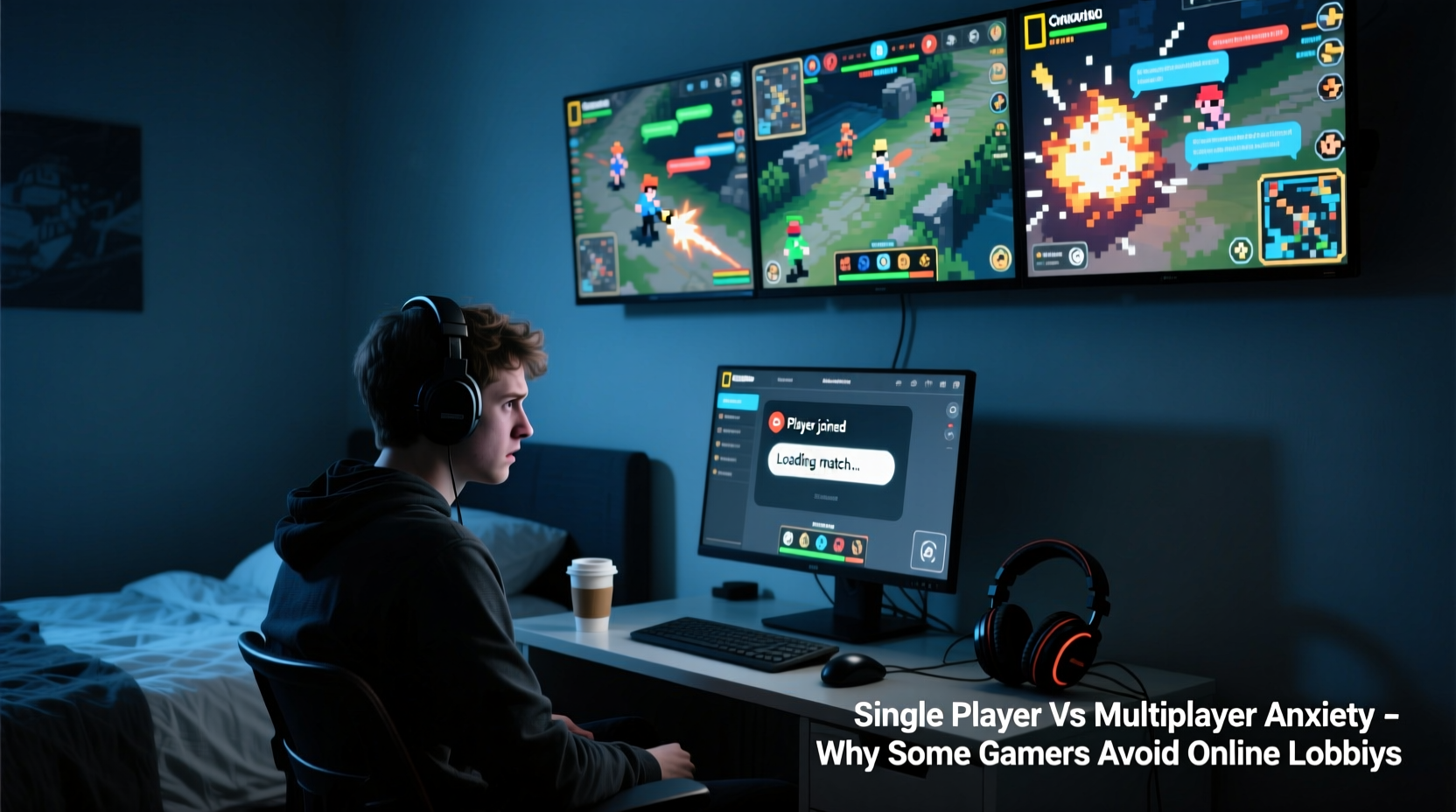
In a single-player game, failure is private. Miss a jump, die to a boss, or take the wrong path—it’s between you and the screen. But online play changes that equation. Every action is visible, often judged, and sometimes ridiculed. The presence of other players introduces performance pressure akin to public speaking. For individuals with social anxiety, this can be overwhelming.
Multiplayer lobbies function like digital coliseums. You're not just playing—you're being evaluated. Skill gaps become glaringly obvious. A new player joining a ranked match may face hostility from teammates who view them as a liability. Even neutral silence can feel isolating. Unlike solo modes, where progress is self-paced, online games often enforce speed, coordination, and communication—expectations that can trigger stress long before the match begins.
Psychological Triggers in Online Environments
Anxiety in multiplayer settings isn’t arbitrary. Several psychological mechanisms contribute to discomfort:
- Social Evaluation Fear: The worry that others are judging your skill, voice, appearance (via avatar), or even typing speed.
- Imposter Syndrome: Feeling like you don’t belong, especially when surrounded by highly skilled or experienced players.
- Anticipatory Anxiety: Dreading potential conflict, trolling, or exclusion before the game even starts.
- Lack of Control: Inability to moderate chat, mute effectively, or exit gracefully increases feelings of helplessness.
A 2022 study published in Computers in Human Behavior found that nearly 43% of surveyed gamers reported avoiding online modes due to fear of harassment or embarrassment. One participant noted, “I love first-person shooters, but I haven’t played online in years because one toxic teammate ruined it for me. Now I flinch every time I see ‘Join Server.’”
“We underestimate how much emotional labor is involved in navigating online spaces. For many, logging into a multiplayer game isn’t recreation—it’s exposure therapy they didn’t sign up for.” — Dr. Lena Tran, Clinical Psychologist specializing in digital behavior
Design Differences: How Games Shape Player Experience
Not all multiplayer experiences are created equal. Game design plays a critical role in either mitigating or exacerbating anxiety. Consider the contrast:
| Game Type | Anxiety Risk Factors | Supportive Features |
|---|---|---|
| Competitive Ranked Shooters (e.g., Call of Duty, Valorant) | High-pressure matches, voice chat, public leaderboards, fast pace | Rank filters, mute options, post-match reports |
| Cooperative Survival (e.g., Valheim, Rust) | Resource competition, betrayal risk, unmoderated servers | Private server creation, invite-only clans |
| Casual Party Games (e.g., Jackbox, Overcooked) | Laughter-based stress, fear of letting friends down | Local-only mode, humor-focused, low stakes |
| Single-Player RPGs (e.g., The Witcher 3, Elden Ring) | Nearly none—player controls pace and environment | Pause anytime, no forced interaction, save/load freedom |
The structure of a game shapes its social footprint. Titles that emphasize cooperation over competition, allow privacy controls, and minimize public visibility tend to foster safer, lower-stress environments. Meanwhile, games built on elimination, ranking, and real-time voice chat amplify stressors—especially when moderation tools are weak or inconsistently enforced.
Real Voices: A Mini Case Study
Meet Alex, 28, a graphic designer and lifelong gamer. He grew up playing Halo and Minecraft with friends, but gradually withdrew from online play during college. “It started with one match,” he recalls. “I joined a random Apex Legends squad. I wasn’t great at movement yet. My teammates started trash-talking me over voice chat—calling me names, saying I was wasting their time. One guy said, ‘Go back to single-player, noob.’ I left the game and didn’t log in for six months.”
Though he still enjoys gaming, Alex now sticks to story-driven titles. “I play God of War, Horizon Zero Dawn, stuff where I can breathe. I don’t have to prove anything. No one’s watching.” His experience isn’t rare. For many, a single negative encounter can create lasting aversion—a digital version of stage fright.
What makes Alex’s case telling is that he doesn’t lack skill. He simply values emotional safety over competitive validation. His retreat from multiplayer isn’t laziness or disinterest—it’s self-preservation.
When Safety Feels Like Isolation
Choosing single-player isn’t always a peaceful decision. It can come with guilt. Gamers often face subtle cultural pressure to engage socially. Phrases like “You’re missing out,” “Just join a clan,” or “It’s more fun with others” can make avoidance feel like failure. But fun isn’t universal. For some, peace *is* the reward.
Moreover, single-player games offer unique psychological benefits: immersion, narrative depth, and autonomy. These aren't lesser experiences—they’re different forms of engagement. As game critic Tanya DePass wrote, “The idea that multiplayer is the ‘real’ way to play is outdated. Not everyone wants to be part of a crowd, and that’s okay.”
Yet, the stigma persists. Online communities sometimes frame solo players as antisocial or “not real gamers.” This dismissiveness overlooks the reality that many avoid lobbies not out of elitism or ignorance—but because those spaces haven’t been made safe or inclusive enough.
Actionable Steps: Creating Safer Entry Points
Whether you're a developer, community moderator, or player looking to support anxious friends, small changes can reduce barriers. Here’s a checklist to foster healthier multiplayer access:
- Normalize opting out: Acknowledge that not everyone enjoys online play—and that’s valid.
- Promote private servers: Encourage friend-based groups where trust is established.
- Use text-first communication: Allow players to type before requiring voice chat.
- Implement skill-matching safeguards: Prevent extreme mismatches that breed frustration.
- Improve reporting systems: Make moderation transparent and responsive.
- Highlight single-player achievements: Celebrate story completion and exploration, not just PvP stats.
FAQ: Common Questions About Multiplayer Anxiety
Is it normal to feel anxious about joining online games?
Yes. Performance anxiety in social digital spaces is common and well-documented. Millions experience similar feelings, especially in high-stakes or unmoderated environments. What matters is how you respond—not whether you feel it.
Can playing multiplayer improve social skills?
It can, but only if the environment is supportive. Forced exposure to hostility usually worsens anxiety. Gradual, positive interactions—such as cooperative play with empathetic teammates—are more effective for building confidence.
Are developers doing anything to address this?
Some are. Games like Animal Crossing: New Horizons and It Takes Two prioritize low-pressure collaboration. Others, like Fortnite, have added robust parental controls and mute-by-default voice settings. However, progress is uneven, particularly in competitive genres where toxicity is often dismissed as “part of the culture.”
Conclusion: Respecting Different Ways to Play
The divide between single-player and multiplayer isn’t just about gameplay preferences—it reflects deeper human needs. Some seek challenge and camaraderie. Others seek refuge and reflection. Both are legitimate. The question isn’t which mode is better, but how we can make gaming welcoming for all temperaments.
Anxiety around online lobbies won’t disappear overnight. But by recognizing its roots—in design flaws, social cruelty, and unmet psychological needs—we can begin to build alternatives. That means better tools, kinder communities, and above all, respect for the quiet player who chooses solitude not out of fear alone, but out of self-awareness.
Gaming should be a space of choice, not coercion. Whether you're storming the battlefield or walking a forest trail alone, your experience matters. And no one should have to justify why they play the way they do.




 浙公网安备
33010002000092号
浙公网安备
33010002000092号 浙B2-20120091-4
Comments
No comments yet. Why don't you start the discussion?