
In recent years, the gaming industry has undergone a quiet but profound transformation. After more than a decade dominated by live-service multiplayer titles—games built around persistent online worlds, competitive modes, and social progression—there’s a growing resurgence in interest toward single-player campaigns. Once considered a fading niche, solo-focused games are now experiencing a renaissance. Major studios and indie developers alike are doubling down on narrative depth, immersive storytelling, and player agency. More gamers are turning off voice chat, closing lobbies, and booting up story-driven adventures that offer emotional resonance, uninterrupted pacing, and personal reflection. This shift isn’t just nostalgic—it reflects deeper changes in how people want to experience games today.
The Rise and Saturation of Multiplayer Gaming
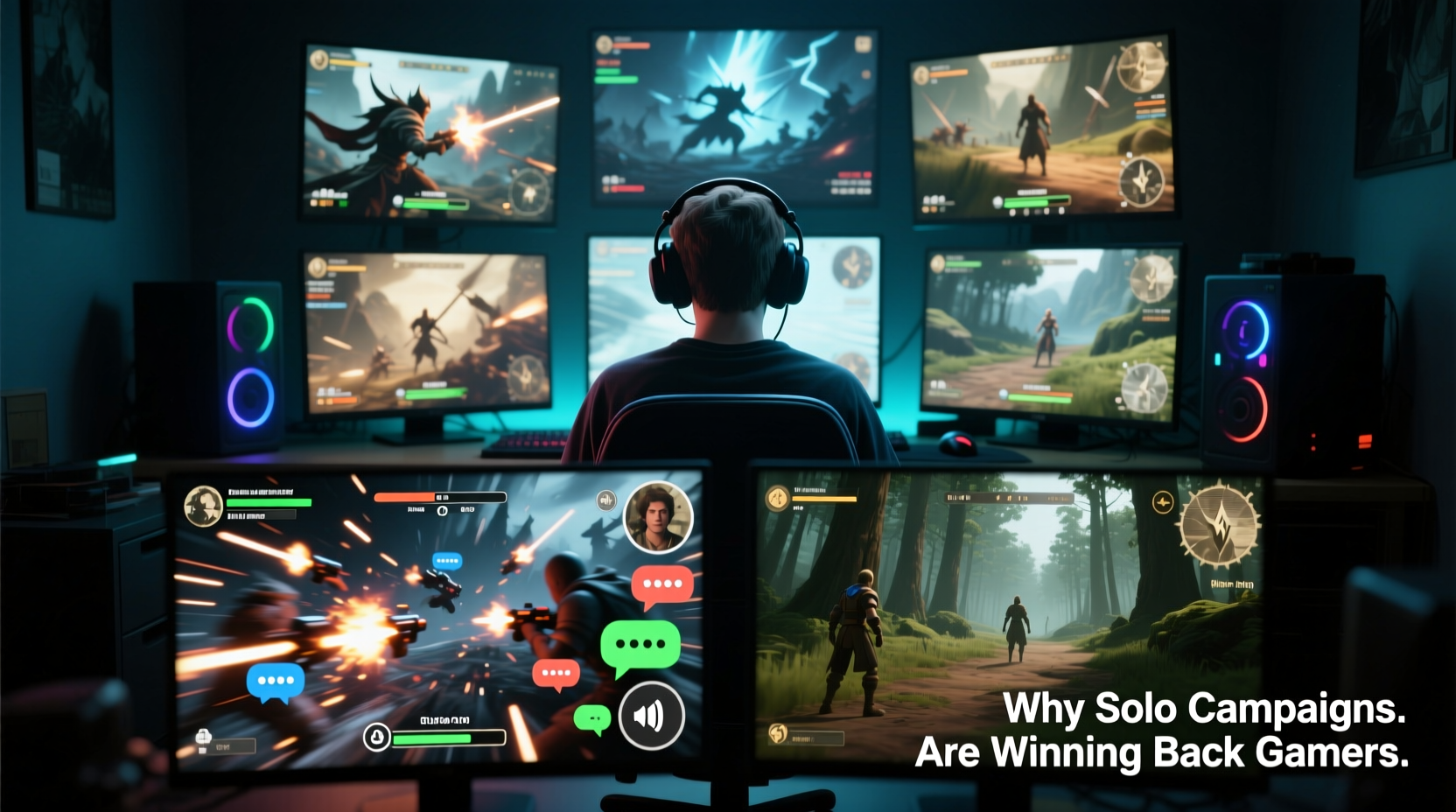
From the mid-2010s onward, multiplayer games surged in popularity. Titles like Fortnite, Call of Duty: Warzone, Apex Legends, and Overwatch defined a generation of play centered around competition, community, and constant engagement. These games were designed to keep players returning daily through battle passes, seasonal events, and social incentives. The model was financially successful—live-service games now generate billions annually—but it came at a cost.
Many players began to feel burned out. The pressure to perform, grind for rewards, or conform to meta strategies eroded the joy of casual play. Toxic behavior in public lobbies, the need for high-speed internet, and the demand for long-term time investment made multiplayer less accessible. For others, especially those playing during pandemic isolation, the impersonal nature of anonymous matches became emotionally draining rather than fun.
Why Single-Player Campaigns Are Making a Comeback
The return to single-player doesn’t mean multiplayer is disappearing. Instead, it signals a desire for balance. Gamers are seeking meaningful experiences that prioritize narrative, atmosphere, and personal connection over leaderboard rankings.
Recent critical and commercial successes highlight this trend. Games like God of War Ragnarök, Star Wars Jedi: Survivor, Alan Wake 2, and Baldur’s Gate 3—despite having some multiplayer elements—center on deep, character-driven stories. Even traditionally multiplayer franchises are reintroducing strong solo modes. Call of Duty brought back full-length campaigns after years of neglect, and Assassin’s Creed continues to expand its historical narratives with rich world-building.
This revival is also driven by technological advancements. Modern hardware allows for more complex AI, expansive open worlds, and cinematic presentation—all of which enhance solo immersion. Players can explore at their own pace, make choices that affect outcomes, and engage with themes rarely explored in competitive settings.
“Single-player games offer something unique: the ability to be truly alone with your thoughts while still being deeply engaged. It's introspective entertainment.” — Lena Torres, Narrative Designer at Obsidian Entertainment
Key Differences: Single Player vs Multiplayer Experiences
| Aspect | Single-Player Games | Multiplayer Games |
|---|---|---|
| Pacing | Controlled by the player; flexible timing | Determined by match flow and other players |
| Narrative Depth | Strong focus on story, character arcs, and world-building | Limited or emergent storytelling |
| Player Agency | Choices often impact plot, dialogue, or endings | Agency limited to tactical decisions in gameplay |
| Accessibility | No internet required; playable anytime | Requires stable connection and server availability |
| Mental Load | Lower stress; self-directed experience | Higher pressure due to competition and coordination |
| Lifespan | Finite experience (typically 10–60 hours) | Designed for long-term retention (months/years) |
The table illustrates a fundamental contrast: single-player games emphasize emotional and intellectual engagement, while multiplayer titles prioritize real-time skill, coordination, and replayability. As lifestyles become busier and attention spans more fragmented, many players find greater satisfaction in completing a well-crafted story than chasing fleeting victories in ranked matches.
Real Shifts in Player Behavior: A Mini Case Study
Consider the case of Marcus, a 32-year-old software engineer and longtime fan of first-person shooters. For nearly a decade, his gaming routine revolved around Counter-Strike and Valorant. He played several nights a week, joined clans, and even streamed occasionally. But over time, the constant need to stay sharp, manage toxic teammates, and keep up with patches wore him down.
During a two-week vacation with no reliable Wi-Fi, he picked up The Last of Us Part I on his PlayStation. What began as a temporary alternative turned into a revelation. “I forgot how powerful games could feel when they’re not about winning,” he said. “I cried during certain scenes. I paused just to look at the environment. No one was yelling in my headset. It felt… peaceful.”
Since then, Marcus has shifted his habits. He still plays multiplayer occasionally, but now dedicates 70% of his gaming time to single-player titles. He’s not alone. Online forums, Reddit threads, and developer surveys show a growing number of players expressing similar sentiments—especially among adults aged 25–45 who value mindfulness and narrative fulfillment.
Design Trends Fueling the Solo Revival
Developers are responding to this shift with renewed investment in single-player experiences. Unlike earlier fears that these games weren’t profitable, modern distribution platforms like Steam, Epic Store, and console marketplaces have proven that story-rich titles can achieve both critical acclaim and financial success.
Indie developers, in particular, have led the charge. Titles like Hades, Disco Elysium, and Tchia prove that compelling writing, innovative mechanics, and artistic direction can captivate audiences without requiring online infrastructure. Meanwhile, AAA studios are reclaiming creative risks. Naughty Dog, Santa Monica Studio, and BioWare continue to champion cinematic storytelling, knowing there’s an audience willing to pay full price for a finite, polished experience.
Another factor is mod support. Single-player games often allow modding communities to extend longevity far beyond initial release. Games like The Elder Scrolls V: Skyrim and Red Dead Redemption 2 remain active years later thanks to user-generated content—something most multiplayer titles restrict due to fairness and security concerns.
Actionable Checklist: How to Reconnect with Single-Player Gaming
If you’ve spent years in multiplayer loops and want to explore what solo campaigns have to offer, here’s a practical checklist to get started:
- Identify your preferred genres – Do you enjoy action-adventure, RPGs, horror, or puzzle games? Start with familiar territory.
- Set aside dedicated playtime – Unlike quick multiplayer matches, single-player games benefit from longer, uninterrupted sessions.
- Turn off distractions – Close browsers, mute notifications, and consider using headphones for full immersion.
- Embrace the story – Don’t rush. Take time to read dialogue, explore environments, and absorb the atmosphere.
- Try one acclaimed title per month – Build a habit. Start with accessible entries like Uncharted: Legacy of Thieves or Ghost of Tsushima.
- Join narrative-focused communities – Platforms like r/GamesOnDeck (Reddit) or Discord servers for story gamers can provide recommendations and discussion.
- Revisit older classics – Many older single-player games are available via backward compatibility or remasters.
Common Misconceptions About Single-Player Games
Despite their resurgence, several myths persist:
- “They’re outdated or irrelevant.” – Far from it. Many of the most awarded games at The Game Awards in recent years have been single-player focused.
- “They’re lonely or isolating.” – While played alone, these games often spark deeper conversations about themes, characters, and moral choices—sometimes more so than multiplayer banter.
- “They lack replay value.” – With branching paths, multiple endings, and New Game+ modes, many offer significant replayability.
- “They’re only for hardcore fans.” – Accessibility options, difficulty sliders, and quality-of-life improvements now make them approachable for casual players too.
Frequently Asked Questions
Are single-player games still profitable for developers?
Yes. While they may not generate ongoing revenue like live-service models, well-made single-player games often see strong launch sales, long-tail performance, and opportunities for remasters or sequels. Elden Ring, despite being primarily single-player, sold over 25 million copies—a testament to market demand.
Can I enjoy both single-player and multiplayer games?
Absolutely. Many players adopt a hybrid approach, rotating between intense multiplayer seasons and reflective solo campaigns. Balance is key to avoiding burnout and maintaining enjoyment.
Do single-player games work on lower-end systems?
Generally, yes. Without the need for real-time network synchronization, single-player games often have better optimization. Many indie titles run smoothly on modest hardware, and offline play eliminates latency issues.
The Future of Gaming: A Balanced Landscape
The future isn’t about choosing between single-player and multiplayer—it’s about recognizing that both have vital roles. The current return to solo campaigns reflects a maturing audience that values diversity in experience. Gamers today want options: sometimes to compete, sometimes to connect, and sometimes to simply be alone with a great story.
As development tools improve and player expectations evolve, we’re likely to see even more innovation in single-player design. Expect deeper AI companions, more responsive worlds, and interactive narratives that adapt to individual playstyles. Cloud gaming may also help preserve legacy single-player titles, ensuring they remain accessible across generations.
Ultimately, the resurgence of solo campaigns is a sign of a healthier, more balanced gaming ecosystem—one where creativity, emotion, and personal expression are valued as highly as speed, rank, and reaction time.




 浙公网安备
33010002000092号
浙公网安备
33010002000092号 浙B2-20120091-4
Comments
No comments yet. Why don't you start the discussion?