
The role-playing game (RPG) genre has long stood as a pillar of video gaming culture, offering immersive worlds, complex narratives, and deeply personalized experiences. Yet, as we approach 2025, a growing debate questions the sustainability of its two dominant branches: single-player RPGs and multiplayer RPGs. While both formats continue to attract passionate audiences, shifts in development priorities, monetization models, and player expectations are reshaping their trajectories. The real question isn’t whether either form will vanish overnight—but which is losing momentum in an increasingly connected, service-driven market.
The Evolution of RPGs: From Solitary Journeys to Shared Worlds
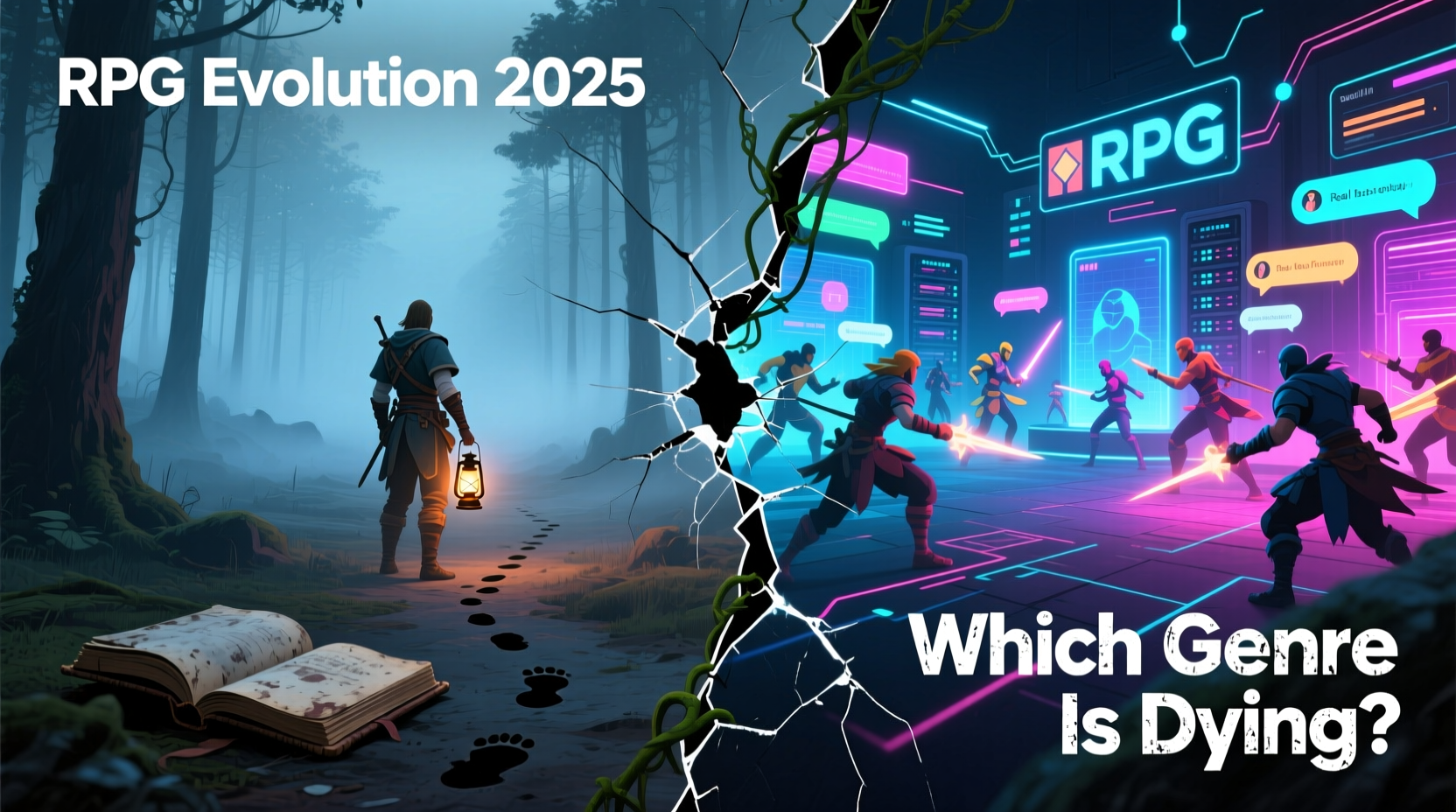
RPGs originated as narrative-heavy, turn-based adventures where players assumed the role of a lone hero shaping destiny through dialogue, choice, and combat. Early titles like Ultima, Wizardry, and later Final Fantasy and The Elder Scrolls series emphasized personal investment in story and character progression. These were inherently solitary experiences—meant to be savored over dozens of hours, often without external interference.
In contrast, the rise of online connectivity birthed the multiplayer RPG. Titles such as World of Warcraft, Destiny, and The Elder Scrolls Online transformed RPGs into persistent social ecosystems. These games prioritized live-service models, regular content updates, and community engagement. By 2025, this model dominates publisher roadmaps, with major studios investing heavily in “games as a service” (GaaS) frameworks that rely on recurring revenue from subscriptions, cosmetics, and battle passes.
Why Multiplayer RPGs Dominate Development Cycles
Publishers favor multiplayer RPGs for several structural reasons:
- Revenue predictability: Live-service games generate ongoing income rather than relying on one-time sales.
- Data-driven design: Player behavior can be monitored in real time, allowing developers to tweak balance, introduce events, and optimize retention.
- Community stickiness: Social bonds keep players engaged longer, increasing lifetime value (LTV).
- Marketing efficiency: Viral moments in multiplayer settings (raids, PvP highlights) spread organically across social platforms.
Meanwhile, single-player RPGs require massive upfront investment with no guaranteed return. Despite critical acclaim, titles like Baldur’s Gate 3 and Starfield remain exceptions—not the rule—in today’s risk-averse publishing climate.
The Myth of the \"Dying\" Single-Player RPG
Claims that single-player RPGs are “dying” are exaggerated—but not baseless. What’s actually declining is the number of AAA studios willing to fund them. The financial risks are high: development costs exceed $100 million, marketing budgets are steep, and there's no post-launch revenue engine unless DLC or expansions follow.
Yet, demand remains strong. Elden Ring sold over 25 million copies by 2024 without any multiplayer component. Disco Elysium – The Final Cut proved that niche, narrative-focused RPGs can achieve cult status and commercial success. Indie developers, empowered by digital distribution and tools like Unity and Unreal Engine, are stepping into the void left by major publishers.
“Players still crave deep, authored stories. The issue isn’t interest—it’s who’s willing to bankroll it.” — Lena Torres, Game Designer at Obsidian Entertainment
However, even these successes face challenges. Smaller teams struggle with burnout, scope creep, and limited QA resources. And while platforms like Steam and Game Pass help visibility, discoverability remains a hurdle in an oversaturated market.
Multiplayer RPGs Aren't Immune to Decline Either
While multiplayer RPGs dominate headlines, they’re not immune to fatigue. Many live-service titles suffer from player churn within 12–18 months of launch. Games like Outriders and Chorus failed to retain audiences despite promising starts. Even established franchises face backlash when monetization feels exploitative or content updates lag.
The pressure to constantly deliver new content leads to developer crunch, creative stagnation, and repetitive seasonal loops. As one senior designer at a major studio noted: “We’re building theme park rides now, not stories.” This shift alienates players who once valued narrative depth and meaningful progression.
A Comparative Breakdown: Key Differences in 2025
| Aspect | Single-Player RPGs | Multiplayer RPGs |
|---|---|---|
| Development Cost | High upfront, limited ROI potential | High, but offset by recurring revenue |
| Player Retention | Finite; ends with completion | Ongoing; driven by events & rewards |
| Narrative Depth | High; fully authored arcs | Often fragmented or lore-light |
| Monetization | One-time purchase + DLC | Subscriptions, microtransactions, cosmetics |
| Longevity | Years of cultural relevance | Months to few years unless highly successful |
| Creative Freedom | Greater control over vision | Constrained by data & live ops |
This table reveals a paradox: single-player RPGs offer richer artistic expression but less financial security, while multiplayer RPGs promise stable revenue at the cost of creative integrity and long-term player satisfaction.
Case Study: The Rise and Stagnation of a Modern Multiplayer RPG
Consider Project Ember, a fictional but representative title launched in late 2023 by a mid-tier studio aiming to capture the looter-shooter-RPG hybrid market. Backed by a $70 million budget and aggressive influencer campaigns, it launched to strong initial sales—over 3 million copies in three months.
By mid-2024, however, daily active users had dropped by 68%. Players cited repetitive endgame loops, lack of meaningful story progression, and cosmetic prices averaging $25 per item. Community forums filled with complaints about “grindy” content designed solely to extend playtime. The studio responded with a “Season Pass Revamp,” introducing battle pass tiers and login streaks. Engagement briefly spiked but plateaued again within weeks.
By early 2025, the game was labeled “zombie live-service”—still technically alive, receiving minor patches, but devoid of innovation or excitement. Development staff were reassigned, and investor funding dried up. Project Ember didn’t fail because multiplayer RPGs are flawed—it failed because it prioritized metrics over meaning.
Is One Genre Actually Dying?
No single format is vanishing—but their dominance is shifting. The traditional single-player RPG is becoming a boutique product, sustained by passionate indie teams, dedicated fanbases, and platform support like Xbox Game Pass and Humble Bundle. These titles may not sell millions, but they win awards, influence design, and preserve the soul of the genre.
Conversely, the multiplayer RPG is evolving into a broader entertainment category—one that blends elements of social media, streaming, and gamification. Success now depends less on gameplay depth and more on ecosystem design: how well a game fosters community, encourages content creation, and integrates with platforms like Twitch and Discord.
If anything, what’s “dying” is the middle ground—the mid-budget, narrative-driven single-player RPG developed by medium-sized studios. These projects are too expensive for indies and too risky for publishers focused on scalable online experiences.
How to Future-Proof Your RPG Experience
Whether you prefer solo adventures or team raids, here’s how to stay engaged as the landscape changes:
- Diversify your library: Don’t rely on one type of RPG. Alternate between story-rich single-player titles and seasonal multiplayer content.
- Follow developer blogs: Studios like Larian, Bloober Team, and Inflexion Games often share post-mortems and design philosophies that reveal long-term intentions.
- Join modding communities: Single-player RPGs like Skyrim and Dragon Age thrive for decades thanks to user-generated content.
- Limit subscription sprawl: Avoid subscribing to every new live-service game. Focus on those with transparent roadmaps and fair monetization.
- Advocate for change: Use review platforms and social media to reward ethical design and call out exploitative practices.
Checklist: Evaluating an RPG Before Buying in 2025
- ✅ Does it align with my preferred playstyle—narrative depth or social interaction?
- ✅ Is the monetization model clearly disclosed?
- ✅ Are there plans for post-launch content—or is it a complete experience?
- ✅ Has the developer shipped similar titles successfully before?
- ✅ Is player feedback actively incorporated (e.g., patch notes, community Q&As)?
Expert Insight: The Designer’s Perspective
Game development is not just art—it’s economics. As budgets rise, so does accountability to shareholders. This tension shapes what gets made.
“The dream of making a 100-hour epic with branching narratives is harder today unless you have a proven IP or investor patience. We’re seeing more ‘safe bets’—sequels, reboots, and shared-world designs.” — Rajiv Mehta, Lead Designer at a AAA RPG Studio
Mehta’s observation underscores a systemic shift: creativity is increasingly filtered through financial viability. That doesn’t mean great single-player RPGs won’t emerge—it means they’ll come from smaller teams, crowdfunding, or hybrid publishing models.
Frequently Asked Questions
Are single-player RPGs really disappearing?
No. While fewer AAA studios are producing them, independent developers and niche publishers continue to release critically acclaimed single-player RPGs. Platforms like Steam, GOG, and Game Pass ensure these titles find audiences. However, the era of frequent, high-budget single-player releases from major publishers may be waning.
Will multiplayer RPGs become pay-to-win?
Some already are. Cosmetic-only monetization remains ideal, but many games now sell power-boosting items, fast-track progression, or exclusive gear. Players concerned about fairness should research a game’s monetization model before investing time or money.
Can a single-player RPG succeed in 2025?
Yes—but under specific conditions. It needs strong word-of-mouth, a passionate community, and often alternative funding (Kickstarter, Epic Store deals, etc.). Titles like Baldur’s Gate 3 prove that quality and authenticity can overcome market headwinds.
Conclusion: The Future Belongs to Players Who Choose Wisely
The narrative that single-player RPGs are dying oversimplifies a complex reality. What’s truly fading is the industrial support for mid-scale, story-driven experiences—not the desire for them. Multiplayer RPGs, meanwhile, face their own crisis of identity, risking player trust with endless content loops and aggressive monetization.
The future of RPGs won’t be determined by technology or trends alone, but by what players value and support. If you cherish deep storytelling, character development, and world-building, seek out and champion single-player experiences. If you thrive on collaboration and competition, hold multiplayer developers accountable for fair design and sustainable content.
Genres don’t die—they evolve. And evolution requires participation. Whether you wield a sword alone in a forgotten forest or join thousands in a digital battleground, your choices shape what gets made next.




 浙公网安备
33010002000092号
浙公网安备
33010002000092号 浙B2-20120091-4
Comments
No comments yet. Why don't you start the discussion?