
For collectors of trading cards—whether Pokémon, Magic: The Gathering, sports memorabilia, or modern collectible card games—display is more than presentation. It's about preservation, pride, and protecting investment value. One of the most common decisions collectors face is whether to use single card display stands or multi-card holders. Each has advantages and trade-offs that depend on your goals, space, budget, and how you interact with your collection.
The right choice isn’t universal. A display solution that works for a casual collector may fall short for someone tracking market value or curating rare editions. Understanding the functional and aesthetic differences between single and multi-card stands can help you make an informed decision that aligns with your collecting philosophy.
Understanding Single Card Display Stands
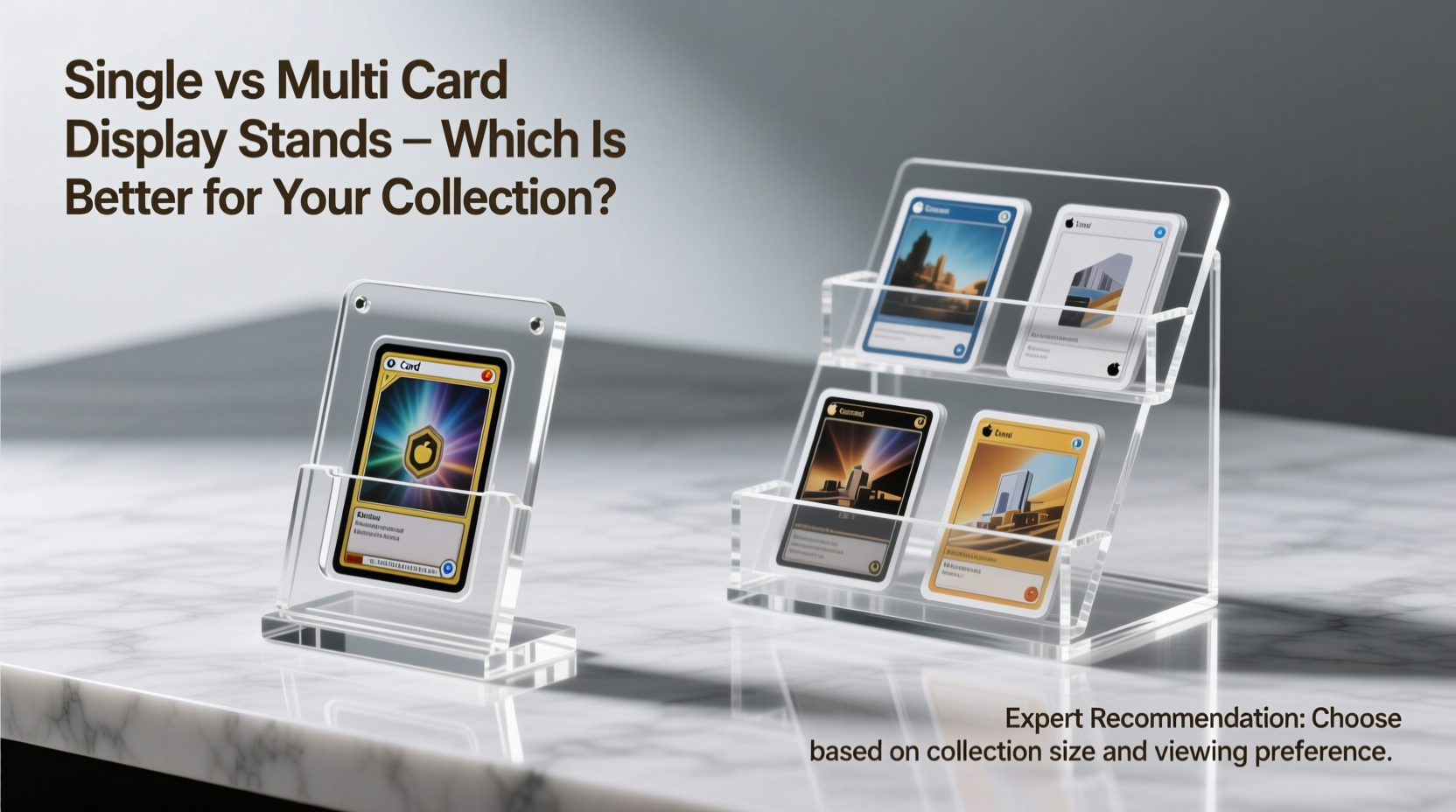
Single card display stands are designed to hold one card at a time, typically in a vertical or angled upright position. These are often made from acrylic, plastic, or metal frames and are built to showcase individual cards like centerpieces. They're popular among collectors who want to highlight specific cards—such as first-edition holographics, graded PSA 10s, or autographed variants.
Because they focus on one card, these stands offer maximum visibility and minimal visual clutter. They allow light to reflect evenly across the card’s surface, making them ideal for photography, social media posts, or room displays where attention should be drawn to a single item.
Benefits of Single Card Displays
- Premium Presentation: Gives each card a museum-like spotlight.
- Better Protection: Many include snap-fit enclosures or soft inner lining to prevent scratches.
- Easier Grading Visibility: Ideal for showing off slabbed (graded) cards without removing them from cases.
- Customization: Can mix and match styles, angles, and materials to create dynamic layouts.
Multicard Display Stands: Function Meets Efficiency
Multicard display stands, sometimes called card racks or trays, are engineered to hold multiple cards simultaneously—anywhere from 5 to 50+ depending on size. These are commonly used in binders with clear sleeves, desktop trays, wall-mounted rails, or tiered acrylic shelves. They prioritize organization and space efficiency over individual spotlighting.
These systems work well for collectors managing large inventories or rotating through decks. For example, a Magic: The Gathering player might keep their tournament deck in a multicard stand for quick access while storing rares in single stands elsewhere.
While not as visually dramatic per card, multicard options reduce physical footprint and often cost less per card displayed. They’re also easier to rearrange or reorganize as collections grow.
When Multicard Stands Shine
- High-volume Collections: More practical than buying dozens of individual stands.
- Frequent Handling: Easy to remove and replace cards without disassembling displays.
- Budget-Friendly: Lower upfront cost per unit when scaling up.
- Deck Organization: Keep playsets together and ready for use.
Comparative Analysis: Single vs Multi – Key Factors
| Factor | Single Card Stand | Multi Card Stand |
|---|---|---|
| Protection Level | High – Enclosed, scratch-resistant materials | Moderate – Open designs expose edges to dust and handling |
| Display Quality | Excellent – Focused lighting, no visual competition |
| Fair to Good – Depends on spacing and background | ||
| Cost Per Card | High – $5–$15 per stand | Low – As little as $0.50 per slot in bulk trays |
| Space Efficiency | Low – One stand per card uses more surface area | High – Vertical stacking maximizes small spaces |
| Flexibility | Low – Reconfiguring requires moving individual units | High – Cards can be swapped quickly |
“Collectors who treat cards as both art and assets tend to favor single stands for high-value pieces. But smart organization with multi-trays keeps the rest of the collection accessible and secure.” — Daniel Reyes, Certified Card Conservator & Founder of CollectSafe Storage
Real Collector Scenario: Balancing Both Worlds
Consider Sarah, a longtime Pokémon TCG collector with over 800 cards. She owns three PSA 10 Charizards and several reverse holofoils she considers long-term investments. Initially, she stored everything in binder pages. After noticing minor edge wear and wanting to impress guests, she upgraded her top-tier cards into magnetic-seal single acrylic stands placed on floating shelves.
For the remaining 700+ cards, she uses a tiered 40-slot multicard display mounted on her desk. This setup allows her to rotate seasonal favorites while keeping daily handlers organized. By combining both types, she balances protection, aesthetics, and usability without overspending.
Sarah’s hybrid approach reflects a growing trend: using single stands selectively for premium cards and relying on multicard solutions for volume. This method optimizes both emotional satisfaction and practical management.
Step-by-Step Guide to Choosing Your Display Strategy
- Inventory Your Collection: Separate cards by value, rarity, sentimental importance, and frequency of use.
- Define Display Goals: Are you showcasing for visitors, protecting investment-grade cards, or organizing for gameplay?
- Assess Space and Budget: Measure available shelf or desk space. Determine how much you’re willing to spend per displayed card.
- Select Priority Cards: Choose 5–10 standout cards to feature in single stands.
- Choose Complementary Multi-Stands: Pick sleek, non-abrasive trays or wall mounts for the remainder.
- Arrange with Flow in Mind: Group related sets together, maintain consistent height, and avoid overcrowding.
- Review Every 6 Months: Rotate featured cards, clean displays, and check for environmental damage.
Essential Checklist Before You Buy
- ✅ Confirm material is non-PVC and acid-free to prevent chemical degradation
- ✅ Check if the stand accommodates sleeved cards (most do, but not all)
- ✅ Ensure stability—angled stands shouldn’t tip easily
- ✅ Verify compatibility with graded slabs (e.g., PSA, BGS) if applicable
- ✅ Consider UV resistance if placing near natural light
- ✅ Look for modular designs that allow future expansion
Frequently Asked Questions
Can I switch a card between single and multi stands frequently?
Yes, but minimize direct handling. Always hold cards by the edges and consider wearing cotton gloves for high-value items. Frequent transfers increase risk of micro-scratches or bent corners.
Do single card stands prevent yellowing?
They help, but only if made from UV-protective materials. Standard acrylic may block some light but won’t stop oxidation from air exposure. For long-term preservation, combine UV-resistant stands with low-humidity environments away from sunlight.
Are multicard stands safe for mint-condition cards?
Only if properly designed. Avoid trays with rough edges or tight friction fits. Opt for models with soft lining or individual slots that don’t require forcing cards in. Cards should slide smoothly without resistance.
Final Thoughts: It’s Not Either/Or—It’s About Intention
The debate between single and multi card display stands isn’t about superiority—it’s about purpose. Single stands elevate special pieces into statement art, offering unmatched clarity and protection for prized possessions. Multi-card stands deliver efficiency, scalability, and practicality for active or expansive collections.
The most effective display strategy blends both. Reserve single stands for cards that represent milestones—your first pull, a birthday gift, or a market-topper. Use multicard solutions to keep the broader collection visible, organized, and enjoyable.
Ultimately, your display should reflect your relationship with your cards: part archive, part gallery, part personal history. Choose not just what looks best today, but what preserves meaning and value for years to come.




 浙公网安备
33010002000092号
浙公网安备
33010002000092号 浙B2-20120091-4
Comments
No comments yet. Why don't you start the discussion?