
Watches have long been more than timekeeping tools—they're statements of personality, taste, and craftsmanship. As horological design evolves, the skeleton watch has emerged as a striking alternative to the traditional analog model. With its exposed mechanics and intricate inner workings on full display, the skeleton watch captivates with technical artistry. But does this modern edge justify moving away from the refined simplicity of a classic analog face? For those torn between innovation and tradition, the decision isn’t just aesthetic—it’s symbolic.
The Anatomy of Design: What Sets Them Apart
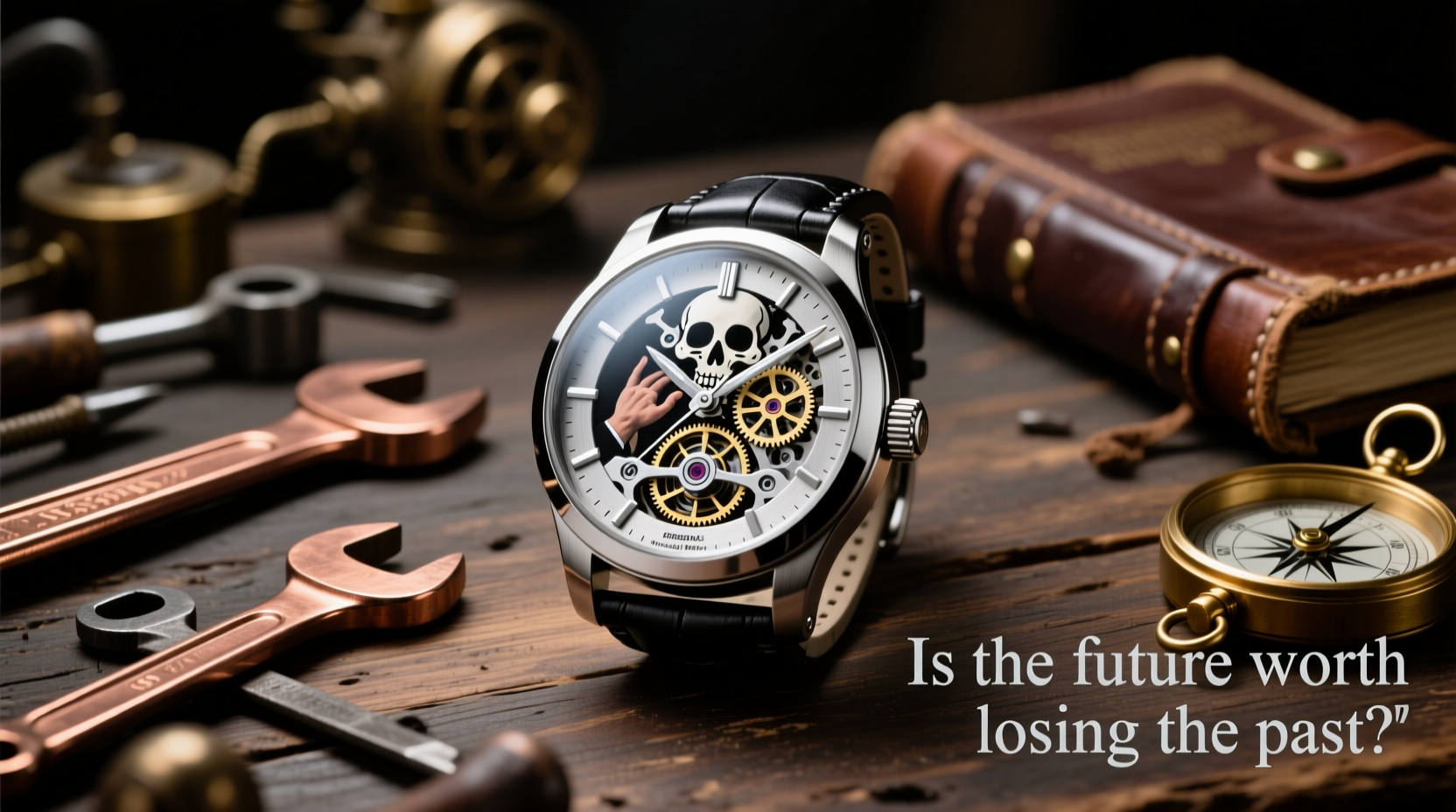
At first glance, both skeleton and analog watches share core components: hands, dial, case, and movement. The fundamental difference lies in visibility and intent. An analog watch emphasizes legibility and elegance. Its dial—often minimalist, textured, or subtly branded—frames the time in a way that feels familiar and polished. Brands like Rolex, Omega, and Patek Philippe have spent decades perfecting this balance of function and form.
In contrast, the skeleton watch strips away the dial to reveal the inner mechanics. Gears, springs, and oscillating weights are left partially or fully exposed, transforming the timepiece into a miniature engineering showcase. This design originated in the 18th century when watchmakers began carving away metal to demonstrate mastery over their craft. Today, it's a hallmark of avant-garde style, often associated with brands like Hublot, Richard Mille, and Jacob & Co.
Functionality Meets Aesthetics: Practical Trade-offs
While skeleton watches dazzle visually, they come with practical considerations. Legibility can suffer due to visual clutter—overlapping gears and bridges may make it harder to read the time at a glance, especially in low light. Some models incorporate small sub-dials or applied indices to compensate, but clarity is rarely as immediate as on a clean analog face.
Another factor is durability. Exposed components are more vulnerable to dust, moisture, and impact. Even with high-quality seals and sapphire crystals, the structural integrity of a skeletonized movement is inherently more delicate. Analog watches, by shielding their internals, tend to be more resilient in daily wear.
On the flip side, skeleton watches often feature higher-grade movements—frequently hand-finished with perlage, bevelling, and blued screws—making them appealing to connoisseurs. The craftsmanship involved is not merely decorative; it reflects precision engineering. For enthusiasts, seeing the balance wheel oscillate or the escapement click is akin to watching a heartbeat.
“Skeletonization isn’t about removing material—it’s about revealing soul. It turns a tool into art.” — Laurent Martinez, Master Watchmaker at Ateliers de Monaco
Style Implications: When to Choose Which
The choice between skeleton and analog often comes down to context and identity. A classic analog watch remains the gold standard for formal settings. Its understated presence complements a tailored suit, exudes professionalism, and signals respect for tradition. Think of it as the little black dress of horology—timeless, versatile, and universally appropriate.
Skeleton watches, however, thrive in expressive environments. They’re ideal for creative industries, social events, or moments where individuality takes precedence. Wearing one signals confidence, curiosity, and an appreciation for mechanical complexity. It’s less about blending in and more about standing out—strategically.
Consider lifestyle cues: someone who attends board meetings daily might lean toward analog, while a designer, entrepreneur, or tech innovator might find the skeleton’s boldness more aligned with their brand.
Comparison Table: Skeleton vs Analog Watches
| Feature | Skeleton Watch | Analog Watch |
|---|---|---|
| Dial Visibility | Exposed movement, partial or full | Closed dial with hour markers |
| Legibility | Moderate to low (depends on design) | High (clear hands and markers) |
| Durability | Lower (exposed components) | Higher (protected movement) |
| Aesthetic Focus | Mechanical artistry, modern flair | Timeless elegance, minimalism |
| Best For | Casual, creative, statement occasions | Formal, professional, everyday use |
| Maintenance Needs | Higher (sensitive to dust/moisture) | Lower (sealed construction) |
Real-World Scenario: Choosing for Impact
Take Mark, a 38-year-old architect based in Barcelona. He owns two watches: a vintage-inspired Jaeger-LeCoultre Reverso (analog) and a contemporary Hublot Big Bang Integral Skeleton. For client presentations and evening galas, he wears the Reverso—its clean lines and golden indices echo the precision of his work. But during design workshops or weekend exhibitions, he switches to the Hublot. “It mirrors my process,” he says. “People see the structure, the layers, the thinking behind it. It’s not just telling time—it’s showing how time is made.”
This duality illustrates a growing trend: owning both styles and deploying them contextually. Rather than replacing one with the other, many collectors now treat them as complementary expressions of self.
How to Decide: A Practical Checklist
Choosing between a skeleton and analog watch shouldn’t be arbitrary. Use this checklist to guide your decision:
- ✅ Do I prioritize ease of reading the time?
- ✅ Will I wear this primarily in professional or formal settings?
- ✅ Am I drawn to mechanical transparency and engineering detail?
- ✅ Do I want a watch that sparks conversations?
- ✅ Is durability important for my daily routine (e.g., travel, outdoor work)?
- ✅ Do I already own a classic analog watch and seek something different?
- ✅ Am I willing to invest more in maintenance for visual appeal?
If the first three questions dominate, analog is likely your best fit. If the latter four resonate more strongly, a skeleton model could be the right evolution in your collection.
Frequently Asked Questions
Can a skeleton watch be worn every day?
Yes, but with caveats. High-end skeleton watches from reputable brands are built for daily wear, yet they require more care. Avoid extreme conditions, impacts, and prolonged exposure to moisture. Regular servicing is essential to maintain performance and appearance.
Are skeleton watches less accurate than analog ones?
No. Accuracy depends on the movement type (quartz vs. mechanical), not the dial design. Most skeleton watches use automatic or manual mechanical movements, which are as precise as their analog counterparts when properly maintained.
Do skeleton watches cost more?
Generally, yes. Due to the labor-intensive finishing and complex manufacturing, skeleton watches often carry a premium. However, entry-level options exist from brands like Seiko and Orient, offering partial skeletonization at accessible price points.
Final Thoughts: Tradition and Innovation Are Not Mutually Exclusive
The debate between skeleton and analog watches isn’t about superiority—it’s about alignment. A classic analog timepiece offers enduring grace, reliability, and universal appeal. The skeleton watch answers a different need: the desire to witness and celebrate the mechanics of time itself. One honors the past; the other invites engagement with the present moment, quite literally.
Rather than viewing them as rivals, consider them chapters in a broader narrative of personal style. Many discerning wearers now embrace both—using analog for moments of restraint, and skeleton for moments of revelation. The true measure of a watch isn’t just in its accuracy, but in how well it reflects who you are and where you’re going.




 浙公网安备
33010002000092号
浙公网安备
33010002000092号 浙B2-20120091-4
Comments
No comments yet. Why don't you start the discussion?