
In an era where timekeeping is just one tap away on a smartphone, watches have evolved from pure utility into statements of identity. Yet within this space, two opposing philosophies dominate: the mechanical artistry of skeleton watches and the functional precision of digital watches. One celebrates visible gears and hand-finished movements; the other prioritizes notifications, fitness tracking, and battery life. So when choosing between a skeleton watch and a digital model, are those mesmerizing exposed internals truly worth sacrificing connectivity and smart capabilities?
The answer depends less on technology and more on intention. For some, wearing a watch is about ritual, craftsmanship, and emotional resonance. For others, it’s seamless integration with daily life—tracking heart rate during a run or receiving a calendar alert without pulling out their phone. This article dissects both options not just in terms of features, but in how they align with lifestyle, aesthetics, and long-term value.
The Allure of the Skeleton Watch: Mechanics as Art
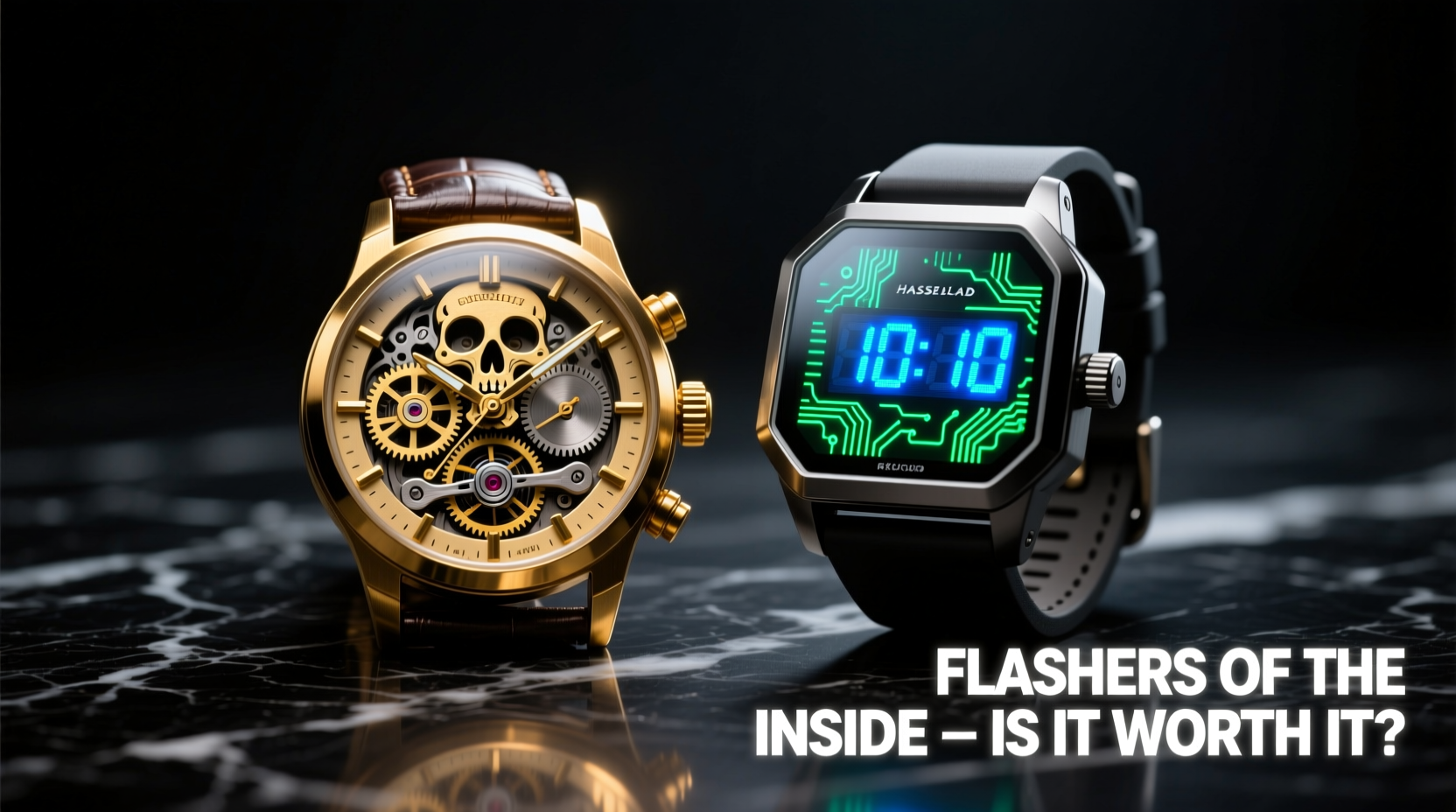
Skeleton watches strip away the dial and much of the movement plate to reveal the intricate inner workings of the timepiece—the balance wheel oscillating, the gears interlocking, the mainspring coiling with stored energy. These watches trace their origins to 18th-century horology, when watchmakers began carving away metal to showcase their technical mastery. Today, skeletonization remains a hallmark of haute horlogerie, blending engineering with artistic expression.
Unlike mass-produced digital displays, each skeleton watch often features hand-engraved components, beveled edges, and meticulous finishing that can take dozens of hours. Brands like Jaeger LeCoultre, Hublot, and even accessible names such as Hamilton and Tissot offer models that turn the movement into a performance piece worn on the wrist.
“Time isn’t just measured—it’s experienced. A skeleton watch makes you feel the passage of seconds.” — Luc Bernard, Independent Watchmaker and Horology Instructor
The appeal lies in tangibility. You’re not just reading time; you’re witnessing its creation. There's a meditative quality in watching the micro-mechanics operate—something no LED backlight can replicate.
Digital Dominance: Functionality First
Digital watches, especially modern smartwatches like the Apple Watch, Garmin Forerunner, or Casio G-Shock series, prioritize utility. They track sleep, monitor stress levels, provide GPS navigation, and sync with smartphones for calls, messages, and apps. Their quartz or digital movements are accurate to within seconds per month, far surpassing most mechanical counterparts.
Beyond accuracy, digital watches adapt. A runner uses theirs for pace tracking. A business traveler relies on multiple time zones. A parent receives alerts without checking their pocket. The interface evolves with software updates, adding features years after purchase—something impossible for purely mechanical designs.
And let’s not overlook durability. Rugged digital models like the G-Shock line are shock-resistant, water-resistant to depths exceeding 200 meters, and built to survive extreme conditions. While some skeleton watches come in robust cases, exposing delicate parts inherently increases vulnerability to impact and dust.
When Practicality Wins
If your day revolves around productivity, health metrics, or outdoor activity, a digital watch likely delivers greater daily value. It reduces reliance on your phone, enhances safety with emergency SOS features, and integrates with ecosystems like iOS Health or Google Fit. For professionals in high-motion jobs—paramedics, construction workers, athletes—digital reigns supreme.
Comparing Core Values: A Side-by-Side Breakdown
| Feature | Skeleton Watch | Digital Watch |
|---|---|---|
| Mechanism | Manual or automatic mechanical | Quartz or digital processor |
| Accuracy | +/- 5 to 30 sec/day | +/- 15 sec/month |
| Battery Life | 40–72 hours (no battery) | 1–7 days (smart), years (basic) |
| Smart Features | None | Fitness tracking, notifications, apps |
| Lifespan | Decades with servicing | 3–8 years (tech obsolescence) |
| Emotional Value | High (craftsmanship, heirloom potential) | Low to moderate |
| Durability | Moderate (sensitive internals) | High (especially rugged models) |
This comparison underscores a fundamental divide: longevity through craftsmanship versus innovation through iteration. A well-maintained skeleton watch can be passed down generations. A top-tier smartwatch may become obsolete in five years due to software support ending or battery degradation.
Real-World Scenario: Two Professionals, Two Choices
Consider Mark, a corporate lawyer who values tradition and detail. He wears a skeleton Audemars Piguet Royal Oak when meeting clients. The watch signals patience, legacy, and attention to nuance. It doesn’t vibrate with emails—but he doesn’t want it to. His phone handles communication; his watch represents presence.
Contrast this with Lena, an ER nurse and triathlete. Her Garmin Fenix 7 tracks her shifts, monitors her heart rate variability, and guides her trail runs. She needs reliability under pressure and real-time data. A skeleton watch, while beautiful, wouldn’t survive a 12-hour shift drenched in sanitizer and sweat.
Neither choice is objectively better. But each reflects a deliberate alignment between tool and role.
Can You Have Both? The Hybrid Approach
Some wearers adopt a dual-watch strategy: a digital model for active use and a skeleton piece for formal or reflective moments. This approach acknowledges that watches now serve different purposes—not replacements for phones, but specialized companions.
Others explore hybrid watches: analog faces with partial skeleton elements and limited smart functions (e.g., Withings ScanWatch). These blend modest tech—like sleep tracking and来电 indicators—with traditional aesthetics. However, they lack the full transparency of true skeleton designs and the robust app ecosystems of full smartwatches.
Step-by-Step Guide: Choosing Your Watch Based on Lifestyle
- Assess your daily routine. Do you work in dynamic environments requiring constant connectivity, or do you value uninterrupted focus?
- Evaluate your attachment to technology. Are you comfortable charging devices nightly, or do you prefer self-winding mechanics?
- Define your aesthetic priorities. Is visual complexity appealing, or do you favor minimalist clarity?
- Consider long-term ownership. Do you want a device that improves via updates, or an object that ages gracefully?
- Test wearability. Try both styles: note comfort, readability, and how often you actually use features.
FAQ: Common Questions About Skeleton vs Digital Watches
Can a skeleton watch be practical for everyday wear?
Yes, but with caveats. Many modern skeleton watches come in durable cases with sapphire crystals and water resistance up to 50m. However, frequent exposure to shocks, moisture, or magnets can damage the delicate movement. They’re best suited for office settings or formal occasions rather than intense physical activity.
Do skeleton watches need regular maintenance?
Absolutely. Mechanical movements require servicing every 3–5 years to clean lubricants, replace worn parts, and recalibrate accuracy. Neglecting maintenance can lead to irreversible damage. Digital watches, meanwhile, need battery replacements or charging but rarely internal servicing.
Are digital watches less prestigious than mechanical ones?
Prestige is context-dependent. In horological circles, mechanical watches command respect for centuries of tradition. But in tech and athletic communities, cutting-edge digital watches represent peak innovation. Prestige today is no longer monolithic—it’s domain-specific.
Final Verdict: Worth Ditching Smart Features?
Only if you seek something deeper than convenience. The exposed mechanics of a skeleton watch aren’t merely decorative—they symbolize human ingenuity, patience, and the beauty of imperfection. In a world of instant gratification, they offer slowness, intention, and tactile wonder.
But ditching smart features means accepting trade-offs: no step count, no weather alerts, no silent alarms. For many, that loss outweighs the visual thrill. Yet for others, reclaiming focus—and wearing a miniature machine forged by hand—is precisely the point.
Ultimately, the decision isn’t about which watch is “better,” but which one serves your life more meaningfully. Technology excels at efficiency. Craftsmanship excels at emotion. Choose based not on specs, but on what you want your wrist to say about who you are.




 浙公网安备
33010002000092号
浙公网安备
33010002000092号 浙B2-20120091-4
Comments
No comments yet. Why don't you start the discussion?