
Skye Miller may not be one of the central figures whose story is told through a set of cassette tapes, but her presence in Netflix’s *13 Reasons Why* resonates far beyond her screen time. As a quiet observer turned emotional anchor for Clay Jensen, Skye embodies a subtle yet powerful narrative force—representing resilience, empathy, and the possibility of healing in a world saturated with trauma. While much of the series focuses on pain, silence, and irreversible consequences, Skye stands as a counterpoint: someone who has also suffered but chooses to keep moving forward, offering others a glimpse of what recovery can look like.
Her significance lies not in dramatic plot twists or tragic backstories revealed in explosive episodes, but in the quiet strength she brings to Clay’s journey and, by extension, to the show’s broader message about mental health, connection, and second chances.
A Symbol of Silent Struggle and Resilience
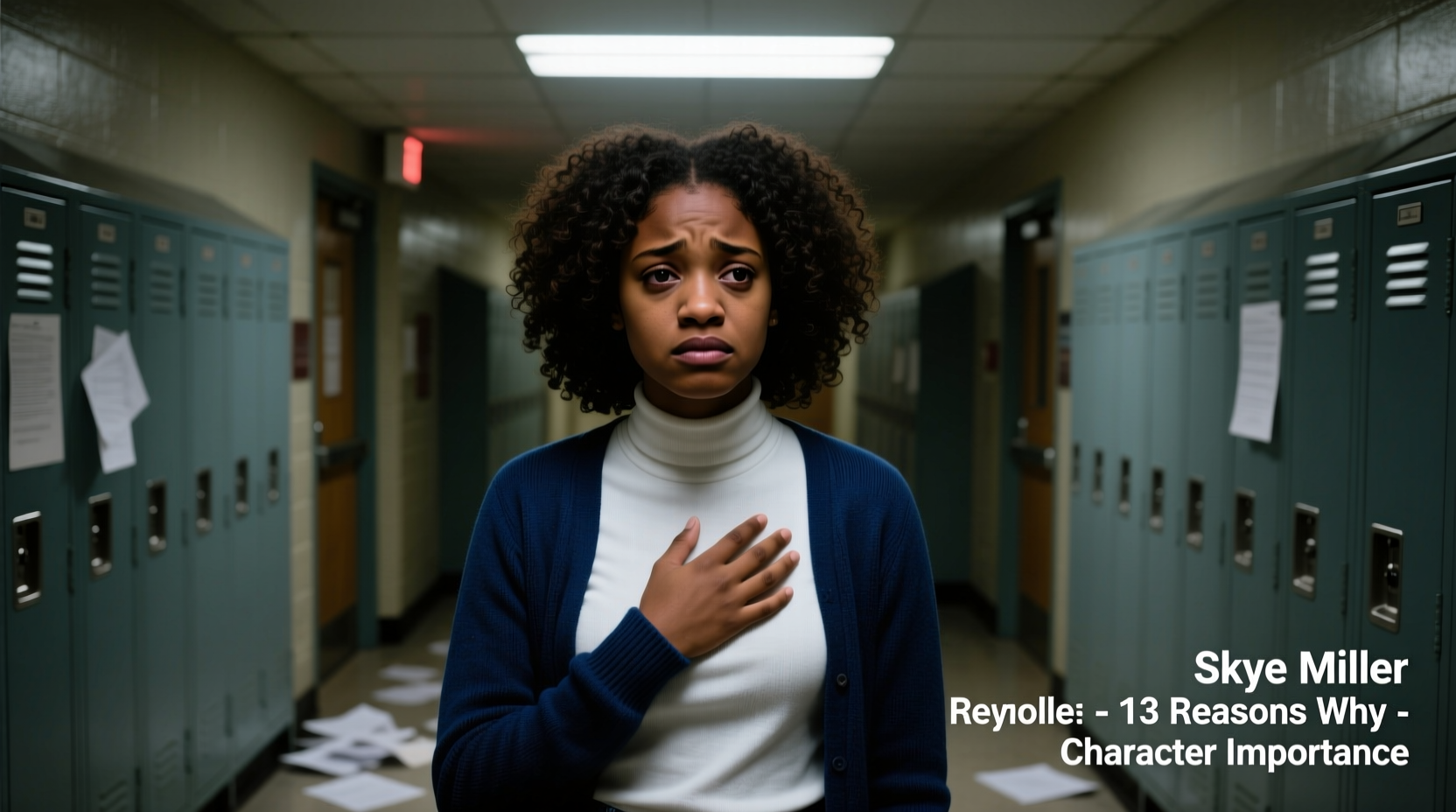
Skye enters the series as a background figure—intelligent, observant, and emotionally guarded. She wears a bandage on her wrist early in Season 1, a visual cue that sparks speculation among viewers. Though the show never explicitly confirms self-harm, the implication is clear: Skye carries her own invisible wounds. Unlike Hannah Baker, whose pain culminates in suicide and becomes the focal point of the narrative, Skye survives. She doesn’t vanish; she stays. And in doing so, she becomes a living testament to survival.
This contrast is intentional. Where Hannah’s story illustrates how isolation and systemic failure can lead to tragedy, Skye’s arc shows that healing is possible—even when it’s messy, slow, and non-linear. Her struggles are not dramatized for shock value. Instead, they’re presented with realism and dignity, making her one of the most authentic portrayals of mental health recovery in teen drama.
“Skye represents the quiet majority—the ones who don’t make headlines but fight their battles every day. Her presence reminds us that recovery isn’t always loud, but it’s no less significant.” — Dr. Lena Torres, Clinical Psychologist & Media Consultant
Emotional Counterbalance to Clay Jensen
Clay Jensen, the protagonist, is consumed by guilt, grief, and confusion after listening to Hannah’s tapes. He oscillates between anger, sorrow, and paralysis. In this emotional storm, Skye serves as a grounding force. Their relationship develops slowly, built on mutual understanding rather than romance alone. They recognize something in each other—a shared sense of being different, of carrying unseen burdens.
Their bond is not without complications. Clay often projects his feelings about Hannah onto Skye, struggling to see her as her own person. At times, he withdraws, overwhelmed by his internal chaos. Yet Skye remains patient, setting boundaries while still showing up. This dynamic underscores a crucial theme: healthy relationships require both vulnerability and respect for individuality.
Narrative Function: The Path Toward Healing
While many characters in *13 Reasons Why* represent various facets of trauma—bullying, sexual assault, substance abuse, parental neglect—Skye embodies the aftermath and the effort required to rebuild. She doesn’t have a redemption arc because she hasn’t done anything wrong. Instead, she has a recovery arc—one that mirrors real-life experiences of those dealing with depression and anxiety.
Her decision to cut her hair in Season 2 is more than a style change; it’s a symbolic act of reclaiming control. Similarly, her choice to stay in school despite personal pain reflects determination. Even her eventual departure from Liberty High isn’t framed as defeat, but as self-preservation—an acknowledgment that sometimes leaving is the bravest thing you can do.
In a show where so many storylines end in tragedy, Skye’s exit offers a rare note of cautious optimism. She doesn’t “save” Clay, nor does he “rescue” her. They help each other simply by being present, by choosing connection over isolation.
Key Contributions of Skye Miller to the Series’ Themes
| Theme | Skye’s Role | Episode Example |
|---|---|---|
| Mental Health Awareness | Represents ongoing struggle without sensationalism | S1E5 – First appearance with wrist bandage |
| Healing & Recovery | Demonstrates small steps toward emotional wellness | S2E8 – Opens up about therapy |
| Healthy Relationships | Models boundary-setting and communication | S2E10 – Confronts Clay about emotional unavailability |
| Survivor Identity | Stays alive and continues forward despite pain | S3 Finale – Final phone call with Clay |
Mini Case Study: The Cafeteria Scene (Season 2, Episode 8)
One of the most poignant moments involving Skye occurs during a cafeteria scene where she sits alone, visibly distressed. Clay notices and approaches, but instead of offering empty reassurance, he simply sits beside her in silence. No dialogue. Just presence.
This moment encapsulates the essence of Skye’s impact. She doesn’t need grand gestures or speeches. What she needs—and what many teens experiencing depression actually benefit from—is someone willing to sit with them in their pain without trying to fix it. Clay’s silent support marks a turning point in his own growth. He begins to understand that healing isn’t about solving everything, but about showing up.
This scene resonated deeply with viewers and mental health advocates alike. It demonstrated that emotional support doesn’t always require words. Sometimes, the most powerful statement is simply, “I’m here.”
Actionable Insights: Learning from Skye’s Approach to Mental Wellness
Skye’s character offers practical lessons for audiences navigating similar challenges. Below is a checklist inspired by her behavior throughout the series:
- Seek help when needed: Skye mentions attending therapy, normalizing professional mental health support.
- Set emotional boundaries: She ends interactions when Clay becomes emotionally unavailable, prioritizing her well-being.
- Allow yourself to change: Her haircut symbolizes transformation and self-redefinition.
- Don’t isolate completely: Despite her introversion, she maintains minimal connections, preventing total withdrawal.
- Recognize progress, not perfection: She stumbles, withdraws, and relapses—but keeps going.
Frequently Asked Questions
Did Skye Miller attempt suicide?
The show never explicitly confirms a suicide attempt, though the bandage on her wrist strongly suggests self-harm or a past crisis. The ambiguity is deliberate—writer Brian Yorkey stated in interviews that the intention was to reflect real-world situations where people carry scars without full disclosure. What matters most is that Skye seeks help and continues her journey toward healing.
Why did Skye leave the show?
Skye departs at the end of Season 3, moving away after being accepted into a specialized academic program. Her exit is bittersweet but empowering—it reinforces her identity as someone building a future, not defined by her past pain. Unlike many characters who leave due to death or scandal, Skye’s departure is framed as growth.
Was Skye a replacement for Hannah Baker?
No. While some fans interpreted her relationship with Clay as a “replacement,” the narrative deliberately avoids this framing. Skye repeatedly tells Clay she is not Hannah and refuses to be compared to her. The show uses this tension to critique the idea that one person can “fill” another’s emotional void. True healing comes from seeing people as individuals, not symbols.
Conclusion: Why Skye Miller Matters
In a series dominated by tragedy, Skye Miller stands out not because she shouts the loudest, but because she whispers hope. Her character reminds us that recovery isn’t linear, visible, or always celebrated—but it is possible. She doesn’t deliver monologues about mental health, yet her actions speak volumes about resilience, self-respect, and the courage it takes to keep going.
For viewers struggling with depression, anxiety, or feelings of invisibility, Skye offers something rare in television: a survivor who isn’t heroic, just human. And in that humanity lies her power.




 浙公网安备
33010002000092号
浙公网安备
33010002000092号 浙B2-20120091-4
Comments
No comments yet. Why don't you start the discussion?