
Traveling often means disrupted sleep schedules, noisy environments, and uncomfortable seating—especially on long-haul flights or overnight trains. Many travelers rely on audio and darkness to help them rest. Two popular solutions have emerged: sleep masks with built-in speakers and traditional earbuds. While both aim to enhance relaxation and block out disturbances, they differ significantly in comfort, functionality, and practicality. Choosing between them isn’t just about preference—it’s about understanding how each option supports your travel needs.
Understanding the Core Differences
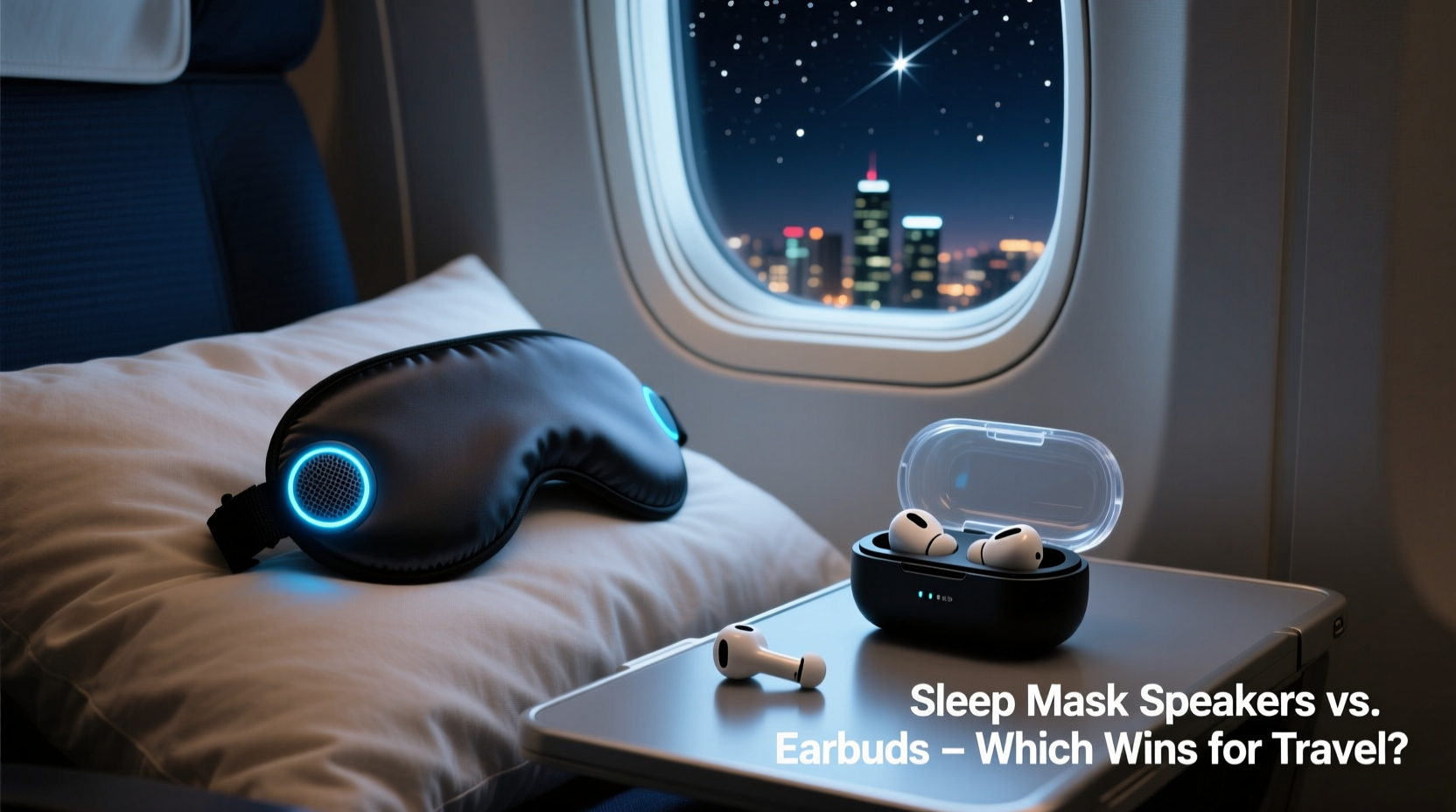
Sleep masks with embedded speakers combine light-blocking fabric with soft, flat audio drivers stitched into the sides. They’re designed to deliver ambient sounds, white noise, or calming music without anything touching your ears. In contrast, earbuds are compact audio devices inserted directly into the ear canal, offering high-fidelity sound and active noise cancellation in many models. The fundamental distinction lies in delivery: one uses open-air audio transmission over the ears, while the other delivers sound directly into the ear.
This difference affects everything from comfort during extended wear to situational awareness. For instance, someone sleeping upright on a plane might find earbuds painful after an hour due to pressure, while a speaker-equipped mask distributes weight evenly across the head. On the flip side, earbuds typically offer superior sound isolation and volume control—critical in loud terminals or shared accommodations.
Comfort and Wearability During Long Journeys
When traveling, especially by air, lying down isn't always possible. Most passengers sleep in seated positions, making head and neck comfort paramount. Earbuds can become uncomfortable when worn for hours. The constant pressure inside the ear canal leads to fatigue, soreness, or even temporary hearing dullness—a common complaint among frequent flyers.
Sleep masks with speakers eliminate this issue by avoiding direct ear contact. Instead, small flat transducers sit near the ears, projecting sound outward. Since there's no insertion, users report less irritation and greater freedom of movement. Additionally, these masks often use memory foam padding and adjustable straps, allowing customization for different head sizes.
However, not all speaker-integrated masks are created equal. Lower-quality models may place speakers too close to the eardrum or use stiff materials that press uncomfortably against the temples. High-end versions address this with directional audio technology, ensuring sound reaches only the intended ear without leakage or distortion.
Another advantage of speaker masks is compatibility with eyewear. Travelers who wear glasses won’t need to remove them before putting on the mask, unlike with most earbuds, where adjusting both glasses and ear tips can be cumbersome.
“Long-duration comfort is often overlooked in audio design. For travelers, minimizing physical strain should be as important as sound quality.” — Dr. Lena Torres, Sleep Ergonomics Researcher at the Institute for Human Factors
Sound Quality and Environmental Suitability
Earbuds win decisively in sound fidelity. Modern wireless earbuds support high-resolution codecs like aptX HD and LDAC, delivering rich bass, crisp highs, and immersive stereo imaging. Many also include active noise cancellation (ANC), which electronically reduces ambient noise such as airplane engines or chatter—making it easier to fall asleep without cranking up the volume.
In comparison, sleep masks with speakers generally produce lower audio resolution. Because the sound travels through air rather than being sealed in the ear canal, it lacks depth and clarity. Bass response is particularly weak, and higher volumes risk disturbing nearby passengers. Some users compensate by increasing volume, potentially harming hearing over time.
Yet, there are scenarios where speaker-based audio shines. In shared hotel rooms or bunk beds, playing sound through a mask keeps noise localized without requiring anyone else to wear headphones. It also allows partial environmental awareness—you can still hear announcements or alarms, reducing the risk of oversleeping. This makes speaker masks safer for solo travelers staying in hostels or unfamiliar locations.
Moreover, some advanced sleep masks now integrate bone conduction principles or directional waveguides to improve audio focus. These innovations narrow sound dispersion, enhancing privacy and efficiency without compromising comfort.
Comparison Table: Key Features at a Glance
| Feature | Sleep Masks with Speakers | Separate Earbuds |
|---|---|---|
| Comfort (Extended Use) | High – No ear insertion, even pressure distribution | Moderate – Can cause ear fatigue after 1–2 hours |
| Sound Quality | Low to Moderate – Limited bass, prone to leakage | High – Crisp audio, ANC available |
| Noise Isolation | Low – Relies on ambient blocking via fabric | High – Especially with ANC models |
| Portability | Moderate – Bulkier than earbuds | High – Compact charging cases fit in pockets |
| Situational Awareness | High – Still hear surroundings | Low – Especially with noise-canceling modes |
| Glasses Compatibility | Excellent – No interference | Poor – May dislodge earbuds when adjusting frames |
| Battery Life | 8–12 hours (mask + audio) | 4–8 hours (plus case recharges) |
Practical Considerations for Real-World Travel
Portability matters. Earbuds, especially true wireless models, come with slim charging cases that easily slip into a jacket pocket or carry-on pouch. They require minimal space and no special packing. Sleep masks, though foldable, take up more room and may need protection from crushing in luggage.
Charging logistics also vary. Most speaker-equipped masks use micro-USB or USB-C ports and last a full night on a single charge. But if you forget to recharge, you lose both darkness and audio. Earbuds offer modular power: even if the earbuds die, you can replace them with spares or use wired alternatives. Their cases provide multiple recharges, ideal for multi-day trips without consistent access to outlets.
Durability is another factor. Speaker masks contain delicate wiring woven into fabric. Frequent folding, washing, or rough handling can damage internal components. Earbuds, while fragile individually, are often built with water-resistant materials and shock-absorbing casings. Replacement costs tend to be lower for earbuds, as many brands sell individual units.
Mini Case Study: Overnight Flight from New York to Tokyo
Sophie, a freelance photographer, frequently flies long-haul routes for assignments. On a recent red-eye from JFK to Narita, she tested both options. She began with premium noise-canceling earbuds, which helped block engine noise and allowed her to watch a movie comfortably. However, after three hours, she developed ear pain and removed them to rest. Without audio, cabin lighting and conversations kept her awake.
Switching to a sleep mask with speakers, she found immediate relief. The mask blocked light effectively, and soft meditation music played gently through the side speakers. Though the sound wasn’t as immersive, it was sufficient for relaxation—and far more comfortable lying against the window. She fell asleep within 20 minutes and stayed rested for nearly five hours.
Her takeaway? Combining both tools strategically worked best: earbuds for entertainment during wakeful periods, and the speaker mask for actual sleep. She now packs both, using each for its strengths.
Step-by-Step Guide: Choosing the Right Option for Your Travel Style
- Assess your primary travel environment. Are you mostly on planes, trains, or buses? Airplanes favor noise cancellation; sleeper trains may benefit more from non-invasive audio.
- Evaluate your comfort thresholds. Do your ears hurt after wearing earbuds for an hour? If so, prioritize a speaker mask.
- Determine your audio needs. Need high-quality music or podcasts? Go for earbuds. Just want ambient noise or guided sleep stories? A mask may suffice.
- Consider battery and charging access. If you’ll lack outlets for days, choose the device with longer life or swappable power sources.
- Test before you fly. Try both options at home. Simulate travel conditions—sit upright, dim lights, play white noise—and see what helps you relax fastest.
- Plan for redundancy. Don’t rely solely on one gadget. Bring a secondary audio method in case of failure.
Frequently Asked Questions
Can I wash a sleep mask with built-in speakers?
Most models allow spot cleaning only. Never submerge them in water. Remove any detachable electronics first, and follow manufacturer instructions carefully. Regular cleaning extends lifespan and hygiene, especially when used across multiple trips.
Do speaker sleep masks disturb others nearby?
At low to moderate volumes, sound leakage is minimal due to directional speaker placement. However, in quiet spaces like libraries or shared rooms, others may hear faint audio. Using a pillow behind your head can further reduce sound projection.
Are earbuds safe to sleep in?
Occasional use is generally safe, but prolonged wear can lead to ear canal irritation, wax buildup, or even minor infections. Avoid sleeping with tightly sealed earbuds regularly. Opt for soft silicone tips and limit continuous use to under two hours when possible.
Final Recommendation: It Depends on Your Priorities
There’s no universal winner. For audiophiles and those flying in extremely noisy cabins, **separate earbuds—especially with ANC—are unmatched** in performance. They offer precision, personalization, and versatility beyond sleep, including calls, navigation, and entertainment.
But for comfort-focused travelers, light sleepers sensitive to touch, or those needing environmental awareness, **sleep masks with speakers provide a uniquely gentle solution**. They merge blackout functionality with soothing audio in a single, non-invasive package.
The smartest approach? Own both. Use earbuds when you're awake and engaged, then switch to a speaker mask when it’s time to truly rest. This hybrid strategy maximizes benefits while minimizing drawbacks.




 浙公网安备
33010002000092号
浙公网安备
33010002000092号 浙B2-20120091-4
Comments
No comments yet. Why don't you start the discussion?