
Five hours of sleep may feel manageable in the short term, but consistently falling short of the recommended 7–9 hours carries serious consequences. Cognitive performance declines, mood regulation suffers, and long-term risks for heart disease, diabetes, and depression increase. If you're regularly getting only five hours, it's not a badge of endurance—it's a warning signal. Understanding the root causes and implementing targeted changes is essential for restoring restful, restorative sleep.
Why You Might Be Sleeping Only 5 Hours
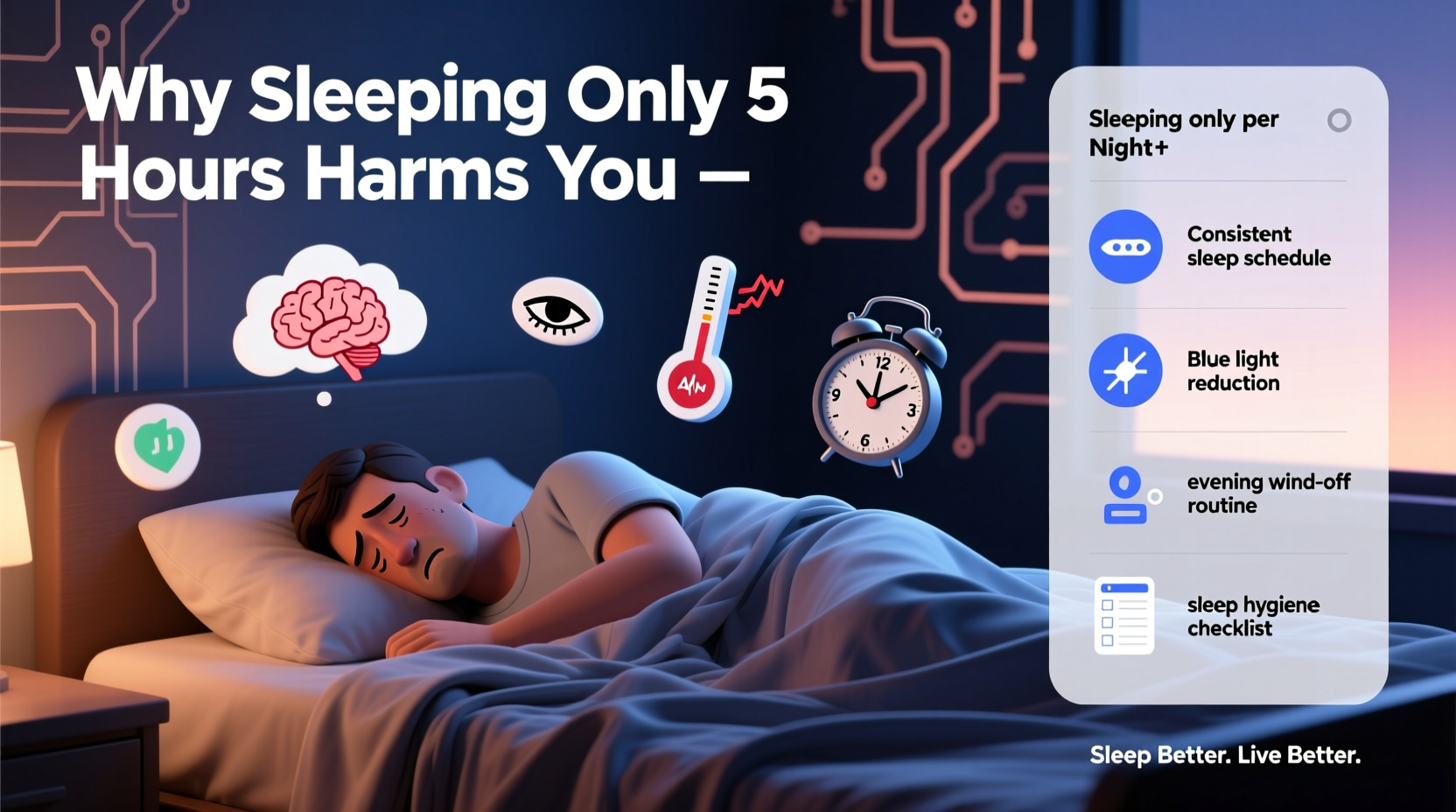
Sleep deprivation rarely stems from a single cause. More often, it’s the result of overlapping lifestyle, environmental, and physiological factors. Identifying which ones apply to you is the first step toward meaningful improvement.
- Lifestyle habits: Late-night screen use, irregular bedtimes, or consuming caffeine and alcohol close to bedtime disrupt natural sleep cycles.
- Work demands: Shift work, long commutes, or high-pressure jobs can compress available sleep time.
- Stress and anxiety: Racing thoughts, financial worries, or emotional strain activate the nervous system, making it difficult to fall or stay asleep.
- Medical conditions: Sleep apnea, restless legs syndrome, chronic pain, or hormonal imbalances like hyperthyroidism interfere with sleep continuity.
- Poor sleep environment: Noise, light, uncomfortable bedding, or room temperature extremes prevent deep, uninterrupted sleep.
Health Consequences of Chronic 5-Hour Sleep
The human body relies on consistent, quality sleep to regulate hormones, repair tissues, consolidate memories, and support immune function. When sleep drops below six hours nightly, these systems begin to falter.
Research from the American Academy of Sleep Medicine shows that people who sleep less than six hours per night are 12% more likely to die prematurely from all causes. Short sleep duration is linked to:
- Impaired focus, slower reaction times, and reduced problem-solving ability
- Increased appetite due to disrupted ghrelin and leptin levels, leading to weight gain
- Elevated cortisol (stress hormone), contributing to hypertension and insulin resistance
- Weakened immunity, increasing susceptibility to infections
- Higher risk of depression and anxiety disorders
“Even modest sleep restriction over just one week significantly impairs glucose metabolism and increases inflammatory markers.” — Dr. Matthew Walker, neuroscientist and author of *Why We Sleep*
What You Can Do: A Step-by-Step Guide to Better Sleep
Improving sleep isn’t about drastic overnight changes. It’s about building sustainable habits that align with your body’s natural rhythms. Follow this practical timeline to gradually extend your sleep duration and quality.
- Week 1: Establish a fixed wake-up time
Choose a consistent wake-up time—even on weekends—and stick to it. This anchors your circadian rhythm, making it easier to feel sleepy at night. - Week 2: Wind down with a pre-sleep routine
Begin a 30–60 minute wind-down ritual: dim lights, avoid screens, and engage in calming activities like reading, stretching, or journaling. - Week 3: Optimize your bedroom environment
Ensure your room is cool (60–67°F), dark, and quiet. Use blackout curtains, earplugs, or a white noise machine if needed. - Week 4: Limit stimulants and heavy meals
Avoid caffeine after 2 p.m. and large meals within three hours of bedtime. Alcohol may make you drowsy but fragments sleep later in the night. - Week 5: Track progress and adjust
Use a sleep diary or wearable tracker to monitor total sleep time and quality. Adjust bedtime earlier in 15-minute increments until you reach 7+ hours.
Common Mistakes That Keep You at 5 Hours
Even with good intentions, certain behaviors sabotage sleep efforts. Recognizing these pitfalls helps you avoid them.
| Mistake | Why It’s Harmful | Better Alternative |
|---|---|---|
| Using phones or tablets in bed | Blue light suppresses melatonin, delaying sleep onset | Read a physical book or listen to a podcast off-screen |
| Hitting snooze multiple times | Fragmented wake-ups increase grogginess and confuse circadian rhythm | Place alarm across the room and rise on first ring |
| Napping late in the day | Reduces sleep pressure at night, making it harder to fall asleep | Limits naps to 20 minutes before 3 p.m. |
| Trying too hard to sleep | Creates performance anxiety, keeping mind active | If awake >20 mins, get up and do something calm until drowsy |
Real Example: How Sarah Increased Her Sleep from 5 to 7.5 Hours
Sarah, a 34-year-old marketing manager, routinely slept five hours due to late-night emails and anxiety about work. She felt exhausted by noon and relied on coffee and sugar to stay alert. After tracking her habits, she realized her phone use in bed was a major culprit.
She implemented a no-screens-after-10 p.m. rule and began journaling before bed to process stress. Within two weeks, she fell asleep faster. She then shifted her wake-up time from 6:30 a.m. to 6:00 a.m. and adjusted bedtime accordingly. Over a month, her average sleep increased to 7.5 hours. Her focus improved, afternoon crashes disappeared, and she reported feeling “more like myself.”
Actionable Checklist to Extend Your Sleep
Use this checklist weekly to reinforce healthy sleep behaviors:
- ✅ Set and maintain a consistent wake-up time
- ✅ Turn off screens at least 60 minutes before bed
- ✅ Avoid caffeine after 2 p.m.
- ✅ Keep bedroom cool, dark, and quiet
- ✅ Practice a relaxing pre-sleep routine (e.g., reading, breathing)
- ✅ Limit naps to 20 minutes and avoid after 3 p.m.
- ✅ Get morning sunlight exposure to strengthen circadian rhythm
- ✅ Write down worries before bed to reduce mental clutter
Frequently Asked Questions
Can you survive long-term on 5 hours of sleep?
No. While some individuals claim to function on minimal sleep, research shows nearly everyone needs 7+ hours for optimal health. Genetic variants allowing true short sleep are extremely rare. Chronic 5-hour sleep increases risks for cardiovascular disease, cognitive decline, and metabolic disorders.
Is it better to get 5 hours every night or vary between 5 and 8?
Consistency matters as much as duration. Irregular sleep patterns confuse your internal clock and reduce sleep quality. However, averaging closer to 7–8 hours—even if some nights are shorter—is healthier than rigidly sticking to 5 every night. Prioritize both quantity and regularity.
What should I do if I can’t fall asleep even when I try?
Stay out of bed if you’re not sleepy. Go to another room and do something low-stimulation—like reading under dim light—until you feel drowsy. Lying in bed awake reinforces anxiety around sleep. The goal is to associate your bed with actual sleep, not frustration.
Take Control of Your Sleep and Health
Sleeping only five hours is not sustainable, nor is it a sign of productivity. It’s a signal that your body and mind are being deprived of essential recovery time. The good news is that most sleep issues are modifiable with deliberate, consistent effort. Start small: fix your wake-up time, eliminate one nighttime habit, and create a sleep-supportive environment. Each change builds momentum toward deeper, longer rest.




 浙公网安备
33010002000092号
浙公网安备
33010002000092号 浙B2-20120091-4
Comments
No comments yet. Why don't you start the discussion?