
The world of footwear is cyclical, where trends resurface with subtle reinvention. Few debates in contemporary fashion spark as much quiet controversy as the one between slingbacks and mules. Once considered interchangeable, these two backless shoe styles have diverged in perception, styling, and cultural relevance. With slingbacks dominating red carpets and editorial spreads, many wonder: are mules fading into obsolescence, or is this merely a pendulum swing in favor of their more structured cousin?
To understand the current state of these shoes, it’s essential to examine not only design differences but also how they function in modern wardrobes, workplace environments, and social settings. This isn’t just about aesthetics—it’s about practicality, identity, and the subtle signals our footwear sends.
Defining the Difference: Slingbacks vs Mules
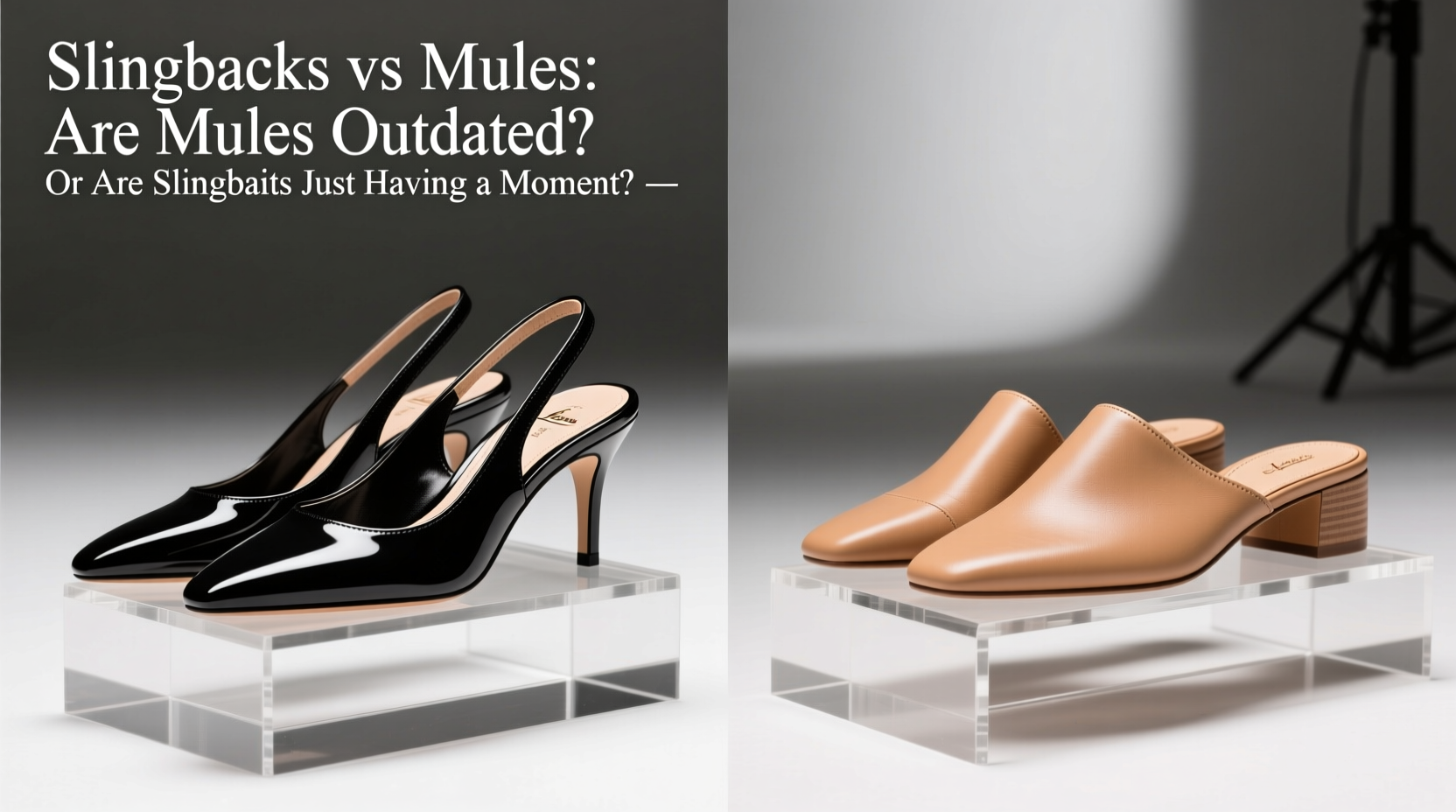
At first glance, both slingbacks and mules appear to be open-back shoes—minimalist, slip-on, and often heel-accentuated. However, their structural distinctions shape their comfort, stability, and versatility.
| Feature | Slingback | Mule |
|---|---|---|
| Back Design | Narrow strap across the heel, anchored at the sides | Completely open back, no strap |
| Security on Foot | High – strap keeps foot secured | Variable – depends on fit and sole shape |
| Heel Types | Block, kitten, stiletto, or flat | Often chunky block or platform; can be flat or high |
| Formality Range | Broad – from office to evening | Tends toward casual or bold statement looks |
| Fashion Era Peaks | 1950s, 1990s, 2020s revival | 1970s, 2010s, early 2020s |
The defining feature of a slingback is its adjustable or fixed strap that wraps around the back of the heel, offering support without enclosing the ankle. This makes it ideal for walking, standing, and professional environments. Mules, by contrast, rely entirely on the fit of the footbed and the shape of the sole to stay on the foot. Their lack of fastening gives them an effortless, sometimes rebellious air—but also makes them less stable during prolonged wear.
The Cultural Resurgence of Slingbacks
Slingbacks have re-entered mainstream fashion with remarkable force. Designers like The Row, Bottega Veneta, and Gucci have championed refined slingbacks with square toes, modest heels, and buttery leathers—elevating them beyond retro nostalgia into symbols of quiet luxury.
This resurgence aligns with broader shifts in consumer values. In an era defined by “quiet luxury” and post-pandemic professionalism, slingbacks offer a balance of polish and ease. They pair effortlessly with tailored trousers, midi skirts, and even cropped denim—making them adaptable across dress codes.
Moreover, the slingback’s structure appeals to those prioritizing ergonomics. Unlike mules, which can encourage toe-gripping to keep the shoe in place—a contributor to foot fatigue—slingbacks distribute pressure more evenly. Podiatrists often recommend them for long-day wear in comparison to fully open-back styles.
“The slingback’s comeback reflects a desire for intentionality. It’s not just a shoe—it’s a signal of control, precision, and understated confidence.” — Clara Nguyen, Fashion Historian & Curator at the Museum of Style Evolution
Are Mules Outdated? Debunking the Myth
To declare mules outdated would ignore their enduring presence across cultures and contexts. While their peak dominance in Western fashion may have cooled since the mid-2010s, mules remain relevant in specific niches: avant-garde fashion, gender-fluid styling, and home-to-street transitions.
Mules originated centuries ago in Norway as clog-like house shoes, later adopted by French royalty and eventually reinterpreted by Yves Saint Laurent in the 1960s. Their inherent informality gives them a democratic quality—they’re worn by artists, executives in relaxed offices, and fashion icons alike.
Rather than being outdated, mules are evolving. Today’s iterations include orthopedic-friendly designs with cushioned soles, sustainable materials like mushroom leather, and unisex silhouettes. Brands such as Axel Arigato and Rothy’s have reimagined mules for urban mobility, blending sneaker comfort with minimalist aesthetics.
The real issue isn’t obsolescence—it’s misapplication. Wearing flimsy, poorly fitted mules for all-day use sets them up for failure. But when chosen thoughtfully, mules serve a vital role in a flexible wardrobe.
Mini Case Study: Emma, Creative Director, London
Emma relied heavily on pointed-toe mules during her commute-heavy job in 2019. By 2022, she developed persistent Achilles discomfort. After consulting a podiatrist, she switched to structured slingbacks with padded collars. “I didn’t realize how much I was clenching my toes just to keep my shoes on,” she says. “Now I reserve mules for short outings or days when I’m mostly seated. Slingbacks became my workhorse—and surprisingly, they feel more modern.”
How to Choose Between Them: A Practical Guide
Selecting the right shoe shouldn’t hinge on trend cycles alone. Consider your lifestyle, environment, and personal comfort. Here’s a step-by-step decision framework:
- Assess your daily movement: Do you walk more than a mile per day? Opt for slingbacks or supportive mules with a heel cup.
- Evaluate your workplace dress code: Conservative offices favor slingbacks; creative industries may welcome bold mule statements.
- Consider heel height and foot shape: High arches may find mules unstable; wider feet benefit from slingback adjustability.
- Test the grip: Walk on a smooth surface. If the shoe slips prematurely, it’s not suitable for active use.
- Match to your wardrobe: Sleek slingbacks complement tailored pieces; boxy mules enhance relaxed, layered looks.
Checklist: Building a Timeless Backless Shoe Rotation
- ✅ One pair of black leather slingbacks (kitten or low block heel) for work and formal events
- ✅ One neutral-toned mule (taupe, beige, or gray) with a cushioned sole for weekend errands
- ✅ One statement slingback (embellished, metallic, or bold color) for evening wear
- ✅ One oversized sole mule for seasonal fashion layering (e.g., with socks and wide-leg pants)
- ✅ Rotate regularly to prevent overuse and material stress
FAQ: Slingbacks vs Mules
Can mules be professional?
Yes—if they’re well-made, closed-toe, and paired with appropriate attire. A polished leather mule with a moderate heel can work in business-casual environments, especially if the back is snug-fitting. Avoid slouchy or slide-style mules in formal settings.
Why do slingbacks feel more secure?
The strap anchors the heel, reducing reliance on toe flexion to keep the shoe in place. This minimizes muscle strain and allows for natural gait, particularly important during extended wear.
Are mules coming back in 2024?
They’re not “coming back”—they never left. However, their role has shifted. Expect to see mules reinterpreted through sustainability, inclusivity (wider widths), and hybrid engineering rather than mass-market trend dominance.
Conclusion: It’s Not About Replacement—It’s About Role
The narrative that slingbacks are replacing mules misunderstands the dynamics of fashion evolution. Trends don’t erase—they redistribute relevance. Slingbacks are currently favored because they align with current ideals of elegance, functionality, and restrained sophistication. Mules, meanwhile, occupy a different lane: one of expressive ease, gender neutrality, and domestic-chic appeal.
Rather than choosing sides, build a shoe collection that reflects range. Let slingbacks anchor your polished moments. Let mules embody your off-duty creativity. Both have earned their place—not as rivals, but as complementary tools in the language of personal style.




 浙公网安备
33010002000092号
浙公网安备
33010002000092号 浙B2-20120091-4
Comments
No comments yet. Why don't you start the discussion?