
In modern office environments where style meets functionality, the choice of dress can subtly influence both confidence and professionalism. Among the most popular options are slip dresses and bodycon dresses—both sleek, versatile, and capable of transitioning from day to night. But when it comes to layering under a tailored blazer for work, one may outperform the other in terms of comfort, silhouette, and overall polish.
This article dives deep into the structural, stylistic, and practical differences between slip and bodycon dresses to determine which is truly easier—and more effective—to wear under a blazer in a professional setting. We’ll examine fabric behavior, fit dynamics, ease of movement, and long-term wearability, supported by real-world insights and expert perspectives.
Fabric & Structure: The Foundation of Layering Success
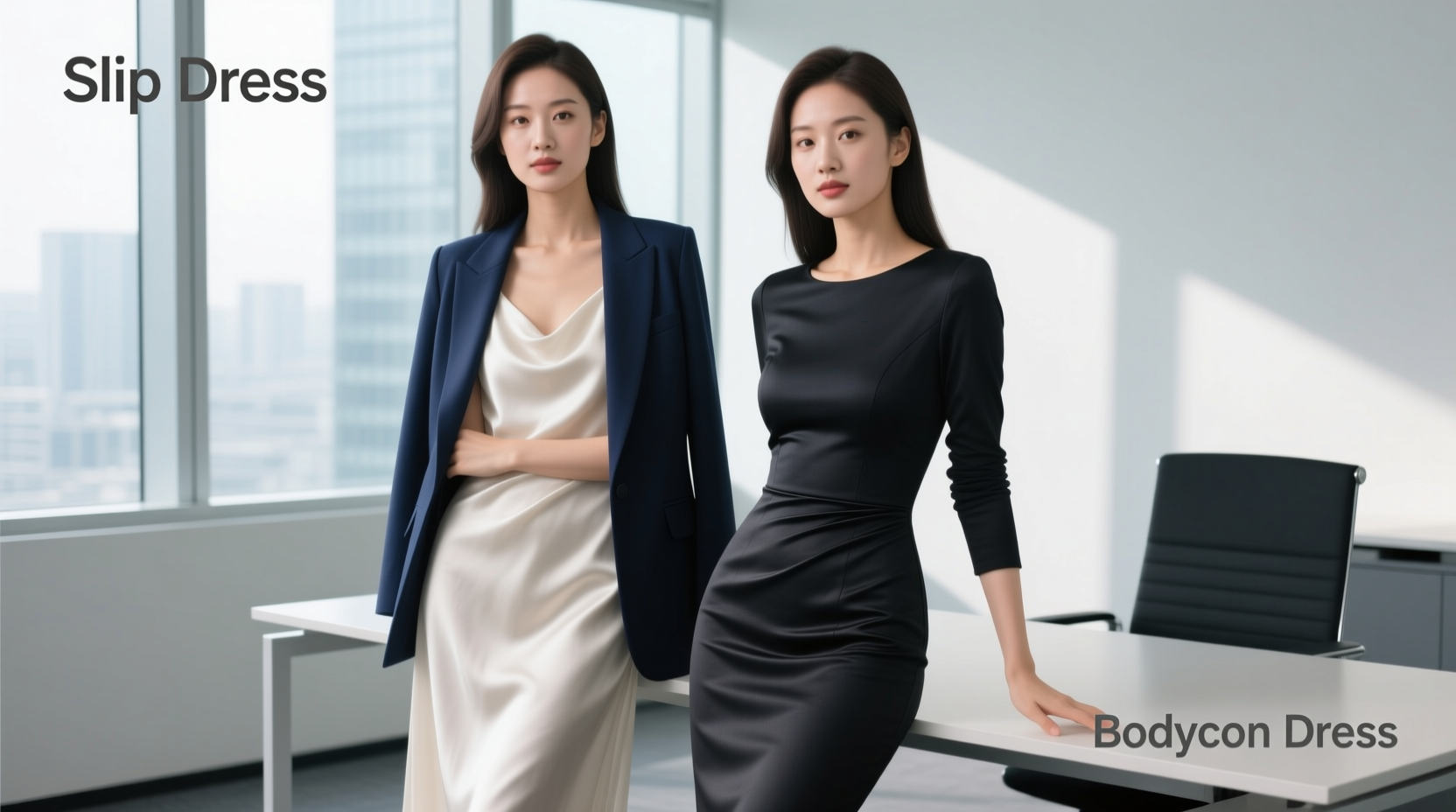
The success of any layered outfit begins with the base garment’s construction. Slip dresses and bodycon dresses differ fundamentally in their design philosophy, which directly impacts how they interact with outer layers like blazers.
Slip dresses are typically cut from fluid fabrics such as silk, satin, rayon, or lightweight polyester blends. They feature minimal structure, often relying on bias cuts that drape softly over the body. Their seams are clean, and they usually lack internal boning or heavy linings. This makes them inherently smooth and low-bulk—ideal for slipping under structured outerwear without creating unwanted volume.
In contrast, bodycon dresses are designed to hug the body tightly, often constructed from stretchy knits containing spandex or elastane. These materials provide compression and shape retention but add thickness and resistance when paired with a blazer. Because bodycon dresses are form-fitting by nature, they can create visible tension lines under a jacket, especially across the shoulders, back, and hips.
The inherent flexibility of slip dresses allows them to conform naturally to the body while maintaining a flat profile beneath a blazer. Bodycons, while flattering on their own, often fight against the rigid lines of a structured jacket, leading to puckering, pulling, or discomfort during prolonged sitting or movement.
Fit & Silhouette: How Each Dress Interacts with a Blazer
A well-layered outfit should enhance—not compete with—the wearer’s shape. Understanding how each dress type interacts with a blazer’s cut is essential for achieving a polished look.
Slip dresses typically follow a straight or slightly A-line silhouette, depending on length. Even those with slight curves maintain a relaxed fit that doesn’t cling aggressively. When worn under a blazer, the result is a streamlined, elongated torso line. The soft drape complements the sharpness of the blazer, creating a balanced contrast between fluidity and structure.
Bodycon dresses, however, emphasize every contour. While this can be empowering in standalone settings, it becomes problematic under a blazer. The tight fit causes the fabric to stretch taut, making any imperfections in tailoring immediately noticeable. For example, if the blazer sleeves are slightly short, the stretched sleeve of the bodycon may ride up, exposing skin unflatteringly. Similarly, seated positions can cause the dress to bunch at the waist or thighs, distorting the intended line of the ensemble.
“Layering is about harmony, not competition. A base layer should support the outer piece, not dominate it.” — Lena Patel, Fashion Stylist & Corporate Wardrobe Consultant
Moreover, bodycon dresses often require precise sizing. Even a half-size mismatch can lead to bulging at the sides or underarms when covered by a blazer—issues rarely seen with the forgiving nature of slip dresses.
Comfort & Practicality During the Workday
Professional attire must withstand the demands of a full workday: meetings, commuting, typing, and sitting for extended periods. Here, comfort becomes non-negotiable.
Slip dresses excel in breathability and freedom of movement. Their loose-to-fitted-but-not-restrictive design allows for natural shifts in posture without strain. Sitting at a desk does not pull the hem upward or compress the midsection. Additionally, the absence of elasticized fabric means no digging waistbands or constriction after hours of wear.
Bodycon dresses, due to their reliance on stretch materials, often feel supportive initially but can become fatiguing over time. The constant pressure from spandex-based knits may lead to discomfort, particularly around the waist, hips, and upper thighs. When combined with a blazer—which adds its own weight and restriction—the cumulative effect can make the wearer feel boxed in.
Another consideration is temperature regulation. Slip dresses made from natural fibers like silk or TENCEL™ allow better airflow than synthetic-heavy bodycon knits, which tend to trap heat and moisture. In air-conditioned offices or warmer climates, this difference significantly affects all-day comfort.
Checklist: Evaluating Layering-Friendly Dresses for Work
- ✅ Fabric is smooth and low-bulk (e.g., satin, viscose, crepe)
- ✅ No visible seams or textures that show through blazers
- ✅ Hemline falls at knee or midi length for professional appropriateness
- ✅ Neckline complements blazer lapels (crew, V-neck, or square neck preferred)
- ✅ Minimal sheerness—either lined or suitable for nude undergarments
- ✅ Allows full range of motion when seated or reaching
Styling Versatility Across Office Environments
Workplace dress codes vary widely—from conservative corporate offices to creative agencies with relaxed policies. The adaptability of a dress under a blazer determines its long-term utility in a professional wardrobe.
Slip dresses offer superior versatility. A black or navy silk slip dress can be dressed up with heels and jewelry for client presentations or simplified with flats and minimal accessories for casual Fridays. Its understated elegance pairs seamlessly with double-breasted, single-button, cropped, or oversized blazers.
Bodycon dresses, while bold and fashion-forward, risk appearing too sensual in traditional office settings—even when covered by a blazer. Their tight fit can still telegraph a provocative silhouette, potentially undermining perceptions of professionalism, especially in industries like law, finance, or government.
Furthermore, slip dresses can easily transition into evening wear by simply removing the blazer and swapping shoes. Bodycon dresses, already at peak formality when worn alone, leave less room for transformation without changing the entire outfit.
Table: Slip Dresses vs Bodycon Dresses – Layering Comparison
| Feature | Slip Dress | Bodycon Dress |
|---|---|---|
| Fabric Bulk | Low – smooth, thin materials | Medium-High – thicker knits with stretch |
| Blazer Compatibility | Excellent – lies flat, no pulling | Fair – may cause tension lines |
| Comfort Over Time | High – breathable, unrestricted | Moderate – can feel restrictive |
| Professional Perception | Polished, elegant, neutral | Risk of appearing too form-fitting |
| Versatility | High – works across settings | Moderate – best for fashion-forward offices |
| Movement Ease | Unrestricted | Limited by tight fit |
Real-World Example: Two Professionals, Two Approaches
Sophie, a marketing manager at a financial firm, used to rely on bodycon dresses paired with blazers for her weekly board meetings. She appreciated their figure-flattering fit and believed they projected confidence. However, after several complaints about overheating and difficulty taking notes comfortably while seated, she reconsidered her choices.
She switched to a collection of matte-finish slip dresses in neutral tones—charcoal, taupe, and deep emerald—each lined for opacity. Paired with structured wool-blend blazers, the new outfits maintained a strong professional presence while allowing her to move freely and stay cool throughout long meetings.
In contrast, Maya, a graphic designer at a creative agency, thrives in expressive clothing. She wears bodycon dresses regularly under cropped denim or leather jackets. In her environment, the bold silhouettes are celebrated. Yet even Maya admits that during formal client calls requiring traditional suiting, she opts for looser bases—confirming that context plays a crucial role in determining what works.
This illustrates a key truth: the “better” option depends not only on physical attributes but also on workplace culture and personal priorities.
Step-by-Step Guide: Building a Blazer-Friendly Work Look
Follow this sequence to ensure your dress-and-blazer combination remains functional, flattering, and appropriate:
- Choose the right dress base: Select a slip dress in a medium-weight, non-sheer fabric with a modest neckline.
- Test the fit: Put on the dress and sit down. Ensure the hem stays at or below the knee and there’s no riding up or tightness.
- Add the blazer: Button it and check for pulling across the back or shoulders. Raise your arms slightly to test mobility.
- Assess visibility: Make sure no dress seams, zippers, or texture contrasts disrupt the blazer’s clean lines.
- Final walk test: Move around for five minutes—walk, sit, stand, reach—to confirm all-day comfort.
Frequently Asked Questions
Can I wear a bodycon dress under a blazer in a corporate job?
Yes, but with caution. Choose bodycon styles in darker, matte colors and pair them with longer blazers that cover the hip area. Avoid ultra-tight fits and opt for higher necklines to maintain professionalism. However, in highly conservative fields, a slip dress remains the safer choice.
Are slip dresses too casual for serious office environments?
Not if styled correctly. A silk or crepe slip dress in navy, black, or gray, when paired with a structured blazer, pointed flats, and minimal jewelry, projects sophistication. Avoid lace trims or excessively shiny finishes to keep the look office-appropriate.
What kind of shoes work best with slip dresses under blazers?
Pumps, loafers, or ankle boots with moderate heels (1.5–3 inches) balance the softness of the slip dress with the authority of the blazer. Avoid strappy sandals unless the office permits more relaxed footwear.
Conclusion: Prioritizing Function Without Sacrificing Style
When evaluating slip dresses versus bodycon dresses for layering under blazers in a work context, the evidence points clearly toward slip dresses as the more practical, comfortable, and professionally adaptable option. Their smooth lines, breathable fabrics, and compatibility with structured outerwear make them ideal foundation pieces for a polished office wardrobe.
Bodycon dresses have their place—especially in dynamic, fashion-forward workplaces—but they come with limitations that can hinder both comfort and perception in traditional settings. For professionals seeking longevity, ease, and elegance in their daily attire, the slip dress emerges as the superior base layer.
Ultimately, dressing for work isn’t just about looking good—it’s about feeling capable, confident, and unrestricted in your role. By choosing garments that support rather than constrain, you invest not only in your appearance but in your performance.




 浙公网安备
33010002000092号
浙公网安备
33010002000092号 浙B2-20120091-4
Comments
No comments yet. Why don't you start the discussion?