
For families juggling work, school, and extracurriculars, dinner is often the most stressful meal of the day. The pressure to serve something nutritious, satisfying, and quick can lead to takeout or frozen meals—unless you have the right appliance on your countertop. Two of the most popular tools for hands-off cooking are the slow cooker and the Instant Pot. Both promise to simplify weeknight dinners, but they operate very differently and deliver distinct results. Understanding their strengths, limitations, and real-world performance can help you decide which one—or whether both—belongs in your kitchen.
How They Work: Fundamental Differences
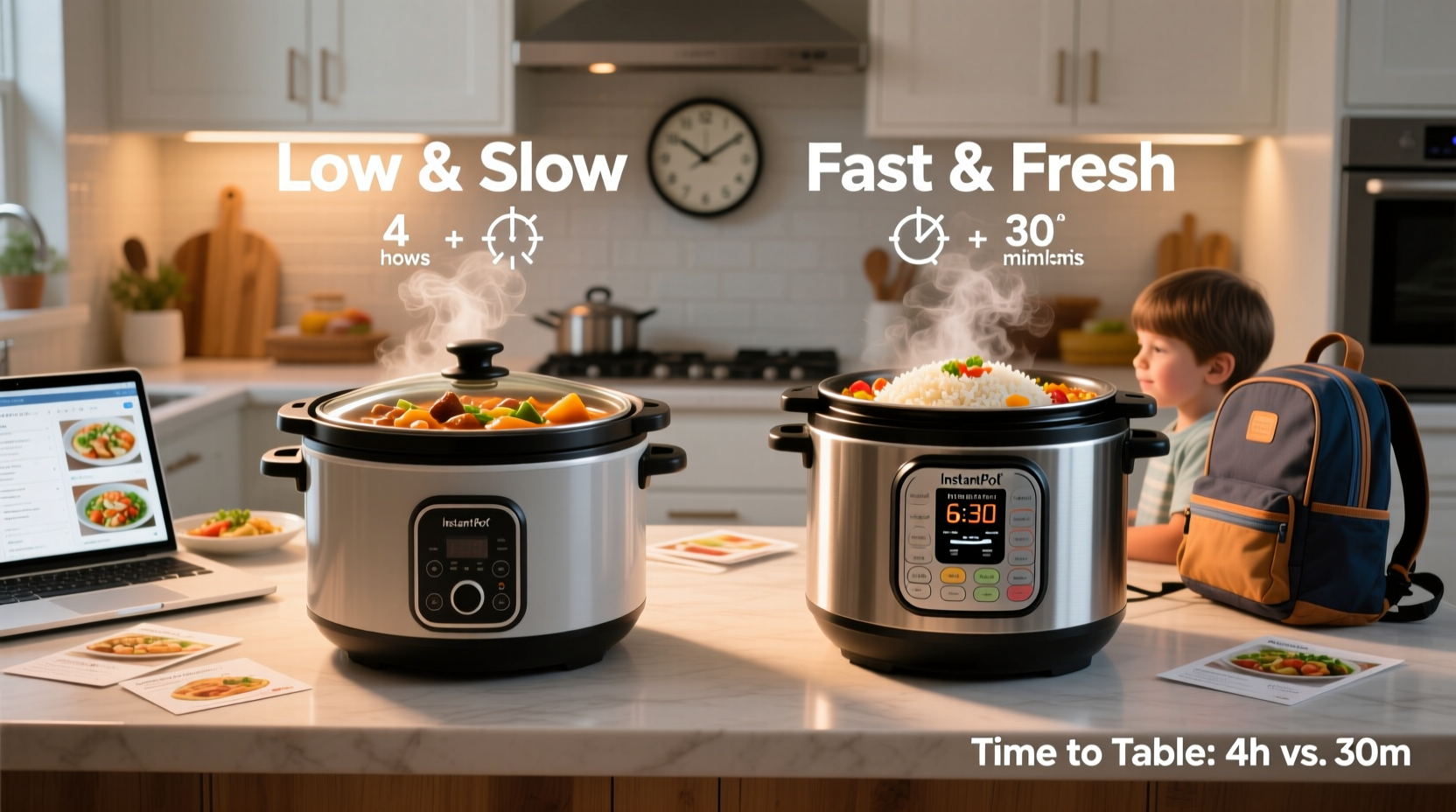
The core distinction between a slow cooker and an Instant Pot lies in their cooking methods. A traditional slow cooker uses low, steady heat over several hours to gently break down ingredients. It operates at temperatures typically between 170°F and 280°F, depending on the setting (low or high), and relies on convection within a sealed ceramic or metal insert. This makes it ideal for dishes that benefit from long, slow simmering—like stews, pot roasts, and braised meats.
In contrast, the Instant Pot is a multi-functional electric pressure cooker. It traps steam to increase internal pressure, raising the boiling point of water and dramatically accelerating cooking time. Most models also include settings for sautéing, steaming, yogurt-making, and even air frying (in select versions). Because it builds pressure, the Instant Pot can cook foods up to 70% faster than conventional methods. For example, dried beans that take 8–10 hours in a slow cooker can be ready in under an hour in an Instant Pot.
“Time is the biggest constraint for modern home cooks. The Instant Pot addresses that with precision and speed, while the slow cooker wins on simplicity and set-it-forget-it reliability.” — Chef Maria Tran, Culinary Instructor and Meal Prep Consultant
Convenience Compared: What Fits a Busy Schedule?
When evaluating convenience, consider not just prep time, but also timing flexibility, monitoring needs, and cleanup.
Slow Cooker: Excels in “dump-and-go” ease. You can assemble ingredients in the morning, turn it on, and return hours later to a fully cooked meal. There’s minimal supervision required, making it ideal for those who leave the house early or want dinner ready when they walk in the door. However, this requires planning ahead—often 6 to 8 hours—and doesn’t accommodate last-minute decisions.
Instant Pot: Offers same-day flexibility. You can decide at 5 PM that you want chili, and have it ready by 6:30. Its rapid cooking cycle eliminates the need for advance prep. But it does require more attention: you must monitor pressurization and release times, and some recipes involve multiple steps (e.g., sauté first, then pressure cook). While faster, it isn’t entirely hands-off during active cooking.
Cooking Results: Flavor, Texture, and Nutritional Impact
Cooking method directly affects food quality. Let’s examine how each appliance performs across key metrics.
Flavor Development
Slow cooking allows flavors to meld gradually. Spices, herbs, and liquids penetrate proteins and vegetables over time, creating deep, complex profiles. Dishes like beef bourguignon or pulled pork achieve a richness that’s hard to replicate quickly.
The Instant Pot, while efficient, compresses this process. Some users report a slightly metallic or “steamed” taste in certain dishes, particularly if natural pressure release isn’t used. However, techniques like deglazing after sautéing and finishing with fresh herbs can restore depth.
Texture Control
Tenderizing tough cuts of meat is where both appliances shine—but differently. The slow cooker gently breaks down collagen over time, yielding melt-in-your-mouth textures. The Instant Pot achieves similar tenderness rapidly, but overcooking by even a few minutes can result in dryness or mushiness, especially with chicken or vegetables.
For grains and legumes, the Instant Pot offers superior consistency. Rice, quinoa, and beans cook evenly and don’t risk scorching, unlike stovetop methods. Slow cookers can struggle with these, often producing uneven or overly soft results.
Nutrient Retention
Pressure cooking preserves more water-soluble vitamins (like vitamin C and B-complex) compared to boiling, due to shorter exposure and less liquid use. Slow cooking, while gentle, subjects food to heat for longer durations, which may degrade some nutrients. However, both methods retain more nutrients than frying or grilling.
Side-by-Side Comparison: Key Features at a Glance
| Feature | Slow Cooker | Instant Pot |
|---|---|---|
| Average Cooking Time | 4–10 hours | 10–60 minutes |
| Prep Flexibility | Must prep hours in advance | Can start anytime |
| Hands-On Monitoring | Minimal | Moderate (pressure build/release) |
| Versatility | Limited (simmer only) | High (pressure, sauté, steam, yogurt, etc.) |
| Best For | Pot roasts, soups, dips, oatmeal | Beans, rice, weeknight curries, quick stews |
| Cleanup Difficulty | Easy (removable pot) | Moderate (seal, lid parts require attention) |
| Energy Efficiency | Lower power, longer runtime | Higher power, shorter runtime |
Real-World Example: A Week of Family Dinners
Sarah, a marketing manager and mother of two, tested both appliances over a two-week period. During week one, she relied solely on her slow cooker. She prepped breakfast the night before, set the cooker at 6 AM, and returned to pulled chicken tacos at 6 PM. The meal was flavorful and well-received, but she found herself stuck with leftovers all week because the entire batch cooked at once.
In week two, she switched to the Instant Pot. On Monday, she made lentil soup in 35 minutes after deciding at 5:30 PM. Tuesday featured risotto in 22 minutes—no stirring. Wednesday’s beef stew took 45 minutes total, including searing. She appreciated the ability to cook smaller portions and adapt meals based on appetite or schedule changes. The only downside? One evening, she forgot to release pressure manually and delayed dinner by 15 minutes.
Her conclusion: “The slow cooker is great when I know exactly what we’re eating days ahead. But the Instant Pot saved me on chaotic nights when plans changed or I didn’t feel like cooking at all.”
Which Should You Choose? A Practical Checklist
Use this checklist to determine the best fit for your lifestyle:
- ✅ Do you often leave the house early and want dinner ready when you return? → Slow cooker
- ✅ Do you frequently make last-minute dinner decisions? → Instant Pot
- ✅ Do you cook large batches for freezing? → Both work, but slow cooker is simpler
- ✅ Do you want one appliance for rice, yogurt, and steaming veggies? → Instant Pot
- ✅ Are you uncomfortable with pressure systems or steam release? → Slow cooker
- ✅ Do you value countertop space and minimal accessories? → Slow cooker
- ✅ Do you cook dried beans often? → Instant Pot saves 6+ hours
Getting the Best Results: Pro Tips for Each Appliance
Maximizing Your Slow Cooker
- Brown meat first: Searing ground beef or searing roasts before adding them enhances flavor through the Maillard reaction.
- Layer wisely: Place root vegetables at the bottom, where heat is strongest, and delicate items like peas or pasta in the last hour.
- Avoid lifting the lid: Every peek releases heat and can add 15–20 minutes to cooking time.
- Use less liquid: Since evaporation is minimal, reduce broth or water by about 25% compared to stovetop recipes.
Mastering the Instant Pot
- Always deglaze: After sautéing, add a splash of wine, broth, or water and scrape the bottom to prevent burn errors.
- Understand pressure release: Use quick release for vegetables and delicate proteins; natural release (10–20 mins) for meats and beans to improve texture.
- Don’t overfill: Never exceed the 2/3 line, especially with grains or foamy liquids like beans.
- Use trivet for steaming: Elevate foods like potatoes or fish to prevent sogginess and ensure even cooking.
Frequently Asked Questions
Can I use the same recipes for both appliances?
Not directly. Slow cooker recipes require significant adjustments for the Instant Pot, primarily reducing liquid and cooking time. As a rule, convert 6–8 hours on low (slow cooker) to about 45–60 minutes under pressure. Always check for doneness and adjust seasoning afterward.
Is the Instant Pot safe for everyday use?
Yes. Modern Instant Pots have 10+ safety mechanisms, including lid interlock, overpressure protection, and temperature sensors. As long as you follow the manual and don’t block the vent, it’s safer than stovetop pressure cooking. Thousands of home cooks use it daily without incident.
Do I need both appliances?
Many households find value in owning both. The slow cooker handles all-day meals with zero effort, while the Instant Pot delivers speed and versatility. If counter space or budget is limited, prioritize the Instant Pot—it can mimic slow cooking with its “slow cook” function (though less efficiently)—but the reverse isn’t true.
Final Thoughts: Making Dinner Easier, Not Harder
The slow cooker and Instant Pot aren’t rivals—they’re tools designed for different moments in your week. The slow cooker rewards foresight and routine, delivering comforting meals with almost no effort. The Instant Pot empowers spontaneity, turning stress into solutions in under an hour. Your choice shouldn’t be about which is “better,” but which aligns with your rhythm, cooking style, and household needs.
If you’re new to either, start with simple recipes: try a shredded chicken taco filling in the slow cooker, or a creamy tomato soup in the Instant Pot. Pay attention to texture, flavor, and how the process fits into your evening. Over time, you’ll develop an instinct for when to use each—one might become your weekend companion, the other your weekday hero.




 浙公网安备
33010002000092号
浙公网安备
33010002000092号 浙B2-20120091-4
Comments
No comments yet. Why don't you start the discussion?