
Bone broth has surged in popularity not just for its rich, savory taste but also for its potential health benefits—supporting joint health, gut healing, and immune function. At the heart of every good batch is time, temperature, and technique. Two modern kitchen appliances dominate the conversation when it comes to making bone broth at home: the slow cooker and the Instant Pot. Both promise convenience, but they deliver very different results. Choosing between them isn’t just about speed—it’s about depth of flavor, collagen extraction, and how you plan to use the broth.
This guide breaks down the strengths and limitations of each method, backed by culinary science and real-world testing. Whether you're a meal-prep enthusiast, a busy parent, or someone focused on nutrient-dense eating, understanding the nuances between slow cooker and Instant Pot bone broth will help you make an informed decision.
The Science Behind Bone Broth Quality
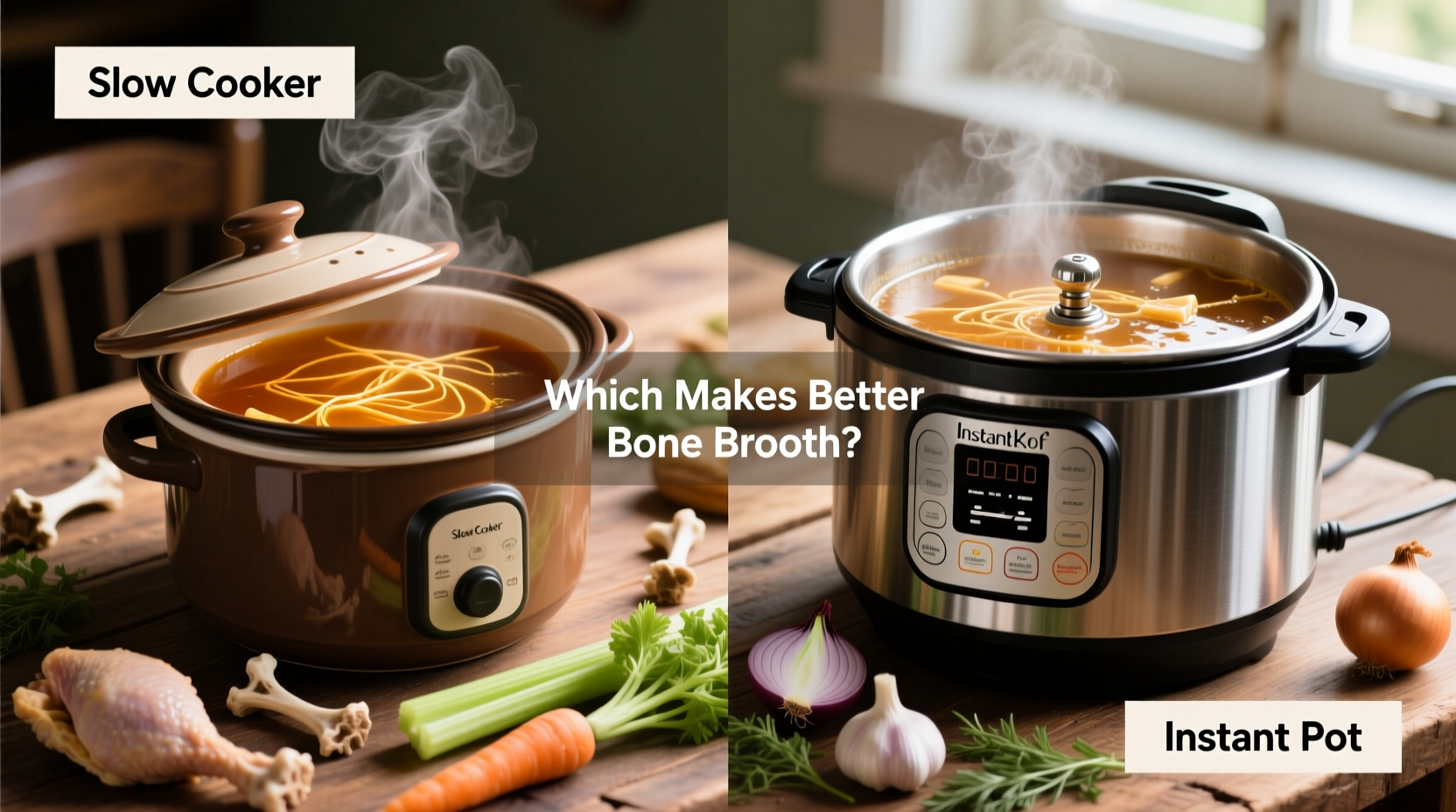
Bone broth is more than just boiled bones. The goal is to extract collagen, gelatin, minerals, and amino acids from connective tissues and marrow by breaking down cartilage and bone matrix over sustained heat. This process hinges on three key factors:
- Time: Collagen converts to gelatin slowly. The longer the simmer, the more thorough the extraction—up to a point.
- Temperature: Too high, and proteins can denature too quickly, leading to cloudy or bitter broth. Too low, and extraction stalls.
- Consistency: Maintaining a gentle simmer without boiling preserves clarity and smoothness.
The ideal bone broth simmers gently for 12–24 hours. During this time, collagen slowly dissolves into gelatin, giving the broth its signature silky mouthfeel and ability to set when chilled. Flavor compounds deepen through Maillard reactions and enzymatic breakdown. This long, low-and-slow approach is where the slow cooker excels.
In contrast, pressure cooking accelerates molecular movement. The Instant Pot reaches temperatures above boiling (up to 250°F at 12 psi), forcing water into bones and speeding up collagen breakdown. While effective, this rapid process can alter flavor development and texture.
Slow Cooker: The Traditionalist’s Choice
The slow cooker operates on simplicity: low, steady heat over many hours. Set it and forget it. For bone broth, this means placing roasted bones, vegetables, vinegar (to help leach minerals), herbs, and water into the pot, then letting it simmer on low for 18–24 hours.
The result? A deeply flavored, aromatic broth with excellent gel strength. Because the temperature stays just below boiling (typically 180–200°F), volatile flavor compounds remain intact. The extended time allows for full collagen conversion, yielding a thick, luxurious texture when cooled.
However, the slow cooker isn't without drawbacks. It demands planning. You can’t make broth on a whim—it requires a full day or overnight commitment. Evaporation can be an issue if the lid doesn’t seal tightly, potentially requiring topping off with water mid-cycle. And while energy-efficient per hour, running for 24 hours does consume more total electricity than a shorter cook.
“Long, slow extraction mimics ancestral methods. It produces a broth that’s not only richer in gelatin but more balanced in umami and mineral notes.” — Dr. Rebecca Nguyen, Functional Nutritionist and Culinary Biochemist
Instant Pot: Speed Without Sacrifice?
The Instant Pot changes the equation entirely. Using high-pressure steam, it reduces cooking time from hours to minutes. A typical bone broth cycle takes 2–4 hours under pressure, followed by natural release. Despite the speed, it still extracts significant collagen—often enough to produce a gelatinous broth when chilled.
The trade-off lies in flavor complexity. Rapid cooking limits the time for nuanced chemical reactions like caramelization and protein breakdown. Some users report a slightly metallic or flat taste compared to slow-cooked versions. The broth may also appear cloudier due to agitation during pressure cycling.
On the plus side, the Instant Pot offers unmatched convenience. It’s ideal for those with tight schedules or limited kitchen access. It uses less energy overall and frees up stove space. Plus, the sealed environment minimizes evaporation, so liquid levels stay consistent.
To improve results, many pressure-cooking enthusiasts recommend a two-step process: sautéing aromatics directly in the pot, then deglazing before adding ingredients. This builds flavor upfront, compensating for the shortened cook time.
Side-by-Side Comparison: Slow Cooker vs Instant Pot
| Feature | Slow Cooker | Instant Pot |
|---|---|---|
| Cook Time | 12–24 hours | 2–4 hours (plus 20–30 min natural release) |
| Gelatin Content | High – thick gel when chilled | Moderate to high – varies by recipe and bone type |
| Flavor Depth | Rich, complex, well-rounded | Good, but less layered; sometimes sharper |
| Convenience | Low – requires advance planning | High – quick turnaround, programmable |
| Energy Use | Higher total consumption | Lower total consumption |
| Evaporation Risk | Moderate – may need water top-up | Minimal – sealed environment |
| Best For | Weekend batches, maximum nutrition, traditionalists | Busy weeknights, smaller yields, time-crunched cooks |
Real-World Test: A Home Cook’s Experience
Sarah M., a registered dietitian and mother of two in Portland, Oregon, tested both methods over a six-week period. She used grass-fed beef bones, organic vegetables, apple cider vinegar, and filtered water for consistency.
Her slow cooker batch ran for 20 hours on low. The resulting broth was dark amber, deeply savory, and formed a firm gel in the fridge. Her family preferred it in soups and sipping.
The Instant Pot version took 3 hours under pressure. While noticeably thinner in texture, it still gelled slightly and tasted clean. She found it perfect for weekday risottos and sauces where subtle flavor was sufficient.
“I keep both in rotation,” she said. “The slow cooker gives me the gold standard, but I’d never make broth as often without the Instant Pot. It’s the difference between ideal and practical.”
Step-by-Step Guide to Making Superior Bone Broth
Regardless of your appliance, these steps maximize quality:
- Roast the bones: Preheat oven to 400°F. Arrange bones on a baking sheet and roast for 30–45 minutes until deeply browned. This step is non-negotiable for rich flavor.
- Add acid: Include 2 tablespoons of vinegar (apple cider or white wine) per gallon of water. Acid helps draw out calcium and other minerals from the bones.
- Use quality ingredients: Grass-fed, pasture-raised, or wild-sourced bones yield cleaner, more nutritious broth. Knuckle, marrow, and feet bones are richest in collagen.
- Fill with cold water: Cover bones completely—about 2 inches above. Start with cold water to gradually extract proteins without shocking them.
- Add aromatics: Onion, carrot, celery, garlic, and herbs like thyme or parsley enhance flavor but aren’t essential for nutrition.
- Simmer gently: Avoid boiling. In a slow cooker, use low setting. In an Instant Pot, use “Manual” or “Soup” mode at high pressure.
- Skim early foam: During the first hour, scum may rise. Skim lightly with a spoon for clearer broth.
- Strain carefully: After cooking, strain through a fine-mesh sieve or cheesecloth. Discard solids.
- Cool and store: Chill overnight to solidify fat for easy removal. Store in glass jars for up to 5 days in the fridge or freeze for 6 months.
Maximizing Results: Best Practices Checklist
Follow this checklist to ensure optimal bone broth, no matter your method:
- ☑ Roast bones before cooking
- ☑ Use a mix of marrow and collagen-rich bones
- ☑ Add vinegar to aid mineral extraction
- ☑ Fill with enough water to cover by 2 inches
- ☑ Simmer uncovered or vented only if reducing
- ☑ Skim foam during the first hour
- ☑ Strain through cheesecloth for clarity
- ☑ Cool rapidly and refrigerate within 2 hours
- ☑ Label containers with date and bone type
Frequently Asked Questions
Can I make bone broth without meat still attached to the bones?
Yes. While meat adds flavor, the primary nutrients come from connective tissue and bone. Clean butcher’s bones work perfectly. Leftover roasted chicken carcasses are excellent for poultry broth.
Why doesn’t my broth gel?
Lack of gel indicates insufficient collagen extraction. Possible causes include using too few collagen-rich bones, cooking too short a time, or diluting with excess water. Try adding beef feet or chicken feet next time—they’re exceptionally high in gelatin.
Is pressure-cooked broth less nutritious?
Not significantly. Studies show pressure cooking preserves most nutrients, including amino acids like glycine and proline. While some heat-sensitive compounds may degrade, the overall nutritional profile remains strong. The main differences are sensory—flavor and texture—not bioavailability.
Final Verdict: Which Is Better?
If flavor, texture, and tradition matter most, the slow cooker wins. Its long, gentle simmer produces a broth that’s fuller-bodied, more aromatic, and richer in gelatin. It’s the choice for those who view broth-making as a ritual—a weekend act of nourishment.
But if frequency, flexibility, and time efficiency are priorities, the Instant Pot is the clear winner. It removes the barrier of long wait times, making regular broth production feasible for modern lifestyles. While not identical to slow-cooked versions, its output is still highly nutritious and versatile.
The truth is, you don’t have to pick one. Many experienced home cooks use both: the slow cooker for large, ceremonial batches and the Instant Pot for quick replenishments. The best tool depends on your goals, schedule, and palate.
“The best bone broth is the one you actually make consistently. Perfection is great, but regularity delivers real health benefits.” — Mark Ransom, Author of *Home Fermentation* and Bone Broth Advocate
Start Brewing Today
Whether you pull out the slow cooker for a weekend simmer or fire up the Instant Pot after work, making bone broth at home is a powerful step toward whole-food nutrition. Experiment with both methods. Taste the difference. Adjust ingredients and timing to suit your preferences.
Don’t wait for the perfect moment—start small. Save chicken bones in the freezer, roast them, and turn them into a quart of golden broth. Notice how your soups deepen, your digestion improves, and your kitchen fills with comforting warmth.




 浙公网安备
33010002000092号
浙公网安备
33010002000092号 浙B2-20120091-4
Comments
No comments yet. Why don't you start the discussion?