
For busy parents juggling work, school drop-offs, extracurriculars, and household duties, time is a luxury. Cooking nutritious meals often falls by the wayside when dinner hour rolls around. That’s where kitchen appliances like slow cookers and pressure cookers come in—both promise convenience, but they serve very different needs. Choosing between them isn’t about which is universally better, but which fits your family’s rhythm, schedule, and culinary preferences.
This guide breaks down the strengths and limitations of each appliance from a parent’s perspective—focusing on prep time, flexibility, safety, cleanup, and real-world usability. Whether you're feeding toddlers or teens, the goal is to help you decide which tool will truly simplify your weeknights.
How They Work: The Core Difference
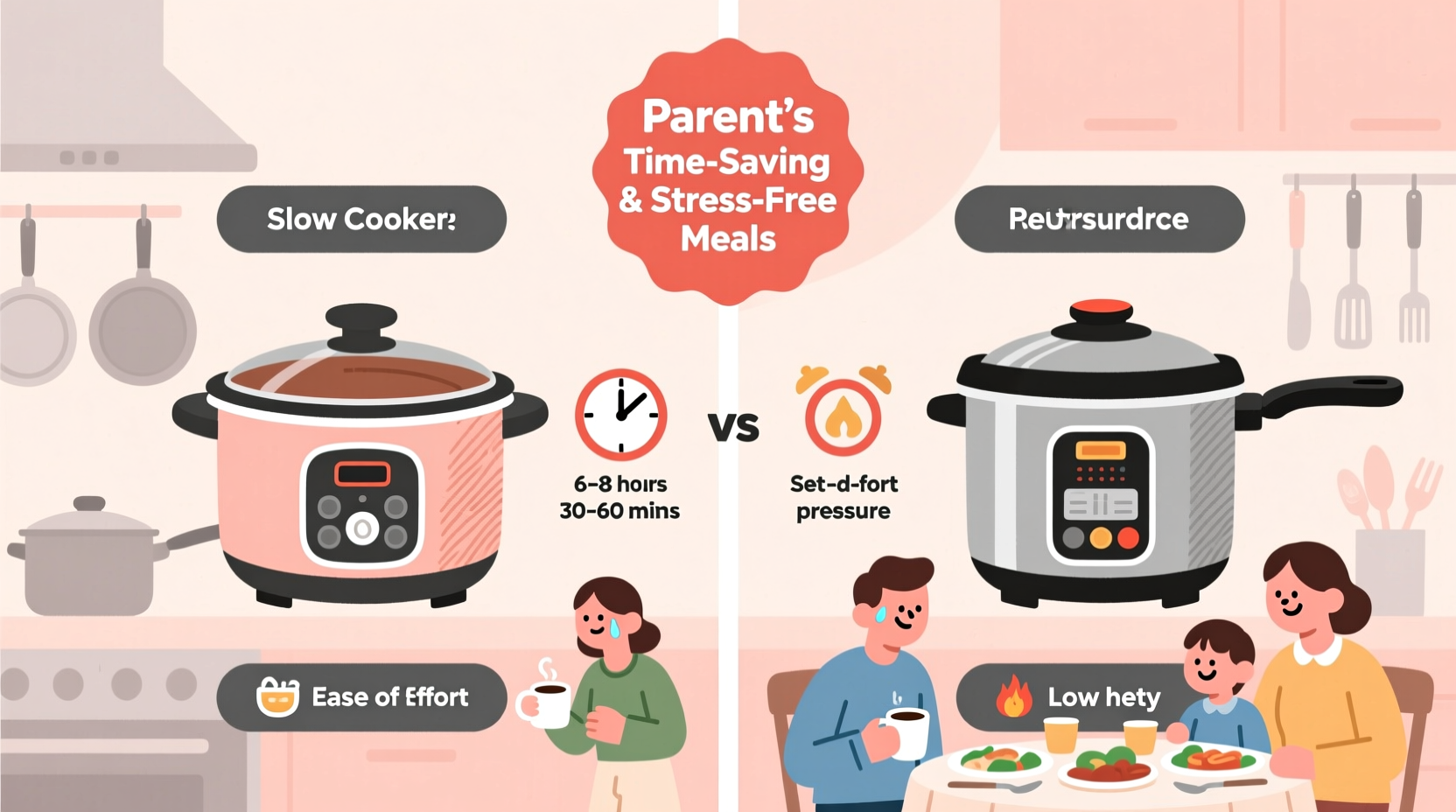
The fundamental distinction between a slow cooker and a pressure cooker lies in how they apply heat and manage time.
A slow cooker uses low, steady heat over several hours to gently simmer food. It operates at temperatures typically between 170°F and 280°F, depending on the setting (low, high, warm). This method breaks down tough cuts of meat, melds flavors, and requires minimal attention once started. Most models are designed to be left unattended for up to 8–10 hours, making them ideal for all-day cooking.
In contrast, a pressure cooker seals in steam to increase internal pressure, raising the boiling point of water and dramatically speeding up cooking. Electric multi-cookers like the Instant Pot combine pressure cooking with other functions such as sautéing, steaming, and slow cooking. A dish that takes 6–8 hours in a slow cooker might take only 30–45 minutes under pressure.
While both can produce tender stews and hearty soups, their approach—and impact on your daily routine—is worlds apart.
Time Efficiency: Who Wins for Busy Schedules?
When evaluating kitchen tools for busy families, timing is everything. Let’s compare two common scenarios:
- Morning prep, dinner ready after school: You wake up, throw ingredients into a pot, and return to a finished meal.
- Last-minute dinner decision: It’s 5:30 PM, and no one has eaten. Can you get something healthy on the table in under an hour?
In the first scenario, the slow cooker excels. Set it and forget it. Chicken thighs, potatoes, carrots, broth, and seasoning go in before heading out the door. By 6 PM, dinner is hot and waiting. No stress, no last-minute scrambling.
But if you didn’t plan ahead—or if soccer practice ran late—the pressure cooker shines. From raw chicken to shredded taco filling in 20 minutes under pressure (plus natural release), it turns “What’s for dinner?” into “Dinner’s done” faster than ordering takeout.
Meal Flexibility and Recipe Compatibility
Not all recipes translate well between appliances. Understanding the strengths of each helps you match the tool to the meal.
Slow cookers are unmatched for dishes that benefit from long, moist heat:
- Pot roasts and pulled pork
- Chili and bean-based stews
- Soups with root vegetables
- Oatmeal or breakfast casseroles (overnight)
The extended cook time allows collagen in meat to break down slowly, resulting in fork-tender texture and deep flavor development. However, slow cookers struggle with foods that need precise timing—like rice or delicate fish—which can turn mushy.
Pressure cookers, on the other hand, handle a broader range of textures and speeds:
- Perfectly cooked rice in 10 minutes
- Hard-boiled eggs with easy-peel shells
- Steamed vegetables without losing nutrients
- Dried beans cooked from scratch in under an hour
They also allow for searing meat directly in the pot before pressure cooking—a feature that builds richer flavor without dirtying extra pans.
“Modern electric pressure cookers are game-changers for families. The ability to sauté, pressure cook, and keep food warm means fewer dishes and more consistent results.” — Chef Maria Thompson, Family Nutrition Educator
Comparison Table: Slow Cooker vs Pressure Cooker
| Feature | Slow Cooker | Pressure Cooker |
|---|---|---|
| Cooking Time | 4–10 hours | 5–45 minutes (under pressure) |
| Prep Required | Minimal (dump-and-go) | Moderate (may require searing, timing adjustments) |
| Hands-On Time | Low (after initial prep) | Medium (monitoring, release methods) |
| Safety with Kids | Very high (cool exterior, stable) | Moderate (hot steam, locking lid) |
| Versatility | Limited to slow-simmered dishes | High (cooks grains, steams, sautés, yogurt, etc.) |
| Cleanup | Easy (often just one pot) | Easy (but sealing ring may retain odors) |
| Best For | All-day meals, batch cooking, set-it-and-forget-it days | Quick meals, unplanned dinners, weeknight staples |
Real-Life Example: A Parent’s Weeknight Dilemma
Meet Sarah, a working mom of two elementary-aged kids. Her weekdays are packed: she leaves home by 7:30 AM, picks up the kids at 4:00 PM, and rarely gets home before 5:45. On most nights, someone is hungry, tired, and asking “Can we order pizza?”
She tried using her slow cooker, but forgot to prep it three mornings in a row. By Wednesday, dinner was yet another box of mac and cheese. Then she borrowed an Instant Pot from her sister.
On Thursday, she came home, sautéed onions and garlic in the pot, added chicken breasts, salsa, and spices, sealed the lid, and set it for 12 minutes. While it cooked, she helped with homework. After a quick natural release, she shredded the chicken and served tacos with avocado and rice—all ready in 35 minutes.
The difference wasn’t just time saved. It was control. She could adapt to the day’s chaos instead of being defeated by it. Over time, she began using both appliances: the slow cooker on weekends to batch-cook chili or shredded beef, and the pressure cooker on unpredictable weeknights.
Safety and Ease of Use Around Children
For parents, safety is non-negotiable. Both appliances are generally safe, but they pose different risks.
Slow cookers run hot on the inside, but the outer casing usually stays cool or warm to the touch. There’s no pressure buildup, no risk of steam burns, and the lid doesn’t lock. Toddlers might knock it over if placed within reach, but there’s no explosive hazard.
Pressure cookers, especially electric ones, have multiple safety mechanisms—lid locks, pressure sensors, and venting systems. Still, releasing steam (especially quick release) involves directing a jet of hot vapor upward. This requires adult supervision and caution. If you have curious kids who hang around the kitchen, you’ll need to establish clear rules: “The pressure cooker is off-limits when cooking.”
Additionally, the silicone sealing ring can absorb food odors—curry one night might flavor your oatmeal later. Many users keep multiple rings for savory and sweet dishes, or opt for stainless steel inserts to reduce odor retention.
Step-by-Step: How to Choose the Right Appliance for Your Family
Follow this practical decision-making process:
- Assess your daily routine: Do you leave early and want dinner ready when you return? A slow cooker may suit you. Or do you often face unpredictable evenings? Lean toward a pressure cooker.
- Evaluate your cooking confidence: If you’re new to cooking, slow cookers are more forgiving. Overcook a stew by an hour? It’ll still taste good. Over-pressurize delicate fish? It might turn rubbery.
- Consider storage and counter space: Most pressure cookers are multi-functional (Instant Pot, Ninja Foodi), replacing several appliances. Slow cookers are simpler but less versatile.
- Think about cleanup habits: Both are relatively easy to clean, but pressure cooker lids have small parts that need disassembling. If you hate scrubbing tiny components, this matters.
- Test one before investing in both: Try a friend’s model or start with one appliance. Many parents eventually own both, but starting with the one that solves your biggest pain point makes sense.
Frequently Asked Questions
Can I cook frozen meat in either appliance?
You can safely cook frozen meat in a pressure cooker—it’s actually recommended because the rapid heating reduces the time food spends in the danger zone. However, manufacturers advise against using frozen meat in slow cookers due to the prolonged time it takes to reach safe temperatures, increasing the risk of bacterial growth.
Which is healthier: slow-cooked or pressure-cooked food?
Both methods preserve nutrients well compared to boiling or frying. Pressure cooking may retain slightly more water-soluble vitamins (like vitamin C) due to shorter cook times and less water exposure. However, the difference is minimal. What matters more is eating whole foods—whether they’re cooked slowly or quickly.
Do I need both appliances?
Many families find value in owning both. The slow cooker handles weekend meal prep, bone broth, and large batches. The pressure cooker rescues chaotic weeknights. But if you must choose one, prioritize based on your schedule: predictability favors the slow cooker; unpredictability favors the pressure cooker.
- ☐ I leave home early and want dinner ready when I return → lean toward slow cooker
- ☐ My evenings are unpredictable → lean toward pressure cooker
- ☐ I cook dried beans often → pressure cooker saves hours
- ☐ I have young children who wander near the stove → consider slow cooker’s cooler exterior
- ☐ I want one appliance that does many things → pressure cooker (multi-cooker) wins
- ☐ I prefer minimal learning curve → slow cooker is simpler to master
Final Verdict: It’s Not Either/Or—It’s About Strategy
The question isn’t really “Which is better?” but “Which solves my biggest problem?”
If your challenge is lack of time in the morning to prep, the slow cooker demands planning. If your challenge is lack of time at night to cook, the pressure cooker delivers relief. The most effective strategy for busy parents isn’t choosing one over the other—it’s understanding how each can play a role in reducing stress and improving meal quality.
Start with the appliance that aligns with your weakest link in the dinner chain. Master it. Then, consider adding the second as your routine evolves. Together, they form a powerful duo: one for patience, one for urgency.
And remember—no appliance replaces the value of a calm, connected family meal. Whether it took 8 hours or 20 minutes, what matters is that you showed up, fed your kids well, and preserved your energy for what really counts.




 浙公网安备
33010002000092号
浙公网安备
33010002000092号 浙B2-20120091-4
Comments
No comments yet. Why don't you start the discussion?