
When winter winds howl and temperatures drop, pet owners often reach for cozy outerwear to keep their furry companions warm. If you own both a small dog and a cat, it’s natural to wonder: Can I just buy one coat and use it for both? After all, they’re roughly the same size, right? While the idea of cross-using pet coats sounds practical—and even economical—the reality is more nuanced. Differences in anatomy, behavior, and comfort needs mean that what works for a Chihuahua might not suit a curious tabby. Understanding these distinctions helps ensure your pets stay safe, warm, and stress-free during colder months.
Anatomical Differences Between Dogs and Cats
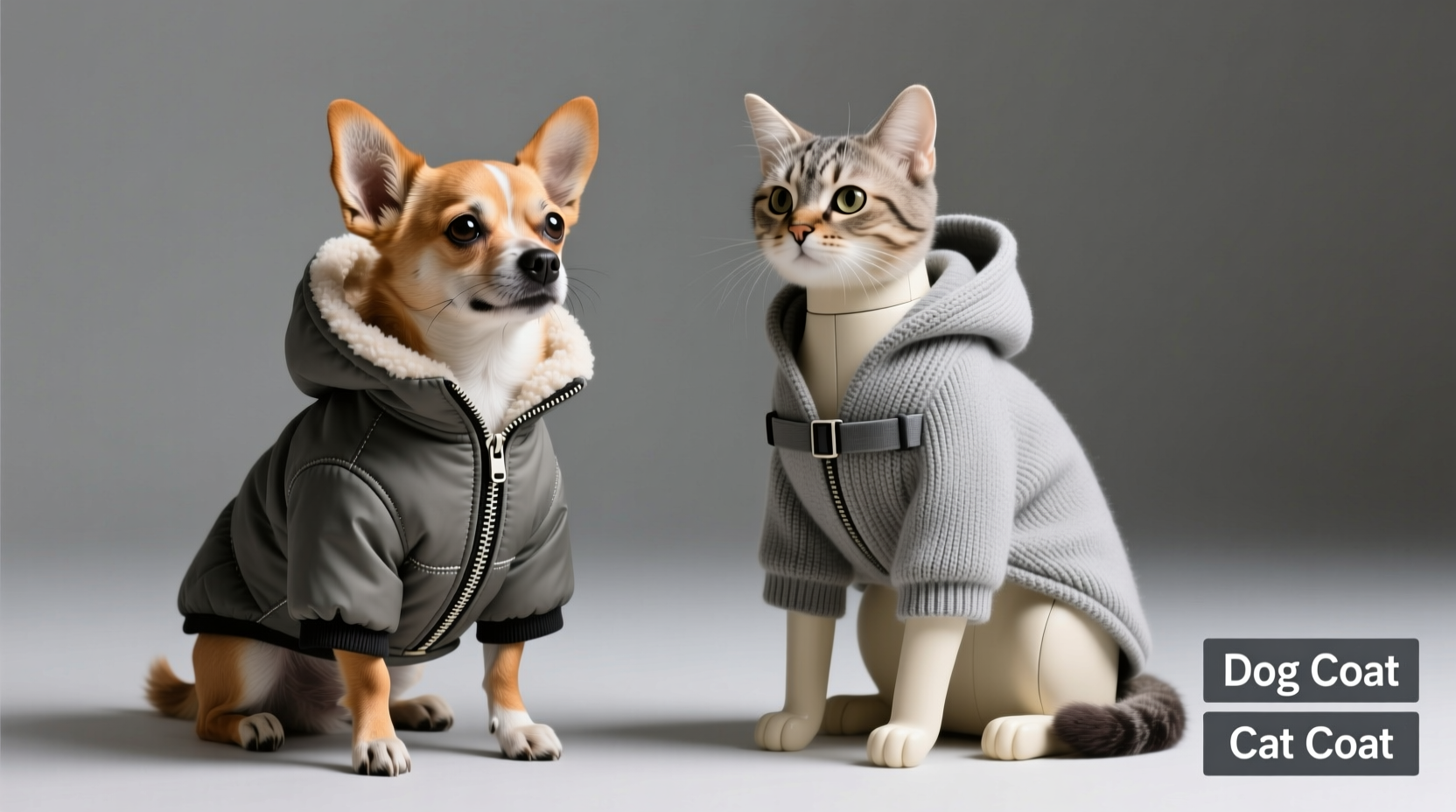
Dogs and cats may share similar body weights, especially when comparing toy breeds to average-sized cats, but their physical structures differ significantly. These differences directly impact how well a coat fits and functions.
Dogs typically have longer backs, broader shoulders, and more pronounced necks. Their posture is more horizontal, with weight distributed evenly across four limbs. In contrast, cats have flexible spines, higher hindquarters, and shorter torsos. They also move with a crouched gait and rely heavily on agility—traits that influence how clothing should sit on their bodies.
A coat designed for a small dog often features:
- Extended back coverage to protect from tail to neck
- Wider chest panels to accommodate deeper ribcages
- Straps or Velcro under the belly and behind the front legs
Cat-specific coats, on the other hand, prioritize freedom of movement and minimal restriction. They tend to be shorter in length, with looser fits around the shoulders and hips to allow quick turns, jumps, and stretches. Using a dog coat on a cat could lead to restricted motion, chafing, or even panic if the pet feels trapped.
“Cats are highly sensitive to anything that limits their mobility. A poorly fitting garment can trigger stress responses, including excessive grooming or refusal to move.” — Dr. Lena Torres, Feline Behavior Specialist
Behavioral Considerations: Comfort and Tolerance
One of the biggest challenges in dressing pets isn’t fit—it’s acceptance. Most cats inherently resist wearing clothes. Unlike dogs, who often enjoy attention and approval (and may tolerate clothing for treats or praise), cats value autonomy and comfort above external rewards.
Even short-term wear can cause anxiety in cats, especially if the coat rubs against their skin, restricts limb movement, or creates unfamiliar pressure points. Dog coats, which are often bulkier and more structured, amplify these discomforts. Some cats may freeze, hide, or attempt to remove the garment by chewing at straps—potentially leading to ingestion hazards.
Dogs, particularly those bred for cold climates or trained for outdoor work, generally adapt better to clothing. However, small breeds like Pomeranians or Yorkshire Terriers may still resist if the coat feels tight or slips out of place.
Design & Functional Comparison
To understand whether interchangeability is feasible, let’s compare key design elements between typical small dog and cat coats.
| Feature | Small Dog Coat | Cat Coat |
|---|---|---|
| Length | Longer cut, covering most of the back and hips | Shorter, ending near mid-back to avoid hindering movement |
| Chest Fit | Broad, snug fit to prevent shifting during walks | Loose or stretchy to allow deep breathing and stretching |
| Neck Opening | Smaller, secure opening to prevent slipping off | Larger, less restrictive to reduce anxiety |
| Fastening System | Variety of snaps, Velcro, and belly straps | Simpler closures; often single snap or elastic |
| Fabric Weight | Often heavier for insulation during outdoor activity | Lightweight to avoid overheating indoors |
The structural priorities reflect each animal’s lifestyle: dogs are walked outdoors and benefit from full coverage, while cats usually wear garments indoors for brief periods, making breathability and ease of removal more important.
Real-Life Scenario: The Shared Coat Experiment
Maria, a pet owner in Portland, Oregon, tried using her Pomeranian’s winter coat on her 9-pound domestic shorthair, Milo. The coat was fleece-lined, had adjustable Velcro straps, and seemed to fit based on measurements.
At first, Milo tolerated it—until he tried to jump onto the couch. The coat bunched near his shoulders, limiting his leap. He twisted awkwardly, panicked, and began frantically scratching at the fabric. Within minutes, he chewed through one strap and hid under the bed, refusing to come out even after the coat was removed.
Conversely, when Maria placed the same coat on her 7-pound Pomeranian, Luna, it stayed securely in place during walks. The snug fit prevented wind penetration, and Luna showed no signs of discomfort.
This example illustrates a critical point: even minor fit discrepancies can lead to major behavioral consequences in cats, while dogs may handle tighter fits without issue.
When Cross-Use Might Work (And When It Won’t)
There are rare cases where a dog coat *might* be adapted for a cat—but only under strict conditions:
- The cat is already accustomed to wearing clothes (e.g., show or therapy cats)
- The coat is lightweight, soft, and has minimal fasteners
- It's used briefly and under direct supervision
- The fit allows full range of motion without pinching
However, these exceptions don’t justify regular cross-use. Over time, friction from an ill-fitting garment can cause hair loss, skin irritation, or pressure sores—especially in long-haired breeds.
Step-by-Step Guide to Testing Coat Compatibility
- Measure both pets accurately: Neck, chest, and back length from base of neck to base of tail.
- Select a loose-fitting dog coat: Choose one labeled for the smaller end of the size range.
- Try it on the cat for 2–3 minutes: Observe movement, breathing, and behavior.
- Test mobility: Encourage gentle walking, sitting, and turning.
- Remove immediately if stress signs appear: Hiding, panting, biting at the coat.
- Never leave unattended: Even a “well-fitting” coat poses risks if worn unsupervised.
Expert Recommendations and Alternatives
Veterinarians and animal behaviorists generally advise against sharing coats between species. Instead, they recommend investing in properly fitted, species-specific apparel.
“Just as human children and adults need different clothing sizes and styles, so do different animals—even at similar weights. Safety and comfort should always come before convenience.” — Dr. Raj Patel, Small Animal Veterinarian
If budget is a concern, consider these alternatives:
- Use soft, removable blankets indoors instead of full coats
- Opt for heated pet beds or warm sleeping areas
- Choose multi-functional garments like cat onesies or dog sweaters made from breathable materials
FAQ
Can I modify a dog coat to fit my cat?
It’s not recommended. Altering straps or cutting fabric can compromise structural integrity, creating choking hazards or uneven pressure. Plus, sewing changes may not account for anatomical movement patterns unique to cats.
Do cats really need coats?
Most indoor cats don’t need coats unless they’re exposed to cold environments (e.g., travel, vet visits, or living in drafty homes). Hairless breeds like Sphynx cats benefit most from clothing due to lack of natural insulation.
Are there universal pet coats on the market?
A few brands offer “universal” or “multi-pet” designs, but reviews are mixed. These tend to work best for very small dogs or larger kittens, but rarely provide optimal fit for both species simultaneously.
Final Thoughts: Prioritize Safety Over Convenience
While it’s tempting to simplify pet care by using one coat for both your small dog and cat, doing so risks comfort, safety, and emotional well-being—especially for felines. The subtle yet significant differences in anatomy, behavior, and garment design make cross-species use impractical and potentially harmful.
Instead, treat each pet’s needs individually. Invest in well-fitted, species-appropriate outerwear, and always prioritize freedom of movement and mental comfort. Your pets may never thank you in words, but their relaxed posture, steady breathing, and willingness to wear the garment speak volumes.




 浙公网安备
33010002000092号
浙公网安备
33010002000092号 浙B2-20120091-4
Comments
No comments yet. Why don't you start the discussion?