
Every day, millions of people carry their lives in bags—laptops, notebooks, water bottles, chargers, snacks, and more. Whether you're commuting to work, walking across campus, or navigating city streets, the type of bag you choose has a direct impact on your posture, spinal alignment, and overall musculoskeletal health. The debate between small messenger bags and backpacks isn't just about style or convenience—it's about how each affects your body over time. While messenger bags offer sleek urban appeal, backpacks promise balanced load distribution. But which one truly supports your back better in the long run?
The Anatomy of Carrying Weight: Why Bag Design Matters
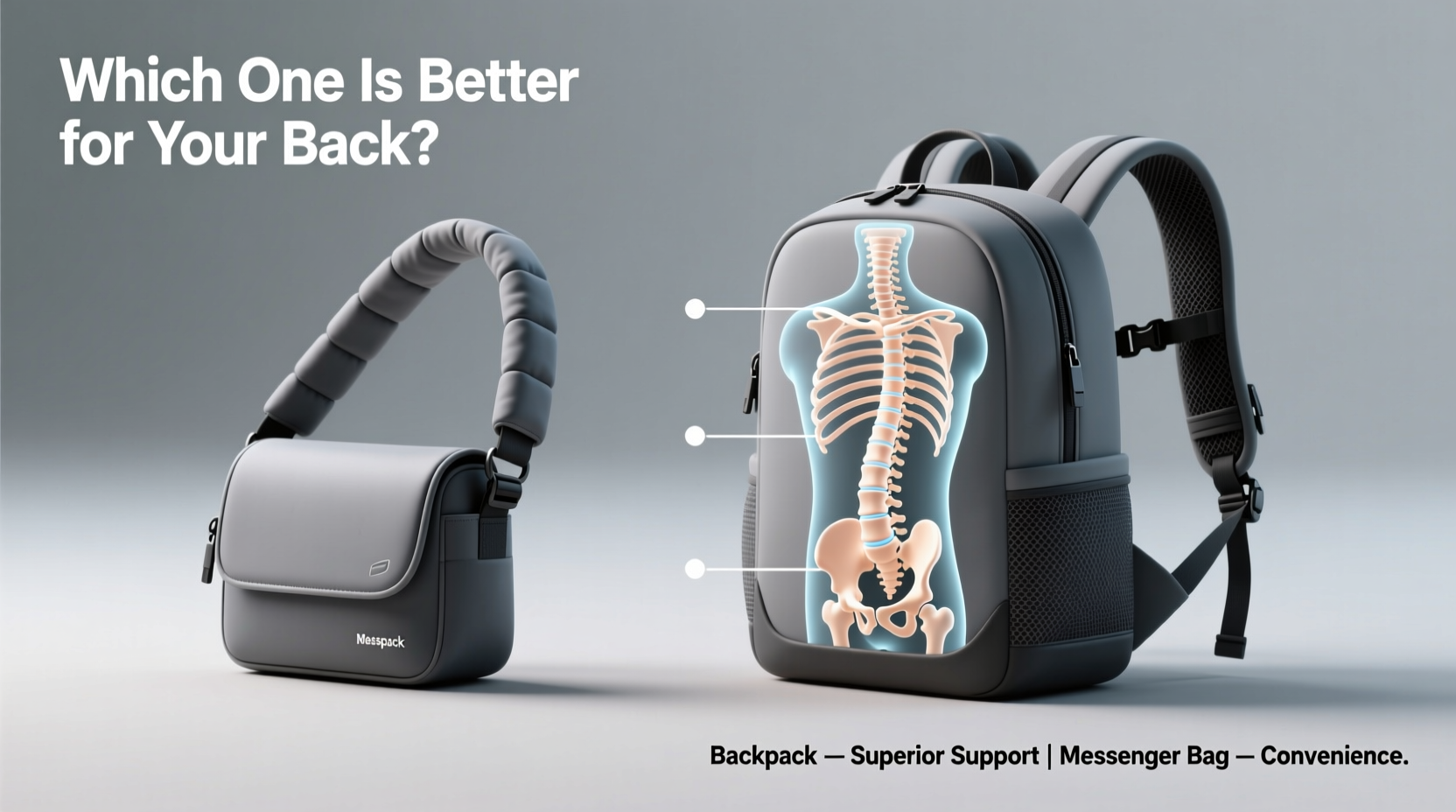
Your spine is designed to maintain a natural S-curve, supported by muscles, ligaments, and vertebrae working in harmony. When weight is unevenly distributed—especially over prolonged periods—it forces your body into compensatory postures. Leaning to one side, hunching forward, or raising a shoulder can all lead to muscle imbalances, joint strain, and chronic discomfort.
Messenger bags typically rest on one shoulder, diagonally across the torso. This design places the entire load on a single side of the body, often causing asymmetrical strain. In contrast, backpacks use two straps to distribute weight across both shoulders and, ideally, the hips via a waist belt. This bilateral support aligns more closely with the spine’s natural balance.
A 2021 study published in the Journal of Physical Therapy Science found that unilateral carrying (as with messenger bags) significantly increased spinal deviation and muscle activation on the loaded side, especially when loads exceeded 10% of body weight. Backpack users, meanwhile, showed more symmetrical muscle engagement and less lateral bending when straps were properly adjusted.
“Carrying weight on one side consistently can lead to functional scoliosis—a reversible but painful shift in spinal alignment.” — Dr. Lena Torres, DPT, Spine Health Specialist
Weight Distribution: A Side-by-Side Comparison
| Feature | Messenger Bag | Backpack |
|---|---|---|
| Load Distribution | Concentrated on one shoulder and hip | Balanced across both shoulders and upper back |
| Spinal Alignment | Frequent lateral tilt; risk of asymmetry | Generally neutral if worn correctly |
| Shoulder Strain | High on dominant side; common nerve compression | Lower when straps are padded and tightened |
| Hip & Lower Back Impact | Uneven pressure; may cause SI joint irritation | Reduced strain with hip belt usage |
| Posture Risk | High—users often lean or hike shoulder | Moderate—slouching possible if underpacked or loose |
Real-World Usage: A Day in the Life
Consider Sarah, a graphic designer who commutes 45 minutes each way on foot and public transit. She used a compact messenger bag for years because it looked professional and fit her tablet, sketchbook, and wallet. Over time, she began experiencing numbness in her left hand and persistent tightness in her left trapezius muscle. After visiting a physical therapist, she learned that her bag’s constant left-shoulder wear had compressed her brachial plexus nerves and caused muscular hypertonicity.
She switched to an ergonomic backpack with contoured shoulder straps and a chest stabilizer strap. Within three weeks, her symptoms decreased significantly. “I didn’t realize how much my bag was throwing me off balance,” she said. “Now I stand straighter, and my neck doesn’t ache by noon.”
Sarah’s case illustrates a common pattern: short-term convenience leading to long-term discomfort. Messenger bags win on accessibility and aesthetics, but they often fail in biomechanical sustainability.
When a Messenger Bag Might Be Acceptable
It’s not that messenger bags are inherently harmful. For light loads—under 5 pounds—and short durations—less than an hour—they can be practical and safe. Urban professionals who walk briefly from transit to office, students moving between adjacent classrooms, or travelers needing quick access to passports and phones may benefit from the crossbody design.
However, key factors determine whether a messenger bag remains low-risk:
- Weight limit: Never exceed 10% of your body weight (e.g., 15 lbs for a 150-lb person).
- Padded strap: Wider, cushioned straps reduce pressure on the shoulder and clavicle.
- Chest or waist stabilizer: Some premium models include secondary straps that reduce swing and improve stability.
- Proper fit: The bag should sit snugly against the back, not sagging below the hips.
Even with these features, prolonged use still introduces asymmetry. Think of a messenger bag like wearing high heels—fine occasionally, risky with daily reliance.
Maximizing Backpack Ergonomics: It’s Not Just About Having Two Straps
Not all backpacks are created equal. A poorly fitted or overloaded backpack can be nearly as damaging as a lopsided messenger bag. To truly protect your back, follow this checklist:
Ergonomic Backpack Checklist
- Adjust shoulder straps so the bag sits snug between the shoulders and waistline.
- Use the sternum strap to prevent shoulder creep and stabilize load.
- Engage the hip belt for loads over 10 pounds—it transfers up to 80% of weight to the pelvis.
- Place heavier items closest to your back and near the center of the pack.
- Avoid overstuffing; bulging packs shift center of gravity forward.
- Choose a frame-backed model for loads over 15 lbs to maintain spinal clearance.
Backpacks with ventilated backs also reduce sweating and slippage, improving comfort during extended wear. Look for designs labeled “ergonomic” or “lumbar-support” for enhanced structure.
FAQ: Common Questions About Bag Choice and Back Health
Can a messenger bag cause permanent back damage?
While rare, chronic one-sided loading can lead to muscle imbalances, disc compression, and postural deviations like functional scoliosis. These changes may become semi-permanent if not corrected early through physical therapy and behavioral change.
Is a small backpack better than a large one for back health?
Size matters less than fit and load management. A small, overloaded backpack causes more harm than a larger, well-distributed one. The ideal backpack fills the space between your neck’s base and waist without hanging too low.
What if I hate wearing backpacks? Are there alternatives?
Yes. Consider a roller bag for heavy loads, or a briefcase with a detachable shoulder strap used alternately. For tech-only carries, a slim chest pack worn across the front can reduce spinal strain while keeping essentials accessible.
Conclusion: Choose Support Over Style—Your Spine Will Thank You
The evidence is clear: when it comes to protecting your back, backpacks are objectively superior to messenger bags for regular, weighted use. Their ability to evenly distribute load, maintain spinal neutrality, and integrate with body mechanics makes them the smarter long-term choice. That doesn’t mean you can never use a messenger bag—but treat it like a situational tool, not a daily workhorse.
Your back doesn’t just carry your bag; it carries your entire upper body every second of the day. Compromising its alignment for fashion or convenience today could mean pain, stiffness, or even structural changes tomorrow. Invest in a well-fitted, ergonomically designed backpack, learn how to wear it properly, and make spine-conscious choices part of your routine.




 浙公网安备
33010002000092号
浙公网安备
33010002000092号 浙B2-20120091-4
Comments
No comments yet. Why don't you start the discussion?