
In an era where fashion and function are expected to coexist seamlessly, the choice between a small square bag and a mini backpack has become a daily dilemma for urban commuters, travelers, and style-conscious individuals. Both options promise portability and trend appeal, but when it comes to practicality—carrying capacity, comfort, accessibility, durability, and versatility—one clearly outperforms the other in specific scenarios. Understanding their strengths and limitations helps you make a smarter, lifestyle-aligned decision.
Design & Aesthetic Appeal
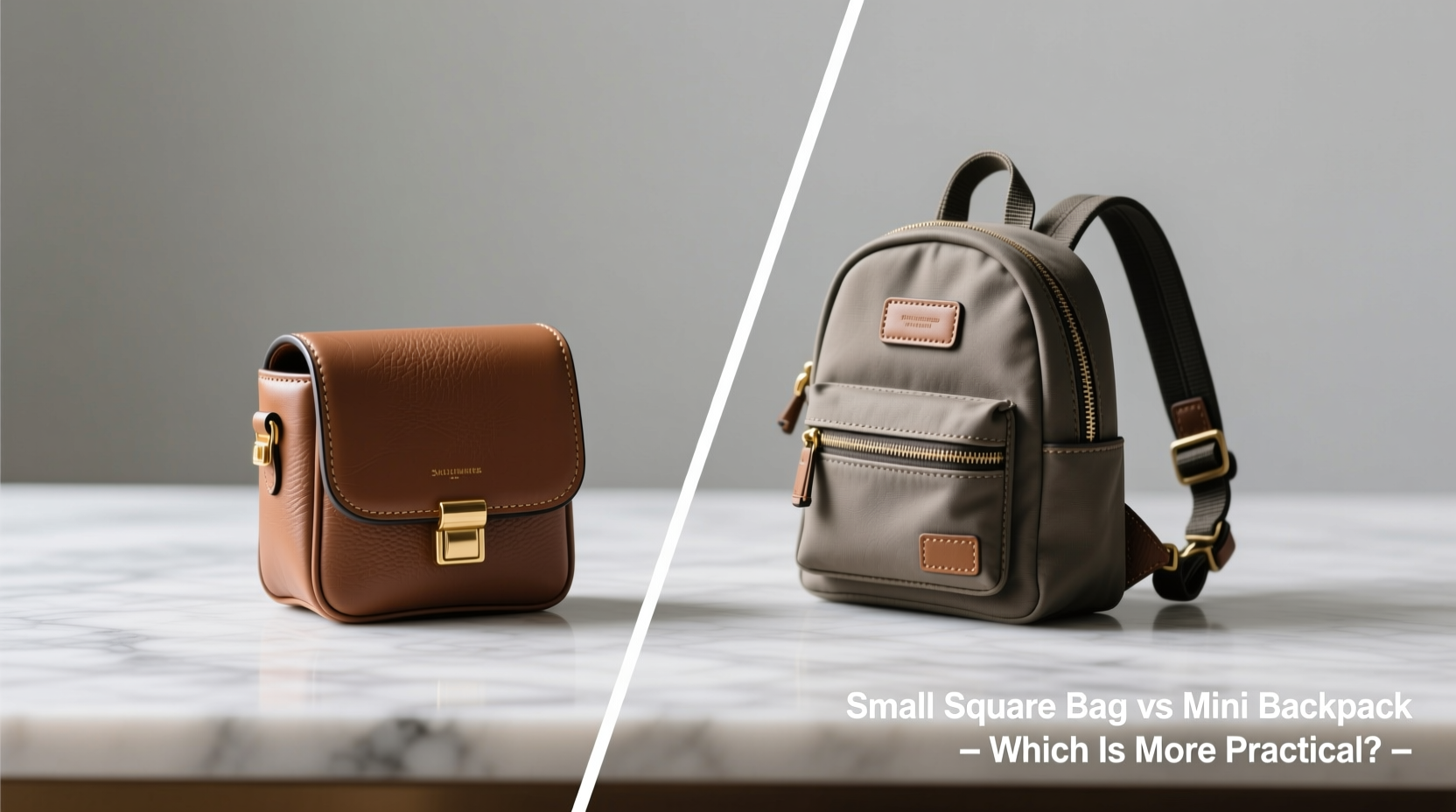
The small square bag has surged in popularity due to its minimalist design and high-fashion roots. Often seen on runways and influencer feeds, it features clean lines, compact dimensions (typically 6–8 inches per side), and a structured silhouette. It’s designed to carry only essentials: phone, wallet, keys, and perhaps lipstick. The aesthetic is sleek, modern, and effortlessly chic—ideal for brunch dates or evening outings.
On the other hand, the mini backpack embraces a casual, utilitarian vibe with roots in outdoor gear and streetwear culture. While still compact, it usually offers slightly more volume and often includes multiple compartments. Its design prioritizes balance and ease of wear over pure visual minimalism. Whether crafted from nylon, leather, or canvas, the mini backpack conveys a relaxed, youthful energy suitable for daytime errands, city exploration, or light travel.
Carrying Capacity and Organization
When comparing internal space, the mini backpack consistently wins. Most models range from 5 to 8 liters, allowing room for a tablet, water bottle, sunglasses case, and even a light jacket. Many feature padded laptop sleeves, zippered front pockets, and side mesh holders—functional details absent in most square bags.
Conversely, the small square bag typically holds under 3 liters. While some offer removable straps or crossbody functionality, internal organization is minimal. You’ll find one main compartment and maybe a tiny slip pocket. Overstuffing distorts its shape, undermining both aesthetics and structural integrity.
“Functionality isn’t just about size—it’s about how intelligently a bag uses its space.” — Lena Torres, Urban Accessory Designer at Nomad Studio
Storage Comparison Table
| Feature | Small Square Bag | Mini Backpack |
|---|---|---|
| Average Volume | 2–3 liters | 5–8 liters |
| Main Compartments | 1 | 1–2 (often with sub-pockets) |
| External Pockets | Rare | Common (zippered or magnetic) |
| Laptop/Tablet Fit? | No | Yes (up to 10–11\") |
| Water Bottle Holder | No | Often included |
Comfort and Wearability
One of the most overlooked aspects of bag practicality is ergonomics. The mini backpack distributes weight evenly across both shoulders, reducing strain during extended wear. This makes it ideal for walking long distances, biking, or navigating crowded spaces. Adjustable straps allow customization for different body types, enhancing comfort further.
The small square bag, typically worn over one shoulder or across the body, places all weight on a single point. Even lightweight contents can cause discomfort after 30–45 minutes, especially if the strap is thin or non-padded. Frequent adjustments are needed to prevent slipping or digging into the shoulder.
For those managing mobility challenges or sensitive shoulders, the backpack format provides significantly better support. Fashion brands like Herschel, Fjällräven, and TUMI have optimized their mini backpacks with breathable back panels and ergonomic shapes, while luxury labels such as Prada and Gucci maintain elegance in their square bags at the cost of comfort.
Real-World Use Case: A Day in the City
Consider Maya, a freelance photographer living in Brooklyn. Her typical weekday involves subway commutes, meetings in Manhattan, coffee runs, and outdoor shoots. She used a designer square bag for months but found herself constantly switching to a tote because she couldn’t fit her portable charger, lens cloth, notebook, and reusable bottle.
After switching to a mini backpack made of water-resistant fabric with a hidden anti-theft pocket, her routine transformed. She no longer worries about losing balance on escalators, can access her metro card quickly from the front flap, and feels confident carrying extra gear. “I still love my square bag for dinners,” she says, “but for actual workdays, the backpack saves me time and stress.”
This scenario illustrates a broader truth: context dictates practicality. If your day involves movement, multitasking, or variable weather, the mini backpack adapts far better than its square counterpart.
Durability and Weather Resistance
Material choices differ significantly between these two styles. Square bags are frequently made from delicate fabrics like satin, velvet, or unlined leather to preserve their elegant appearance. These materials are prone to scuffing, water damage, and wear from frequent handling.
Mini backpacks, inspired by outdoor and commuter needs, often use rugged synthetics such as ballistic nylon, recycled polyester, or waxed canvas. These resist abrasion, repel light rain, and tolerate being set down on dirty surfaces without immediate damage. Zippers are typically sturdier, and closures are designed for repeated use.
If you live in a rainy climate or regularly place your bag on café floors or public transit seats, the mini backpack’s resilience gives it a clear edge in longevity and low-maintenance upkeep.
Security and Accessibility
Security is another critical factor, especially in crowded environments. Mini backpacks worn on the front (a common practice among travelers) keep valuables within sight and reduce pickpocket risk. Some models include RFID-blocking pockets and lockable zippers for added protection.
Square bags, particularly clutch-style versions, are more exposed. When carried in hand or draped over the arm, they’re vulnerable to snatching. Crossbody versions improve security but can swing awkwardly while walking or cycling.
Accessibility also favors backpacks. Front pockets allow quick access to transit cards or phones without fully opening the bag. In contrast, retrieving items from a square bag often requires stopping, unzipping, and rummaging—impractical in fast-paced settings.
Checklist: Choosing the Right Bag for Your Lifestyle
- Ask yourself: Do I walk more than 30 minutes daily? → Lean toward mini backpack.
- Will I carry tech devices (phone, power bank, earbuds)? → Backpack offers better protection.
- Am I dressing up for formal events? → Square bag enhances elegance.
- Do I need hands-free convenience? → Backpack wins hands-down (literally).
- Is weather unpredictable? → Choose water-resistant backpack materials.
Frequently Asked Questions
Can a small square bag be practical at all?
Yes—but only in limited contexts. If you're attending a wedding, gallery opening, or dinner where minimalism is key, a square bag serves perfectly. However, don’t expect it to handle daily commuting or active lifestyles.
Are mini backpacks appropriate for professional settings?
Increasingly, yes. Sleek, neutral-colored mini backpacks in leather or minimalist designs are accepted in creative offices, startups, and hybrid workplaces. Pair them with tailored separates to maintain polish.
Which bag holds its value better over time?
Luxury square bags from heritage brands may appreciate as collectibles, but in terms of functional lifespan, mini backpacks generally last longer due to durable construction and less susceptibility to wear from daily use.
Final Verdict: Practicality Depends on Purpose
The mini backpack emerges as the more practical option for everyday utility, offering superior comfort, capacity, durability, and security. It adapts to dynamic routines, supports active users, and withstands environmental challenges. For anyone prioritizing efficiency and ease, it’s the logical choice.
However, the small square bag excels in curated moments where style takes precedence. It’s a statement piece—an accessory that complements an outfit rather than serves as a tool. Recognizing this distinction prevents frustration and aligns your choices with real needs.




 浙公网安备
33010002000092号
浙公网安备
33010002000092号 浙B2-20120091-4
Comments
No comments yet. Why don't you start the discussion?