
Silicone ice cube trays have become a staple in modern kitchens for their flexibility, durability, and ease of use. Unlike rigid plastic or metal molds, silicone trays are soft, pliable, and often stackable—qualities that make them ideal not only for freezing but also for compact storage. Yet, despite their practical design, many homeowners struggle with how to store these trays efficiently. Poor organization leads to cluttered drawers, tangled stacking, and even warping over time. The solution lies in adopting a few smart, space-conscious strategies that preserve the integrity of your trays while keeping your kitchen neat and functional.
Maximize Drawer Space with Vertical Folding
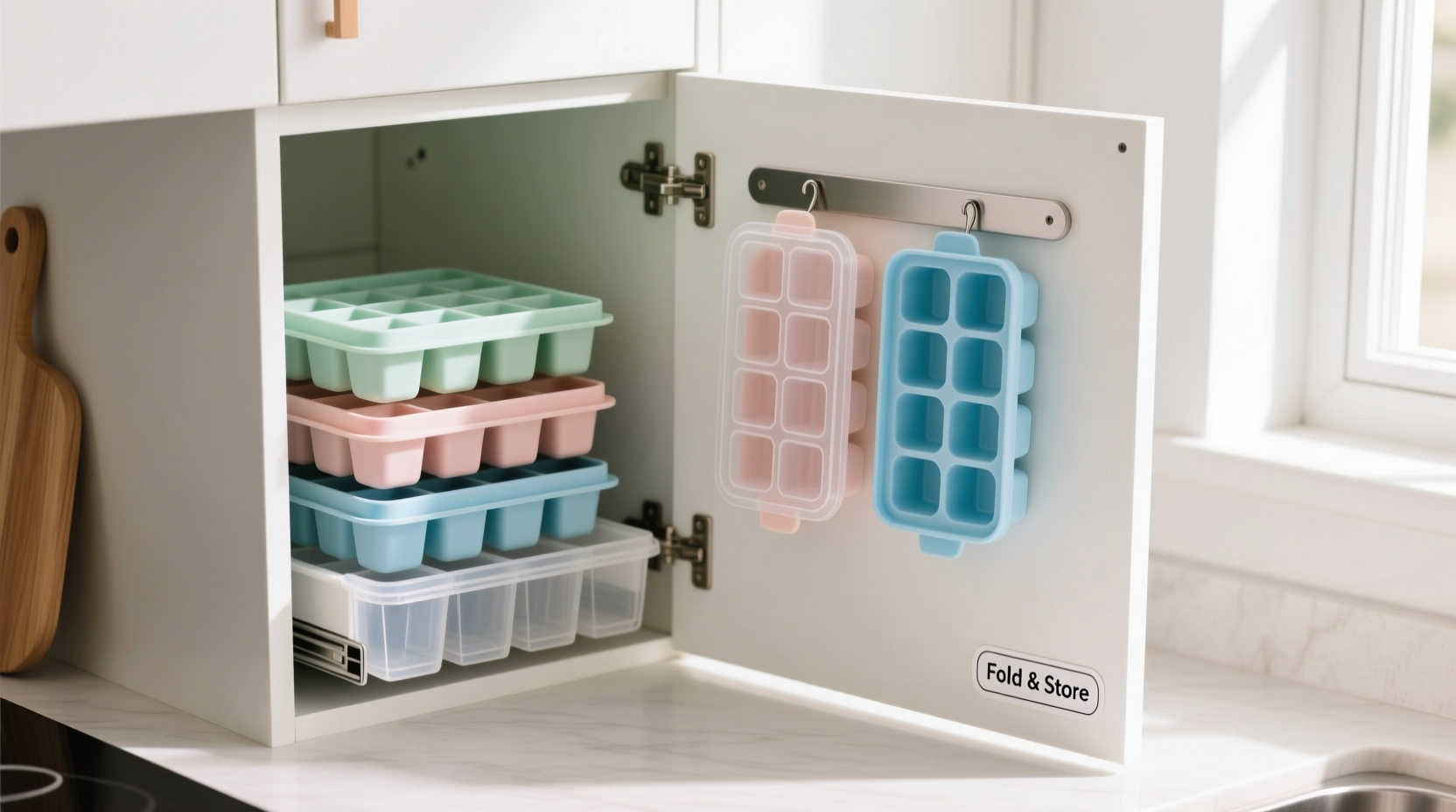
One of the most underutilized storage techniques is vertical folding. Because silicone trays are flexible, they can be folded in half or rolled up like a scroll, allowing them to stand upright in narrow spaces. This method works especially well in deep drawers where flat stacking would waste valuable height.
To implement this, fold the tray along its center line and place it vertically against the back of the drawer. If you own multiple trays, alternate the fold direction so they interlock neatly without slipping. For added stability, pair them with a slim utensil divider or a tension rod cut to size to keep them standing upright.
Stack Smartly Without Warping
While stacking seems like the obvious choice, improper stacking can lead to permanent deformation. When stacked flat under heavy items, silicone trays may lose their shape, making them difficult to fill evenly or remove cubes cleanly.
To avoid this, only stack trays when they are completely dry and clean. Place a sheet of parchment paper or a thin fabric liner between each layer to reduce friction and protect edges. Limit stacks to three or four trays high to minimize pressure on the bottom ones. If possible, store them inside a designated bin or container to keep the stack contained and easily movable.
| Storage Method | Space Efficiency | Risk of Damage | Best For |
|---|---|---|---|
| Flat Stacking | High | Moderate (if overloaded) | Shallow cabinets |
| Vertical Folding | Very High | Low | Narrow drawers |
| Hanging with Hooks | Medium | Low | Door or wall storage |
| Rolling & Bundling | High | Minimal | Deep storage bins |
Utilize Unconventional Spaces: Doors, Walls, and Freezer Corners
Kitchen real estate is limited, but creativity unlocks hidden storage potential. Consider mounting adhesive-backed hooks inside cabinet doors or on the side of the refrigerator to hang trays by their corners. This keeps them visible and accessible while freeing up drawer space for other tools.
For those with magnetic freezer walls, rare-earth magnets wrapped in silicone-friendly tape can gently hold trays in place. Alternatively, install a narrow pegboard strip inside a pantry or near the freezer to create a customizable hanging system.
If freezer shelf space allows, dedicate a corner specifically for silicone trays. Use a labeled bin or tray organizer to group them separately from frozen foods, preventing accidental contamination and improving retrieval speed.
“Flexible silicone doesn’t just bend—it adapts to your storage logic. The key is using its pliability as an advantage, not fighting against it.” — Lena Ruiz, Kitchen Organization Consultant
Step-by-Step Guide to Optimal Silicone Tray Storage
Follow this simple sequence to ensure your trays remain functional, clean, and easy to access:
- Clean thoroughly after use: Wash with warm, soapy water and dry completely. Residual moisture promotes mildew and odors.
- Inspect for damage: Check for tears, discoloration, or lingering smells. Replace trays that show signs of wear.
- Choose your storage method: Decide whether to fold, roll, stack, or hang based on available space and frequency of use.
- Protect surfaces: Use liners between stacked trays or padding on hooks to prevent abrasion.
- Label if necessary: If storing multiple types (e.g., mini cubes, large spheres, herb trays), add discreet labels with waterproof tape.
- Rotate regularly: Use older trays first to maintain even wear and prevent long-term compression.
Real-Life Example: The Urban Apartment Kitchen Upgrade
In a 500-square-foot Brooklyn apartment, Sarah Chen faced constant kitchen clutter. Her collection of five silicone trays—including standard cubes, star shapes, and cocktail spheres—was crammed into a single utensil drawer, often getting buried under spatulas and measuring cups. After reading about vertical folding, she reorganized her deep lower drawer using a $7 bamboo divider.
She folded each tray in half and stood them upright, grouped by type. She also attached two small S-hooks to the inside of the cabinet door for quick-access trays used daily. The change freed up 40% of her drawer space and reduced the time spent searching for a specific mold. “I didn’t realize how much mental clutter came from digging through junk drawers,” she said. “Now I actually enjoy making infused ice.”
Do’s and Don’ts of Silicone Ice Tray Storage
- Do store trays in a cool, dry place away from direct sunlight to prevent UV degradation.
- Do use breathable containers if storing long-term to avoid trapped moisture.
- Do label trays used for non-water contents (coffee, broth, baby food) to prevent mix-ups.
- Don’t store trays directly on hot surfaces or near stovetops—silicone can warp above 200°F (93°C).
- Don’t stack heavy objects on top of stored trays; this can cause permanent creasing.
- Don’t leave trays damp in enclosed containers—this encourages bacterial growth and odors.
Frequently Asked Questions
Can I store silicone ice cube trays in the freezer permanently?
Yes, provided they are empty and clean. Leaving them in the freezer saves space and keeps them ready for immediate use. Just ensure they’re not blocking airflow or taking priority over perishable items.
How do I prevent my silicone trays from absorbing odors?
Always wash trays promptly after use, especially if freezing broths, juices, or flavored liquids. To deodorize, soak in a mixture of water and baking soda for 15 minutes, then rinse thoroughly. Avoid storing near strong-smelling foods like onions or fish in open containers.
Is it safe to roll up silicone trays for storage?
Absolutely. High-quality food-grade silicone is designed to flex repeatedly without cracking. Rolling is a safe and efficient way to save space, particularly for larger or rectangular trays.
Final Thoughts and Action Plan
Storing silicone ice cube trays effectively isn’t just about tidiness—it’s about optimizing function, preserving material quality, and reducing daily friction in the kitchen. Whether you live in a spacious home or a compact studio, the adaptability of silicone means your storage solutions should be just as flexible.
Start today by pulling out all your trays and assessing their condition. Clean them, categorize by use, and choose a storage method that aligns with your kitchen layout. Implement one change—vertical folding, hanging, or protective stacking—and observe how it improves both accessibility and peace of mind.




 浙公网安备
33010002000092号
浙公网安备
33010002000092号 浙B2-20120091-4
Comments
No comments yet. Why don't you start the discussion?