
In a world where small accessories define personal style, the humble keyring has evolved from a simple metal loop into a statement piece. Among the most charming and functional upgrades are animal-themed keyrings—playful, expressive, and surprisingly effective tools for organizing your keys. Beyond their aesthetic appeal, these whimsical designs offer practical benefits, helping you identify, categorize, and protect your keys with flair. Whether you're managing home, office, car, or spare sets, animal-themed keyrings blend utility with personality in ways that traditional rings simply can't match.
Why Animal-Themed Keyrings Work So Well
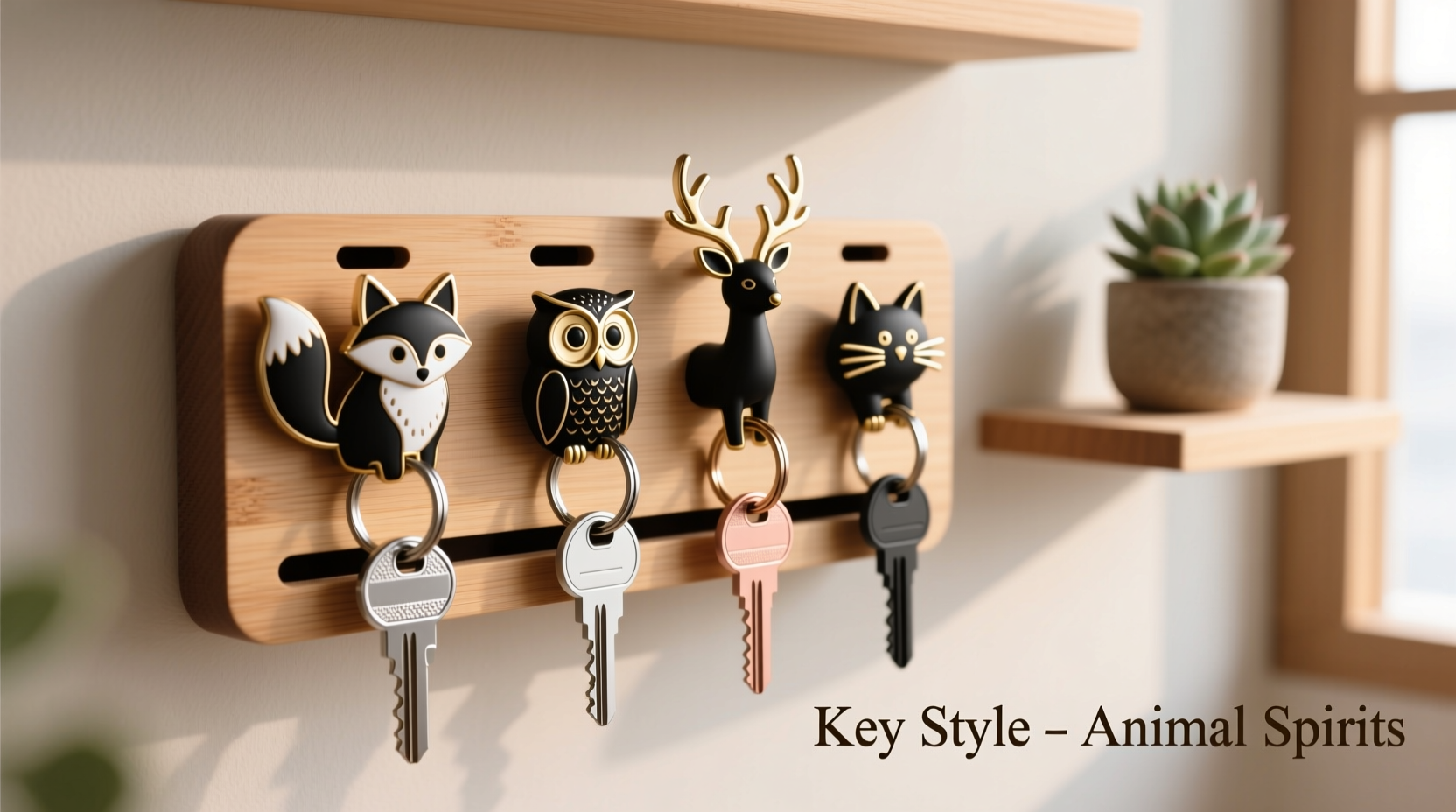
At first glance, animal motifs may seem purely decorative. However, their real value lies in cognitive recognition. The human brain processes shapes, colors, and familiar forms like animals faster than abstract symbols or plain metal. This makes identifying a specific keychain in a crowded bag or pocket nearly instantaneous.
Animals also carry emotional resonance. A fox might symbolize cleverness, an elephant represent memory, and a cat stand for independence. Choosing an animal that reflects your lifestyle or values adds a layer of personal meaning to an otherwise mundane object. Designers have capitalized on this by crafting durable, detailed animal keyrings from materials like silicone, enamel, zinc alloy, and even recycled metals—ensuring both longevity and visual impact.
Smart Organizing Strategies Using Animal Keyrings
The true power of animal-themed keyrings emerges when used as part of a deliberate organization system. Here are several practical methods to maximize both function and style.
Color and Species-Based Categorization
Assign different animals or colors to different key sets. For example:
- Lion (gold) – House keys
- Dolphin (blue) – Car keys
- Owl (gray) – Office or storage unit
- Bear (brown) – Cabin or vacation home
This method leverages both visual and symbolic cues, making it easy to grab the right keys without thinking. Families can assign each member their own animal—children often enjoy choosing a “key animal” that feels like theirs.
Size Matters: Matching Scale to Use
Larger animal keyrings (3–5 cm) work best for frequently accessed keys, such as house or car keys. Smaller, minimalist animal charms (1–2 cm) are ideal for less-used sets like bike locks or tool sheds. Oversized figures can be counterproductive if they make pockets bulge or snag in bags, so balance is key.
| Animal Type | Best For | Avoid If |
|---|---|---|
| Elephant (large, sturdy) | Main entry keys, shared family use | Pocket wear, minimalist style preference |
| Fox (medium, sleek) | Car or office keys | Need compact size for tight keychains |
| Turtle (small, flat) | Spare keys, luggage locks | Require high visibility |
| Peacock (colorful, wide) | Decorative use, gift sets | Carrying in narrow pockets |
Step-by-Step: Building Your Animal Key Organization System
- Inventory your keys – Sort all keys into categories: home, vehicle, workplace, storage, etc.
- Select matching animal themes – Choose one animal per category based on symbolism, color, or personal affinity.
- Purchase quality keyrings – Opt for rust-resistant materials with secure clasps (e.g., lobster claw or screw-lock).
- Attach and label – Use engraved tags or colored jump rings for backup identification.
- Test and refine – Use the system for a week and adjust animals or sizes based on comfort and speed of access.
Real-Life Example: The Peterson Family’s Key Chaos Fix
The Petersons, a family of five in Portland, struggled with misplaced keys every morning. With two cars, a home, a garden shed, and a shared Airbnb, their key drawer was a tangled mess. After adopting animal-themed keyrings, they assigned each household role a species:
- Mom: Owl (home & office)
- Dad: Bear (cars & garage)
- Teen daughter: Cat (bike & locker)
- Young son: Dinosaur (backdoor & playhouse)
- Guest set: Penguin (Airbnb)
Within days, morning confusion dropped by 70%. The kids enjoyed “finding the dinosaur,” and Dad never grabbed the wrong car key again. The system became part of their routine—and even sparked conversations with guests about the playful design.
“Personalization isn’t just about aesthetics—it reduces decision fatigue and builds intuitive habits.” — Dr. Lena Torres, Behavioral Designer at Urban Living Lab
Checklist: Optimizing Your Animal Keyring Setup
- ✅ Audit all keys and remove unused ones
- ✅ Group keys by frequency and location
- ✅ Select animal themes that are visually distinct
- ✅ Choose durable, tarnish-resistant materials
- ✅ Ensure clasp security (no accidental drops)
- ✅ Test the system during a busy week
- ✅ Involve household members in selection for buy-in
- ✅ Store spare sets in labeled containers with mini animal tags
Common Mistakes to Avoid
Even the most stylish system fails if poorly executed. Watch out for these pitfalls:
- Overcrowding: Too many keys on one animal ring defeats the purpose. Limit to 3–4 keys per ring.
- Poor material choice: Cheap zinc alloys may crack; plastic can fade. Invest in UV-resistant and corrosion-proof finishes.
- Ignoring ergonomics: Sharp edges or bulky shapes can damage pockets or scratch phone screens.
- Using similar animals: Avoid pairing a wolf and a dog or a panther and a leopard unless clearly differentiated by color or accessory.
FAQ
Can animal keyrings be used for professional settings?
Absolutely. Opt for sleek, minimalist animal designs in silver, black, or matte finishes. A subtle owl or fox can convey intelligence and agility without appearing childish. Many professionals use them discreetly to manage multiple access points without drawing attention.
Are there eco-friendly animal keyrings available?
Yes. Brands like EcoCharm and GreenLoop offer animal keyrings made from recycled ocean plastics, biodegradable resins, or sustainably sourced wood. Look for certifications like FSC or OceanBound Plastic to ensure authenticity.
How do I clean and maintain my animal keyrings?
Wipe with a soft, damp cloth monthly. For metal parts, use a dry toothbrush to remove grime from crevices. Avoid soaking silicone or painted pieces, as this can degrade finishes. Store in a dry place to prevent moisture buildup.
Conclusion: Turn Keys Into Conversation Starters
Organizing keys doesn’t have to be dull. With animal-themed keyrings, you transform a daily chore into an opportunity for self-expression and efficiency. These small accessories do more than hold metal—they anchor routines, reduce stress, and spark joy every time you reach for them. From the symbolic strength of a lion to the quiet wisdom of a turtle, your keys can reflect who you are while keeping your life running smoothly.




 浙公网安备
33010002000092号
浙公网安备
33010002000092号 浙B2-20120091-4
Comments
No comments yet. Why don't you start the discussion?