
The living room is the heart of the home—a space for relaxation, connection, and expression. Yet it’s also one of the most vulnerable to clutter. Magazines pile up, remotes vanish between cushions, and toys or tech accessories scatter without warning. While many reach for expensive storage bins or built-in shelving, there's a simpler, more sustainable solution: paper boxes. Often overlooked, paper boxes offer an affordable, customizable, and surprisingly elegant way to bring order to your living room. When used thoughtfully, they blend function with aesthetic appeal, proving that organization doesn’t require compromise on style.
Why Paper Boxes Work in Modern Living Rooms
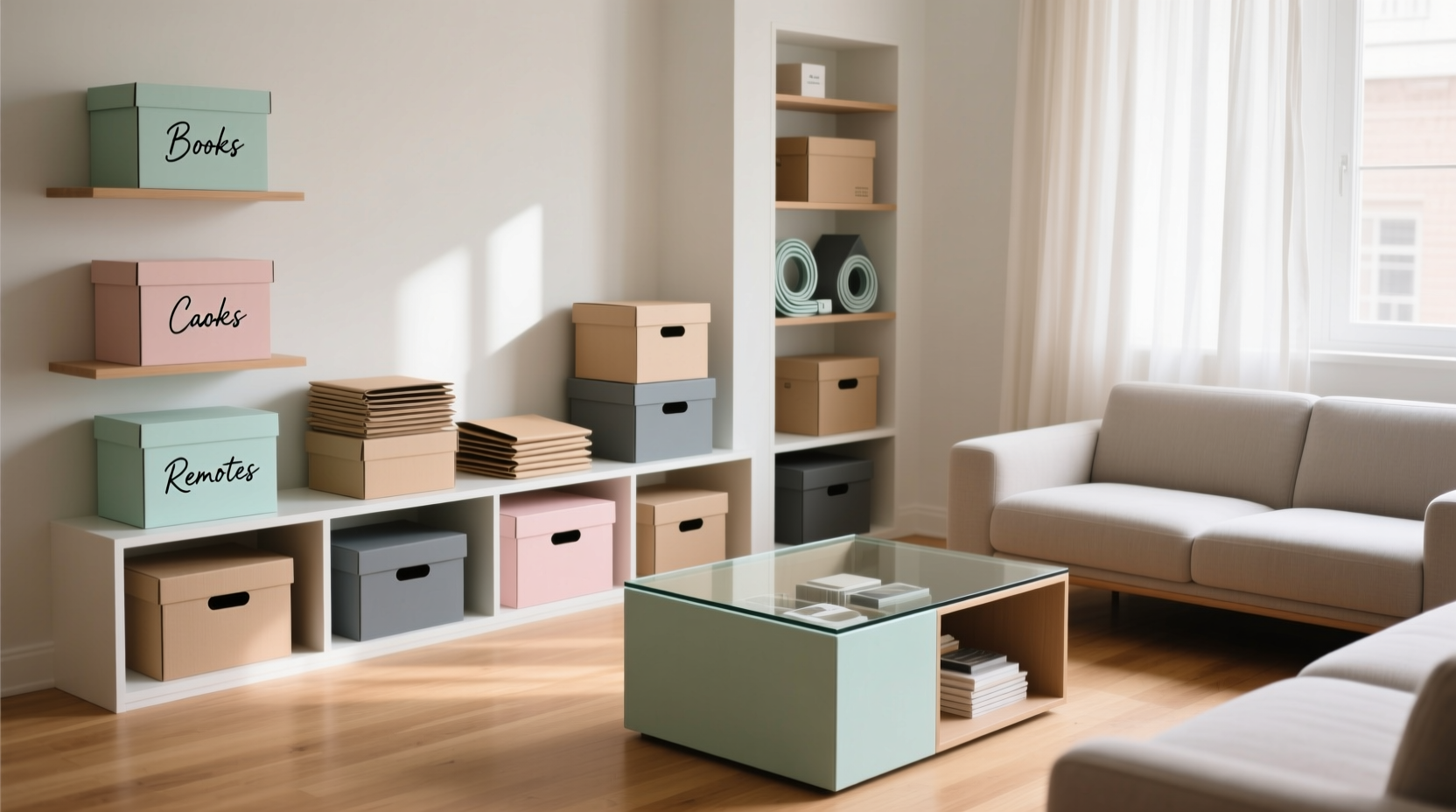
Paper boxes are lightweight, biodegradable, and easy to modify. Unlike plastic containers, they don’t contribute to microplastic pollution, and unlike wood or metal units, they can be folded, painted, or covered to match any décor. Available in various sizes—from small gift boxes to large shipping cartons—they adapt easily to different storage needs. Their versatility makes them ideal for temporary or rotating storage, especially in homes where layout and usage shift over time.
Interior designer Lena Torres notes:
“Sustainability and simplicity are defining trends in modern interiors. Paper-based storage aligns perfectly with both. With a bit of creativity, a plain kraft box can become a design feature.” — Lena Torres, Sustainable Interior Designer
Beyond eco-consciousness, paper boxes reduce visual noise. A well-wrapped or labeled box looks intentional rather than utilitarian. This psychological shift—from “storage container” to “design object”—is key to making organization feel seamless in shared spaces.
Step-by-Step: Transforming Paper Boxes into Stylish Storage
Turning ordinary paper boxes into attractive organizers takes minimal effort but yields significant results. Follow this sequence to maximize both utility and appearance:
- Select the right box: Choose sturdy corrugated or chipboard boxes with clean edges. Avoid flimsy packaging that sags under weight.
- Clean and reinforce: Remove labels and tape residue. For heavy items, double up boxes or line interiors with cardboard inserts for rigidity.
- Customize dimensions: Cut down taller boxes for lower-profile storage. Use a craft knife and ruler for straight edges.
- Wrap or cover: Apply decorative paper, fabric, or paint. Washi tape can create clean borders or geometric patterns.
- Add labeling: Use chalkboard stickers, printed tags, or handwritten calligraphy for clarity and charm.
- Arrange strategically: Group like-sized boxes on shelves or under tables. Align labels uniformly for a cohesive look.
Stylish Applications in Real Living Rooms
Consider Maya, a graphic designer living in a compact urban apartment. Her open-plan living area doubled as a workspace and guest zone, leading to constant clutter. She repurposed six medium-sized paper boxes from recent deliveries, wrapping each in muted-toned Japanese washi paper that matched her neutral palette. Three boxes were placed inside a low coffee table with a lift-top lid—one for tablet chargers, one for notebooks, and one for remote controls. Two others sat beside the sofa on a narrow console, storing sketchbooks and headphones. The last served as a disguised trash bin behind a folding screen, wrapped in black paper with a discreet ventilation cutout.
Within a week, Maya reported not only reduced mess but increased mindfulness about what entered her space. “I stopped letting things accumulate because I could see the boxes filling up,” she said. “It made tidying part of the daily rhythm.”
Smart Organizing Ideas by Category
Paper boxes excel when assigned specific functions. Here are practical applications across common living room challenges:
- Entertainment Hub: Store HDMI cables, gaming controllers, and streaming sticks in separate small boxes labeled with icons.
- Reading Nook: Use shallow boxes on floating shelves to sort magazines, bookmarks, and current reads.
- Kid-Friendly Zones: Let children decorate their own boxes for toy storage—personalization encourages cleanup habits.
- Seasonal Rotation: Label boxes for winter throws, holiday decor, or summer games; stack neatly behind a console or bench.
- Guest Essentials: Keep spare blankets, slippers, and travel-sized toiletries in a covered box near the guest seating.
Do’s and Don’ts: Best Practices for Longevity
| Do | Don’t |
|---|---|
| Use acid-free glue when applying decorative covers to prevent yellowing. | Store paper boxes in damp basements or humid bathrooms—moisture weakens structure. |
| Place boxes inside baskets or trays if used on carpeted floors to avoid edge fraying. | Overload boxes with heavy books or electronics unless reinforced. |
| Rotate seasonal boxes quarterly to check for wear and refresh labels. | Use glossy laminated wraps that peel over time and look cheap. |
| Group boxes in odd numbers (3 or 5) for visually pleasing arrangements. | Leave sharp corners exposed in homes with young children or pets. |
Checklist: Launch Your Paper Box Organization Project
Before you begin, gather supplies and clarify goals. This checklist ensures a smooth, effective process:
- ☐ Collect 5–7 clean, undamaged paper boxes of varying sizes
- ☐ Decide on a color or material theme (e.g., kraft + twine, pastel paper, monochrome)
- ☐ List the categories of items needing storage (e.g., remotes, coasters, pet supplies)
- ☐ Assign one box per category to avoid cross-contamination
- ☐ Prepare tools: scissors, ruler, glue stick, labels, protective liner (optional)
- ☐ Designate zones in the living room (shelf, cabinet, under-table, etc.)
- ☐ Complete customization and place boxes within 48 hours to maintain momentum
Frequently Asked Questions
Can paper boxes really hold up over time?
Yes—when properly reinforced and used for appropriate contents. Light to medium-weight items like blankets, books, or accessories pose no issue. For durability, opt for double-walled corrugated boxes or apply a light sealant like Mod Podge to the exterior.
How do I make paper boxes look high-end?
Focus on consistency. Use matching wrap materials, uniform labeling, and symmetrical placement. Adding fabric lids or wooden knobs instantly elevates the look. Pairing boxes with woven trays or marble trays creates contrast and refinement.
Are paper boxes safe around children and pets?
Generally yes, but avoid placing them where they might be knocked over or chewed. Rounded corners (achieved with sandpaper or fabric binding) reduce injury risk. Supervise young children during use, and consider non-toxic finishes only.
Conclusion: Elevate Order with Intention and Simplicity
Organizing your living room doesn’t demand costly renovations or rigid systems. Paper boxes, often dismissed as disposable, can become intelligent, beautiful components of a well-curated space. By investing a small amount of time in selection, customization, and placement, you transform clutter into calm. These solutions are not just functional—they reflect a mindful approach to living: resourceful, adaptable, and aesthetically aware.




 浙公网安备
33010002000092号
浙公网安备
33010002000092号 浙B2-20120091-4
Comments
No comments yet. Why don't you start the discussion?