
Choosing between smart blinds and traditional curtains isn’t just about aesthetics—it’s a decision that affects your home’s comfort, energy consumption, and monthly utility bills. As homeowners increasingly prioritize sustainability and convenience, understanding the real differences in energy efficiency and automation costs becomes essential. While curtains have been a staple for centuries, smart blinds represent the modern shift toward connected, responsive living spaces. This article breaks down both options across performance, cost, and functionality so you can invest wisely in your home’s future.
Energy Efficiency: How Window Treatments Impact Heating and Cooling
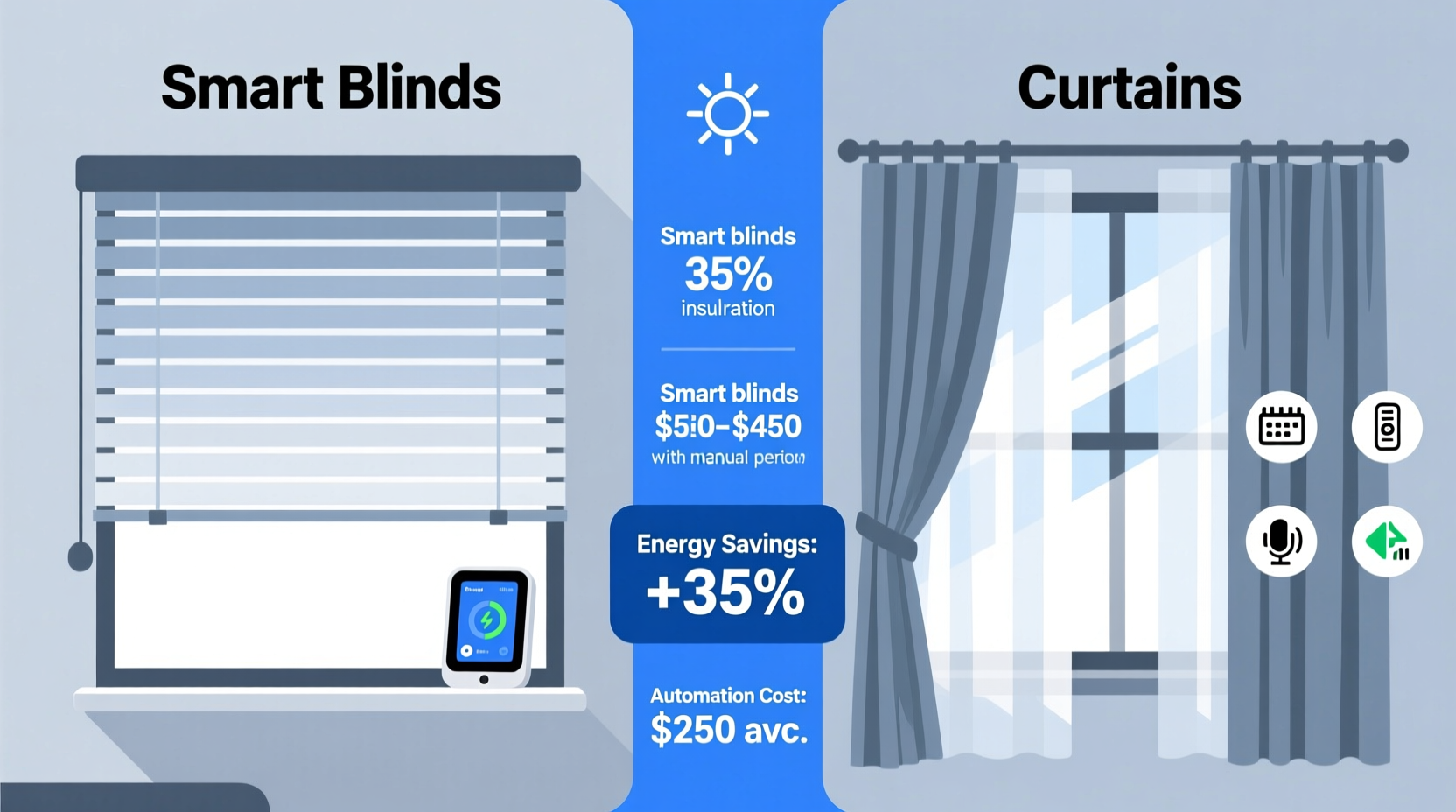
The way you cover your windows directly influences how much heat enters or escapes your home. In winter, poorly insulated windows can account for up to 30% of heat loss. In summer, unmanaged sunlight turns rooms into greenhouses, increasing reliance on air conditioning. The right window treatment can reduce this effect significantly—by as much as 25% according to the U.S. Department of Energy.
Curtains offer passive insulation. Heavy, lined drapes create a barrier between indoor air and cold glass, reducing convective heat loss. In summer, dark-colored or blackout curtains block solar gain when drawn during peak daylight hours. However, their effectiveness depends entirely on user behavior—leaving them open by accident on a hot afternoon negates any benefit.
Smart blinds, on the other hand, actively manage thermal exposure. Motorized shades with automated scheduling close at sunrise on south-facing windows and open during cooler evening hours. Some models integrate with weather forecasts and indoor temperature sensors to adjust in real time. This dynamic response enhances energy savings without requiring daily attention.
Comparing Automation Costs: Upfront Investment vs Long-Term Savings
When evaluating smart blinds versus curtains, cost is often the first consideration—but it shouldn’t be the only one. Initial pricing varies dramatically, and long-term value depends on usage patterns, durability, and energy savings.
| Feature | Smart Blinds (Average) | Traditional Curtains (Average) |
|---|---|---|
| Upfront Cost per Window | $200–$600 | $50–$200 |
| Installation | Professional or DIY (battery/wired) | DIY-friendly |
| Automation Features | Scheduling, voice control, app integration | None (unless motorized add-ons used) |
| Lifespan | 7–10 years (electronics may degrade) | 10–15 years (with care) |
| Energy Savings Potential | 15–25% reduction in HVAC load | 10–15% (user-dependent) |
| Maintenance | Battery replacement, firmware updates | Cleaning, re-hanging after wash |
The higher entry price of smart blinds reflects embedded technology: motors, wireless connectivity (Zigbee, Z-Wave, Wi-Fi), and compatibility with platforms like Google Home, Apple HomeKit, or Alexa. While some budget systems exist, premium brands such as Lutron, Somfy, and IKEA’s FYRTUR offer better reliability and integration.
Curtains are far less expensive initially, but their energy-saving potential hinges on consistent manual operation. A study by the Lawrence Berkeley National Laboratory found that occupant behavior reduces actual curtain efficiency by nearly half compared to theoretical maximums. Automated solutions eliminate this gap.
“Automation removes human inconsistency from energy management. Smart shading systems deliver measurable HVAC savings, especially in climates with extreme seasonal shifts.” — Dr. Rebecca Tran, Building Efficiency Researcher, UC Berkeley
Real-World Example: A Denver Homeowner’s Experience
Consider Mark T., a homeowner in Denver, Colorado, where temperatures swing from -10°F in winter to 90°F in summer. He replaced his old cotton drapes with Lutron Serena smart roller shades across eight large windows. Each shade cost $380 installed, totaling $3,040—an investment he financed over two years.
Using Lutron’s app, he programmed the shades to close at 9:00 AM on sunny winter days to trap heat, then open at 4:00 PM to allow low-angle sunlight in. In summer, they closed automatically at 11:00 AM to block solar heat gain. Integrated with an Ecobee thermostat, the system adjusted based on indoor temperature and local weather.
After one year, his gas and electric bills dropped by an average of 18%. He estimates annual savings of $420, meaning the system will pay for itself in about seven years. Beyond savings, he values the convenience—no more remembering to adjust curtains before leaving for work.
Mark’s experience illustrates that while smart blinds require a significant upfront commitment, their combination of automation, precision, and responsiveness delivers tangible returns in suitable environments.
Step-by-Step Guide: Choosing the Right Option for Your Home
Deciding between smart blinds and curtains isn’t one-size-fits-all. Follow this process to determine the best fit based on your priorities:
- Evaluate your climate and sun exposure. Homes in regions with intense sun (e.g., Southwest U.S.) benefit more from automated shading. North-facing rooms may not need advanced controls.
- Assess your daily routine. If you’re rarely home to adjust window coverings, automation adds real value. If you enjoy hands-on control, curtains may suffice.
- Calculate potential energy savings. Use the DOE’s rule of thumb: effective window treatments can cut HVAC use by 10–25%. Multiply your annual heating/cooling cost by 0.15 to estimate savings.
- Compare lifecycle costs. Include purchase, installation, maintenance, and expected lifespan. Factor in whether smart features align with your existing smart home ecosystem.
- Test a pilot room. Install smart blinds in one high-exposure room first. Monitor comfort and bill changes before scaling.
Hybrid Solutions: Getting the Best of Both Worlds
You don’t always have to choose between smart blinds and curtains. Many designers and energy-conscious homeowners combine both for layered functionality.
A common approach is installing motorized cellular (honeycomb) shades close to the glass, then hanging decorative thermal curtains behind them. During the day, the cellular shades manage light and insulation automatically. At night, curtains are drawn for added privacy and warmth. This dual-layer method can improve R-values—the measure of thermal resistance—by up to 50% compared to either solution alone.
Another hybrid uses sheer smart roller blinds paired with stationary curtain panels. The rollers adjust throughout the day for glare and heat control, while the fixed curtains maintain aesthetic continuity.
While this increases initial cost and complexity, the synergy enhances both performance and design flexibility. It’s particularly effective in living rooms and master bedrooms where comfort and ambiance matter most.
Checklist: Key Questions Before You Buy
- Do I live in a climate with extreme heat or cold?
- Am I likely to forget to close/open window treatments at optimal times?
- Do I already use a smart home platform (Google, Alexa, Apple)?
- Are my windows large or numerous, making manual operation impractical?
- Is my primary goal energy savings, convenience, or aesthetics?
- Can I access rebates or tax incentives for energy-efficient upgrades?
- Will I own this home long enough to recoup the investment?
Frequently Asked Questions
Do smart blinds really save energy?
Yes, when properly programmed. Studies show automated shades that respond to sun position and indoor temperature can reduce cooling loads by up to 30% in sunny climates. In colder areas, closing shades at night adds an insulating layer equivalent to an extra pane of glass.
Can I automate existing curtains?
Limited options exist. Devices like SwitchBot Curtain or Geeni Smart Track use motorized sliders to open and close standard curtain rods. However, they work best with lightweight fabrics and straight tracks. They also lack the seamless integration and quiet operation of built-in smart blinds.
Which is better for privacy: smart blinds or curtains?
Curtains generally offer superior privacy due to full coverage and fabric density. Smart blinds, especially slatted models like venetians, may leave small gaps. For maximum privacy, consider blackout smart shades or combine motorized blinds with sheer curtains.
Final Considerations: Making a Future-Proof Decision
Smart blinds and curtains serve different roles in modern homes. Curtains remain a cost-effective, versatile option for decoration and moderate insulation—especially when used diligently. But for those seeking hands-free comfort, optimized energy use, and integration with a growing smart home ecosystem, smart blinds offer compelling advantages.
The key is alignment: match your choice to your lifestyle, climate, and long-term plans. If you're planning to stay in your home for five or more years, the return on investment from smart blinds becomes increasingly favorable. If you rent or plan to move soon, high-quality curtains with thermal lining may be the smarter short-term play.
Technology continues to evolve. New materials like electrochromic films and AI-driven climate prediction algorithms may soon make smart shading even more efficient. But today’s systems are already capable of meaningful impact—reducing carbon footprints, lowering bills, and enhancing daily comfort.
“The next decade of home efficiency won’t come from bigger furnaces or thicker walls—it will come from intelligent surfaces that adapt in real time.” — Michael Greve, Senior Analyst, Rocky Mountain Institute
Take Action Today
Your windows are more than views to the outside world—they’re active interfaces between your home and the environment. Whether you choose the timeless appeal of well-chosen curtains or embrace the precision of smart blinds, make your decision intentional. Start by auditing one room: track its temperature, sunlight exposure, and how often you interact with its window coverings. Use that data to guide your upgrade path.
Small changes compound. Investing in smarter window treatments today sets the foundation for a more comfortable, efficient, and responsive home tomorrow.




 浙公网安备
33010002000092号
浙公网安备
33010002000092号 浙B2-20120091-4
Comments
No comments yet. Why don't you start the discussion?