
Lighting plays a subtle yet powerful role in shaping our mental state. From the crisp morning sunlight that wakes us up to the warm glow of a bedside lamp that signals bedtime, light influences alertness, mood, and cognitive performance. With the rise of smart bulbs, we now have unprecedented control over our indoor lighting—adjusting not just brightness, but color temperature and hue. But when it comes to improving focus or encouraging relaxation, which is more effective: colored light from smart bulbs or carefully tuned white light? The answer lies in understanding how different wavelengths interact with our biology and environment.
The Science Behind Light and Brain Function
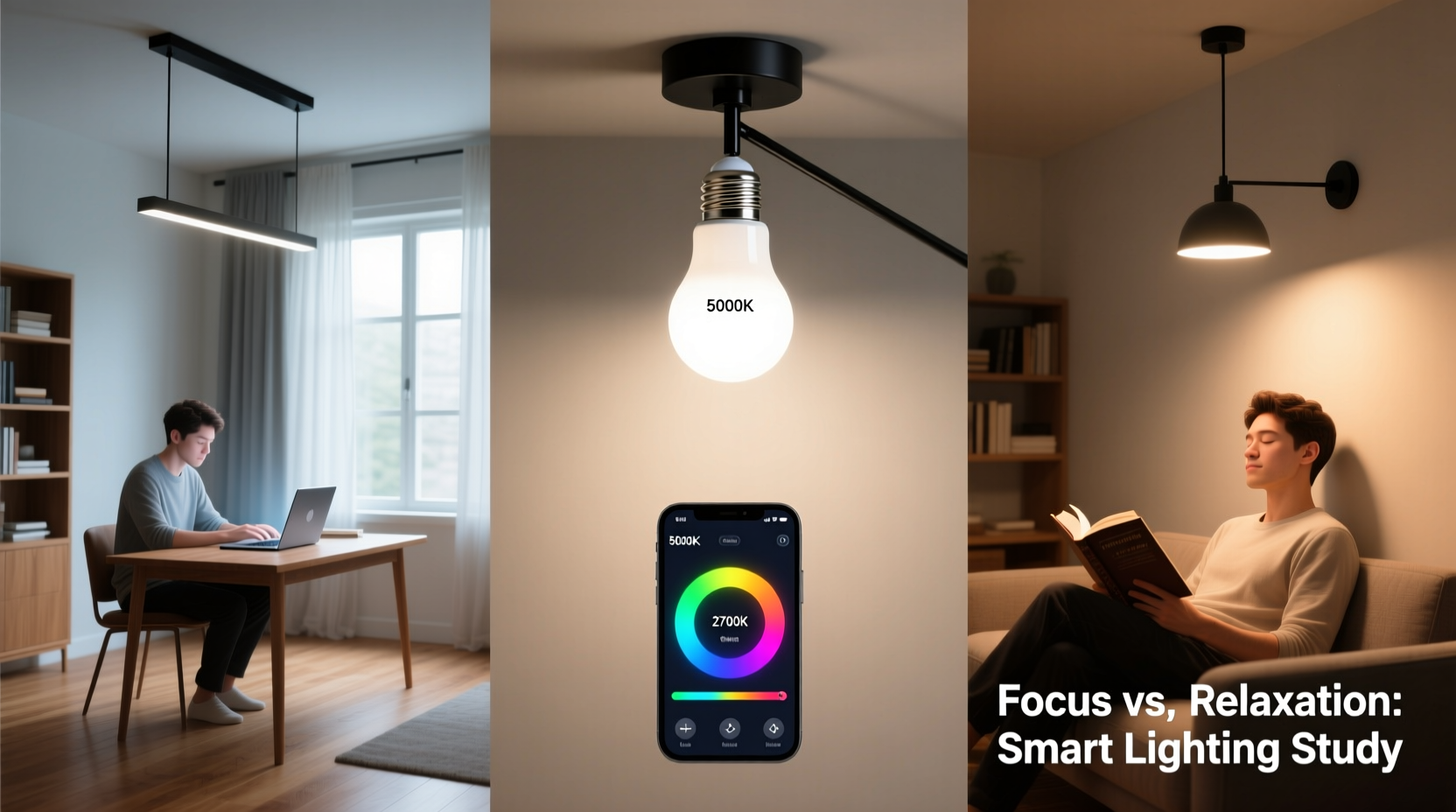
Human circadian rhythms—the internal clock regulating sleep, wakefulness, and hormone production—are deeply influenced by light exposure. Specialized cells in the retina, called intrinsically photosensitive retinal ganglion cells (ipRGCs), are particularly sensitive to blue-enriched light. These cells send signals directly to the suprachiasmatic nucleus in the brain, the body’s master clock, helping regulate melatonin release.
During the day, exposure to cooler, blue-rich white light (5000K–6500K) suppresses melatonin and increases alertness, reaction time, and concentration. In contrast, warmer light (2700K–3000K), low in blue spectrum, supports melatonin production, preparing the body for rest.
Smart bulbs extend this capability by offering full-spectrum color options beyond standard white tones. While red, amber, or soft pink hues may seem decorative, research suggests they can also impact mood and physiological states. However, not all colors are equally effective for every purpose—and some may even interfere with natural rhythms if used incorrectly.
“Light is one of the most potent environmental cues for human physiology. Misuse of artificial light, especially at night, can disrupt sleep and impair daytime cognition.” — Dr. Joshua Gooley, Neuroscientist, Harvard Medical School
White Light: Precision Tuning for Cognitive Performance
White light isn’t a single entity—it spans a range of color temperatures measured in Kelvin (K). This variation has measurable effects on mental performance:
- Cool White (5000K–6500K): Mimics midday sunlight. Enhances attention, reaction speed, and visual clarity. Ideal for workspaces, study areas, and tasks requiring sustained concentration.
- Natural White (4000K–4500K): Balanced between warm and cool. Supports moderate alertness without harshness. Suitable for kitchens, bathrooms, or multi-use rooms.
- Warm White (2700K–3000K): Emits a yellowish glow similar to incandescent bulbs or candlelight. Promotes relaxation and reduces arousal. Best for bedrooms, living rooms, and evening use.
A 2020 study published in *Chronobiology International* found that office workers exposed to dynamic white lighting—shifting from cool in the morning to warm in the evening—reported better focus during work hours and improved sleep quality at night. The key was alignment with natural daylight patterns.
Smart Bulb Colors: Emotional Impact vs Functional Benefit
While white light primarily affects alertness through biological pathways, colored light often works via psychological and emotional associations. For example:
- Blue: Linked to calmness and depth (e.g., oceans, skies), but only at low intensity. High-intensity blue, especially at night, can delay sleep onset.
- Green: Associated with nature and balance. Some studies suggest green light may reduce anxiety and support steady focus without overstimulation.
- Red/Amber: Long-wavelength light minimally suppresses melatonin. Ideal for nighttime navigation or winding down before bed.
- Purple/Pink: Often perceived as soothing or creative, though scientific evidence of cognitive benefit is limited. May be useful for ambiance rather than performance.
However, using vibrant colors like bright red or electric blue for extended periods can cause visual fatigue or emotional overstimulation, counteracting relaxation goals. The aesthetic appeal of colorful lighting should not overshadow functional needs.
When Color Works: Targeted Use Cases
Color-tunable smart bulbs shine in specific scenarios where mood modulation matters more than cognitive precision:
- Using soft amber during evening meditation to deepen relaxation.
- Flashing gentle green pulses as a non-intrusive focus timer during Pomodoro sessions.
- Setting a calming lavender hue in a child’s room to ease bedtime resistance.
But for deep work, reading, or analytical thinking, pure white light remains superior due to higher contrast and reduced chromatic distortion.
Comparative Effectiveness: Focus vs Relaxation
To clarify the best lighting choices, here's a direct comparison of smart bulb color options versus tunable white light across key performance metrics.
| Light Type | Focus & Concentration | Relaxation Support | Circadian Safety (Night) | Best Use Case |
|---|---|---|---|---|
| Cool White (6500K) | ★★★★★ | ★☆☆☆☆ | ★☆☆☆☆ | Morning work, study, task lighting |
| Warm White (2700K) | ★★☆☆☆ | ★★★★☆ | ★★★★★ | Evening lounging, pre-sleep routine |
| Soft Blue (Low Intensity) | ★★★☆☆ | ★★★☆☆ | ★☆☆☆☆ | Short-term calm (not recommended at night) |
| Green (Nature Tone) | ★★★★☆ | ★★★☆☆ | ★★★☆☆ | Focused relaxation, reading nooks |
| Amber/Red (Dim) | ★☆☆☆☆ | ★★★★★ | ★★★★★ | Night lights, meditation, sleep prep |
| Vivid Purple/Pink | ★☆☆☆☆ | ★★☆☆☆ | ★☆☆☆☆ | Decorative, creative spaces only |
This table illustrates that while certain colors offer niche benefits, tunable white light provides the most consistent results across both focus and relaxation when adjusted appropriately throughout the day.
Step-by-Step Guide: Optimizing Your Lighting Schedule
Maximizing the benefits of smart lighting requires intentionality. Follow this daily timeline to align your environment with your cognitive and emotional needs.
- 6:30–7:30 AM – Wake-Up Mode
Set bulbs to 6000K cool white at 80–100% brightness. This mimics sunrise and suppresses melatonin, helping you feel alert faster. - 9:00 AM–12:00 PM – Peak Focus
Use 5000K natural-cool white in workspaces. Pair with task lighting to reduce eye strain during detailed activities. - 12:00–2:00 PM – Midday Balance
Shift to 4000K neutral white. Avoid overly cool tones to prevent mental fatigue. Take breaks near windows if possible. - 6:00–8:00 PM – Wind-Down Transition
Gradually dim lights and shift to 3000K warm white. Turn off screens or enable night mode to complement lighting changes. - 9:00–10:00 PM – Pre-Sleep Relaxation
Use dim red or amber lighting (if available) or stick to 2700K warm white at 20% brightness. Avoid blue or white overhead lights. - Nighttime Navigation – Red Night Light Mode
Install smart bulbs in hallways or bathrooms set to red at minimal brightness. Preserves night vision and doesn’t disrupt sleep cycles.
Mini Case Study: A Remote Worker’s Lighting Transformation
Sarah, a software developer working from home in Portland, struggled with afternoon slumps and difficulty disconnecting at night. Her workspace used static warm-white ceiling lights, and she often worked late under overhead LEDs.
After integrating tunable white smart bulbs, she restructured her lighting:
- Morning: 6000K light activated at 7 AM with a gradual ramp-up over 30 minutes.
- Work Hours: 5000K light from 9 AM to 5 PM, supplemented with a daylight desk lamp.
- Evening: Transition to 3000K at 6 PM; all bulbs dimmed by 8 PM.
- Night: Bedroom lights set to amber at 10% after 9:30 PM.
Within three weeks, Sarah reported a 40% reduction in midday fatigue, improved coding accuracy, and falling asleep 25 minutes faster on average. She noted that the structured lighting created “invisible boundaries” between work and rest.
Action Checklist: Optimize Your Lighting Today
Apply these steps to enhance focus and relaxation in your space:
- ✅ Replace fixed-temperature bulbs with tunable white or full-color smart bulbs.
- ✅ Set morning routines to deliver cool white light within 30 minutes of waking.
- ✅ Use 4000K–5000K lighting in home offices and study areas during active hours.
- ✅ Dim lights and shift to 2700K–3000K by early evening.
- ✅ Avoid blue and bright white light 2 hours before bedtime.
- ✅ Use red or amber for night-time movement (e.g., bathroom trips).
- ✅ Automate schedules to maintain consistency, even on weekends.
Frequently Asked Questions
Can colored smart bulbs improve concentration like cool white light?
No. While certain colors like green may support mild focus due to their association with natural environments, they lack the spectral power in the blue-green range needed to stimulate alertness effectively. Cool white light remains the most scientifically supported option for enhancing concentration.
Is red light truly better for nighttime use?
Yes. Red light has the longest wavelength in the visible spectrum and produces the least suppression of melatonin. Studies show that exposure to red light at night causes significantly less disruption to circadian rhythms compared to blue, green, or even warm white light.
Do I need full-color smart bulbs, or are tunable white bulbs enough?
For most people focused on health, productivity, and relaxation, tunable white bulbs are sufficient—and often preferable. They eliminate the temptation to use stimulating colors at inappropriate times. Full-color bulbs add versatility for ambiance but should be used mindfully.
Conclusion: Lighting as a Tool for Well-Being
The choice between smart bulb colors and white light isn’t about novelty—it’s about function. While colorful lighting can create atmosphere and support emotional expression, tunable white light delivers unmatched benefits for both focus and relaxation when aligned with natural circadian rhythms. By treating light as an active component of your daily routine—not just a background utility—you gain a simple, science-backed method to sharpen your mind during the day and restore calm at night.




 浙公网安备
33010002000092号
浙公网安备
33010002000092号 浙B2-20120091-4
Comments
No comments yet. Why don't you start the discussion?