
As December rolls around, homes across neighborhoods begin their seasonal transformation. Twinkling rooftops, glowing wreaths, and trees aglow with color signal the arrival of the holidays. At the heart of this spectacle are Christmas lights—simple strands that have evolved from basic incandescent bulbs into Wi-Fi-enabled, app-controlled spectacles. But for many, a pressing question remains: Is upgrading to smart Christmas lights really worth it compared to the trusted tradition of classic string lights?
The answer isn’t just about brightness or color variety. It’s about lifestyle, budget, ease of use, and long-term value. Whether you're a minimalist decorator or an all-out light enthusiast, understanding the real differences between smart and traditional lights can save time, money, and frustration.
Understanding the Core Differences
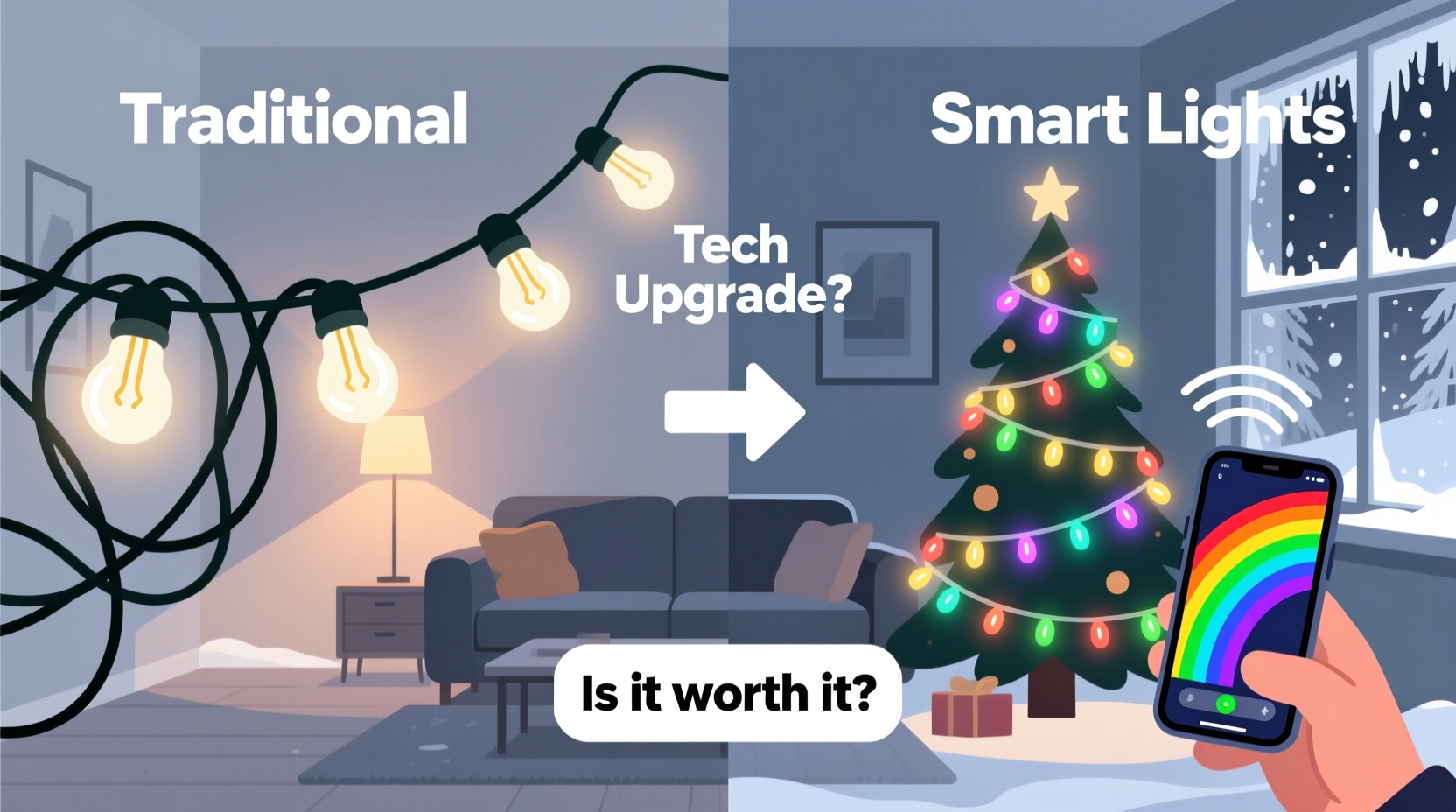
Traditional string lights have been the standard for decades. Typically powered by incandescent or LED bulbs, they come in fixed colors and patterns, often requiring manual setup each season. They plug directly into an outlet and stay on—or blink—until turned off.
Smart Christmas lights, on the other hand, connect to your home network via Wi-Fi, Bluetooth, or a hub. Controlled through smartphone apps or voice assistants like Alexa or Google Assistant, they offer dynamic features such as color changing, scheduling, music synchronization, and remote operation. Some models even support geofencing—automatically turning on when you approach home.
While both types illuminate, the experience diverges sharply. Traditional lights offer simplicity and nostalgia; smart lights deliver precision and personalization.
Cost Comparison: Upfront vs. Long-Term Value
One of the most immediate barriers to adopting smart lights is price. A 50-light strand of basic LED string lights costs between $8 and $15. The same length in smart RGB LEDs can range from $30 to $60—or more for premium brands like Philips Hue or Govee.
However, evaluating only upfront cost misses the bigger picture. Smart lights typically use energy-efficient LEDs, consume less power, and last longer—often rated for 25,000 to 50,000 hours. Over several holiday seasons, reduced energy bills and fewer replacements add up.
Moreover, smart lights eliminate the need for multiple sets of different colors or animation styles. Instead of buying red-and-white, multicolor, warm white, and chasing-effect strings, one set of smart lights can replicate all these looks digitally.
“Smart lighting pays for itself in versatility. You’re not just buying lights—you’re investing in a customizable display system.” — Daniel Reyes, Home Automation Consultant
Features That Set Smart Lights Apart
The true advantage of smart Christmas lights lies in functionality. Here are key capabilities traditional lights simply can’t match:
- Remote Control: Turn lights on or off from anywhere using your phone—even if you forgot before leaving for vacation.
- Scheduling: Program lights to turn on at sunset and off at midnight, ensuring consistent displays without daily effort.
- Color Customization: Choose millions of colors, create gradients, or match your home’s exterior palette with precision.
- Music Sync: Some models pulse or change color in rhythm with holiday music, enhancing outdoor gatherings or indoor ambiance.
- Voice Integration: “Alexa, turn on the Christmas lights” is faster than walking to an outlet or untangling timers.
- Scene Presets: Save different looks—“Cozy Fireplace,” “Festive Red & Green,” “Winter Wonderland”—and switch between them instantly.
For families with young children or elderly relatives, the ability to control lights without climbing ladders or navigating dark attics adds significant safety and convenience.
Practical Limitations of Smart Technology
Despite their advantages, smart lights aren’t perfect. Several drawbacks may deter some users:
- Wi-Fi Dependency: If your internet goes down, app control fails. While most retain local functions (on/off), advanced features may be inaccessible.
- Setup Complexity: Pairing lights with apps, syncing multiple strands, and troubleshooting connection issues can frustrate non-tech-savvy users.
- Power Requirements: Many smart light strands require constant power. Using extension cords or outdoor-rated outlets is essential, especially in wet climates.
- Bulkier Design: Smart bulbs often have larger bases to house circuitry, making them harder to conceal in tight spaces or delicate garlands.
- Limited Range: Bluetooth-based systems work best within 30–50 feet. Wi-Fi models depend on router strength, particularly for backyard or rooftop installations.
In contrast, traditional lights are nearly foolproof: plug in, switch on, enjoy. No updates, no pairing, no passwords.
Real-World Example: The Johnson Family Holiday Display
The Johnsons live in suburban Minnesota, where winter temperatures regularly drop below zero. For years, they used traditional incandescent lights on their roofline and tree. Each November, Mark Johnson spent two full weekends installing, testing, and repairing broken strands. Timers helped, but inconsistent daylight hours meant lights were sometimes on during sunrise or off during evening arrivals.
Last year, he upgraded to a Wi-Fi-enabled smart LED system. He installed four 100-light strands controlled via a single app. He programmed them to turn on at dusk (using GPS-based sunset tracking) and off at 10 p.m. He created a “Movie Night” scene with soft white tones and a “Holiday Party” preset with animated red-green waves.
During a weekend trip, he realized the lights were still on. From his hotel in Denver, he opened the app and turned them off—saving energy and avoiding neighbor complaints. When guests arrived, he activated the music-sync mode for a festive entry.
Though the initial investment was $220 (versus $60 for traditional equivalents), Mark estimates he saved eight hours in setup and maintenance. His wife noted fewer tripped circuits due to lower power draw. For the Johnsons, the tech upgrade wasn’t just convenient—it redefined their holiday routine.
Comparison Table: Smart vs. Traditional Christmas Lights
| Feature | Smart Christmas Lights | Traditional String Lights |
|---|---|---|
| Initial Cost (50-light strand) | $30–$60 | $8–$15 |
| Energy Efficiency | High (LED + low wattage) | Moderate to high (if LED); poor (if incandescent) |
| Color Options | Millions (RGB capable) | Fixed (single color or multi-color) |
| Control Method | App, voice, schedule, remote | Manual switch or timer |
| Installation Complexity | Moderate to high | Low |
| Durability | High (but sensitive to moisture ingress) | Varies (incandescent fragile; LED robust) |
| Special Features | Scheduling, music sync, geofencing | Basic blinking or steady modes |
| Long-Term Maintenance | Low (fewer replacements) | Moderate (bulb burnout, wire damage) |
When to Stick With Tradition
Smart lights aren’t always the better choice. Consider sticking with traditional string lights if:
- You decorate minimally—just a tree or porch railing.
- You prefer the warm, soft glow of incandescent bulbs (some find smart LEDs too bright or clinical).
- You lack reliable outdoor Wi-Fi coverage.
- You rent your home and don’t want to invest in semi-permanent setups.
- You enjoy the ritual of manual decorating and see tech-free traditions as part of the season’s charm.
Additionally, vintage-style displays—think retro aluminum trees or mid-century decor—often pair better with simple, unchanging light strings that evoke authenticity.
Step-by-Step Guide to Transitioning to Smart Lights
If you're ready to make the leap, follow this practical sequence:
- Assess Your Needs: Determine how many strands you’ll need and where they’ll go (indoor, outdoor, covered, exposed).
- Check Network Coverage: Ensure your Wi-Fi reaches all installation areas. Use a signal tester app if unsure.
- Choose a Compatible Ecosystem: Pick lights that work with your existing smart home platform (e.g., Alexa, Google Home, Apple HomeKit).
- Start Small: Begin with one or two strands to test performance before scaling up.
- Label and Organize: Tag each strand in the app (e.g., “Front Roof,” “Tree Top”) for easy control.
- Set Schedules: Program on/off times based on local sunset/sunrise data.
- Create Scenes: Design 2–3 favorite looks and assign them to voice commands or routines.
- Store Properly Off-Season: Keep in dry containers, coiled gently, away from extreme temperatures.
Frequently Asked Questions
Can smart Christmas lights work without Wi-Fi?
Some functions may still work locally—like on/off via Bluetooth—but full features (remote access, scheduling, voice control) require an active internet connection. Always check product specs for offline capabilities.
Are smart lights safe for outdoor use?
Yes, but only if labeled as weather-resistant or IP65/IP67 rated. Always plug them into GFCI-protected outlets and avoid submerging connectors. Use protective covers for junction boxes.
Do smart Christmas lights burn out faster?
No—in fact, they typically last longer due to efficient LED technology and built-in current regulation. However, electronic components (like controllers) can fail before the bulbs do, so reliability varies by brand.
Final Checklist Before Buying Smart Lights
- ✅ Confirm outdoor rating (IP65 or higher for wet locations)
- ✅ Verify compatibility with your smart home assistant
- ✅ Check maximum run length (how many strands can connect end-to-end)
- ✅ Review app reviews for stability and ease of use
- ✅ Ensure warranty covers both bulbs and controller units
- ✅ Measure total distance from outlet to farthest light point
- ✅ Plan storage solution for off-season protection
Conclusion: Is the Upgrade Worth It?
The shift from traditional to smart Christmas lights mirrors broader trends in home living—automation, personalization, and efficiency. For those who value convenience, creative expression, and long-term savings, smart lights are absolutely worth the investment.
They reduce physical labor, expand design possibilities, and integrate seamlessly into modern lifestyles. Parents, travelers, entertainers, and tech enthusiasts will find particular value in remote access and programmable scenes.
Yet tradition has its own magic. The tactile process of untangling, testing, and hanging familiar strands connects us to memories and rituals. For some, the warmth of a simple string of lights carries more emotional weight than any rainbow fade effect.
The decision ultimately hinges on your priorities. If you seek control, consistency, and innovation, embrace the upgrade. If simplicity, affordability, and sentimentality matter most, there’s no shame in sticking with what works.
Many decorators now blend both worlds—using smart lights for large displays and traditional strands for intimate touches. This hybrid approach balances practicality with nostalgia, offering the best of both eras.




 浙公网安备
33010002000092号
浙公网安备
33010002000092号 浙B2-20120091-4
Comments
No comments yet. Why don't you start the discussion?