
For decades, the peephole has been the standard for front-door visibility—a simple, no-cost way to see who’s on the other side without opening the door. But with the rise of smart home technology, many homeowners are reconsidering this basic tool in favor of something more advanced: the smart doorbell. These devices offer live video feeds, motion detection, two-way audio, and cloud storage—all accessible from a smartphone. The question now isn’t just about convenience, but value: Is replacing a reliable peephole with a smart doorbell truly a worthwhile security upgrade?
The answer depends on your lifestyle, security needs, budget, and how you interact with your home. While a peephole serves its purpose, a smart doorbell transforms passive observation into active monitoring. This article breaks down the differences, evaluates real-world benefits, and helps you decide whether the investment makes sense for your household.
Understanding the Basics: Peephole vs Smart Doorbell
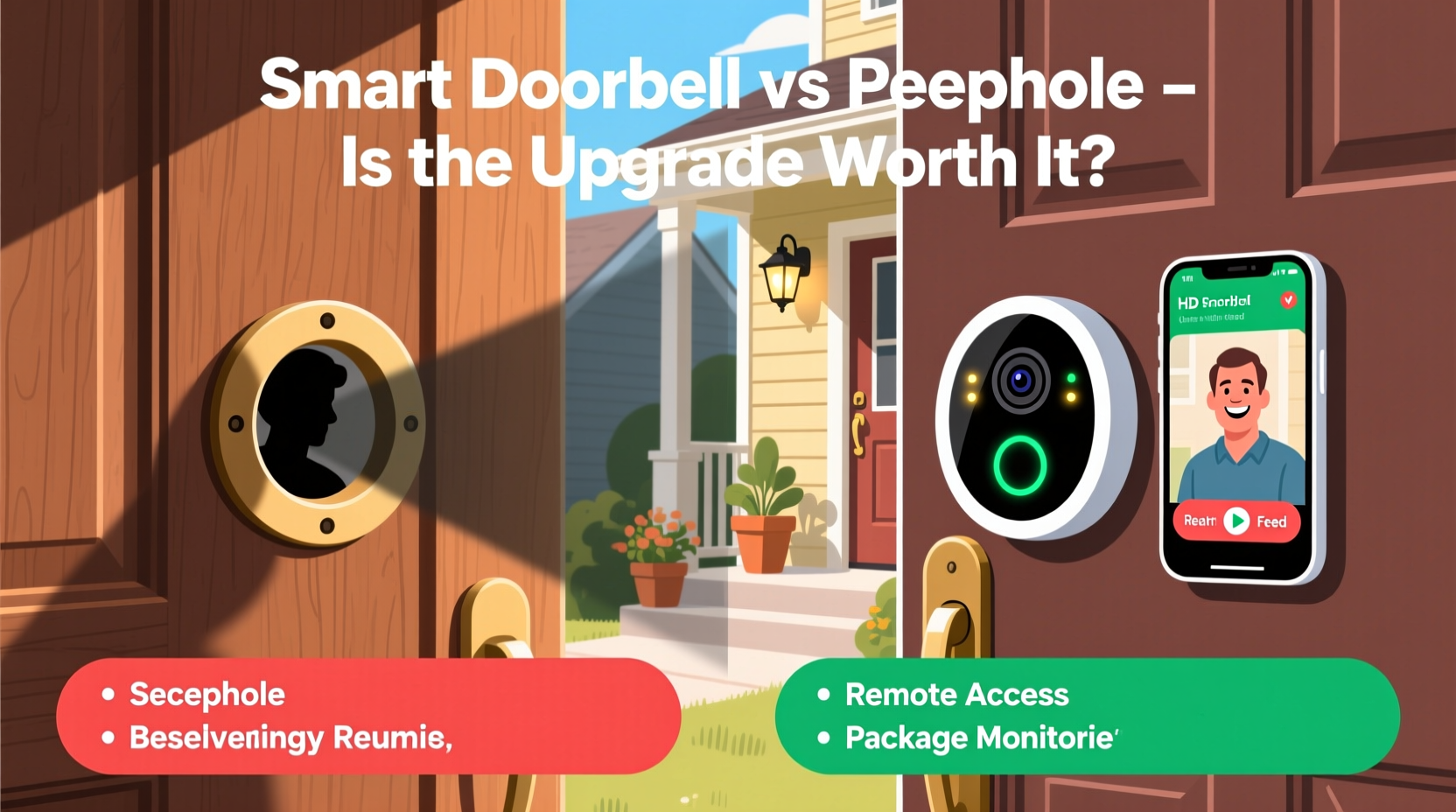
A traditional peephole is a small optical device embedded in the door that allows occupants to view a fisheye image of the area outside. It requires no power, has zero maintenance, and provides immediate visual confirmation of visitors. However, its functionality is limited: narrow field of view, poor visibility in low light, and no recording or remote access.
In contrast, a smart doorbell integrates a camera, microphone, speaker, and Wi-Fi connectivity into a single unit. Most models connect to a mobile app, enabling users to see, hear, and speak to anyone at the door from anywhere with internet access. Advanced features include night vision, motion alerts, facial recognition, integration with home security systems, and video history.
The core difference lies in capability. A peephole offers momentary, localized viewing. A smart doorbell delivers persistent, remote, and interactive surveillance. But does added functionality justify the cost and complexity?
Security Benefits: Passive Observation vs Active Monitoring
Peepholes provide a static line of defense. They allow you to verify identity before opening the door, which can deter scams or unwanted interactions. However, they do nothing when you're not near the entrance. If someone rings while you’re in the backyard or asleep, you won’t know—unless they knock loudly enough to be heard.
Smart doorbells eliminate that gap. With push notifications sent directly to your phone, you’re alerted the instant motion is detected or the doorbell is pressed. This means you can respond in real time, even if you're miles away. For parents, pet owners, or those managing deliveries, this level of awareness significantly enhances safety and control.
Moreover, smart doorbells often record footage, creating a digital trail useful in disputes or investigations. In one documented case, a Ring doorbell captured footage of a package thief, leading to an arrest within 48 hours. No peephole could offer such evidentiary value.
“Video evidence from smart doorbells has become a critical tool in urban crime prevention. We’ve seen a measurable drop in porch piracy in neighborhoods where adoption exceeds 30%.” — Detective Mark Reynolds, Los Angeles Police Department (Community Tech Initiative)
Cost and Long-Term Value Comparison
Upgrading involves both upfront and ongoing costs. A peephole costs between $5 and $20 and can be installed in minutes with a drill. There are no recurring fees. On the other hand, smart doorbells range from $90 to over $250 depending on brand and features (e.g., wired vs battery-powered, resolution, AI capabilities).
Beyond the initial purchase, most smart doorbells require a subscription for full functionality. Basic plans start around $3–$4/month, offering cloud storage for clips, event history, and person detection. Without a plan, many devices only support live viewing—no recordings.
| Feature | Peephole | Smart Doorbell |
|---|---|---|
| Initial Cost | $5–$20 | $90–$250+ |
| Installation | DIY, under 10 mins | DIY or pro, 20–60 mins |
| Maintenance | None | Battery changes or wiring checks |
| Ongoing Fees | None | $3–$12/month (cloud storage) |
| Remote Access | No | Yes, via app |
| Video Recording | No | Yes (with subscription) |
| Motion Alerts | No | Yes |
| Lifespan | Decades | 3–7 years (tech obsolescence) |
While the smart doorbell clearly outperforms the peephole in features, the return on investment depends on usage. Renters may find subscriptions hard to justify over short stays. Homeowners planning long-term residence, especially in high-traffic or high-crime areas, often see tangible benefits that outweigh the costs.
Real-World Use Case: The Johnson Family Upgrade
The Johnsons, a family of four in suburban Atlanta, relied on a peephole for years. Their teenage daughter often came home after school before her parents arrived. One afternoon, she saw someone lingering near their front door through the peephole but couldn’t tell if they were waiting for someone or casing the house. She stayed cautious but had no way to confirm intent or document the incident.
After discussing neighborhood break-ins, they installed a Google Nest Doorbell. Within weeks, the system alerted them to repeated motion events late at night. Reviewing the footage, they noticed a man walking along their street testing door handles. They shared the video with local police, who identified a pattern across several homes. The suspect was apprehended days later.
“It wasn’t just about seeing who rang,” said Sarah Johnson. “It was knowing we were protected even when no one was home. That peace of mind is priceless.”
This scenario illustrates how smart doorbells shift security from reactive to proactive. The peephole failed to provide context or continuity; the smart system filled those gaps effectively.
Step-by-Step Guide to Evaluating Your Upgrade Options
Before making a purchase, follow this structured approach to determine whether a smart doorbell is right for your situation.
- Assess Your Current Security Setup: Do you already have outdoor lighting, locks, or a security system? If so, a smart doorbell can integrate seamlessly. If not, consider addressing foundational vulnerabilities first.
- Identify Your Pain Points: Are missed deliveries, suspicious activity, or safety concerns driving your interest? List specific scenarios where a peephole falls short.
- Determine Your Budget: Include both the device and potential subscription costs over three years. Compare total ownership cost versus expected benefits.
- Check Internet Reliability: Smart doorbells depend on stable Wi-Fi. Test signal strength at your front door. Weak signals can lead to lag or disconnections.
- Review Privacy Policies: Understand how your data is stored, who has access, and whether you can disable cloud storage in favor of local options (some models support microSD cards).
- Compare Models: Focus on resolution (1080p minimum), field of view (150°+ ideal), night vision quality, and compatibility with voice assistants like Alexa or Google Assistant.
- Install and Test: Follow setup instructions carefully. Test motion zones, alert sensitivity, and two-way audio. Adjust settings to minimize false alarms (e.g., passing cars).
When a Peephole Still Makes Sense
Despite the advantages of smart technology, there are valid reasons to stick with or supplement rather than replace a peephole.
- Renters: Installing a smart doorbell may violate lease terms or require landlord approval. A peephole is non-invasive and reversible.
- Privacy-Conscious Users: Some individuals avoid internet-connected cameras due to hacking risks or data collection concerns.
- Low-Tech Households: Elderly users or those uncomfortable with smartphones may find apps confusing or unnecessary.
- Backup Verification: Even with a smart doorbell, a physical peephole adds redundancy. If the device fails or loses power, you still have a way to check the door.
In fact, many modern installations combine both: a smart doorbell mounted above or beside the existing peephole. This hybrid approach maximizes coverage and reliability.
Frequently Asked Questions
Can a smart doorbell completely replace a peephole?
Technically, yes—but it’s not always advisable. Power outages, Wi-Fi disruptions, or technical glitches can disable your smart doorbell. A peephole works independently of electricity and networks, serving as a fail-safe. For maximum reliability, keep both.
Are smart doorbells vulnerable to hacking?
All connected devices carry some risk. However, reputable brands use end-to-end encryption and regular firmware updates to protect user data. You can further secure your device by using strong passwords, enabling two-factor authentication, and keeping your router’s firmware updated.
Do I need a subscription to use a smart doorbell?
You can use basic functions—like live viewing and manual recording—without a subscription. However, features like motion-triggered clips, person detection, and extended video history typically require a monthly or annual plan. Some models allow local storage via microSD card, eliminating the need for a subscription.
Final Verdict: Is the Upgrade Worth It?
The decision to upgrade from a peephole to a smart doorbell hinges on what you value most: simplicity and cost-efficiency, or enhanced awareness and digital integration. For most modern households, especially those with frequent deliveries, children returning home alone, or concerns about property crime, the smart doorbell offers meaningful improvements in security and convenience.
It’s not merely a replacement for a peephole—it’s a redefinition of doorstep safety. You gain visibility beyond physical presence, documentation of events, and the ability to interact remotely. Over time, these features often pay for themselves in prevented losses, reduced anxiety, and faster emergency response.
That said, it’s not a one-size-fits-all solution. Evaluate your unique circumstances, test compatibility, and choose a model that aligns with your priorities. And remember: technology enhances security, but it doesn’t replace good habits like locking doors and staying aware of your surroundings.




 浙公网安备
33010002000092号
浙公网安备
33010002000092号 浙B2-20120091-4
Comments
No comments yet. Why don't you start the discussion?