
During festive seasons, decorative garlands enhance the charm of homes, offices, and public spaces. However, traditional garlands—especially when combined with lights and near heat sources—can pose a hidden danger. The rise of smart home technology has introduced a new class of intelligent décor: smart garlands equipped with embedded sensors that monitor environmental conditions in real time. These innovative designs go beyond aesthetics by actively detecting temperature fluctuations and early signs of fire risk, offering peace of mind alongside seasonal beauty.
The integration of sensor technology into everyday objects is transforming passive decorations into proactive safety tools. A smart garland isn’t just a string of evergreen or LED-lit branches—it’s a networked device capable of sensing, analyzing, and alerting. As electrical faults, overheating lights, or proximity to open flames contribute to thousands of holiday fires each year, this advancement marks a critical shift toward prevention through design.
How Smart Garlands Work: Sensors and Safety Mechanisms
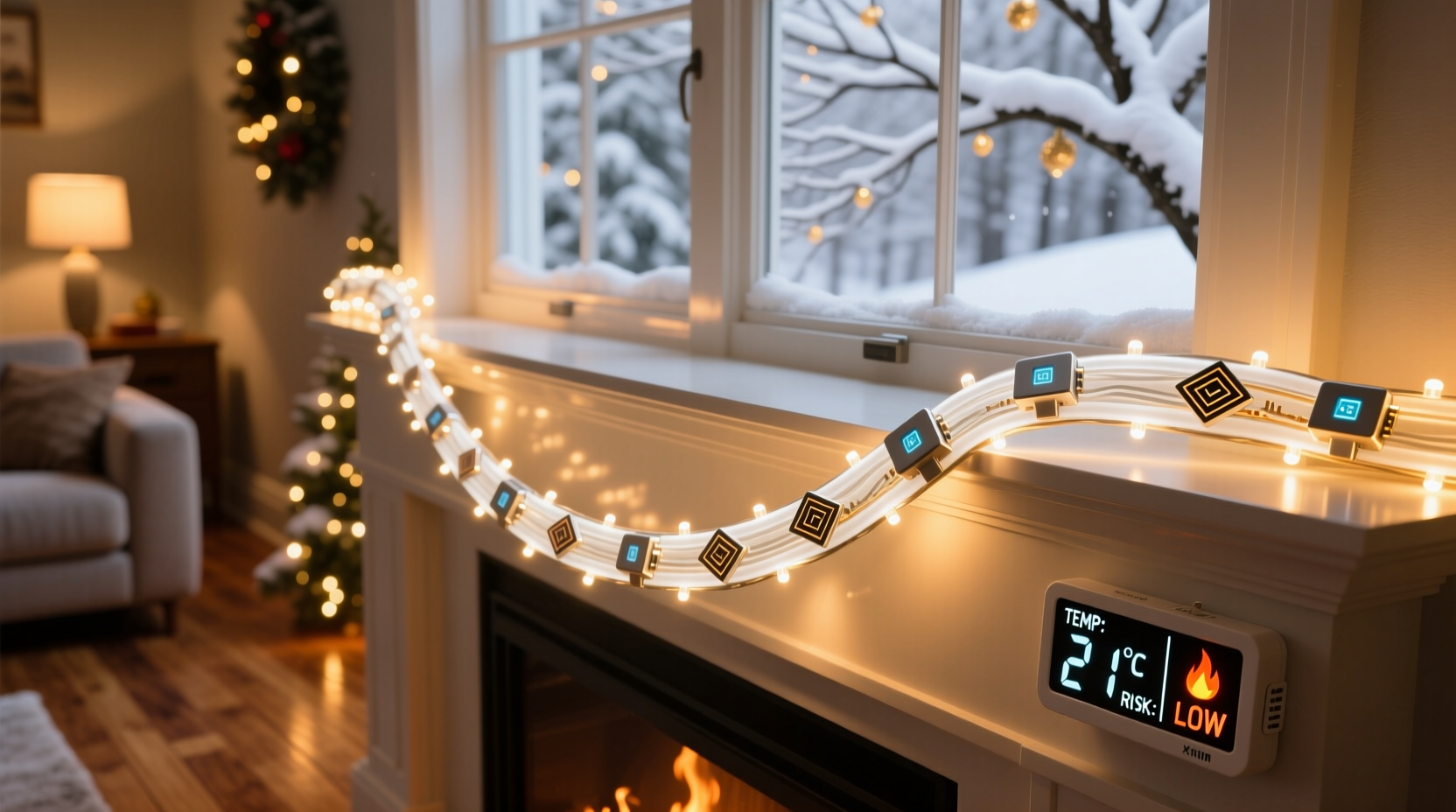
At the core of every smart garland are miniature electronic components seamlessly woven into the structure. These include temperature sensors, microcontrollers, wireless communication modules (such as Wi-Fi or Bluetooth), and sometimes humidity or smoke detectors. When deployed, the garland continuously monitors its immediate environment, collecting data at regular intervals.
Temperature sensors—typically thermistors or digital ICs like the DS18B20—are placed at strategic points along the garland, especially near light clusters or power junctions where heat buildup is most likely. If the ambient temperature exceeds a predefined threshold—say, 45°C (113°F)—the system triggers an internal response. This could involve activating an audible alarm, sending a push notification to a connected smartphone app, or even cutting power to attached lighting via a built-in relay.
Data processing occurs either locally on a microcontroller such as an ESP32 or Arduino-based module, or it's transmitted to a cloud platform for deeper analysis. Some models use machine learning algorithms trained on historical fire incident patterns to assess risk levels based not only on temperature but also on rate of change. For example, a sudden spike from 25°C to 40°C within two minutes may indicate a developing fault more urgently than a slow rise over hours.
Key Features That Make Smart Garlands Effective
Not all smart garlands are created equal. The most effective systems combine hardware reliability with intuitive user feedback. Below are essential features found in high-performing models:
- Real-Time Monitoring: Continuous tracking of temperature every 1–5 seconds ensures no anomaly goes unnoticed.
- Wireless Alerts: Integration with mobile apps allows homeowners to receive instant notifications even when away from home.
- Auto-Shutdown Capability: Advanced units can disconnect power to connected lights if dangerous temperatures are detected.
- Multi-Zone Sensing: Larger installations use multiple sensor nodes spaced evenly across long runs of garland for comprehensive coverage.
- Low Power Consumption: Energy-efficient designs ensure the monitoring system doesn’t significantly increase electricity usage.
- Durability: Weather-resistant versions are available for outdoor use, maintaining functionality in rain, snow, or wind.
In commercial applications—such as shopping malls or city center displays—these garlands often connect to centralized building management systems (BMS). Facility managers can monitor dozens of installations simultaneously, receiving dashboard alerts and historical trend reports.
Step-by-Step: Deploying a Smart Garland Safely
Installing a smart garland requires attention not only to visual appeal but also to optimal sensor performance and safety protocols. Follow this sequence for best results:
- Inspect the Unit: Before installation, check cables, connectors, and sensor housings for damage. Ensure firmware is up to date via manufacturer software.
- Plan Placement Strategically: Avoid placing near radiators, fireplaces, candles, or HVAC vents. Keep at least 12 inches of clearance from any heat source.
- Test Sensor Functionality: Use the companion app to run a diagnostic scan. Confirm all sensors register baseline room temperature accurately.
- Install with Ventilation in Mind: Drape loosely rather than compressing against walls or surfaces. Allow space for air circulation around electronics.
- Connect to Power and Network: Plug into a surge-protected outlet. Pair with your home Wi-Fi or Bluetooth hub following setup instructions.
- Set Alert Preferences: Customize thresholds—e.g., notify me if temperature exceeds 40°C or rises more than 10°C in five minutes.
- Monitor During Initial Use: Observe readings for the first 24 hours, especially after turning on connected lights, to establish normal operating baselines.
Regular maintenance includes cleaning dust off sensor ports with a soft brush and verifying battery levels (if applicable) monthly during active use.
Comparison: Traditional vs. Smart Garlands
| Feature | Traditional Garland | Smart Garland |
|---|---|---|
| Fire Risk Detection | No | Yes – via embedded sensors |
| Temperature Monitoring | Manual only | Continuous, automated |
| User Alerts | None | Mobile notifications, alarms |
| Power Control | Manual switch | Automatic shutdown capability |
| Lifespan (with care) | 3–5 years | 5+ years (with firmware updates) |
| Cost | $15–$50 | $80–$200 |
| Outdoor Suitability | Varies | Available in weatherproof models |
While smart garlands come at a higher initial cost, their ability to prevent property damage and protect lives offers substantial long-term value. Insurance providers in some regions now offer small premium discounts for homes using monitored fire-prevention devices, including smart décor.
Real-World Example: Preventing a Holiday Fire
In December 2023, a family in Portland, Oregon, avoided a potential disaster thanks to their smart garland. They had installed a 12-foot model along their staircase railing, integrated with LED lights and powered through a smart plug. Around 2:17 a.m., the garland’s onboard sensor detected a rapid temperature increase near the base of the stairs—rising from 22°C to 46°C in under three minutes.
An internal algorithm flagged the change as abnormal. Simultaneously, the unit triggered a local siren, sent a push alert to both parents’ phones, and cut power to the lighting strand. Upon investigation, they discovered that one of the older LED bulbs had shorted internally, causing resistive heating in the socket. The plastic housing had begun to deform and emit smoke before the system intervened.
“We were asleep,” said homeowner Linda Tran. “If it weren’t for that alert, we might have woken up to flames. It wasn’t just decoration—it literally saved our home.”
“We’re seeing more cases where minor electrical faults escalate quickly due to overlooked décor. Smart detection systems add a crucial layer of defense.” — Dr. Marcus Reed, Fire Safety Engineer, National Institute of Standards and Technology (NIST)
Checklist: Is Your Smart Garland Setup Optimal?
Pre-Installation Checklist:
- ☐ Verify all sensors are intact and responsive
- ☐ Update firmware via manufacturer app
- ☐ Choose location away from heat sources and foot traffic
- ☐ Test connectivity to Wi-Fi or central hub
- ☐ Set appropriate temperature thresholds
- ☐ Confirm auto-shutdown function works during trial
- ☐ Inform household members about alarm sounds and responses
Frequently Asked Questions
Can smart garlands detect actual fires, or just heat?
Most current models focus on temperature anomalies and rate-of-rise detection, which are strong indicators of fire development. While they don’t replace dedicated smoke detectors, they provide earlier warnings for smoldering or electrical fires originating within the garland itself. Higher-end versions may integrate CO or particulate sensors for broader detection.
Are smart garlands safe for children and pets?
Yes, when properly installed. All electronics are enclosed in insulated casings, and low-voltage components minimize shock risk. However, keep cords out of reach to prevent chewing or tripping hazards. Supervise young children around any plugged-in décor.
Do I need internet access for the garland to work?
Basic monitoring functions operate offline, but remote alerts, app control, and cloud logging require a stable internet connection. In case of outage, local alarms and auto-shutdown will still function.
Future Developments and Industry Trends
The evolution of smart garlands is accelerating. Researchers at MIT’s Media Lab are experimenting with flexible printed circuit boards that allow sensors to be embedded directly into artificial foliage fibers, making detection truly distributed. Other innovations include self-powered systems using thermoelectric generators that harvest energy from small temperature differences, reducing reliance on batteries or external power.
Integration with voice assistants and smart home ecosystems is becoming standard. Imagine saying, “Hey Google, what’s the temperature of the living room garland?” and receiving an immediate response. Future versions may collaborate with robotic vacuum cleaners or drones to perform visual inspections during extended absences.
As fire departments report that nearly 40% of winter residential fires start in living rooms or hallways—common garland locations—the demand for intelligent prevention tools will continue to grow. Municipalities may eventually mandate smart monitoring for large-scale public displays, much like structural inspections for temporary stages.
Conclusion: Decorating with Intelligence
A smart garland with embedded sensors for detecting temperature and fire risk represents more than a technological novelty—it’s a meaningful step toward safer living environments. By merging tradition with innovation, these devices preserve the warmth of celebration without compromising security.
Whether you're decorating a home, office, or community space, choosing a smart garland means investing in awareness, responsiveness, and resilience. As automation becomes more intuitive and accessible, there’s no reason to accept preventable risks in the name of aesthetics.




 浙公网安备
33010002000092号
浙公网安备
33010002000092号 浙B2-20120091-4
Comments
No comments yet. Why don't you start the discussion?