
For years, Bluetooth speakers have been the go-to for portable sound—simple, affordable, and reliable. But as smart home technology becomes mainstream, many consumers are wondering whether it’s time to make the switch to a smart home speaker. These devices promise more than just audio: voice assistants, home automation, multi-room syncing, and seamless integration with other smart devices. But does that extra functionality justify the higher price tag and potential privacy trade-offs?
The answer isn’t universal. Whether an upgrade is worthwhile depends on how you use your speaker, your lifestyle, and what you value in a connected home. Let’s break down the key differences, examine real-world usage scenarios, and help you determine if making the leap makes sense for you.
Core Differences: Functionality and Design
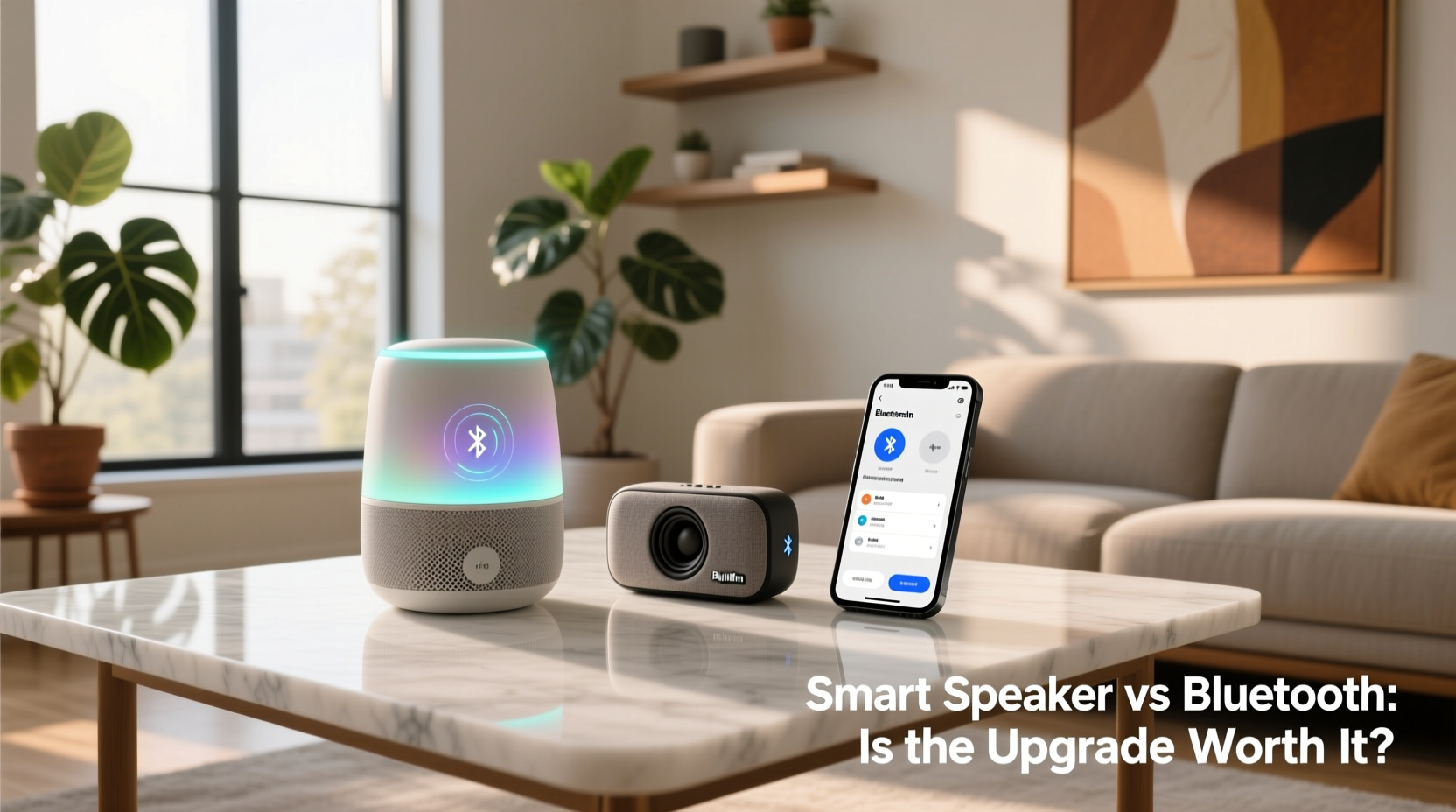
At first glance, both smart home and Bluetooth speakers deliver audio. But their underlying capabilities diverge significantly.
Bluetooth speakers are built for portability and simplicity. They connect wirelessly via Bluetooth to your phone, tablet, or laptop. Most operate on battery power, making them ideal for outdoor use, travel, or casual listening around the house. Their interface is minimal—usually physical buttons for play/pause, volume, and pairing.
Smart home speakers, like Amazon Echo, Google Nest Audio, or Apple HomePod, are stationary devices powered by electricity. They’re always listening (within privacy limits) for wake words like “Alexa,” “Hey Google,” or “Siri.” Beyond playing music, they act as command centers for smart homes—controlling lights, thermostats, doorbells, and security systems using voice commands.
They also offer additional features such as:
- Voice-controlled timers, alarms, and calendars
- Real-time weather, news, and traffic updates
- Hands-free calling and messaging
- Integration with streaming services (Spotify, Pandora, Apple Music)
- Multi-speaker audio syncing across rooms
Cost Comparison: What You're Really Paying For
Price is often the first barrier. Bluetooth speakers range from $20 for basic models to $300+ for high-end waterproof or rugged versions. Smart speakers start around $50 (e.g., Echo Dot) and can exceed $300 for premium options like the HomePod Max.
But cost isn’t just about upfront price. Consider long-term value:
| Feature | Bluetooth Speaker | Smart Home Speaker |
|---|---|---|
| Initial Cost | $20–$300 | $50–$350 |
| Maintenance | Battery charging/replacement | Firmware updates, cloud services |
| Additional Costs | Rare (accessories) | Premium subscriptions (e.g., Spotify, Audible) |
| Lifespan | 3–5 years (battery degradation) | 4–7 years (software support dependent) |
| Value Add-Ons | Portability, durability | Home automation, voice AI, ecosystem integration |
A $100 Bluetooth speaker may seem like a bargain, but if you end up buying multiple units for different rooms, the total cost can rival a single high-end smart speaker—or a multi-device smart home setup.
When the Upgrade Makes Sense
Not everyone needs a smart speaker. But certain lifestyles and preferences make the upgrade not just worthwhile—but transformative.
Consider switching if you:
- Already own other smart devices (lights, locks, cameras)
- Use voice assistants regularly on your phone
- Want hands-free control while cooking, cleaning, or multitasking
- Stream music across multiple rooms
- Have mobility challenges or prefer voice-based interfaces
“Smart speakers aren’t just audio devices—they’re accessibility tools. For older adults or people with disabilities, voice control can restore independence in daily routines.” — Dr. Lena Torres, Human-Computer Interaction Researcher, MIT
Mini Case Study: The Busy Parent’s Morning Routine
Sarah, a mother of two in Denver, used a Bluetooth speaker in her kitchen for morning playlists. But her routine was fragmented—checking the weather on her phone, setting timers manually, reminding kids about school schedules.
After getting a Google Nest Hub, she restructured her mornings:
- “Hey Google, good morning” triggers a custom routine: weather, school calendar, news brief, and breakfast playlist.
- She sets cooking timers without touching anything (“Set a timer for 10 minutes”).
- Her kids ask the speaker homework questions while eating.
The result? A smoother, less stressful start to the day. The speaker paid for itself in reduced mental load within weeks.
When a Bluetooth Speaker Still Wins
Despite the allure of smart features, there are clear scenarios where Bluetooth remains superior.
You likely don’t need a smart speaker if:
- You prioritize portability (camping, beach, gym)
- You’re concerned about privacy and constant microphone activation
- You live alone and rarely use voice commands
- You want a simple plug-and-play audio solution
- Your internet connection is unreliable
Moreover, Bluetooth speakers often outperform smart speakers in sound quality at similar price points. Brands like JBL, Sony, and Ultimate Ears focus purely on acoustics, delivering richer bass and clearer mids without compromising design for microphones or internal processors.
Step-by-Step: How to Decide If You Should Upgrade
Follow this practical timeline to evaluate your needs:
- Week 1: Track Your Current Usage
Write down how often you use your Bluetooth speaker, where, and for what purpose. Note frustrations (e.g., manual controls, weak battery). - Week 2: Test a Smart Speaker (If Possible)
Borrow one from a friend, or use a return-friendly model (Amazon allows 30-day returns). Try setting routines, controlling lights, and asking questions. - Week 3: Audit Your Smart Home Potential
List devices you already own or plan to buy (smart bulbs, plugs, thermostat). Check compatibility with Alexa, Google Assistant, or Siri. - Week 4: Calculate Real Value
Ask: Will this save me time? Reduce stress? Improve safety? If yes, assign a rough hourly value (e.g., 10 minutes saved daily = ~6 hours monthly). - Decision Point
If the convenience outweighs the cost and privacy considerations, proceed. Otherwise, stick with Bluetooth—or consider a hybrid approach.
Hybrid Approach: Best of Both Worlds?
You don’t have to choose one or the other. Many households benefit from using both types strategically:
- Kitchen/Living Room: Smart speaker for routines, calls, and smart home control.
- Backyard/Patio: Waterproof Bluetooth speaker for pool parties or grilling.
- Bedroom: Bluetooth speaker for bedtime music without voice assistant interruptions.
Some users even pair Bluetooth speakers with smart displays via auxiliary cables or Bluetooth relays, using the smart device as a brain and the passive speaker as the voice.
FAQ
Can I use a smart speaker without Wi-Fi?
No. Smart speakers require a stable internet connection to process voice commands through the cloud. Without Wi-Fi, they function only as basic Bluetooth speakers (if supported).
Are smart speakers always listening?
They listen for the wake word locally, but audio is only sent to the cloud after detection. You can disable microphones physically (via button) or delete voice history through settings. However, privacy concerns remain valid—review permissions regularly.
Do smart speakers sound better than Bluetooth speakers?
Not necessarily. While high-end models like HomePod Max deliver exceptional audio, most entry-level smart speakers prioritize voice clarity over rich sound. Dedicated Bluetooth speakers often provide better audio fidelity per dollar.
Conclusion: Is the Upgrade Worth It?
The shift from Bluetooth to smart home speakers isn’t just about better sound—it’s about redefining how you interact with your environment. If your life revolves around efficiency, connectivity, and automation, the upgrade offers tangible benefits that compound over time. Voice-controlled routines, seamless integration, and intelligent assistance can simplify daily tasks in ways a simple speaker never could.
But if you value simplicity, portability, or privacy above all, sticking with Bluetooth isn’t falling behind—it’s choosing intentionality. Technology should serve your lifestyle, not dictate it.
Ultimately, the “worth” of the upgrade lies in alignment: Does the smart speaker solve real problems in your life? Or does it add complexity you don’t need? Answer that honestly, and the decision becomes clear.




 浙公网安备
33010002000092号
浙公网安备
33010002000092号 浙B2-20120091-4
Comments
No comments yet. Why don't you start the discussion?