
In homes where lighting once served only a functional purpose—illuminating dark corners or enabling late-night reading—technology has quietly transformed how we experience light. The shift from traditional incandescent or fluorescent bulbs to smart, color-changing LED systems isn’t just about convenience or aesthetics. It’s increasingly tied to wellness, circadian health, and emotional regulation. But do these advanced lighting systems genuinely influence mood, or is their appeal mostly novelty? This article examines the tangible differences between smart lights and regular bulbs, explores the psychological effects of color-tunable lighting, and evaluates whether investing in dynamic lighting setups can lead to measurable improvements in mental well-being.
The Evolution of Home Lighting: From Function to Feeling
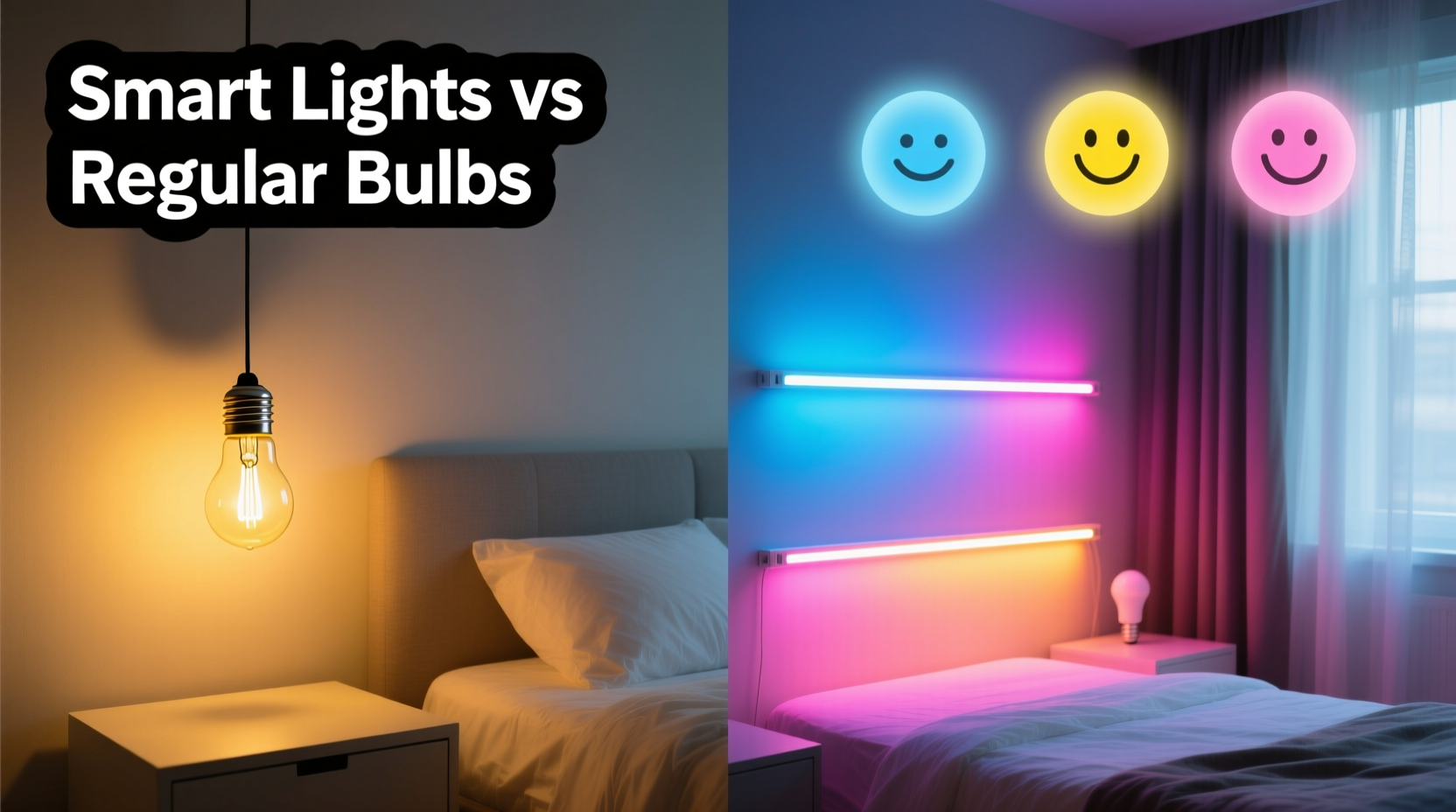
For decades, household lighting was static. A single switch controlled a fixed-color bulb—usually warm white or cool white—with no variation throughout the day. These regular bulbs provided illumination but did little to support natural rhythms or emotional states. In contrast, modern smart lights offer full-spectrum color control, adjustable brightness, scheduling, and integration with voice assistants and home automation platforms.
Smart lighting systems use RGB (red, green, blue) or tunable white LEDs to produce millions of colors or mimic daylight shifts across 24 hours. They can be programmed to gradually brighten at sunrise, emit energizing blue-enriched light during work hours, transition to warm tones in the evening, and even pulse gently to help with relaxation or meditation. This level of control introduces a new dimension to indoor environments: lighting as an active contributor to mood and behavior.
How Light Influences Mood and Physiology
Light does more than help us see—it directly affects brain chemistry. Exposure to specific wavelengths influences melatonin production, alertness, cognitive performance, and emotional regulation. The human body operates on a circadian rhythm synchronized primarily by light cues received through the eyes.
According to Dr. Steven Lockley, a neuroscientist at Harvard Medical School who studies light and sleep,
“Light is the most powerful environmental signal that resets our internal clock each day. Even small changes in intensity and spectrum can significantly affect mood and alertness.” — Dr. Steven Lockley, Harvard Medical School
Blue-enriched light, prevalent in morning sunlight, suppresses melatonin and promotes wakefulness. Conversely, dim, warm-toned light in the evening signals the brain to prepare for sleep. Disruptions to this cycle—such as exposure to bright screens or harsh overhead lighting at night—are linked to insomnia, fatigue, and mood disorders like seasonal affective disorder (SAD).
This biological sensitivity forms the foundation for why smart lighting could be more than a gadget trend—it may serve as a non-invasive tool for mood modulation.
Smart Lights vs Regular Bulbs: A Practical Comparison
| Feature | Smart Color-Changing Lights | Regular Incandescent/LED Bulbs |
|---|---|---|
| Color Options | Millions of colors + tunable whites | Fixed color temperature (e.g., warm white) |
| Brightness Control | Adjustable via app, voice, or schedule | Limited to dimmer switches (if installed) |
| Circadian Support | Programmable sunrise/sunset, auto-adjusting color temps | No dynamic adjustment |
| Mood Applications | Custom scenes for focus, relaxation, energy | No intentional emotional design |
| Energy Efficiency | High (LED-based, low wattage) | Moderate to high (depends on type) |
| Cost Over Time | Higher initial cost, lower operating cost | Lower upfront, potentially higher long-term usage |
| User Interaction | App control, voice commands, automation | Manual switch only |
The data shows that while regular bulbs fulfill basic needs, smart lights introduce adaptability that aligns with both lifestyle demands and physiological requirements. Their ability to shift dynamically makes them uniquely suited to support emotional balance.
Real-World Impact: Can Color-Changing Setups Improve Mood?
Consider the case of Maya, a remote worker living in Seattle—a city known for its overcast winters and limited daylight. During fall and winter months, she began experiencing low energy, difficulty concentrating, and mild depressive symptoms consistent with SAD. After consulting her therapist, she incorporated a smart lighting system into her workspace and bedroom.
Each morning, her lights simulate a gradual sunrise, starting dim and amber before shifting to bright, cool white over 30 minutes. Her desk lamp emits a steady 5000K tone during work hours to promote alertness. In the evening, all lights transition to soft reds and ambers, reducing blue light exposure. She also uses calming purple and deep blue scenes during yoga and meditation sessions.
Within three weeks, Maya reported improved morning motivation, fewer midday slumps, and better sleep quality. While not a substitute for therapy or medical treatment, the lighting changes created a supportive environment that complemented her wellness routine.
This scenario reflects broader research findings. A 2021 study published in *Chronobiology International* found that participants using circadian-optimized smart lighting reported a 27% reduction in self-rated fatigue and a 22% improvement in evening relaxation compared to those using standard lighting.
Key Psychological Benefits of Smart Lighting
- Enhanced Circadian Alignment: Automated color temperature shifts reinforce natural sleep-wake cycles, improving sleep onset and daytime alertness.
- Emotional Expression Through Environment: Choosing colors based on mood (e.g., calming blues, energizing yellows) gives users a sense of agency over their emotional space.
- Stress Reduction: Soft, warm lighting in the evening lowers cortisol levels and supports parasympathetic nervous system activation.
- Focus and Productivity: Cool, bright light during work hours increases concentration and reduces errors in cognitive tasks.
- Seasonal Affective Support: Simulated daylight exposure helps mitigate symptoms of SAD when natural sunlight is scarce.
Designing a Mood-Supportive Lighting Plan: Step-by-Step Guide
Integrating smart lighting for emotional benefit requires intentionality. Random color changes may feel playful but lack therapeutic value. Follow this timeline to build a sustainable, mood-enhancing setup:
- Assess Your Space (Day 1): Identify key areas—bedroom, office, kitchen, living room—and note how you use them throughout the day.
- Select Compatible Fixtures (Days 2–3): Choose bulbs or strips compatible with platforms like Philips Hue, LIFX, or Matter-enabled ecosystems. Ensure they support tunable white and full color.
- Map Daily Rhythms (Day 4): Outline your typical schedule: wake-up time, work blocks, winding down, bedtime. Match lighting needs to each phase.
- Create Lighting Scenes (Day 5):
- Morning Boost: Bright, cool white (5000K–6500K)
- Focus Mode: Steady daylight tone with moderate brightness
- Relaxation: Warm amber (2200K–2700K)
- Sleep Prep: Red or deep orange (minimal blue spectrum)
- Mood Accent: Subtle pastels or slow transitions for meditation
- Automate Transitions (Day 6): Use app schedulers to automate scene changes. For example, start dim red at 7:00 PM, fade to warm white by 8:00 PM, then off by 10:00 PM.
- Evaluate & Adjust (Ongoing): After one week, reflect on energy levels, sleep quality, and mood. Tweak timing or color temperatures as needed.
Common Pitfalls to Avoid
Even with advanced technology, misuse can undermine benefits. Be mindful of these mistakes:
- Overstimulation at Night: Using bright or colorful lights too close to bedtime disrupts melatonin release.
- Inconsistent Scheduling: Irregular lighting patterns confuse the circadian system. Automation ensures consistency.
- Ignoring Room Function: A vibrant party mode might suit a game room but is inappropriate in a bedroom designed for rest.
- Skipping Warm-Up Periods: Abrupt light changes feel jarring. Gradual transitions mimic natural conditions and are less stressful.
FAQ: Smart Lighting and Emotional Well-Being
Can smart lights really treat depression or anxiety?
While smart lights are not a clinical treatment, they can support mental health management. For conditions like mild seasonal affective disorder, properly timed light exposure can alleviate symptoms. However, individuals with diagnosed mood disorders should consult healthcare providers and not rely solely on lighting interventions.
Do I need a full-home smart lighting system to see benefits?
No. Even one or two strategically placed smart bulbs—in a bedside lamp or desk fixture—can make a meaningful difference. Focus on areas where you spend the most time during critical parts of the day (e.g., morning routine or pre-sleep wind-down).
Are there health risks associated with smart lights?
When used appropriately, smart lights pose minimal risk. However, excessive blue light at night, flickering effects, or overly bright settings may contribute to eye strain or sleep disruption. Always prioritize smooth dimming, avoid strobe-like effects, and limit screen-like brightness in the evening.
Checklist: Building a Mood-Optimized Lighting System
- ☑ Identify primary rooms for lighting upgrades
- ☑ Choose smart bulbs with tunable white and color options
- ☑ Install and connect to a reliable hub or Wi-Fi network
- ☑ Define daily routines and corresponding lighting needs
- ☑ Program automated scenes for morning, day, evening, and night
- ☑ Test transitions for smoothness and comfort
- ☑ Monitor personal well-being weekly for four weeks
- ☑ Adjust color temperatures or schedules based on feedback
Conclusion: Lighting as a Tool for Emotional Resilience
The comparison between smart lights and regular bulbs reveals a fundamental shift: lighting is no longer passive infrastructure but an interactive element of wellness design. While traditional bulbs meet basic visibility needs, smart, color-changing systems offer a nuanced way to influence alertness, calm, and emotional tone throughout the day.
Scientific evidence and real-world experiences confirm that thoughtfully implemented smart lighting can enhance mood, support circadian health, and create environments that respond to human needs—not just electrical ones. It’s not about constant color shows or flashy effects; it’s about alignment with biology, intentionality in design, and creating spaces that nurture mental well-being.




 浙公网安备
33010002000092号
浙公网安备
33010002000092号 浙B2-20120091-4
Comments
No comments yet. Why don't you start the discussion?