
Lighting shapes how we experience our homes. For decades, the choice was simple: incandescent, halogen, or later, energy-saving LEDs. Today, smart lighting has entered the mainstream—offering remote control, scheduling, voice commands, and most notably, color-changing capabilities. But beyond the novelty of shifting your living room from sunset orange to cool blue, do these features actually deliver meaningful value? Or are they just a flashy gimmick masking higher prices and unnecessary complexity?
To answer this, we need to move beyond marketing hype and examine how color-changing smart lights perform in real-world settings compared to traditional bulbs. This isn’t just about brightness or wattage—it’s about lifestyle integration, mental well-being, functionality, and long-term cost efficiency.
The Core Differences: Smart Lights vs Regular Bulbs
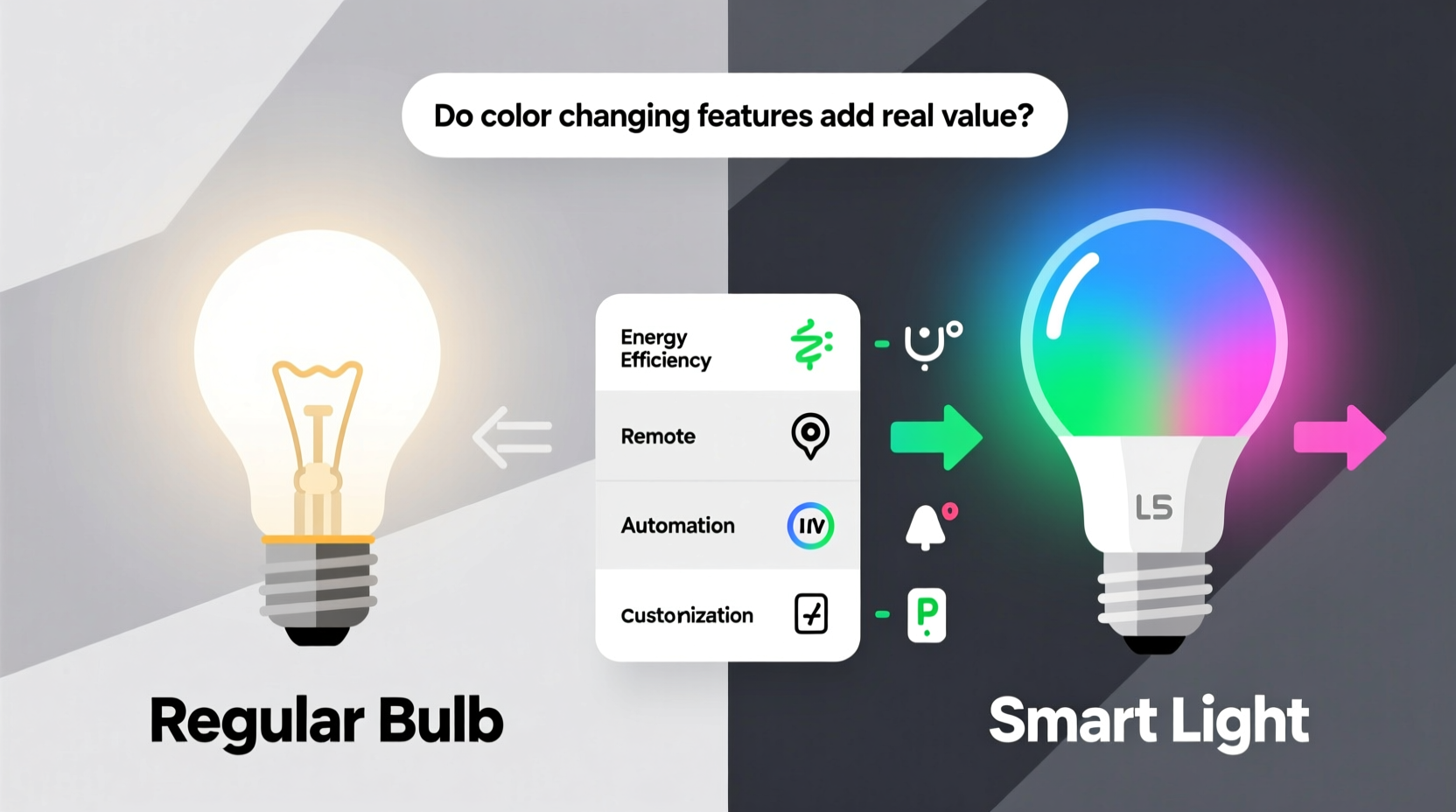
At their most basic level, both smart and regular bulbs produce light. But the similarities end there. Traditional bulbs—especially modern LED variants—are reliable, affordable, and efficient. They come in fixed color temperatures (warm white, daylight, etc.) and require only a switch to operate.
Smart lights, on the other hand, connect to your home Wi-Fi or a hub (like Zigbee or Bluetooth), allowing control via smartphone apps, voice assistants (Alexa, Google Assistant, Siri), or automation routines. Many offer dimming, scheduling, and—critically—color tuning across millions of hues.
This flexibility opens up new possibilities, but it also introduces trade-offs: higher upfront cost, dependency on software, potential privacy concerns, and compatibility issues.
Key Functional Differences
| Feature | Regular LED Bulbs | Smart Color-Changing Bulbs |
|---|---|---|
| Color Options | Fixed (e.g., 2700K warm white) | Millions of colors + adjustable white tones |
| Control Method | Wall switch only | App, voice, automation, switch |
| Energy Efficiency | High (8–10W equivalent to 60W incandescent) | Slightly lower due to onboard electronics |
| Lifespan | 15,000–25,000 hours | 15,000–20,000 hours (electronics may fail first) |
| Upfront Cost | $2–$5 per bulb | $15–$50 per bulb |
| Installation Complexity | Plug-and-play | App setup, network pairing, possible hub needed |
Do Color-Changing Features Add Real Value?
The appeal of changing your light color is obvious: you can set a romantic red glow for dinner, shift to energizing blue-white in the morning, or create a psychedelic party effect with animated color cycles. But does this translate into lasting, practical value?
For many users, the answer depends on how deeply lighting affects their daily routines and emotional state. Unlike static bulbs, color-tunable smart lights allow dynamic environments tailored to time of day, mood, or activity—a feature rooted in circadian science.
“Light is the primary cue our brain uses to regulate sleep, alertness, and hormone production. Tunable lighting that mimics natural daylight patterns can support better sleep and improved focus.” — Dr. Lena Torres, Sleep and Circadian Neuroscience Researcher, Stanford University
Studies have shown that exposure to cooler, blue-enriched light during daytime hours increases alertness and cognitive performance, while warmer, amber-toned light in the evening supports melatonin production and prepares the body for rest. Smart bulbs that automatically adjust color temperature throughout the day—known as “circadian lighting”—can thus contribute to healthier sleep-wake cycles.
However, full-color RGB capabilities go beyond health. They enable creative expression and environmental adaptation. A parent might use soft purple light to calm a child before bedtime. A remote worker could simulate a sunrise to combat winter blues. Home theater enthusiasts often sync ambient lighting with screen content for immersive viewing.
Real-World Applications: When Color-Changing Lights Shine
Not every home needs color-shifting bulbs in every room. The value becomes clearest when specific use cases align with user needs. Consider the following scenarios:
Case Study: Evening Wind-Down Routine
Mark, a software developer working late, struggled with insomnia. His apartment had bright overhead LEDs that stayed on until midnight. After installing smart bulbs in his bedroom and living area, he created a schedule: lights gradually shift from 4000K (cool white) at 6 PM to 2200K (candlelight warmth) by 9:30 PM. He also set a “Relax” scene with deep amber lighting and paired it with calming music via voice command.
Within three weeks, Mark reported falling asleep 25 minutes faster on average. While not a cure-all, the lighting change removed a key environmental stressor—excessive blue light exposure at night.
Entertainment and Atmosphere
In shared spaces like living rooms or patios, color-changing lights excel at enhancing social experiences. Imagine hosting a dinner party where the lighting subtly shifts from golden warmth during appetizers to a soft indigo during dessert. Or syncing lights to music beats during a weekend gathering—features available through apps like Philips Hue Sync or Nanoleaf Shapes.
These aren’t essential, but they elevate ambiance in ways traditional bulbs simply cannot. For those who entertain frequently or value mood-driven design, the investment can be justified.
Accessibility and Routine Support
For individuals with sensory sensitivities, dementia, or neurodivergent conditions, customizable lighting offers tangible benefits. A caregiver might use green light in the morning to signal “wake up,” yellow at midday, and red in the evening to indicate bedtime. Visual cues reduce anxiety and support independent living.
Similarly, parents can use color changes to help children understand transitions: blue for homework time, warm white for reading, and dim purple for sleep.
Practical Checklist: Is a Color-Changing Smart Light Right for You?
Before upgrading, assess whether your lifestyle will benefit from advanced lighting features. Use this checklist to evaluate your needs:
- ✅ Do you struggle with sleep or irregular circadian rhythms?
- ✅ Do you want lighting that adapts automatically to time of day?
- ✅ Do you host gatherings where ambiance matters?
- ✅ Are you interested in home automation (e.g., lights turning on at sunset)?
- ✅ Do you have family members who benefit from visual cues or soothing environments?
- ✅ Are you comfortable managing apps, updates, and potential connectivity issues?
- ❌ Are you looking for a low-cost, no-fuss lighting solution?
- ❌ Do you rarely change lighting preferences once set?
If most of your answers are “yes” to the first six and “no” to the last two, color-changing smart lights likely offer real value. If not, stick with high-quality tunable-white (non-RGB) smart bulbs or standard LEDs.
Cost-Benefit Analysis Over Time
Let’s assume a typical living room setup: six light fixtures. Here’s a simplified cost comparison over five years:
| Option | Initial Cost | Energy Cost (5 yrs) | Maintenance/Replacement | Total 5-Year Cost |
|---|---|---|---|---|
| Standard LED Bulbs (6 x $3) | $18 | $30 | $0 (long lifespan) | $48 |
| Tunable-White Smart Bulbs (6 x $20) | $120 | $36 | $20 (possible early failure) | $176 |
| Full RGB Color-Changing Bulbs (6 x $25) | $150 | $40 | $30 | $220 |
While smart bulbs cost significantly more upfront, their value isn’t purely financial. If improved sleep saves you hours of fatigue-related inefficiency, or if enhanced ambiance improves your quality of life, the return may justify the expense. However, for basic illumination needs, traditional bulbs remain the economical choice.
Frequently Asked Questions
Can I use smart color-changing bulbs with regular light switches?
Yes, but with limitations. If you turn off a smart bulb at the wall switch, it loses power and disconnects from the network. To maintain smart functionality, keep the switch on and control brightness/color via app or voice. Some systems support “switch sensing” to detect toggle patterns, but this requires additional hardware.
Do color-changing bulbs use more energy than regular LEDs?
When displaying white light, RGB smart bulbs are slightly less efficient than dedicated white LEDs because they mix red, green, and blue diodes. However, the difference is minimal—typically 1–3 watts more per bulb. In color mode, energy use varies depending on the hue, but overall consumption remains low compared to older bulb types.
Are smart bulbs safe? Can they be hacked?
Like any connected device, smart bulbs pose potential security risks if not properly managed. Always update firmware, use strong Wi-Fi passwords, and avoid brands without a track record of security patches. Opt for reputable manufacturers (e.g., Philips Hue, LIFX, Sengled) that offer local control options to reduce cloud dependency.
Step-by-Step Guide to Evaluating Smart Lighting for Your Home
- Assess Your Lighting Needs: Identify which rooms would benefit most from adaptive lighting (e.g., bedroom, home office, entertainment area).
- Determine Feature Priorities: Decide whether you need full color, tunable white only, or basic dimming and scheduling.
- Check Compatibility: Ensure your router supports the required protocol (Wi-Fi, Zigbee, Z-Wave) and that bulbs work with your voice assistant (if used).
- Purchase a Starter Kit: Buy 1–2 bulbs to test responsiveness, app usability, and real-world impact on your routine.
- Create Automation Rules: Set schedules (e.g., warm light at sunset), scenes (“Movie Night”), or integrations (lights turn on when door unlocks).
- Evaluate After 30 Days: Ask: Did it improve comfort, productivity, or convenience? If yes, expand gradually.
Conclusion: Value Beyond the Gimmick
Color-changing smart lights are more than a party trick—they represent a shift toward human-centric lighting. When used intentionally, they can support better sleep, enhance emotional well-being, and personalize living spaces in ways static bulbs never could. But they’re not universally necessary.
The real value lies not in the ability to make your ceiling glow neon green, but in the capacity to align artificial light with natural rhythms, behavioral cues, and personal preferences. For tech-savvy households, wellness-focused individuals, or those designing multi-functional spaces, the investment pays off in comfort and control.
For others, especially those prioritizing simplicity and affordability, regular LED bulbs—or even tunable-white smart bulbs without full RGB—may be the smarter choice.




 浙公网安备
33010002000092号
浙公网安备
33010002000092号 浙B2-20120091-4
Comments
No comments yet. Why don't you start the discussion?