
For Airbnb hosts, securing a rental property isn’t just about protecting physical assets—it’s about building trust with guests and ensuring long-term operational reliability. The front door is the first line of defense, and choosing between a traditional deadbolt and a modern smart lock can significantly impact both security and convenience. While deadbolts have been trusted for decades, smart locks offer remote access, digital key sharing, and activity logs. But which option truly delivers superior protection in the context of short-term rentals?
The answer depends on several factors: threat models, guest turnover, maintenance habits, and technological awareness. This article breaks down the strengths and weaknesses of each system, compares real-world performance, and provides actionable insights to help hosts make an informed decision.
Understanding the Core Security Features
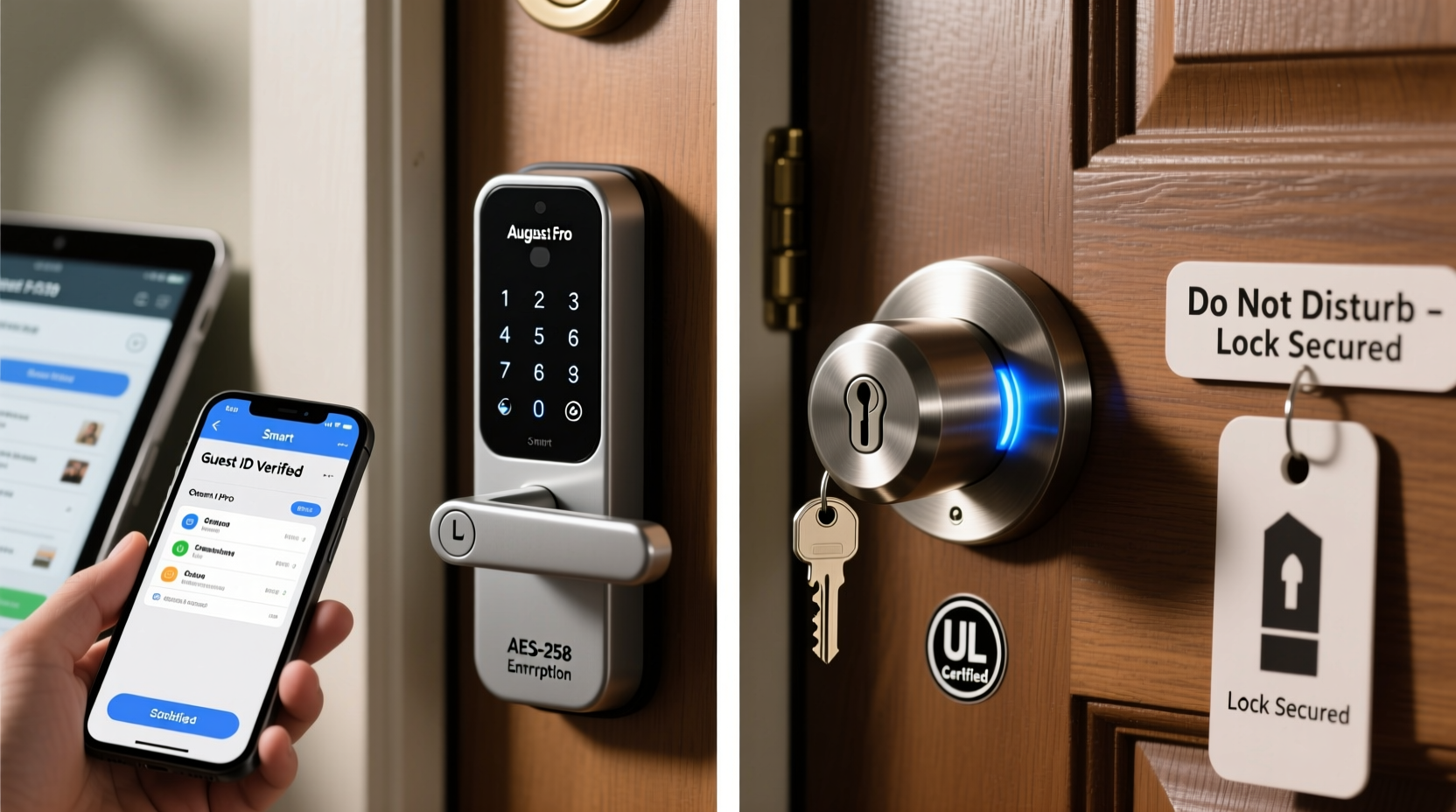
A deadbolt is a mechanical locking device that extends a solid metal bolt into the door frame when engaged. It typically requires a physical key or thumb turn to operate and has no electronic components. Its simplicity is its strength—there are no batteries to die, no Wi-Fi to disconnect, and no software vulnerabilities to exploit.
Smart locks, by contrast, integrate electronics and wireless connectivity (Bluetooth, Wi-Fi, or Z-Wave) to enable keyless entry. They support PIN codes, smartphone apps, biometrics, and temporary digital keys. Most allow remote locking/unlocking and generate access logs, which can be invaluable for monitoring guest behavior.
From a pure mechanics standpoint, a high-quality Grade 1 deadbolt resists forced entry better than most smart locks. However, smart locks introduce layers of digital oversight that mechanical systems simply cannot match.
Security Comparison: Physical vs Digital Threats
Physical security remains paramount. A deadbolt made of hardened steel with a minimum 1-inch throw and installed on a sturdy door jamb is highly resistant to kicking, prying, and bumping. According to the National Institute of Standards and Technology (NIST), properly installed deadbolts can withstand over 1,000 pounds of force—a critical factor in deterring break-ins.
Smart locks, while convenient, often sacrifice some structural robustness. Many models use motorized bolts that are shorter or less rigid than their manual counterparts. Additionally, the external keypad or touchscreen can become a point of vulnerability through tampering, smudge attacks, or brute-force code guessing.
On the digital side, smart locks face unique risks. Poorly secured firmware, unencrypted communication, or outdated software can expose devices to hacking. In 2020, researchers at the University of Michigan demonstrated that certain Bluetooth-enabled locks could be bypassed using relay attacks within seconds. However, newer models from reputable brands like August, Yale, and Schlage now include encryption, two-factor authentication, and anti-tamper alerts.
“Physical durability still wins in high-risk environments, but smart locks offer unprecedented visibility and control—if configured correctly.” — Daniel Reyes, Cybersecurity Analyst at HomeShield Labs
Practical Benefits for Airbnb Hosts
For hosts managing multiple properties or frequent guest rotations, convenience plays a major role in daily operations. Here, smart locks shine. Instead of hiding spare keys under mats or coordinating meetups, hosts can generate time-limited access codes via app. These codes expire automatically after checkout, eliminating the need to rekey locks between stays.
Consider a host managing five listings across a city. With smart locks, they can remotely grant access to cleaners, inspectors, or emergency responders without being physically present. Activity logs also provide accountability—knowing exactly when someone entered the property can resolve disputes over cleaning times or unauthorized access.
Deadbolts, while reliable, require more manual management. Spare keys must be stored securely, and lost keys necessitate immediate rekeying to prevent unauthorized entry. For hosts who prioritize minimal interaction and automation, this added friction can be a significant drawback.
Smart Lock Advantages for Short-Term Rentals
- Remote access and real-time lock status monitoring
- Temporary, revocable guest codes
- Integration with property management platforms (e.g., Hostaway, Guesty)
- Automated check-in/check-out workflows
- Digital audit trail of entries and exits
Deadbolt Advantages for Short-Term Rentals
- No dependency on power or internet
- Immunity to hacking or software glitches
- Lower upfront cost and no subscription fees
- Proven track record in residential security
- Simpler troubleshooting during emergencies
Comparison Table: Smart Lock vs Deadbolt for Airbnb Use
| Feature | Smart Lock | Deadbolt |
|---|---|---|
| Installation Complexity | Moderate to high; may require hub or wiring | Low; standard door prep usually sufficient |
| Battery Dependency | Yes; requires periodic replacement or charging | No |
| Guest Access Management | Excellent; digital keys, PINs, auto-expiry | Poor; relies on physical keys or lockboxes |
| Physical Durability | Variable; generally lower than premium deadbolts | High; especially Grade 1 models |
| Cybersecurity Risk | Moderate to high if not updated or poorly configured | None |
| Integration with Smart Home Systems | Yes; works with Alexa, Google Home, Apple HomeKit | No |
| Cost (Initial + Ongoing) | $150–$300+; potential app subscription fees | $30–$100; minimal ongoing costs |
| Best For | High-turnover rentals, remote hosting, tech-savvy owners | Low-turnover rentals, budget-conscious hosts, high-crime areas |
Real-World Scenario: A Host’s Dilemma
Jamie manages three Airbnb units in downtown Austin. Two are studio apartments with weekly turnover; the third is a monthly rental. Initially, she used traditional deadbolts with lockboxes. Guests frequently forgot to return keys, and she spent hours rekeying doors. After one guest accidentally left the door unlocked, leading to a minor theft, she decided to upgrade.
She installed Yale Assure Lock 2 models on the studios and kept the deadbolt on the long-term unit. Within weeks, her operational efficiency improved dramatically. She could verify lock status from her phone, issue new codes instantly, and receive alerts if doors were left open. When a cleaner arrived early one day, Jamie remotely granted temporary access instead of rushing over.
However, during a city-wide power outage, one unit’s lock ran out of battery. Fortunately, it had a backup key override, but the incident reminded her to maintain a battery replacement schedule. For her, the trade-off was worth it: increased control outweighed the minor technical hiccups.
Actionable Checklist for Airbnb Hosts
Whether you choose a smart lock or deadbolt, follow this checklist to maximize security:
- ✅ Install a solid-core exterior door (minimum 1¾ inches thick)
- ✅ Upgrade the door jamb with a reinforced strike plate (using 3-inch screws)
- ✅ Ensure the lock meets ANSI/BHMA Grade 1 or Grade 2 standards
- ✅ Test all locks regularly for smooth operation and alignment
- ✅ If using a smart lock, enable two-factor authentication and automatic firmware updates
- ✅ Set up notifications for unlock events and low battery warnings
- ✅ Never reuse guest codes; always generate new ones per booking
- ✅ Keep a secure log of physical keys and digital access permissions
- ✅ Consider adding secondary security (e.g., security camera, alarm system)
- ✅ Educate guests on proper door closing and locking procedures in your listing instructions
Frequently Asked Questions
Can smart locks be hacked?
Yes, but the risk is low with modern, well-maintained devices. Vulnerabilities exist in older models or those with weak passwords and unpatched firmware. Choose locks certified by recognized standards (e.g., Zigbee, Z-Wave, or Apple HomeKit Secure Remote Access) and keep software updated. Avoid using default PINs and disable unused features like remote access if not needed.
Do insurance companies prefer deadbolts or smart locks?
Most insurers recognize both as acceptable, provided they meet basic security standards. Some may offer discounts for smart home integrations, including monitored locks or alarms. However, if a claim arises from a cyber breach related to a smart lock, coverage could be contested. Always disclose security setups and confirm policy terms with your provider.
Is it legal to monitor guest access with smart lock logs?
In most jurisdictions, recording entry times is permissible as part of property management, especially if disclosed in the rental agreement. However, continuous surveillance inside the home (e.g., cameras in private areas) is illegal. Be transparent: inform guests that access is logged and how data is stored. Compliance with GDPR, CCPA, or other privacy laws is essential for international or cross-state rentals.
Hybrid Approach: Best of Both Worlds
Many experienced hosts opt for a hybrid solution: installing a smart lock *in addition* to a traditional deadbolt. This dual-layer approach combines digital convenience with mechanical redundancy. For example, a smart handle lock can manage daily access, while a separate deadbolt is manually engaged at night or during extended absences for added peace of mind.
Some manufacturers now offer \"convertible\" smart locks that retrofit onto existing deadbolts, preserving the core hardware while adding electronic controls. These solutions balance cost, security, and functionality—ideal for hosts unwilling to fully commit to either system.
Final Recommendation
For most Airbnb hosts, a **high-quality smart lock** offers superior overall value due to its operational advantages and monitoring capabilities. However, security doesn’t come from the lock alone—it comes from how it’s installed, maintained, and integrated into broader property management practices.
If you operate in an area with frequent power issues, limited internet reliability, or higher crime rates, pairing a smart lock with a robust deadbolt—or sticking with a mechanical lock—may be the safer choice. Conversely, hosts focused on scalability, automation, and guest experience will find smart locks indispensable.
The future of short-term rentals leans toward intelligent, connected systems. But technology should enhance—not replace—fundamental security principles. No matter which lock you choose, ensure it’s part of a comprehensive strategy that includes strong doors, vigilant monitoring, and clear guest communication.




 浙公网安备
33010002000092号
浙公网安备
33010002000092号 浙B2-20120091-4
Comments
No comments yet. Why don't you start the discussion?