
For apartment renters, choosing how to secure your front door isn’t just about preference—it’s about safety, convenience, and compliance with lease agreements. As smart locks become more common in urban living spaces, many tenants wonder whether upgrading from a traditional key lock to a smart lock actually improves their security. The answer isn't always straightforward. While smart locks offer modern conveniences like remote access and digital guest keys, they also introduce new vulnerabilities. Traditional keyed locks, on the other hand, are time-tested but come with their own risks—like lost keys or unauthorized duplication.
This article breaks down the real-world safety implications of both systems specifically for renters. We’ll compare physical security, ease of access, vulnerability to tampering, and compatibility with rental agreements. By the end, you’ll have a clear understanding of which option may better suit your lifestyle and risk tolerance—without compromising your lease or peace of mind.
Understanding the Basics: How Each Lock Works
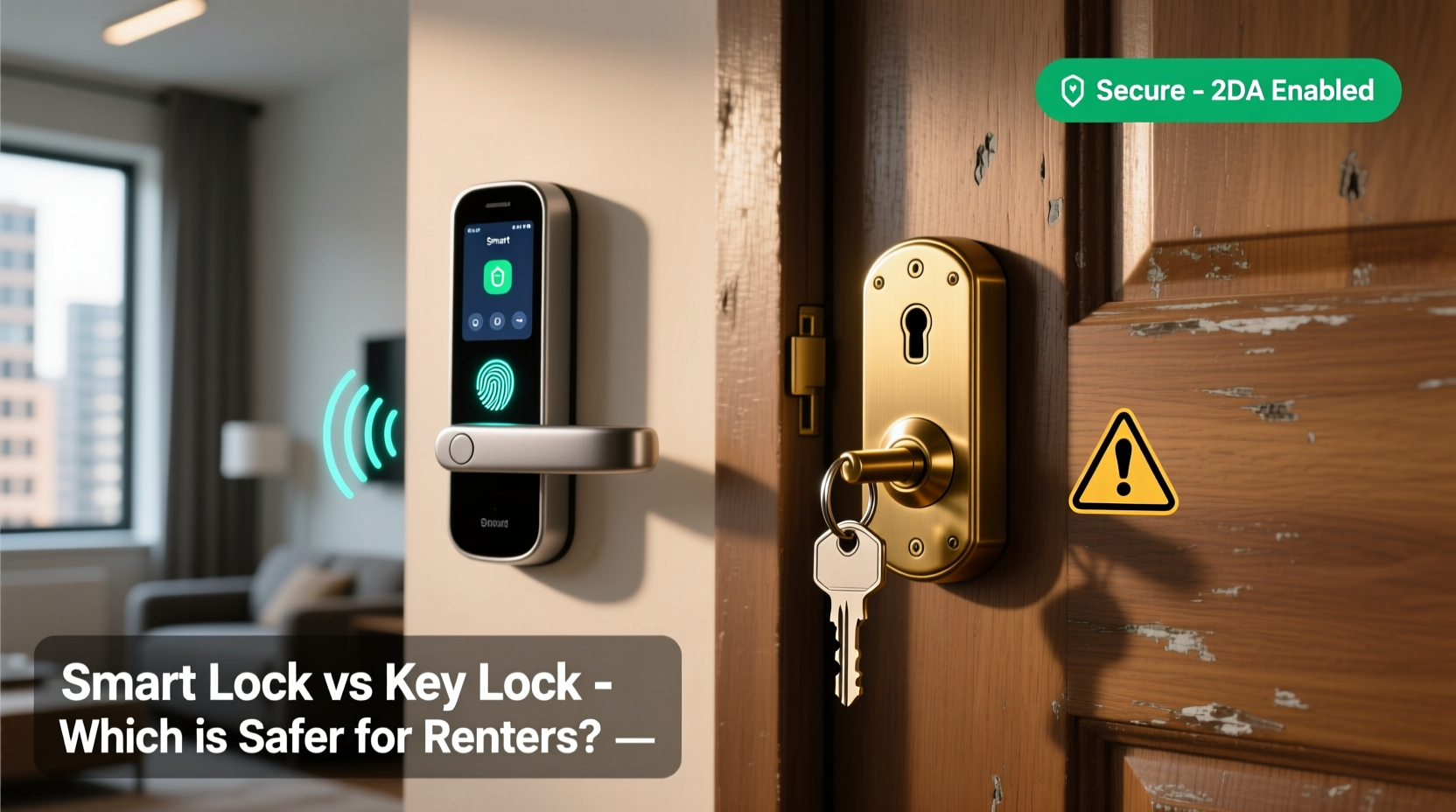
Before comparing safety, it's essential to understand how each type functions.
Key locks are mechanical devices that require a physical metal key to unlock. They typically use pin-and-tumbler mechanisms (like in Kwikset or Schlage deadbolts), where the correct key aligns internal pins to allow the cylinder to turn. These locks have been standard for decades and are widely trusted due to their simplicity and lack of reliance on power or software.
Smart locks, by contrast, integrate electronic components. Most connect via Bluetooth, Wi-Fi, or Z-Wave and can be operated using smartphone apps, keypads, fingerprint scanners, or even voice commands through assistants like Alexa or Google Assistant. Some models still include a physical key override as a backup. They often support features like temporary access codes, entry logs, and integration with home security systems.
The core difference lies in attack vectors: key locks are vulnerable to physical manipulation (picking, bumping, drilling), while smart locks face risks from hacking, battery failure, or app malfunctions. For renters, this distinction matters because control over installation, maintenance, and upgrades usually rests with the landlord.
Security Comparison: Physical vs Digital Threats
When evaluating safety, we must consider both real-world break-in methods and everyday risks unique to rental living.
| Threat Type | Key Lock Vulnerability | Smart Lock Vulnerability |
|---|---|---|
| Lock Picking | High – especially with low-grade cylinders | Low – no physical mechanism to pick |
| Bumping | Moderate to high – common technique for skilled intruders | None – no traditional keyway |
| Hacking / Spoofing | None | Moderate – depends on encryption and network security |
| Physical Forced Entry | Equal – both types attached to same door/frame | Equal – strength depends on mounting hardware |
| Battery Failure | Not applicable | High – can disable lock if not monitored |
| Lost Key / Unauthorized Copy | High – easy to duplicate; hard to revoke | Low – digital access can be instantly revoked |
According to the National Crime Prevention Council, most burglaries involve simple forced entry rather than sophisticated lock manipulation. However, when tools are used, lower-quality key locks are easier to compromise than well-designed smart locks. That said, smart locks depend on consistent power and software integrity—two factors outside a renter’s full control.
“From a forensic locksmithing perspective, traditional locks fail predictably. Smart locks fail unpredictably—sometimes silently.” — Daniel Reyes, Certified Master Locksmith and Security Consultant
Renter-Specific Challenges and Considerations
Renters operate under constraints that homeowners don’t face. You typically cannot modify property without permission, and any damage could result in withheld security deposits. This makes lock choices particularly sensitive.
Landlords may provide either key locks or pre-installed smart locks. In some newer complexes, smart locks are standard, managed centrally through building access systems. But if you're considering an upgrade, you need written approval. Installing a smart lock without consent—even over an existing deadbolt—can violate your lease.
Another issue is accountability. If a smart lock fails during a power outage or firmware update, who fixes it? If someone gains access using a previously issued digital code you forgot to deactivate, is the landlord liable? These gray areas make documentation and communication critical.
Real Example: A Renter’s Smart Lock Misstep
Jamie rented a one-bedroom apartment in Chicago and wanted added convenience for dog walkers and cleaners. Without consulting her landlord, she installed a popular smart lock over the existing deadbolt. It worked perfectly for three months—until the batteries died unexpectedly. She was out of town, and her pet sitter couldn’t enter. When maintenance arrived, they removed the device, citing lease violation. Jamie paid a $150 fine and reverted to the original lock.
Worse, the smart lock had slightly misaligned the strike plate, causing the door to close improperly. That flaw went unnoticed until two weeks later, when a neighbor reported seeing the door ajar. Though nothing was stolen, the incident highlighted how well-intentioned upgrades can backfire without proper coordination.
Step-by-Step Guide: Choosing the Right Lock for Your Rental
If you’re deciding between options, follow this practical timeline to make a safe, compliant decision.
- Review your lease agreement – Look for clauses about alterations, security systems, or prohibited devices.
- Contact your landlord or property manager – Ask if smart locks are permitted and whether they have preferred brands or restrictions.
- Assess current lock quality – Is your key lock ANSI Grade 3 or higher? If it’s old or easily jiggled open, it may already be a weak point.
- Determine your needs – Do you frequently grant access to guests, cleaners, or delivery personnel? Or do you live alone and value simplicity?
- Research compatible smart locks – Choose models designed for renters, such as those that install inside the door (e.g., Level Lock) or replace only the interior portion.
- Check for local regulations – Some cities require emergency key access or restrict certain biometric data collection.
- Install only with approval – Document everything: emails, photos, serial numbers. Keep the original hardware in case reversion is required.
- Maintain vigilance – Change access codes regularly, monitor battery levels, and test functionality monthly.
Best Practices Checklist for Apartment Security
- ✅ Confirm lock permissions with your landlord before making changes
- ✅ Upgrade to a Grade 1 or 2 key lock if currently using a low-security model
- ✅ Choose a smart lock with AES-128 encryption or higher
- ✅ Enable two-factor authentication on associated apps
- ✅ Set up automatic battery alerts
- ✅ Use strong, unique passwords for smart lock accounts
- ✅ Regularly audit user access logs (for smart locks)
- ✅ Never share permanent access codes; use timed ones for visitors
- ✅ Install a secondary barrier like a portable door jammer for extra protection
- ✅ Keep spare keys in a secure off-site location, not under the mat
Frequently Asked Questions
Can a smart lock be hacked remotely?
Yes, but it’s rare for individuals. Most attacks require proximity (within 30 feet) and specialized equipment. Cloud-connected models with weak passwords or outdated firmware are at higher risk. Using strong credentials and enabling automatic updates greatly reduces exposure.
Are key locks obsolete for renters?
No. A high-quality ANSI Grade 1 or 2 key lock remains highly secure. Many security experts argue that mechanical reliability outweighs digital convenience, especially in rentals where you can’t fully control the environment or maintenance schedule.
What happens if my smart lock stops working?
Reputable models include emergency power ports (via 9V battery) or physical key overrides. Always know how to manually unlock your door. If the lock is landlord-provided, report malfunctions immediately to avoid liability for damages caused by forced entry attempts.
Final Verdict: Which Is Safer?
There is no universal answer—but for most apartment renters, **a high-quality key lock remains the safer default choice**, provided it meets modern security standards. Why? Because it avoids dependency on batteries, networks, and third-party apps, all of which introduce points of failure beyond the tenant’s control.
That said, a properly approved and maintained smart lock can enhance security in specific scenarios—especially when managing frequent guest access or integrating with broader safety systems. The key is ensuring compatibility with your rental agreement and maintaining rigorous digital hygiene.
The safest approach combines technology with awareness. Whether you use a key or code, remember that the strongest lock is useless if left unengaged. Always double-check that your door is fully locked, regardless of the mechanism.




 浙公网安备
33010002000092号
浙公网安备
33010002000092号 浙B2-20120091-4
Comments
No comments yet. Why don't you start the discussion?