
When it comes to home security, few decisions are as critical as choosing the right front door lock. For decades, the traditional deadbolt has been the gold standard—simple, reliable, and widely trusted. But with the rise of smart home technology, smart locks have surged in popularity, promising greater convenience and modern features like remote access and keyless entry. Yet many homeowners are left wondering: when it comes down to actual security, which option offers better protection against intruders?
The answer isn’t as straightforward as “one is better.” Each system has strengths and weaknesses that depend on context—your lifestyle, neighborhood crime rates, technical literacy, and even how well the lock is installed. This article breaks down the real-world security implications of both options, compares their vulnerabilities, and provides actionable guidance to help you make an informed decision.
How Traditional Deadbolts Work—and Why They’ve Endured
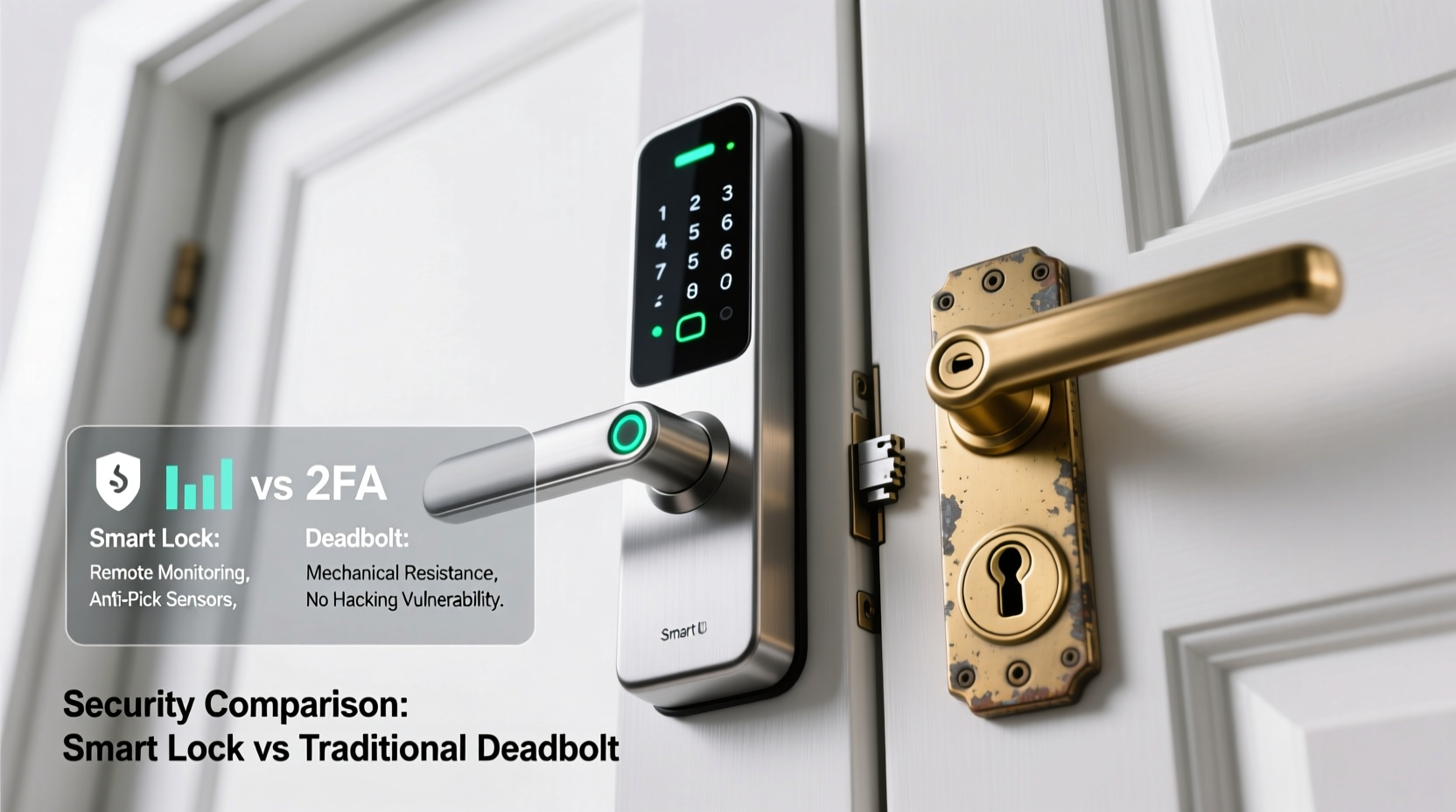
A traditional deadbolt is a mechanical locking mechanism that extends a solid metal bolt into the door frame when engaged. Unlike spring-latch locks (commonly found in doorknobs), deadbolts don’t retract automatically and require a physical key or thumb turn to operate. Most are rated by the American National Standards Institute (ANSI) based on strength and durability, with Grade 1 being the highest for residential use.
These locks rely on physical resistance. Breaking through one requires forceful methods like drilling, kicking, or picking—all of which take time and generate noise, deterring most casual burglars. Their simplicity is also a strength: no batteries, no software updates, and no connectivity means fewer points of failure.
However, traditional deadbolts aren't foolproof. Lost keys, unauthorized duplicates, and lock-picking remain genuine risks. According to the FBI’s Uniform Crime Reporting program, nearly two-thirds of residential break-ins occur through forced entry at doors or windows, but many others involve stolen or copied keys—especially in cases involving former tenants, contractors, or disgruntled acquaintances.
Smart Locks: Security Through Technology—or New Vulnerabilities?
Smart locks integrate digital technology into door security. They can be unlocked via smartphone apps, PIN codes, biometrics (like fingerprints), voice commands, or even geofencing (automatically unlocking when your phone approaches). Many sync with home automation systems such as Google Home, Apple HomeKit, or Amazon Alexa.
From a convenience standpoint, smart locks excel. You can grant temporary access to guests without handing over a key, receive alerts when someone enters, and monitor activity remotely. Some models eliminate keys entirely; others offer hybrid designs with both digital and physical key access.
But increased functionality introduces new attack vectors. Cybersecurity becomes a concern. A poorly designed app, unpatched firmware, or weak Wi-Fi encryption could allow hackers to gain access remotely. In 2020, researchers at the cybersecurity firm Pen Test Partners discovered vulnerabilities in several popular smart lock brands that allowed attackers within Bluetooth range to intercept signals and unlock doors silently.
Physical tampering remains possible too. While some smart locks have anti-tamper alarms, others can be pried off or disabled with brute force. And if the battery dies—something that happens more often than users expect—the lock may become inoperable unless there’s a backup power port or emergency key override.
“Smart locks add layers of convenience, but they shift the threat model from physical to digital. A homeowner must now worry about phishing attacks, spoofing, and network breaches—not just crowbars.” — Dr. Lena Patel, Cybersecurity Researcher at MIT Lincoln Laboratory
Comparative Security Analysis: Key Factors Compared
To assess which system is more secure, consider multiple dimensions beyond just \"can it be broken?\" Here's a side-by-side evaluation of core security aspects:
| Security Factor | Traditional Deadbolt | Smart Lock |
|---|---|---|
| Physical Resistance | High – resistant to kick-ins, jimmies, and prying when properly installed | Variable – depends on build quality; some models less robust due to internal electronics |
| Pick Resistance | Moderate to high – skilled locksmiths can pick most in minutes | Low for keypad-only entry; high for models with encrypted authentication |
| Remote Access Risk | None – no connectivity | Present – potential for hacking if software/firmware outdated |
| Battery Dependency | None | Yes – failure risks lockout unless backup method exists |
| Access Control | Limited – hard to revoke key access quickly | Strong – user codes can be added/revoked instantly |
| Monitoring & Alerts | None | Yes – real-time notifications enhance situational awareness |
| Installation Quality Impact | Critical – poor framing reduces effectiveness significantly | Even more critical – misalignment affects sensors and motor function |
This table shows that while traditional deadbolts win in raw physical resilience, smart locks offer superior control and monitoring—features that contribute meaningfully to overall security in practice.
Real-World Example: When Smart Features Prevented a Break-In
In suburban Denver, Sarah M., a working mother of two, uses a smart lock integrated with her home security system. One evening, she received a push notification stating her front door had been unlocked at 2:17 a.m. She hadn’t opened it—and neither had any family member.
She checked her security camera feed and saw a shadowy figure near the door. The person had found a spare key hidden under a flowerpot, used it to enter, then left the door slightly ajar after exiting moments later—possibly startled by motion lighting. Because the smart lock logged the event and sent an alert, Sarah was able to call police immediately. Officers arrived within four minutes and caught the suspect attempting to flee.
With a traditional deadbolt, this incident might have gone unnoticed until morning. The intruder could have returned or taken more valuables. In this case, the smart lock didn’t prevent initial access (due to poor key management), but its logging and alert capabilities turned a potential burglary into a swift intervention.
Step-by-Step Guide: Choosing the Right Lock for Your Security Needs
Deciding between a smart lock and a traditional deadbolt shouldn’t be based on trends—it should align with your specific environment and habits. Follow this five-step process:
- Assess Your Neighborhood Risk Level
Check local crime statistics. If break-ins are common and typically involve forced entry, prioritize physical strength (favoring high-grade deadbolts). If social engineering or insider threats are concerns (e.g., rental properties), smart access logs and revocable codes add value. - Evaluate Your Daily Habits
Do you frequently forget keys? Host guests? Lose track of who has access? Smart locks reduce friction here. But if you prefer minimal tech reliance, a mechanical lock avoids dependency on apps or batteries. - Inspect Your Door and Frame
A weak door or softwood frame undermines any lock. Ensure your exterior door is solid-core, hinges are secured with non-removable pins, and the strike plate is anchored into wall studs with long screws. This step is essential regardless of lock type. - Determine Connectivity Requirements
Choose smart locks compatible with your existing ecosystem (Apple HomeKit, Z-Wave, etc.). Prefer models with offline functionality so you’re not locked out during internet outages. Look for WPA3 encryption and regular firmware updates. - Plan for Failures
For smart locks, confirm backup access methods (emergency key, USB power port). Test battery life monthly. For traditional locks, keep spare keys in a secure location—not hidden outside.
Expert Checklist: Maximizing Security Regardless of Lock Type
- ✅ Install a solid-core exterior door if you don’t already have one
- ✅ Use a Grade 1 ANSI-rated locking mechanism
- ✅ Reinforce the door frame with a heavy-duty strike plate and 3-inch screws
- ✅ Never hide spare keys outside—use a smart lock PIN or digital key sharing instead
- ✅ Pair your lock with visible security cameras and outdoor lighting
- ✅ Change access codes regularly, especially after tenants or contractors leave
- ✅ For smart locks: enable two-factor authentication and automatic firmware updates
Frequently Asked Questions
Can smart locks be hacked easily?
Most reputable smart locks use strong encryption and secure protocols. While no connected device is 100% immune, the average burglar is far more likely to smash a window than attempt a digital breach. The real risk lies in poor user practices—like reusing passwords or ignoring software updates.
Are smart locks legal for rental properties?
In most U.S. states, landlords may install smart locks, but they must provide tenants with reliable access and written policies on data collection and code changes. Some jurisdictions require notice before recording entry logs. Always consult local housing laws.
Which is better for elderly users: smart lock or deadbolt?
Smart locks often benefit older adults who struggle with keys due to arthritis or memory issues. Keypad entry or voice activation can simplify access. However, ensure the system includes easy-to-use backups and clear instructions to avoid confusion during emergencies.
Conclusion: Security Is Holistic—Not Just About the Lock
The debate over smart lock vs traditional deadbolt isn’t truly about which is “more secure.” It’s about understanding that security is a layered system. No single device guarantees safety. A high-tech lock on a flimsy door offers little advantage. Conversely, a Grade 1 deadbolt won’t help if spare keys are left under mats or access codes are shared carelessly.
Modern threats demand modern solutions—but they don’t invalidate proven ones. The most secure homes combine physical strength (a sturdy door and frame), access control (whether through keys or encrypted codes), and awareness (via alerts and monitoring). In many cases, the best approach is hybrid: a smart lock built into a high-quality deadbolt assembly, giving you both convenience and resilience.
Your front door is only as strong as its weakest component. Upgrade thoughtfully, maintain vigilance, and remember that the best lock is the one you use correctly every time.




 浙公网安备
33010002000092号
浙公网安备
33010002000092号 浙B2-20120091-4
Comments
No comments yet. Why don't you start the discussion?