
In the quiet moments of the morning, few objects are as central to our routine as the bathroom mirror. For decades, it has served one essential purpose: reflection. But as technology seeps into every corner of our lives, even this humble fixture is undergoing a transformation. Enter the smart mirror—a sleek fusion of display, sensor, and connectivity that promises more than just a clear image. It shows the weather, tracks fitness goals, streams news, and even adjusts lighting based on skin tone. But does it truly enhance daily life, or is it an overpriced gadget with diminishing returns?
This article explores the practical differences between smart mirrors and regular mirrors, evaluates their impact on personal routines, and helps you decide whether upgrading is worth the investment.
What Defines a Smart Mirror?
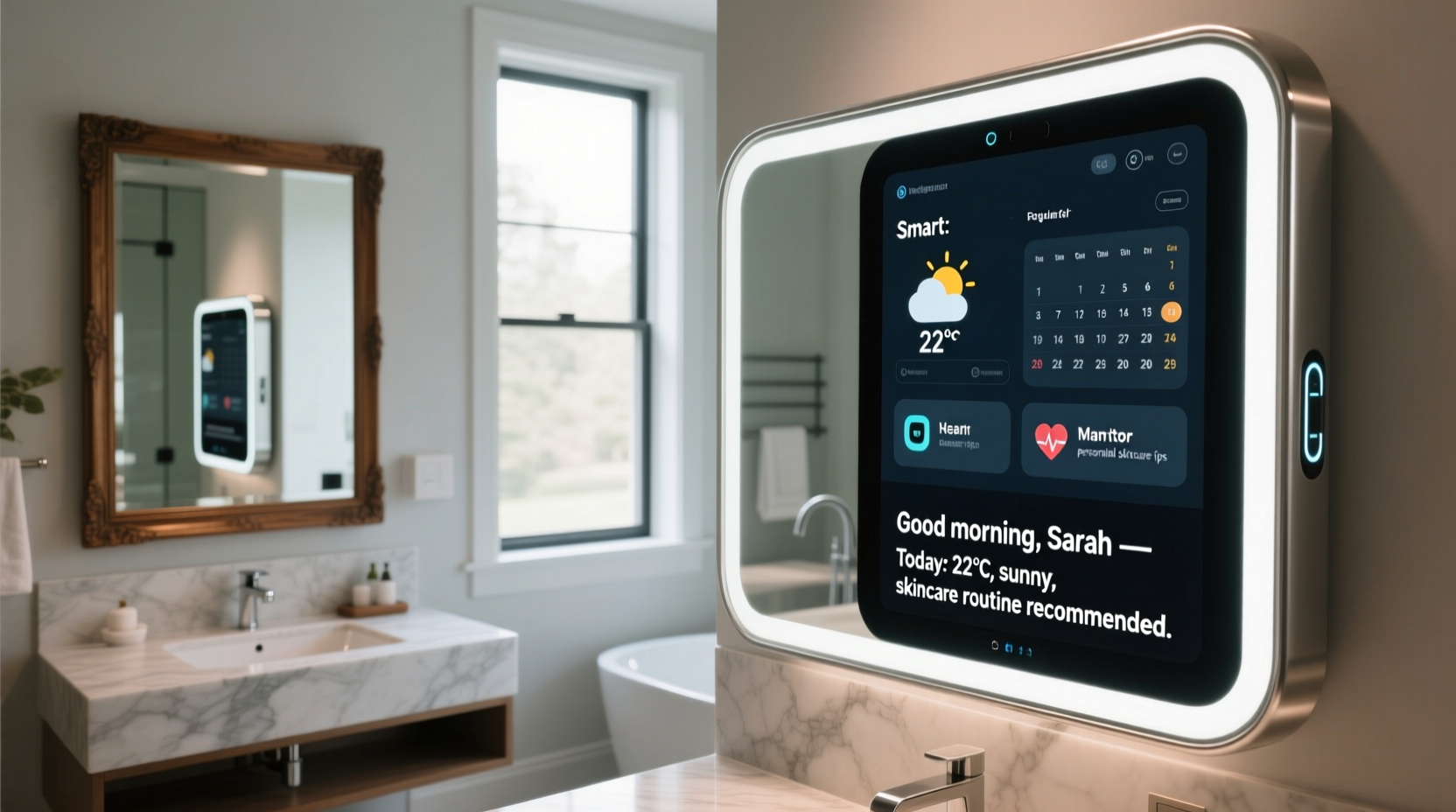
A smart mirror is essentially a two-way mirror with a digital display embedded behind it. When powered off, it looks like a standard reflective surface. When activated, it reveals information such as time, calendar events, weather forecasts, traffic updates, and even personalized health metrics. Many models integrate voice assistants (like Alexa or Google Assistant), Bluetooth speakers, motion sensors, and Wi-Fi connectivity.
Some advanced versions include facial recognition for tailored experiences—displaying different data depending on who’s standing in front. Others offer touch or gesture controls, allowing users to scroll through news headlines or control smart home devices without touching a phone.
Unlike traditional mirrors, which serve a single visual function, smart mirrors aim to be interactive hubs within homes—particularly bathrooms and dressing areas.
Key Differences: Functionality and Design
The most obvious distinction lies in functionality. A regular mirror reflects light to show your appearance. A smart mirror does that too—but layers in real-time digital content. Below is a detailed comparison.
| Feature | Regular Mirror | Smart Mirror |
|---|---|---|
| Reflection Quality | Excellent, consistent clarity | Slightly reduced due to screen layer |
| Power Requirement | None | Required (plug-in or USB) |
| Digital Integration | None | Wi-Fi, apps, voice assistants |
| Customization | Frame only | Display themes, layout, alerts |
| Lifespan | Decades with care | 5–8 years (tech obsolescence) |
| Maintenance | Wipe with glass cleaner | Avoid harsh chemicals; software updates |
| Cost Range | $20–$300 | $300–$1,500+ |
While smart mirrors offer impressive features, they come with trade-offs. The reflective quality is often slightly dimmer due to the semi-transparent screen layer. Glare from internal LEDs can interfere with makeup application or shaving precision under certain lighting conditions.
Real-World Impact on Daily Routines
The value of any technology should be measured by its ability to save time, reduce stress, or improve outcomes. So how do smart mirrors perform in everyday use?
For professionals with packed schedules, having calendar events, commute times, and weather forecasts appear as they brush their teeth can eliminate the need to check phones. This small reduction in decision fatigue adds up over weeks. One study by the University of California found that minimizing early-morning distractions improved focus throughout the day by nearly 17%.
Fitness enthusiasts benefit from mirrors with posture analysis or workout integration. Some models sync with Apple Health or Fitbit, displaying yesterday’s step count or hydration levels. Others support guided yoga sessions via mirrored video playback—turning the bathroom into a mini wellness station.
“Integrating passive information delivery into routine spaces reduces cognitive load and supports habit formation.” — Dr. Lena Patel, Behavioral Technologist at MIT Media Lab
However, not all features deliver equal value. Notifications about social media or emails may increase anxiety rather than streamline mornings. The key is customization: limiting displayed data to what’s truly useful.
A Day in the Life: Sarah’s Morning Routine
Sarah, a 34-year-old project manager in Seattle, installed a smart mirror six months ago. Her mornings used to involve checking three devices: phone, tablet, and laptop. Now, she stands in front of her mirror while getting ready, and the display shows:
- Current weather and UV index
- Traffic estimate to office
- Top three priorities for the day
- Last night’s sleep score from her wearable
She uses voice commands to dismiss reminders or add quick notes. “I don’t pull out my phone until I’m already out the door,” she says. “It feels like I’ve gained five minutes of mental space.”
But there have been hiccups. Once, the mirror failed to update traffic after a sudden road closure, causing her to be late. Another time, a software glitch blanked the screen during a power surge. She keeps a small handheld mirror in her drawer as backup.
Her verdict? “Worth it—for me. But only because I customized it heavily and disabled unnecessary alerts.”
When a Regular Mirror Still Wins
Despite the allure of high-tech convenience, traditional mirrors maintain several advantages.
First, reliability. A regular mirror requires no updates, no internet, and no charging. It works in power outages and survives firmware failures. In humid environments like bathrooms, moisture-resistant glass lasts longer than electronic components prone to corrosion.
Second, cost-effectiveness. Most people don’t need constant access to digital data while grooming. If your routine involves minimal planning or multitasking, a $50 framed mirror serves just as well.
Third, aesthetics. Many smart mirrors have visible bezels or faint pixelation when off. They often look more like TVs than elegant fixtures. Interior designers caution against prioritizing tech over harmony in bathroom design.
Step-by-Step Guide: Choosing the Right Mirror for Your Lifestyle
Deciding between a smart and regular mirror shouldn’t be based on novelty—it should align with your habits and goals. Follow this process:
- Assess Your Morning Routine: Track how you spend your first 30 minutes for a week. Do you check devices? Plan tasks? Exercise? Identify where friction occurs.
- List Desired Features: Want weather updates? Calendar sync? Music playback? Prioritize only what solves real problems.
- Evaluate Installation Needs: Smart mirrors require nearby outlets and strong Wi-Fi. Measure space and confirm electrical access.
- Compare Models: Research brands like HiMirror, Simplehuman, or Kohler Verdera. Read reviews focusing on long-term reliability.
- Test Reflection Clarity: If possible, view demos in person. Check for glare, color accuracy, and visibility in low light.
- Start Small: Consider a hybrid option—such as a mirror with built-in LED lighting and defogger but no screen. These offer modern benefits without full digitization.
This method prevents impulse buys and ensures technology enhances, rather than complicates, your day.
Common Pitfalls and How to Avoid Them
Many consumers regret smart mirror purchases due to poor expectations. Here are frequent issues and solutions:
- Overloaded Interface: Too much data creates visual clutter. Solution: Customize dashboards to show only 3–4 key widgets.
- Short Lifespan: Rapid tech changes make older models obsolete. Solution: Choose brands offering software support for at least 5 years.
- Privacy Concerns: Cameras and mics raise surveillance fears. Solution: Opt for models with physical camera covers or disable recording features entirely.
- Difficult Setup: Pairing with apps can frustrate non-tech-savvy users. Solution: Seek plug-and-play systems with intuitive mobile apps.
“Technology should adapt to humans, not the other way around.” — Dr. Arjun Mehta, UX Researcher at Stanford HAI
FAQ: Smart Mirrors vs Regular Mirrors
Are smart mirrors safe in bathrooms?
Yes, if designed for bathroom use. Look for IP-rated (Ingress Protection) models with sealed electronics and GFCI-compliant power supplies. Avoid DIY installations unless you're experienced with electrical safety in wet zones.
Can I install a smart mirror myself?
Basic models with adhesive mounts or hanging brackets can be self-installed. Larger units with hardwired connections should be handled by licensed electricians to meet building codes and ensure safety.
Do smart mirrors work without internet?
Limited functions remain available offline—like basic reflection and pre-loaded content. However, real-time data (weather, traffic, updates) requires a stable connection. Some allow cached data display during brief outages.
Final Checklist Before Buying
Before committing, ask yourself these questions:
- Will I actually use the digital features daily?
- Is my bathroom setup compatible (power, Wi-Fi, space)?
- Does the mirror integrate with tools I already use (Google Calendar, Alexa, etc.)?
- Am I comfortable with potential privacy trade-offs?
- Have I read independent reviews on durability and customer support?
- Is there a return policy if it doesn’t fit my routine?
If most answers are “yes,” a smart mirror could be a meaningful upgrade. If not, a high-quality regular mirror—with excellent lighting and positioning—remains a smarter choice.
Conclusion: Enhancing Routine, Not Replacing Simplicity
The rise of the smart mirror reflects a broader trend: the desire to optimize every moment. And for some, it delivers—streamlining decisions, reducing screen dependency, and adding subtle intelligence to daily rituals. But technology isn’t inherently better just because it’s new.
A regular mirror offers timeless utility. A smart mirror offers contextual convenience—if thoughtfully implemented. The real enhancement comes not from the device itself, but from how intentionally you use it.
Rather than chasing innovation for its own sake, consider what your routine truly needs. Maybe it’s not more data, but less distraction. Or perhaps seamless access to critical information is exactly the boost you’ve been missing.




 浙公网安备
33010002000092号
浙公网安备
33010002000092号 浙B2-20120091-4
Comments
No comments yet. Why don't you start the discussion?