
In bathrooms and dressing rooms around the world, a quiet revolution is taking place. The once-humble mirror—unchanged for centuries—is being reimagined with screens, sensors, voice assistants, and connectivity. Smart mirrors promise to transform your morning routine into a seamless, data-driven experience. But is the upgrade worth it? Or are we trading simplicity for unnecessary complexity? As these high-tech alternatives gain traction, it's time to examine whether smart mirrors genuinely enhance daily life—or if a traditional mirror still holds its ground.
The Evolution of the Mirror: From Silvered Glass to Embedded AI
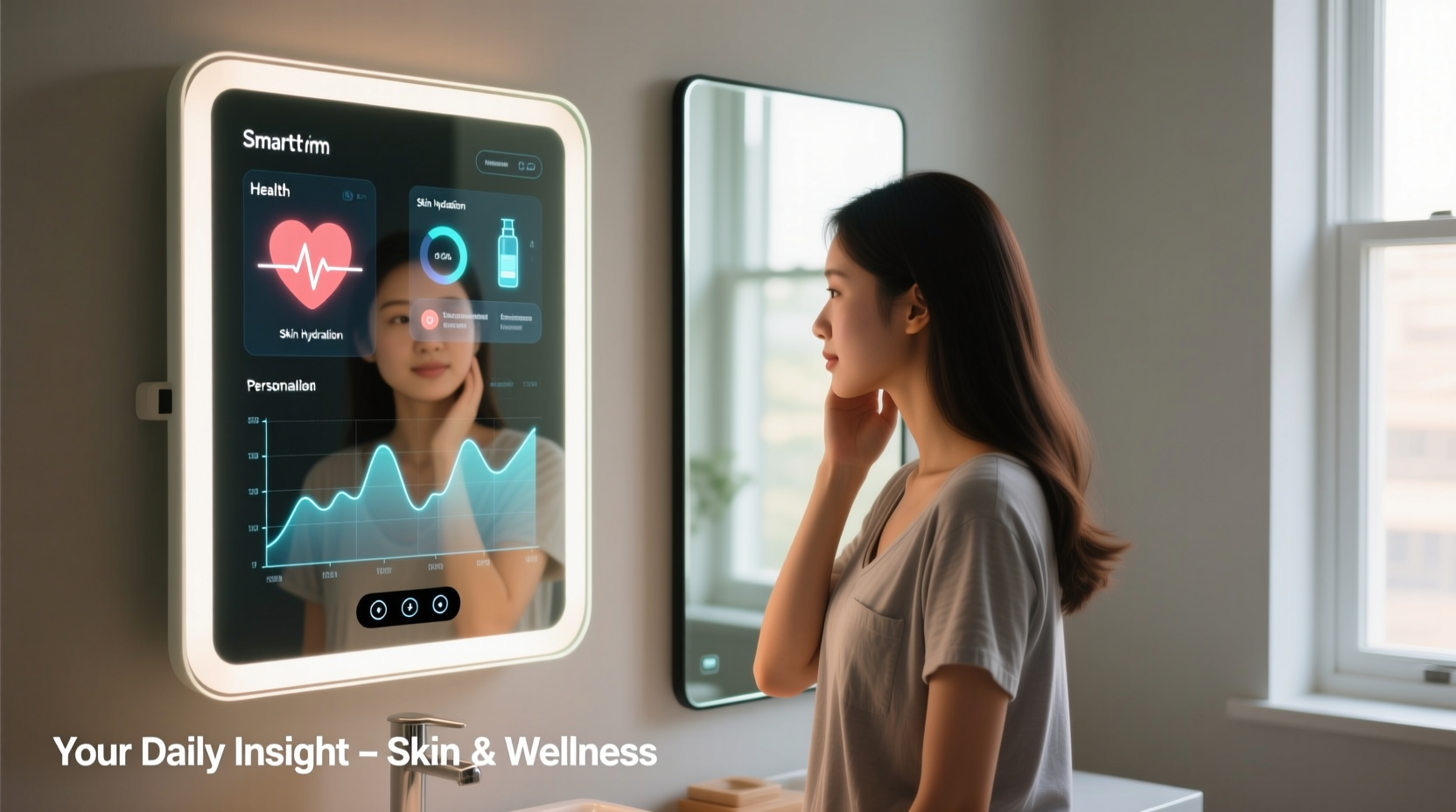
Mirrors have always served one primary purpose: reflection. For centuries, advancements were limited to clarity, frame design, and mounting. But in the last decade, technology has begun merging with everyday objects. The smart mirror is a product of this convergence—a reflective surface that doubles as a display, showing weather updates, calendar alerts, fitness metrics, or even streaming video while you shave or apply makeup.
These devices typically use transparent OLED or LCD panels behind a two-way mirror surface. When powered off, they appear like standard mirrors. When activated, digital information overlays the reflection. Some integrate voice assistants like Alexa or Google Assistant, while others sync with smartphones, wearables, or home automation systems.
Yet despite their futuristic appeal, smart mirrors remain niche. Prices range from $500 to over $2,000, far exceeding the cost of even premium traditional mirrors. Their functionality varies widely—from basic informational displays to full interactive interfaces. This raises a fundamental question: does this added technology improve your routine meaningfully, or simply distract from it?
Functionality Face-Off: What Can a Smart Mirror Do That a Regular Mirror Can’t?
To assess real-world value, let’s break down what smart mirrors offer beyond reflection.
- Real-time information display: Weather forecasts, news headlines, calendar events, and traffic updates appear without needing to check your phone.
- Voice and gesture control: Adjust lighting, play music, or set reminders hands-free—useful when your hands are soapy or occupied.
- Integrated lighting: Adjustable color temperature and brightness simulate natural daylight, improving visibility for grooming tasks.
- Fitness and wellness tracking: Some models connect to wearables and display heart rate, sleep quality, or hydration levels during your morning check-in.
- Augmented reality (AR) features: Virtual try-ons for makeup, hairstyles, or clothing are emerging in high-end models.
In contrast, a regular mirror performs one task flawlessly: providing an accurate, uninterrupted reflection. It requires no software updates, no Wi-Fi connection, and no electricity. It doesn’t crash, freeze, or become obsolete in two years. Its reliability is absolute.
“Technology should serve human behavior, not complicate it. A mirror’s job is to reflect—you don’t need an app for that.” — Dr. Lena Patel, Human-Computer Interaction Researcher, MIT Media Lab
The key issue isn’t capability—it’s necessity. While smart mirrors can do more, most users find that much of their functionality overlaps with devices they already own: phones, smart speakers, and tablets. The novelty wears off quickly when you realize you’re checking the same weather forecast you saw on your phone three times already.
Cost, Maintenance, and Longevity: The Hidden Trade-offs
Purchasing a smart mirror isn’t just about upfront cost—it’s about long-term ownership. Let’s compare practical factors side by side.
| Feature | Smart Mirror | Regular Mirror |
|---|---|---|
| Average Price | $600 – $2,500 | $30 – $300 |
| Power Requirement | Yes (plug-in or hardwired) | No |
| Lifespan | 5–7 years (tech may degrade faster) | 15+ years |
| Maintenance Needs | Software updates, screen cleaning, potential repairs | Occasional glass wiping |
| Repairability | Limited; often requires manufacturer service | High; easily replaced or reglazed |
| Privacy Risks | Data collection, microphone/camera access | None |
The disparity is stark. A smart mirror introduces points of failure absent in traditional designs. If the display fails, the entire unit may need replacement—even if the reflective surface is intact. Software bugs, compatibility issues, or discontinued support can render advanced features useless over time.
Real-World Impact: Does It Actually Improve Your Routine?
To understand actual benefits, consider a typical morning sequence:
- Wake up and head to the bathroom.
- Brush teeth, wash face, style hair.
- Check appearance before leaving.
- Review day’s schedule and weather.
A regular mirror supports steps 2 and 3 perfectly. Step 4 usually happens on a smartphone. A smart mirror attempts to merge all four—but at what cost?
In many cases, users report that the mirror becomes just another screen competing for attention. Notifications pop up mid-shave. Glare from the display distorts facial details. Voice commands misfire in humid environments. And because most smart mirrors lack tactile feedback, accidental touches trigger unwanted actions.
Mini Case Study: Sarah’s Six-Month Smart Mirror Experiment
Sarah, a 34-year-old marketing director in Seattle, installed a premium smart mirror in her master bathroom to streamline her busy mornings. She was drawn to its promise of integrated wellness data and voice-controlled lighting.
For the first month, she loved it. Seeing her sleep score and hydration level while brushing her teeth felt empowering. The adjustable lighting helped with makeup application on dark winter mornings.
But by month three, enthusiasm waned. The interface became sluggish. Syncing with her fitness tracker failed repeatedly. One morning, the mirror displayed an ad for skincare products mid-routine—an unexpected result of a “free” companion app.
By month six, she had unplugged it. “It wasn’t broken,” she said. “It just stopped adding value. I realized I could glance at my watch for my health stats and turn on a lamp manually. The mirror became more hassle than help.”
Sarah’s experience reflects a broader trend: initial excitement followed by diminishing returns. The technology works—but only inconsistently, and often redundantly.
When a Smart Mirror Makes Sense (And When It Doesn’t)
That said, smart mirrors aren’t universally impractical. There are specific scenarios where they deliver measurable benefits.
Situations Where Smart Mirrors Shine
- Accessibility needs: Users with mobility or vision challenges benefit from voice commands and large-display information.
- Professional grooming: Makeup artists or barbers may use AR overlays for precision work or client consultations.
- Smart home integration: In fully automated homes, mirrors can act as central control hubs for lighting, climate, and security.
- Wellness-focused routines: Individuals tracking biometrics may appreciate passive data visualization during daily rituals.
Situations Better Served by a Regular Mirror
- Simple, reliable use: Most people only need accurate reflection.
- Budget-conscious buyers: The ROI on a $1,200 mirror for checking your hair is questionable.
- Privacy-sensitive households: Cameras and microphones pose risks, especially in private spaces.
- Renters or frequent movers: Smart mirrors are harder to uninstall and transfer safely.
FAQ: Common Questions About Smart vs. Regular Mirrors
Can smart mirrors work without Wi-Fi?
Limited functionality. Most will still function as a basic mirror, but lose connectivity-dependent features like weather, calendar sync, or voice assistants. Some allow offline use of saved settings, but updates and cloud services require internet.
Are smart mirrors safe in humid bathrooms?
Most are designed for bathroom use with sealed components and moisture-resistant coatings. However, prolonged exposure to steam can degrade electronics over time. Proper ventilation is essential, and warranties often exclude water damage.
Do smart mirrors improve grooming accuracy?
Only indirectly. The main advantage is adjustable lighting that mimics natural daylight, reducing shadows. The digital features themselves don’t enhance grooming precision—though some AR tools for virtual makeup trials show promise in specialized applications.
Conclusion: Technology Should Enhance, Not Replace, Simplicity
The debate between smart and regular mirrors isn’t really about technology—it’s about intentionality. A mirror’s core purpose hasn’t changed: to show us ourselves clearly and honestly. Smart mirrors add layers of functionality, but too often those layers obscure rather than enhance.
High-tech features can be helpful in specific contexts, but for most people, a well-placed, well-lit traditional mirror remains the superior choice. It’s reliable, affordable, private, and enduring. It doesn’t demand updates, collect data, or distract with notifications. It simply works.
Before investing in a smart mirror, ask: What problem am I trying to solve? If the answer is “I want to see the weather while I brush my teeth,” consider whether your phone or smart speaker already handles that—more efficiently and at lower cost.
Technology should simplify life, not complicate rituals that already function well. In the quiet moments of your morning routine, sometimes the most advanced tool is no tool at all—just a clear reflection and a moment of presence.




 浙公网安备
33010002000092号
浙公网安备
33010002000092号 浙B2-20120091-4
Comments
No comments yet. Why don't you start the discussion?