
Every holiday season, millions of homes light up with festive cheer—often starting with the glow of a beautifully decorated Christmas tree. But as tradition meets technology, more households are turning to smart plugs to control their tree lights. The promise is simple: turn lights on and off remotely, set schedules, and even dim them via smartphone. Yet beneath the convenience lies a critical question—does using a smart plug actually make Christmas lighting safer and easier?
The answer isn’t just about convenience—it’s about electrical safety, fire risk, ease of use, and long-term reliability. While smart plugs offer undeniable modern advantages, they aren’t foolproof. Used incorrectly, they can introduce new risks. When implemented wisely, however, they can enhance both safety and seasonal joy.
How Smart Plugs Work with Christmas Tree Lights
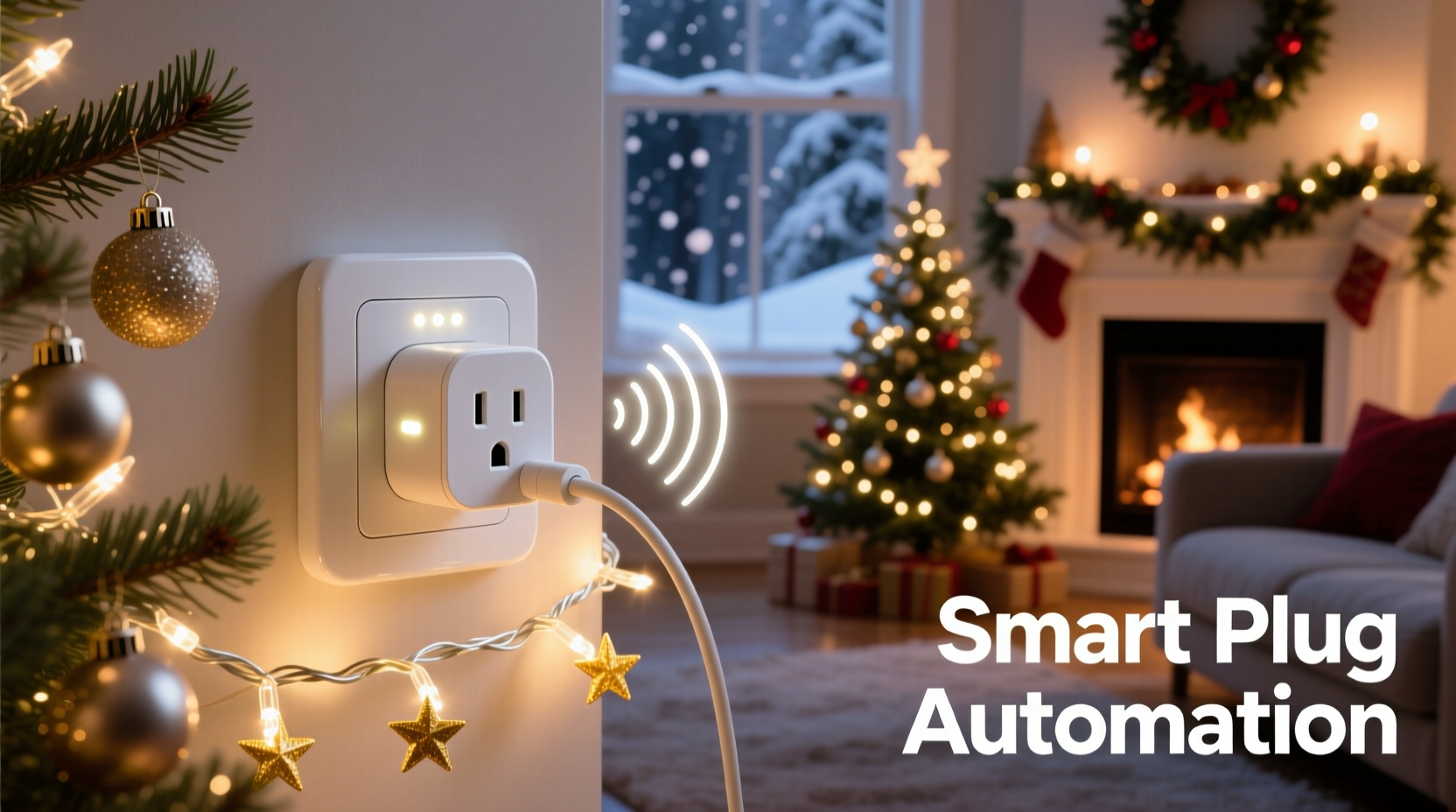
A smart plug is a small device that fits between a wall outlet and an electrical appliance—in this case, your Christmas tree light strand. Once connected to Wi-Fi and paired with a mobile app (like Google Home, Amazon Alexa, or Apple HomeKit), it allows remote control over power delivery. You can schedule on/off times, activate lights with voice commands, or monitor usage through energy reports.
For holiday displays, this means you can:
- Turn on tree lights before arriving home
- Set automatic shut-off at bedtime
- Sync lighting with music or other smart devices
- Check if lights were left on while away
But not all Christmas lights are created equal. Older incandescent strands draw significantly more power than modern LED sets. A typical incandescent mini-light string uses 40–100 watts; daisy-chaining several can exceed 500 watts. Most smart plugs have a maximum load rating of 15 amps or 1800 watts (at 120V), but sustained high loads generate heat—especially when multiple strands are plugged into a single adapter.
Safety: Does Automation Reduce Risk?
One of the most cited reasons for adopting smart plugs during the holidays is safety. Traditional advice warns against leaving Christmas tree lights unattended or running them overnight due to fire hazards. According to the National Fire Protection Association (NFPA), U.S. fire departments respond to an average of 160 home fires per year caused by decorative lighting—many linked to electrical failures, overloading circuits, or leaving lights on too long.
Smart plugs address part of this problem by enabling scheduled shutoffs. For example, setting lights to turn off automatically at 11 PM reduces the window of risk when no one is awake to notice flickering or overheating. Some models also include overload protection and real-time current monitoring.
However, automation doesn’t eliminate physical dangers. If faulty wiring exists in the light strand itself—or if the tree is dry and located near drapes—the presence of a smart plug won’t prevent ignition. As Dr. Linda Harper, Electrical Safety Engineer at UL Solutions, explains:
“Smart plugs add a layer of control, but they don’t replace basic fire safety practices. They’re tools, not safeguards. A smart plug can cut power after a delay, but it can't detect smoldering insulation or arcing in damaged wires.” — Dr. Linda Harper, UL Solutions
In fact, adding a smart plug may create additional connection points—each a potential source of resistance and heat buildup. Poor-quality outlets, loose fittings, or dust accumulation inside the plug can contribute to failure. This is especially true in older homes with outdated wiring.
When Smart Plugs Improve Safety
- You frequently forget to turn off lights before bed or travel
- Your lights are LED-based and low-wattage (under 500W total)
- You live in a household with mobility challenges or young children
- You want remote verification that lights are off when away
When They May Introduce Risk
- Used with high-draw incandescent light strings
- Daisy-chained with multiple extension cords or power strips
- Plugged into overloaded circuits (e.g., shared with space heaters)
- Paired with aged or frayed light cables
Ease of Use: Is It Really Simpler?
Beyond safety, the appeal of smart plugs lies in convenience. No more walking across the room to flip a switch—or worse, digging behind the tree to reach an outlet. With automation, lighting becomes part of your daily rhythm.
Consider a common scenario: you arrive home from work in December darkness. With geofencing enabled, your smart plug turns on the tree lights as soon as your phone detects arrival within a 1-mile radius. Or perhaps you’ve programmed a gentle “sunrise” effect where lights gradually brighten each morning to start the day with warmth.
“Last year, I forgot to turn off the tree for three nights straight while traveling. This year, I set a strict 7 AM to 10 PM schedule. It’s peace of mind—I know it shuts off even if I don’t.” — Sarah M., homeowner in Portland, OR
This kind of hands-off management is especially helpful for elderly users or those managing multiple holiday displays. Voice control integration means someone with limited mobility can say, “Alexa, turn on the tree,” without bending or reaching.
Yet ease depends heavily on setup quality. Many users report frustration during initial configuration—failed Wi-Fi pairing, app crashes, or inconsistent responses. Signal strength matters: if your router is in the basement and the tree is on the second floor, connectivity drops may cause delays or missed triggers.
Step-by-Step Setup Guide
- Choose a compatible smart plug (e.g., works with Alexa, Google, or HomeKit).
- Install the manufacturer’s app and create an account.
- Plug the device into a wall outlet near the tree—avoid extension cords if possible.
- Connect the light strand to the smart plug.
- Follow in-app instructions to connect to Wi-Fi (ensure 2.4 GHz network is used; most smart plugs don’t support 5 GHz).
- Test remote control via app and voice assistant.
- Set a schedule or routine (e.g., “On at 5 PM, Off at 10 PM”).
- Name the device clearly (e.g., “Christmas Tree Lights”) for easy identification.
Comparing Options: What to Look for in a Holiday Smart Plug
Not all smart plugs are equally suited for Christmas lighting. Here’s a comparison of key features to consider based on real-world needs:
| Feature | Why It Matters | Recommended |
|---|---|---|
| Wi-Fi Compatibility | Must support 2.4 GHz networks; most do not work on 5 GHz-only routers | TP-Link Kasa, Wemo Mini, Eve Light Switch |
| Load Capacity | Should handle at least 1200W for multiple LED strands or small incandescents | America Energy AE-T1 (1800W rated) |
| Energy Monitoring | Tracks power usage—helpful for identifying abnormal draws | Emporia Vue, Sense Energy Monitor (whole-home option) |
| Voice Assistant Support | Enables hands-free control via Alexa, Google, Siri | All major brands except some regional models |
| Physical Button | Allows manual override if app fails or Wi-Fi goes down | Highly recommended |
| Size | Larger plugs may block adjacent outlets | Compact designs like Kasa KP105 or Wemo Mini |
Note: Avoid using smart power strips designed for entertainment centers—they often lack individual outlet control and may not be optimized for lighting loads.
Real-World Example: A Family’s First Smart Tree
The Thompson family in Denver decided to go “smart” with their 2023 holiday display. Their seven-foot pre-lit tree already had built-in LEDs, but they added two extra strands for sparkle and connected everything to a TP-Link Kasa smart plug.
They set a schedule: lights turned on at 5 PM Sunday through Thursday, and 4 PM Friday through Saturday. On Christmas Eve, they created a special scene called “Midnight Mass Mode” that activated only from 10 PM to 12:30 AM.
One evening, the app alerted them that power consumption spiked unexpectedly. Upon inspection, they found one of the supplemental strands had a short circuit—wires exposed where a pet had chewed the cord. The smart plug hadn’t prevented the fault, but the energy monitoring feature helped catch it early.
“We would’ve never noticed until something burned,” said Mark Thompson. “Now we check the app weekly like a dashboard.”
Common Mistakes to Avoid
Even tech-savvy users make errors when integrating smart plugs into holiday routines. These pitfalls can compromise safety or functionality:
- Overloading the plug: Connecting too many strands beyond rated capacity.
- Using damaged cords: Never plug frayed or taped wires into any smart device.
- Ignoring firmware updates: Manufacturers release patches for security and stability.
- Setting vague schedules: “Always on” defeats the purpose of automation.
- Skipping naming conventions: Multiple smart plugs without clear labels lead to confusion.
Frequently Asked Questions
Can I use a smart plug with any type of Christmas lights?
Most LED and incandescent light strings work with smart plugs, provided the total wattage stays within the plug’s limit. However, avoid using smart plugs with rotating light projectors, motorized decorations, or items generating electromagnetic interference unless explicitly supported.
Are smart plugs a fire hazard?
When used correctly—with proper load management and in good condition—smart plugs are not inherently hazardous. However, like any electrical device, they can overheat if overloaded, poorly ventilated, or used with incompatible wiring. Choose UL-listed models and inspect regularly for warmth or discoloration.
What happens if my Wi-Fi goes down?
If your internet connection fails, remote control and scheduling may stop working, depending on the model. Some advanced plugs (like those with local control via Matter protocol) can still operate on preset timers. Otherwise, manual operation via the physical button (if present) remains available.
Final Verdict: Safer and Easier? Yes—but With Conditions
Automation through a smart plug can indeed make managing Christmas tree lights safer and easier—but only when used responsibly. The technology excels at enforcing discipline around usage time, reducing human error, and offering remote oversight. For families with busy schedules or accessibility needs, it’s a meaningful upgrade.
Yet it’s not a substitute for vigilance. A smart plug won’t save a dried-out tree from catching fire, nor will it repair worn insulation. Its value multiplies when combined with sound practices: using LED lights, inspecting cords annually, avoiding circuit overload, and unplugging entirely when away for extended periods.
The ideal setup blends old wisdom with new tools: a fresh tree, modern low-heat LEDs, a properly rated smart plug, and a consistent off-schedule. Add regular inspections and a smoke detector nearby, and you’ve maximized both safety and simplicity.
“Technology should support, not replace, responsible habits. Automate the routine, but never automate the responsibility.” — Dr. Elena Torres, Home Fire Prevention Institute
Take Action This Season
This holiday season, consider upgrading your tree lighting routine—not just for convenience, but for smarter, more mindful celebration. Start by auditing your current setup: check cord condition, calculate total wattage, and assess outlet quality. Then choose a reliable smart plug, configure it thoughtfully, and integrate it into your seasonal rhythm.
Small changes today can prevent emergencies tomorrow. Whether you're lighting a tabletop spruce or a towering Fraser fir, let automation serve your peace of mind—not replace it.




 浙公网安备
33010002000092号
浙公网安备
33010002000092号 浙B2-20120091-4
Comments
No comments yet. Why don't you start the discussion?