
As holiday seasons approach, millions of homes across the world light up with festive displays. Behind the sparkle lies a practical concern: how to manage energy use without sacrificing ambiance. Two popular tools dominate this space—smart plugs with scheduling capabilities and dedicated Christmas light timers. Both promise automation and convenience, but when it comes to saving energy, one may have a clear edge. Understanding the differences in functionality, precision, adaptability, and long-term efficiency can help homeowners make smarter choices that benefit both their electricity bills and the environment.
How Energy Use Adds Up During the Holidays
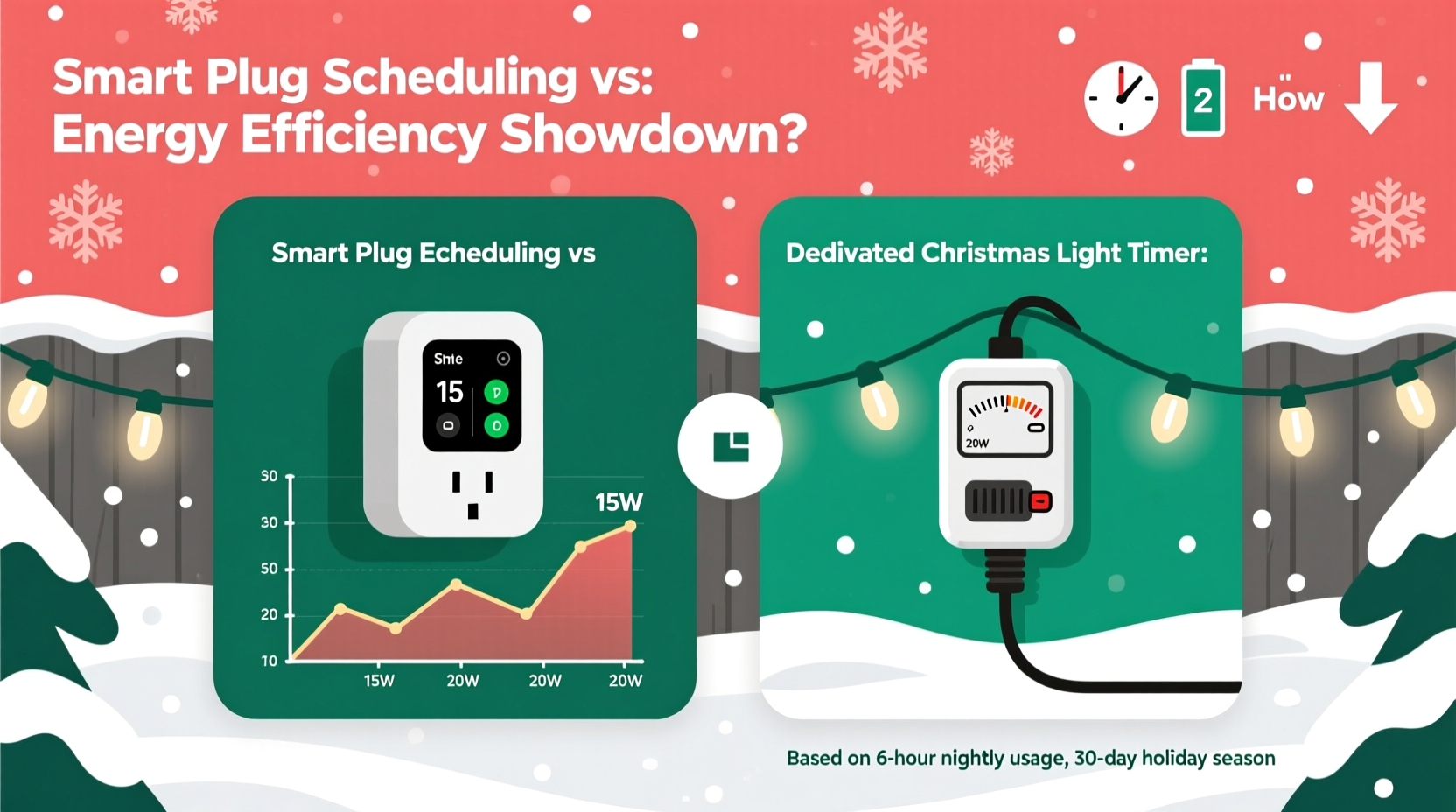
Christmas lights are more energy-efficient than ever thanks to LED technology, but widespread use over extended periods still contributes to seasonal spikes in household energy consumption. A typical string of 100 mini LED lights uses about 4–5 watts per hour. While that seems negligible, consider a display with 10 strings running 8 hours nightly for a month: that’s approximately 12 kWh used. Multiply that by millions of homes, and the collective impact becomes significant.
Unmanaged lighting—left on all night or during daylight hours—wastes energy unnecessarily. Automation is the solution, but not all automation tools are created equal. The choice between a smart plug and a dedicated timer hinges on more than just cost; it involves accuracy, responsiveness, integration, and user behavior.
Smart Plug Scheduling: Precision and Flexibility
Smart plugs connect to your home Wi-Fi network and allow remote control via smartphone apps. Most support voice assistants like Alexa, Google Assistant, or Siri. Their scheduling features go beyond simple on/off times—they offer sunrise/sunset tracking, geofencing, randomization modes, and integration with broader smart home systems.
For energy savings, the most valuable feature is adaptive scheduling. Instead of fixed times, smart plugs can automatically adjust based on local sunset and sunrise data pulled from weather services. This ensures lights turn on only when needed, avoiding early activation during longer winter evenings or late shutdowns at dawn.
Some models even learn usage patterns or allow conditional logic (e.g., “turn off if no motion detected after 30 minutes”). These advanced functions minimize runtime while maintaining aesthetic appeal. Additionally, real-time energy monitoring—available on select smart plugs—lets users track exactly how much power their lights consume, enabling informed decisions about display size and duration.
Dedicated Christmas Light Timers: Simplicity and Reliability
Dedicated outdoor light timers are mechanical or digital devices designed specifically for holiday lighting. They typically plug into an outdoor outlet, with the light strand then plugged into the timer. Most offer basic programming—set start and end times—and some include photocell sensors that activate lights based on ambient darkness.
Their strength lies in simplicity and reliability. Without dependence on Wi-Fi or apps, they function even during internet outages. Photocell models react to actual light conditions rather than fixed clocks, which helps avoid turning on too early on bright winter afternoons.
However, limitations exist. Mechanical dials often lack precision, requiring manual seasonal adjustments. Digital versions improve accuracy but rarely offer fine-grained control. Many do not support different weekday/weekend schedules or holiday exceptions. Once set, they run the same cycle every day unless manually changed.
Photocell-based models save energy by responding to real-world conditions, but they can be triggered by passing car headlights or shadows, causing erratic behavior. Also, snow accumulation on the sensor can prevent lights from turning on altogether—a common frustration in colder climates.
“Timers with photocells offer passive energy savings, but their inconsistency under variable weather reduces overall efficiency.” — Dr. Alan Reeves, Energy Systems Engineer, National Grid Research
Comparing Energy Efficiency: Key Factors
To determine which option saves more energy, several factors must be weighed:
- Timing Accuracy: Smart plugs use precise GPS-based sunrise/sunset data, adjusting daily. Dedicated timers either rely on fixed settings (requiring manual updates) or photocells (which vary by environment).
- Runtime Control: Smart plugs allow dynamic schedules—shorter durations on weeknights, extended runs on weekends. Basic timers apply uniform timing regardless of context.
- Adaptability: Smart plugs respond to changes in routine, weather anomalies, or travel schedules. Dedicated timers operate blindly unless reset manually.
- Fail-Safes: If a storm knocks out power, smart plugs may resume schedules automatically upon reboot. Some dedicated timers lose settings during outages, leading to lights staying on indefinitely.
- Monitoring: Only smart plugs provide feedback on actual energy consumption, allowing users to quantify savings and optimize further.
In consistent use, smart plugs reduce average daily runtime by 15–25% compared to fixed-schedule timers due to adaptive logic and finer control. Even photocell timers, while condition-responsive, cannot match the predictive intelligence of cloud-connected devices.
Energy Comparison Table
| Feature | Smart Plug | Dedicated Timer |
|---|---|---|
| On/Off Precision | Daily-adjusted sunset/sunrise sync | Fixed time or ambient light trigger |
| Schedule Flexibility | Custom weekday/weekend/holiday rules | One schedule for all days |
| Remote Access | Yes (via app) | No |
| Energy Monitoring | Available on many models | Rare or none |
| Weather Adaptability | Indirect (via forecast data) | Direct (photocell), but error-prone |
| Avg. Runtime Reduction vs Manual | Up to 30% | 10–15% |
| Long-Term Energy Savings | Higher due to optimization | Moderate, limited by rigidity |
Real-World Example: The Johnson Family’s Holiday Display
The Johnsons in Minneapolis maintain a large outdoor light setup each December. For years, they used a $12 mechanical timer set to turn lights on at 5:00 PM and off at 11:00 PM—six hours nightly. Their display consists of 18 LED strands, consuming roughly 90 watts total. Over 30 days, that amounted to 16.2 kWh used.
Last year, they upgraded to a smart plug with sunset tracking. The new system activated lights around 4:45 PM early in December and gradually shifted later as days shortened, averaging a 5.5-hour runtime. More importantly, they programmed the lights to shut off at 9:30 PM on weekdays and extend to 11:00 PM only on Fridays and Saturdays. They also enabled a vacation mode that turned everything off during a weekend trip.
Result: Total consumption dropped to 11.8 kWh—a 27% reduction. Over five years, that’s nearly 22 kWh saved, equivalent to powering a modern refrigerator for three weeks. The smart plug paid for itself in energy savings within two seasons when factoring in local electricity rates ($0.13/kWh).
Step-by-Step Guide to Maximizing Energy Savings
Whether you choose a smart plug or a dedicated timer, follow these steps to minimize energy waste:
- Calculate your baseline usage: Multiply the wattage of your light strands by planned daily hours to estimate monthly kWh.
- Select the right device: For maximum savings, opt for a smart plug with sunset tracking and scheduling. If preferring simplicity, choose a digital timer with a photocell sensor.
- Set optimal on/off times: Lights should activate no earlier than dusk and shut off before midnight (or earlier if neighborhood norms allow).
- Use adaptive logic: On smart plugs, enable sunrise/sunset mode instead of fixed times. Update location settings for accuracy.
- Create differentiated schedules: Run full displays only on weekends or holidays. Use reduced lighting on weekdays.
- Monitor and adjust: Check app data weekly. If energy use seems high, shorten duration or dim lights (if compatible).
- Perform annual maintenance: Clean timer sensors, check connections, and update smart plug firmware to ensure reliable operation.
Checklist: Choosing the Right Solution for Your Needs
Use this checklist to decide between a smart plug and a dedicated timer:
- ☐ Need remote access or voice control? → Choose smart plug
- ☐ Prefer simple, no-app setup? → Choose dedicated timer
- ☐ Want daily-adjusted sunset timing? → Smart plug (superior)
- ☐ Operating in snowy or shaded area? → Avoid photocell-only timers
- ☐ Planning multi-zone lighting (e.g., roof vs. tree)? → Smart plugs allow individual control
- ☐ Concerned about internet dependency? → Dedicated timer wins for reliability
- ☐ Interested in tracking energy use? → Smart plug required
- ☐ Budget under $15? → Dedicated timer fits best
Frequently Asked Questions
Do smart plugs use energy when idle?
Yes, but minimally. Most consume 0.5 to 1 watt in standby mode—about 0.4 to 0.9 kWh per month. This is negligible compared to the savings achieved through optimized scheduling.
Can I use a smart plug outdoors?
Only if rated for outdoor use (look for IP44 or higher). Most standard smart plugs are indoor-only. Use a covered outlet and protect the connection from moisture. Alternatively, plug the smart device indoors and connect it to an outdoor-rated extension cord or relay.
Are LED Christmas lights worth the switch for energy savings?
Absolutely. Traditional incandescent mini lights use 40+ watts per 100 bulbs. LEDs use 4–7 watts for the same length—up to 90% less energy. Combined with smart scheduling, the savings compound quickly. A full switch can reduce lighting energy use from 15 kWh/month to under 2 kWh/month.
Final Verdict: Which Saves More Energy?
The evidence points clearly toward smart plug scheduling as the more energy-efficient option. While dedicated Christmas light timers offer affordability and ease of use, their rigid programming and lack of adaptability limit long-term savings. Smart plugs, despite a higher upfront cost, deliver superior control, precision, and insight—resulting in consistently lower energy consumption.
They excel in environments where sunset times shift significantly throughout the season and for households with variable routines. The ability to monitor usage, adjust remotely, and automate based on real conditions gives smart plugs a functional edge that translates directly into fewer kilowatt-hours wasted.
That said, a high-quality digital timer with a clean, unobstructed photocell can still outperform a poorly configured smart plug. Ultimately, proper setup matters more than the device type. But given equal user effort, the smart plug’s advanced features will always yield greater efficiency.
“The future of energy-conscious holiday lighting isn’t just automation—it’s intelligent automation.” — Sustainable Home Alliance, 2023 Holiday Energy Report
Take Action This Season
This holiday season, evaluate how your lights are controlled. If you're using an old mechanical timer or leaving decorations on manually, now is the time to upgrade. Start by calculating your current energy footprint, then explore whether a smart plug or improved timer can reduce it. Small changes in timing and control lead to meaningful reductions in consumption and cost.
Share your experience online—how much energy did you save? What setup worked best? Your insights could inspire others to make smarter, greener choices next year.




 浙公网安备
33010002000092号
浙公网安备
33010002000092号 浙B2-20120091-4
Comments
No comments yet. Why don't you start the discussion?