
Home automation has evolved from a luxury to a practical necessity for modern living. At the heart of this transformation are two common devices: smart plugs and smart switches. Both allow remote control of electrical devices, voice integration with assistants like Alexa or Google Assistant, and scheduling capabilities. But choosing between them isn’t always straightforward. The decision hinges on more than just preference—it involves understanding how each fits into your space, lifestyle, and long-term goals.
This guide dives deep into the functional, aesthetic, and technical differences between smart plugs and smart switches. Whether you're retrofitting an older home or building a new smart ecosystem, clarity on these devices will help you make informed choices that maximize convenience without unnecessary expense.
Understanding the Basics: What Each Device Does
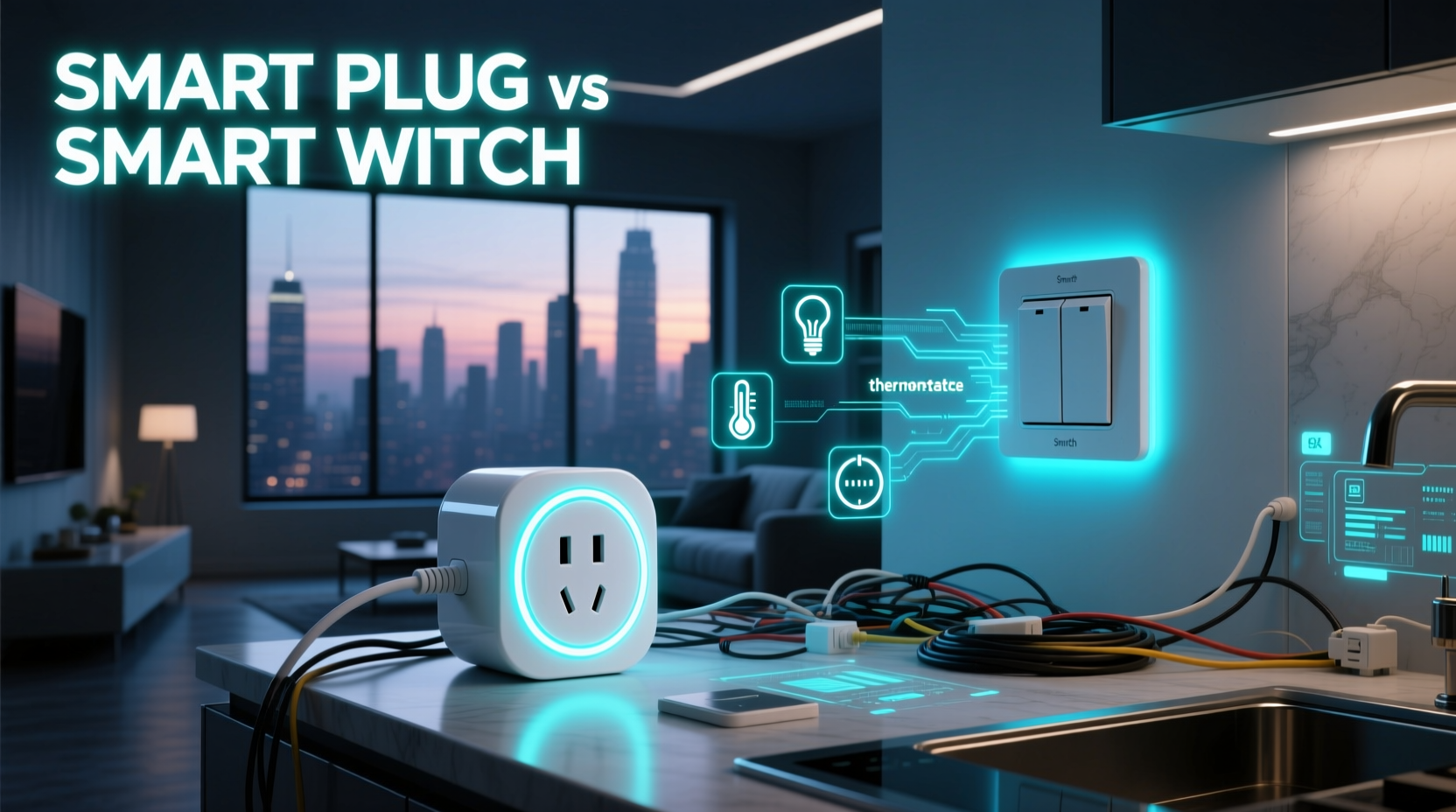
A smart plug is a standalone device that plugs into a standard wall outlet. You then connect your lamp, fan, coffee maker, or other appliance into the smart plug. Once paired with your Wi-Fi network and a companion app, it allows you to turn the connected device on or off remotely via smartphone, voice command, or automated routines.
In contrast, a smart switch replaces your existing light switch or wall switch. It’s hardwired into your home’s electrical system and controls power directly at the source—typically lighting fixtures or permanently installed appliances. Like smart plugs, they offer app-based control, voice integration, and scheduling, but operate at the circuit level rather than as an intermediary accessory.
The fundamental distinction lies in integration: smart plugs are non-invasive add-ons; smart switches require electrical work and permanent installation. This difference shapes everything from cost and safety to design compatibility and scalability.
Installation & Practicality: Ease vs. Permanence
One of the most compelling advantages of smart plugs is their simplicity. No tools, no electrician, no permits—just plug in and pair. They’re ideal for renters or anyone unwilling to modify wiring. Because they don’t alter the structure of your home, they can be moved from room to room or taken with you when relocating.
Smart switches, however, demand more effort. Installation typically requires turning off the circuit breaker, removing the old switch, connecting wires (line, load, neutral, ground), and securing the new unit. While many models come with detailed instructions, improper installation can pose fire or shock risks. For this reason, hiring a licensed electrician is often recommended—adding both time and cost to the process.
Despite the complexity, smart switches offer a cleaner look. There's no bulky adapter protruding from the wall, no visible cords, and no risk of someone accidentally unplugging your \"smart\" device. In high-traffic areas like kitchens or living rooms, this seamless integration enhances both aesthetics and usability.
Performance & Control Capabilities Compared
Both devices support core smart features: remote access, voice commands, timers, and scene automation. However, performance varies based on application.
- Smart Plugs generally cap out at 15 amps (1800 watts), making them suitable for lamps, TVs, heaters, and small appliances. Some advanced models include energy monitoring, allowing you to track power consumption over time—an excellent tool for identifying energy hogs.
- Smart Switches, being wired directly into the circuit, handle higher loads and are built for continuous use. Dimmer versions provide smooth brightness adjustment for compatible bulbs, something most smart plugs cannot do unless the bulb itself is smart-enabled.
Another key factor is responsiveness. Smart switches usually have lower latency because they’re directly connected to the fixture. A smart plug introduces a middle layer—the plug-to-appliance connection—which may slightly delay response times, especially if the appliance has its own startup sequence.
“Smart switches give a more integrated experience—they feel like part of the house, not an afterthought.” — Marcus Tran, Home Automation Consultant at NestLogic Systems
Detailed Comparison Table: Smart Plug vs Smart Switch
| Feature | Smart Plug | Smart Switch |
|---|---|---|
| Installation Difficulty | Easy – plug and play | Hard – requires wiring and possibly an electrician |
| Cost (Average) | $15–$30 per unit | $30–$70 per switch + installation fees |
| Mobility | High – portable across outlets | None – fixed to one location |
| Energy Monitoring | Common in mid-to-high-end models | Rare, except in specialized switches |
| Dimming Capability | No (unless paired with smart bulb) | Yes, with compatible dimmer switches |
| Aesthetic Integration | Prominent – visible from wall | Seamless – flush with wall plate |
| Suitability for Renters | Ideal – no modifications needed | Poor – alters property permanently |
| Lifespan | 3–5 years (plastic housing, heat exposure) | 10+ years (industrial-grade components) |
Real-World Use Cases: Where Each Shines
Choosing the right device depends heavily on context. Consider the following scenarios:
Case Study: The Urban Renter
Jessica lives in a leased apartment with outdated lighting and no permission to modify walls. She wants to automate her reading lamp and space heater. A smart plug solves both needs instantly. She schedules the heater to warm the room before she arrives and uses geofencing to turn off the lamp when she leaves. No landlord approval required, no damage to property, and full functionality achieved.
Case Study: The New Construction Smart Home
David is building a custom home and prioritizes invisible technology. He installs smart switches throughout—dimmers in the bedroom, multi-way controls in the hallway, and motion-sensing switches in closets. The result is a cohesive system where lights respond intuitively, without relying on external adapters. Voice commands feel natural, and the minimalist design aligns with his architectural vision.
These examples illustrate a broader principle: smart plugs excel in flexibility and accessibility, while smart switches deliver elegance and permanence. Neither is universally superior—it’s about matching the tool to the environment and objective.
When to Choose a Smart Plug
- You rent your home or cannot modify wiring.
- You want to test home automation before committing.
- Your target devices are plug-in appliances (lamps, fans, coffee makers).
- You need portability or plan to move frequently.
- You’re on a tight budget and want to start small.
When to Choose a Smart Switch
- You own your home and are comfortable with (or can afford) electrical work.
- You prioritize clean design and hidden tech.
- You want to control ceiling lights, under-cabinet lighting, or exhaust fans.
- You desire dimming functionality without smart bulbs.
- You’re building or renovating and can integrate switches during construction.
Hybrid Approach: Combining Both for Maximum Flexibility
Many advanced smart homes use both technologies in tandem. For example:
- Smart switches control overhead lighting in every room.
- Smart plugs manage seasonal or temporary devices—holiday lights, air purifiers, humidifiers.
This hybrid model leverages the strengths of each. Permanent fixtures benefit from seamless switching, while adaptable appliances retain mobility and granular control. It also future-proofs your setup: if you later decide to remove a smart plug, no rewiring is needed. If you upgrade a switch, the rest of your system remains unaffected.
Step-by-Step: Building a Balanced Smart Lighting Plan
- Assess your circuits: Identify which lights are hardwired and which are plug-in.
- Determine ownership status: Are you allowed to modify wiring?
- Map high-use zones: Prioritize bedrooms, hallways, and entry points for smart switches.
- Select plug-in targets: Choose appliances used intermittently or seasonally for smart plugs.
- Verify compatibility: Ensure your Wi-Fi coverage reaches all devices and your hub supports both types.
- Install and test: Begin with one switch and one plug to evaluate performance before scaling.
- Create automations: Link devices to routines like “Good Morning” or “Away Mode” for full integration.
Frequently Asked Questions
Can I use a smart plug with a smart switch?
Technically yes, but it’s redundant and can cause confusion. If a smart switch turns off power to the outlet, the smart plug downstream will lose connectivity. Avoid stacking unless necessary for specific control logic.
Do smart switches work when the internet is down?
Most smart switches still function as manual switches during outages. However, remote access, voice commands, and automations will be unavailable until connectivity resumes. Local-control hubs (like Home Assistant or Apple HomeKit with a HomePod) can maintain some functionality offline.
Are smart plugs safe for high-power appliances like space heaters?
Only if the plug is rated for the appliance’s wattage. Most standard smart plugs support up to 1800W. Check labels carefully—overloading can lead to overheating or fire. Never use extension cords or power strips with smart plugs for high-draw devices.
Final Verdict: It’s Not One vs. the Other—It’s About Strategy
The so-called “battle” between smart plugs and smart switches is misleading. They aren’t competitors; they’re complementary tools serving different purposes. Framing them as rivals oversimplifies the nuanced reality of home automation planning.
Smart plugs win on accessibility, affordability, and versatility. They democratize smart technology, making it available to anyone regardless of living situation. Meanwhile, smart switches represent the premium tier—offering durability, design cohesion, and deeper integration for those who can invest the time and resources.
The most effective smart homes don’t choose one over the other. They strategically deploy both, guided by purpose, location, and long-term vision. Whether you’re starting with a single lamp or designing a fully automated residence, the goal isn’t to pick a winner—but to build a system that works seamlessly for your life.




 浙公网安备
33010002000092号
浙公网安备
33010002000092号 浙B2-20120091-4
Comments
No comments yet. Why don't you start the discussion?