
Home automation has transformed how we interact with everyday appliances. From turning on lights remotely to scheduling coffee makers, the ability to control devices through smartphones or voice assistants is now standard in modern homes. Two of the most accessible entry points into this ecosystem are smart plugs and smart switches. While both allow remote control and automation of electrical devices, they differ significantly in function, installation, scalability, and effectiveness. Choosing between a smart plug and a smart switch isn’t just about preference—it’s about understanding which solution aligns best with your home layout, usage patterns, and long-term goals.
Understanding Smart Plugs and Smart Switches
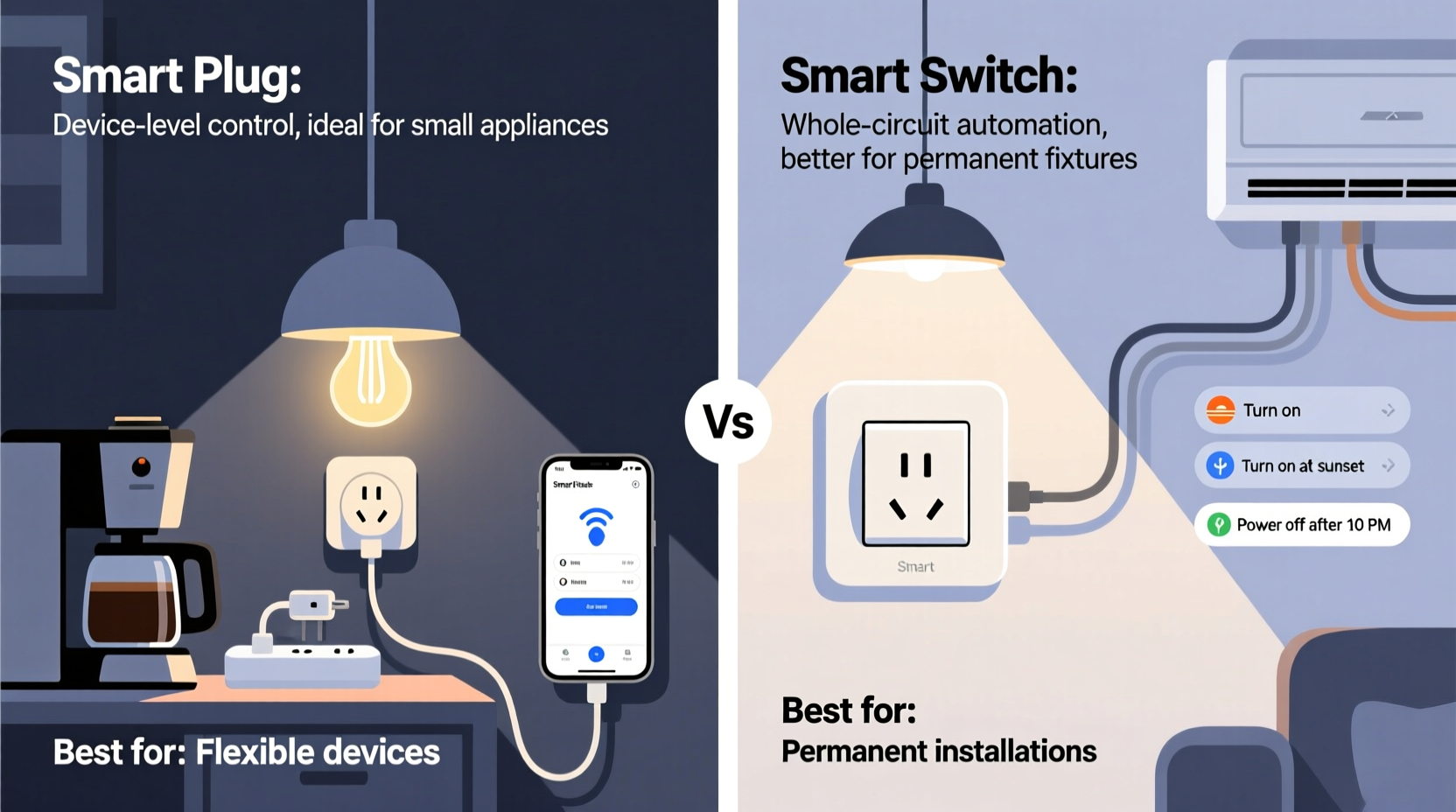
A smart plug is a standalone device that plugs into a standard wall outlet. You then connect your lamp, fan, coffee maker, or any other appliance into the smart plug. Once set up, you can control the connected device via an app, voice command (using Alexa, Google Assistant, or Siri), or automated routines based on time, motion, or location.
In contrast, a smart switch replaces your existing light switch or wall toggle. It’s hardwired into your home’s electrical system and directly controls the flow of electricity to built-in fixtures like ceiling lights, exhaust fans, or under-cabinet lighting. Installation typically requires turning off the circuit breaker and connecting live, neutral, and ground wires—tasks that may require a licensed electrician depending on local regulations.
The core distinction lies in integration: smart plugs are modular and portable; smart switches are permanent and structural. This fundamental difference shapes their capabilities and limitations across various use cases.
Performance and Automation Capabilities
When evaluating effectiveness, automation depth matters. Both devices support basic commands like on/off scheduling and voice activation, but smart switches generally offer richer integration with home systems.
Smart switches often support multi-way configurations (e.g., controlling one light from two different locations), scene presets (dimming levels tied to moods or times of day), and real-time status feedback. Many also include features like auto-dimming based on ambient light or occupancy detection when paired with sensors.
Smart plugs, while versatile, usually lack fine-grained control. Most only provide binary on/off functionality without dimming support. However, some high-end models now include energy monitoring, allowing users to track power consumption over time—a feature rarely found in budget smart switches.
Latency and Responsiveness
Smart switches typically respond faster than smart plugs because they’re wired directly into the electrical circuit. Smart plugs rely on Wi-Fi or Bluetooth connectivity, which can introduce lag during peak network traffic. For critical applications—like turning on hallway lights at night—this delay, though minor, may affect user experience.
Installation and Safety Considerations
One of the biggest deciding factors between these devices is ease of installation.
Smart plugs win hands-down for simplicity. No tools required. Just plug in, download the app, pair via Wi-Fi or Bluetooth, and start using. They’re ideal for renters or anyone uncomfortable working with household wiring.
Smart switches demand more effort. The process involves removing the faceplate, disconnecting the old switch, identifying correct wires (line, load, neutral, ground), and securing connections. Incorrect wiring can pose fire hazards or damage devices. Moreover, not all homes have a neutral wire in the switch box—an essential requirement for most smart switches. Older homes built before the 1980s often lack neutral wires at switch locations, making retrofitting difficult without rewiring.
“Always turn off power at the breaker before touching any wiring. Even experienced DIYers should verify circuits with a voltage tester.” — Carlos Mendez, Master Electrician & Home Automation Consultant
Safety and Compliance
Because smart switches become part of your home’s permanent electrical infrastructure, they must meet stricter safety certifications (such as UL listing in North America). Reputable brands undergo rigorous testing, but low-cost imports may cut corners. Always check product ratings and avoid uncertified models.
Smart plugs, being external adapters, are inherently safer for non-professionals. Still, ensure they’re not overloaded beyond their rated wattage (typically 15A/1800W for U.S. models) and avoid daisy-chaining multiple power strips.
Cost and Long-Term Value Comparison
At first glance, smart plugs appear cheaper—most range from $15 to $30 per unit. Smart switches cost more upfront ($30–$70 each), especially if professional installation is needed. But long-term value depends on application scale and durability.
| Feature | Smart Plug | Smart Switch |
|---|---|---|
| Upfront Cost | $15–$30 | $30–$70+ |
| Installation | DIY, no tools | May require electrician |
| Lifespan | 3–5 years (plastic housing) | 7–10+ years (wall-integrated) |
| Portability | High (move between rooms) | None (fixed location) |
| Energy Monitoring | Common | Rare (except premium models) |
| Dimming Support | Limited | Standard |
Over time, replacing worn-out smart plugs adds hidden costs. Their plastic casings degrade with heat exposure, especially when used with high-wattage devices like space heaters. Smart switches, once installed correctly, operate silently behind walls for years with minimal maintenance.
Real-World Use Cases and Effectiveness
The question of which device \"automates home devices more effectively\" hinges on context. Let’s examine two realistic scenarios.
Case Study: Urban Apartment Renter
Maria lives in a leased one-bedroom apartment. She wants to automate her bedside lamp and living room floor lamp without modifying property. A landlord won’t allow permanent changes. She opts for two smart plugs—one for each lamp. Within minutes, she sets up voice control via Google Assistant and schedules lights to turn on at sunset. When she moves in six months later, she takes the plugs with her. Total cost: $40. Zero risk. Maximum flexibility.
In this case, smart plugs are clearly more effective—not because they’re technically superior, but because they match the constraints and mobility needs of the user.
Case Study: Single-Family Homeowner
James owns a suburban home and is renovating his kitchen. He installs recessed LED lighting and under-cabinet strips. He replaces traditional switches with Lutron Caseta smart switches. Now, he controls multiple zones independently, creates “Cooking Mode” scenes with adjustable brightness, and integrates motion sensors so lights turn off automatically when the room is empty. He even links the system to his security cameras: lights flash if motion is detected after midnight.
Here, smart switches enable deeper automation, seamless aesthetics, and whole-room intelligence that smart plugs simply cannot replicate. The initial investment pays off through daily convenience and energy savings.
Step-by-Step Guide to Choosing the Right Option
- Assess Your Devices: List which appliances or lights you want to automate. Are they plugged into outlets (lamps, TVs) or hardwired (ceiling lights)?
- Check Electrical Setup: Open your switch plate (after cutting power). Do you see a neutral wire? If not, many smart switches won’t work.
- Evaluate Mobility Needs: Will you move soon? Renting? Prefer flexible solutions? Choose smart plugs.
- Determine Control Requirements: Need dimming, color temperature adjustment, or multi-location control? Go with smart switches.
- Budget for Installation: Factor in potential electrician fees (~$100–$200/hour) if wiring upgrades are needed.
- Scale Your Plan: Automating five lamps with smart plugs might cost less than replacing three switches—but consider clutter and reliability.
- Test One First: Buy a single smart plug and one compatible switch to compare responsiveness, app quality, and voice assistant integration.
Expert Recommendations and Industry Trends
According to the Consumer Technology Association, over 60% of smart home adopters begin with smart plugs due to their accessibility. Yet, long-term users increasingly shift toward integrated solutions like smart switches as their needs evolve.
“Smart plugs are great for dipping your toes in automation. But once people experience scene-based lighting and silent, invisible control, they rarely go back.” — Lisa Tran, Senior Product Manager at Eve Systems
Manufacturers are blurring the lines between categories. Some hybrid solutions now exist—like smart outlets that replace entire wall sockets and offer built-in surge protection and USB charging. Others integrate smart relay modules behind light fixtures, eliminating the need for switch replacements altogether.
Another trend is Matter protocol adoption, which ensures cross-platform compatibility regardless of brand. Both smart plugs and switches supporting Matter will coexist seamlessly in Apple Home, Google Home, and Amazon ecosystems, reducing fragmentation.
Frequently Asked Questions
Can I use a smart plug with any appliance?
Most small to medium-powered devices (lamps, fans, coffee makers) work well. Avoid high-draw appliances like air conditioners, microwaves, or space heaters unless the plug explicitly supports their wattage. Check manufacturer specifications carefully.
Do smart switches work without Wi-Fi?
Yes, physically. They still function as manual switches. However, remote access, automation, and voice control require a stable internet connection. Local control via physical toggle remains operational during outages.
Are smart plugs a fire hazard?
Reputable, certified smart plugs from brands like TP-Link, Wemo, or Eve pose minimal risk when used within rated limits. Never cover them with rugs or place them in enclosed spaces where heat builds up. Regularly inspect for discoloration or warmth.
Final Verdict: Which Automates More Effectively?
Effectiveness isn’t determined by technology alone—it’s shaped by fit. For portability, affordability, and quick deployment, smart plugs are unmatched. They democratize automation, letting anyone start small and expand gradually.
However, when measuring automation depth, reliability, aesthetic integration, and long-term utility, smart switches outperform. They eliminate visible hardware, support advanced lighting scenes, integrate with home security systems, and operate with near-instant response. In permanent residences, especially newly built or remodeled spaces, smart switches represent the gold standard.
The most effective strategy combines both. Use smart plugs for seasonal decor, guest room lamps, or workshop tools. Install smart switches for primary lighting circuits—hallways, kitchens, bedrooms. This hybrid approach balances flexibility with sophistication, giving you comprehensive control without sacrificing practicality.




 浙公网安备
33010002000092号
浙公网安备
33010002000092号 浙B2-20120091-4
Comments
No comments yet. Why don't you start the discussion?