
When building a smart home, one of the earliest decisions homeowners face is how to automate lighting and appliances. Two of the most popular options—smart plugs and smart switches—offer distinct advantages depending on your needs. While both connect to Wi-Fi, integrate with voice assistants, and support app-based scheduling, their capabilities diverge significantly in terms of control, installation, aesthetics, and long-term usability. Understanding these differences helps you choose the solution that delivers not just convenience, but real, lasting control over your environment.
Understanding Smart Plugs and Smart Switches
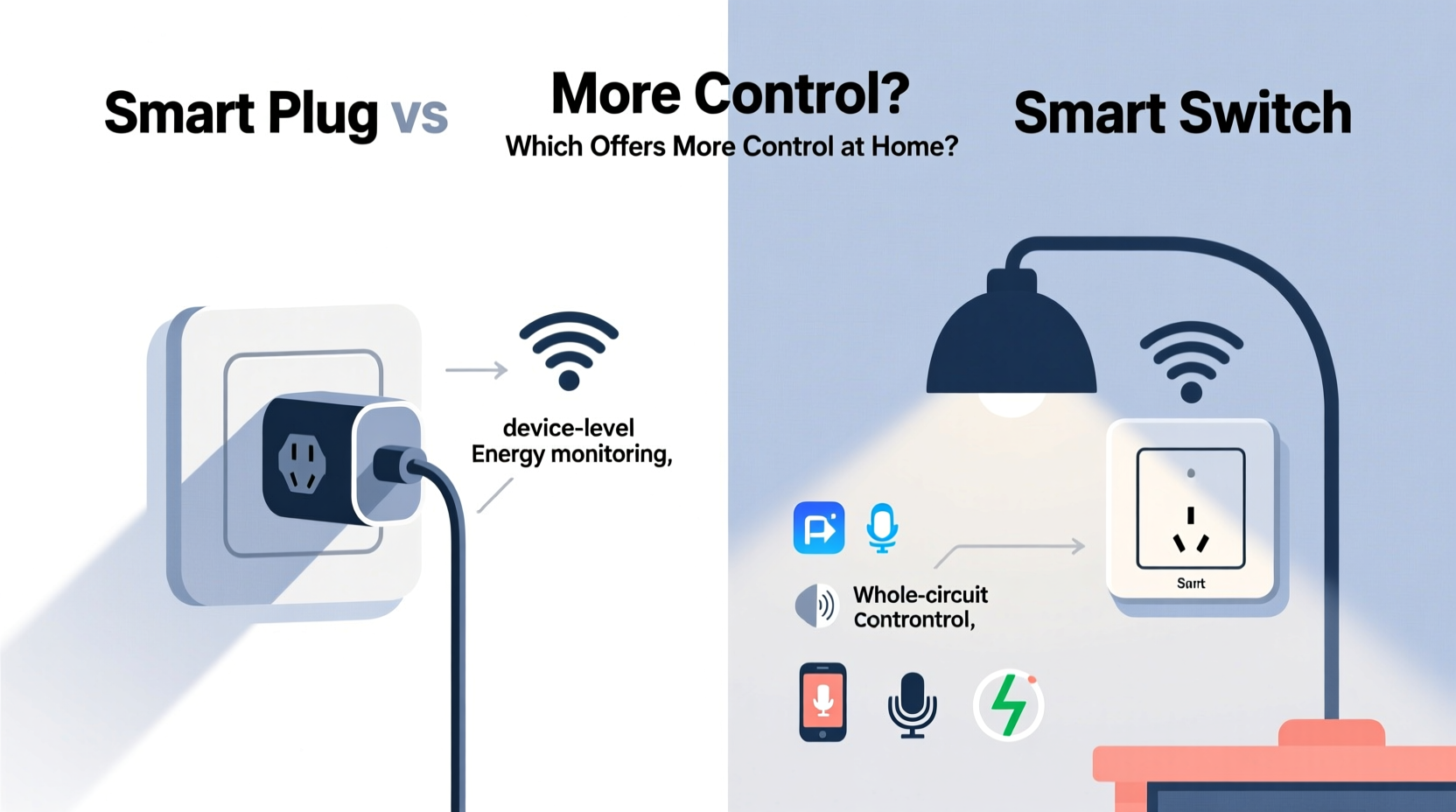
A smart plug is a device that plugs into a standard wall outlet. You then plug your lamp, fan, coffee maker, or other appliance into the smart plug. It acts as a remote-controlled intermediary, allowing you to turn the connected device on or off via an app, voice command, or automated schedule. Most smart plugs also offer energy monitoring, letting you track power consumption over time.
In contrast, a smart switch replaces your existing light switch. It’s hardwired into your home’s electrical system and controls lights or ceiling fans directly from the wall. Once installed, it functions like a traditional switch but adds remote access, dimming (in the case of smart dimmers), and integration with smart home ecosystems like Amazon Alexa, Google Home, or Apple HomeKit.
The key distinction lies in where control begins: smart plugs operate at the device level, while smart switches control circuits at the source. This foundational difference shapes everything from installation complexity to user experience.
Control and Flexibility: Where Each Excels
Control isn’t just about turning something on or off—it’s about precision, accessibility, and adaptability. Let’s break down how each device performs across critical dimensions.
Remote Access and Automation
Both smart plugs and smart switches allow remote operation through mobile apps. Whether you're across the house or across the world, you can toggle lights or appliances. They also support automation rules—like turning on a lamp at sunset or powering down a space heater when you leave home via geofencing.
However, smart switches often provide smoother integration with whole-home scenes. For example, saying “Goodnight” to your voice assistant might trigger all bedroom lights to turn off, locks to engage, and thermostats to adjust. Because smart switches are fixed to specific circuits, they’re more reliable within such routines than smart plugs, which may be moved or unplugged accidentally.
Physical Accessibility and User Experience
Smart switches retain the familiar wall-mounted interface. Even if your phone dies or the Wi-Fi goes down, you can still flip the switch manually. This dual functionality—physical control plus smart features—makes them ideal for high-traffic areas like kitchens, hallways, and bedrooms.
Smart plugs, on the other hand, remove the wall switch from the equation. If you install a smart plug for a floor lamp, the wall switch should ideally remain on permanently; otherwise, flipping it off cuts power to the plug and disables its smart functions. This can confuse guests or family members who expect switches to work as usual.
Energy Monitoring and Device Management
Many smart plugs include built-in energy meters, providing real-time data on wattage, voltage, and cumulative kWh usage. This feature is invaluable for identifying energy hogs—like old refrigerators or gaming consoles left in standby mode.
Smart switches rarely offer granular energy tracking unless specifically designed for it (e.g., Lutron Caséta). Most only report basic on/off status. If detailed energy insights are a priority, smart plugs currently have the edge.
Installation: DIY-Friendly vs Permanent Upgrade
Installation is a major deciding factor. Smart plugs win hands-down for simplicity. Just plug them in, pair via Bluetooth or Wi-Fi, and start using them. No tools, no permits, no electrical knowledge required. Renters especially benefit from this non-permanent solution.
Smart switches require replacing your existing wall switch. This involves turning off the circuit breaker, removing the faceplate, disconnecting wires, and connecting the new switch—often requiring a neutral wire, which older homes may lack. While many modern models are designed for DIY installation, mistakes can pose fire or shock risks. If you're uncomfortable working with wiring, hiring an electrician adds cost and complexity.
“Smart switches offer deeper integration but demand respect for electrical safety. When in doubt, consult a licensed professional.” — Jordan Lee, Residential Electrician & Smart Home Installer
Compatibility and Wiring Requirements
Not all homes are ready for smart switches. Key considerations include:
- Neutral Wire: Most smart switches need a neutral wire to stay powered when the light is off. Homes built before the 1980s often lack neutrals at switch boxes.
- Load Type: Ensure compatibility with LED, CFL, or incandescent bulbs, especially with dimmers.
- Multi-Way Circuits: Stairway or hallway switches with two controls require additional components (like companion switches) for smart functionality.
Smart plugs bypass these issues entirely. As long as the outlet works, the plug will function—no rewiring needed.
Comparative Overview: Smart Plug vs Smart Switch
| Feature | Smart Plug | Smart Switch |
|---|---|---|
| Installation Difficulty | Easy – plug and play | Moderate to hard – requires wiring |
| Physical Control | No (unless wall switch is left on) | Yes – retains toggle/dimmer functionality |
| Energy Monitoring | Commonly available | Rare, except in premium models |
| Works in Rented Homes | Yes – removable | No – permanent modification |
| Supports Scenes & Routines | Limited by portability | Strong integration with home-wide automation |
| Controls Built-In Fixtures | No | Yes – ceiling lights, fans, etc. |
| Cost per Unit | $15–$30 | $30–$70+ (plus installation if needed) |
| Lifespan | 3–5 years (portable, prone to damage) | 10+ years (built into wall) |
Real-World Scenarios: Which Solution Fits Best?
Choosing between a smart plug and a smart switch isn’t about which is better overall—it’s about matching the tool to the task. Consider these common situations.
Scenario 1: Renter Automating a Living Room Lamp
Sophia lives in an apartment and wants to automate her floor lamp for evening reading. She doesn’t want to modify any wiring. A smart plug is the perfect fit. She plugs it in, connects it to her Wi-Fi, sets a schedule for 7 PM daily, and uses voice commands to adjust brightness via her smart bulb. No landlord approval needed, and she can take the plug when she moves.
Scenario 2: Homeowner Upgrading Kitchen Lighting
Mark owns his home and wants full control over recessed kitchen lights. He values seamless operation—being able to use the wall switch manually or remotely, and integrating lighting into morning and evening routines. He installs a smart dimmer switch. Now, lights brighten gradually at sunrise, dim during dinner, and shut off automatically when he leaves. The physical switch remains functional, satisfying family members who prefer tactile control.
Scenario 3: Monitoring Energy Use of a Home Office Setup
Jamal runs a small business from home and wants to reduce electricity costs. His desktop computer, monitor, and printer draw power even when idle. He uses a smart plug with energy tracking to measure consumption. After discovering his setup uses 80 watts on standby, he schedules the plug to cut power after work hours. Monthly savings exceed $15, with clear data to justify the investment.
Step-by-Step: Choosing the Right Option for Your Needs
Follow this decision framework to determine whether a smart plug or smart switch gives you more meaningful control.
- Assess your ownership status. Are you renting? If yes, lean toward smart plugs to avoid permanent changes.
- Identify what you’re controlling. Is it a portable device (lamp, fan, TV)? Use a smart plug. Is it a ceiling light or built-in fixture? A smart switch is likely necessary.
- Check your electrical setup. Do switch boxes have neutral wires? Use a voltage tester or consult an electrician. No neutral? Look for smart switches that don’t require one (e.g., Lutron Aurora).
- Determine your automation goals. Want deep integration with scenes and sensors? Smart switches are more reliable. Need simple on/off or energy tracking? A smart plug may suffice.
- Consider user habits. Will others in the household use the switch? Physical toggles reduce confusion. Do you frequently rearrange furniture? Smart plugs offer portability.
- Budget for long-term value. Smart switches cost more upfront but last longer and enhance property value. Smart plugs are cheaper but may wear out faster.
Frequently Asked Questions
Can I use a smart plug with a lamp that has a manual switch?
Yes, but the lamp’s switch should remain in the “on” position. Otherwise, turning it off breaks the circuit, making the smart plug ineffective. Some users set lamps to “on” and rely solely on the app or voice control.
Do smart switches work without Wi-Fi?
The physical switch still operates manually, but remote access, automation, and voice control require a stable internet connection. Local control remains functional during outages.
Are smart plugs safe to leave plugged in all the time?
Yes, reputable brands meet UL safety standards and are designed for continuous use. Avoid overloading them beyond their rated wattage (typically 15A/1800W), and ensure proper ventilation around the unit.
Final Recommendation: Maximize Control Through Strategic Pairing
The question isn’t whether smart plugs or smart switches give more control—it’s how to combine them for optimal results. In practice, the most effective smart homes use both. Smart switches manage permanent fixtures with elegance and reliability, while smart plugs handle temporary or movable devices with flexibility.
For instance, a bedroom might have a smart switch controlling overhead lights and a smart plug managing a humidifier or robot vacuum. The switch integrates into a bedtime routine, while the plug ensures the humidifier runs only during sleep hours and reports energy usage monthly.
Ultimately, control means having the right tool in the right place. Smart switches offer permanence, seamless design, and robust automation. Smart plugs deliver instant access, energy insights, and rental-friendly convenience. By understanding your priorities—whether it’s safety, aesthetics, data, or ease of use—you can build a smarter, more responsive home environment.




 浙公网安备
33010002000092号
浙公网安备
33010002000092号 浙B2-20120091-4
Comments
No comments yet. Why don't you start the discussion?