
In recent years, wearable health technology has evolved beyond wrist-worn gadgets. The rise of smart rings—compact, discreet devices worn like jewelry—has introduced a new contender in continuous health monitoring. Meanwhile, smart watches remain dominant, offering rich dashboards, notifications, and extensive sensor arrays. But when it comes to health tracking, are these two form factors truly comparable? Can a tiny ring on your finger deliver data as reliable as a full-featured watch on your wrist?
This question matters not just for tech enthusiasts but for anyone relying on biometrics to manage fitness, sleep, or chronic conditions. While both devices claim to measure heart rate, blood oxygen, sleep stages, and even stress levels, differences in sensor placement, power constraints, and usage patterns can significantly affect data quality. Let’s examine the reality behind the numbers.
Sensor Placement and Physiological Accuracy
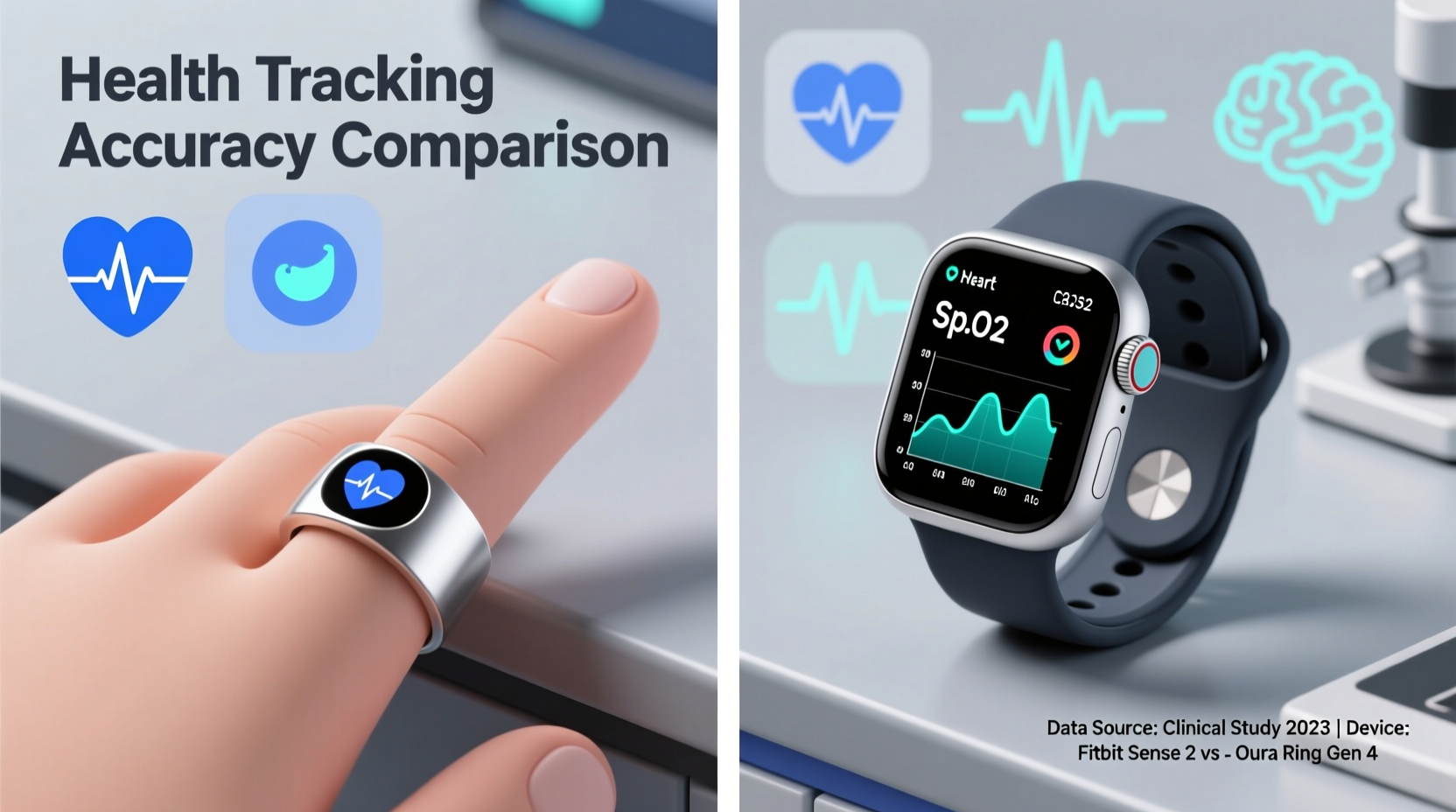
The location of sensors plays a critical role in data accuracy. Smart watches typically use photoplethysmography (PPG) sensors on the underside of the device, pressed against the skin of the inner wrist. This area has consistent blood flow, making it suitable for capturing pulse and blood oxygen (SpO2). However, movement during activity—especially high-intensity workouts—can introduce motion artifacts that distort readings.
Smart rings, by contrast, sit on the finger, where capillary density is higher than the wrist. Studies suggest that fingertip PPG may offer more stable signals due to stronger pulsatile blood flow. A 2022 study published in *npj Digital Medicine* found that certain ring-based devices recorded heart rate variability (HRV) with greater consistency during sleep compared to wrist-worn trackers, likely because finger movement is naturally more limited at night.
However, finger-based sensing isn’t without limitations. Rings must be worn snugly to maintain contact, and poor fit can lead to signal dropout. Additionally, peripheral circulation varies more than central circulation; cold fingers or low perfusion (common in people with Raynaud’s or diabetes) can reduce measurement reliability.
Key Health Metrics: How Do They Compare?
To assess comparability, we need to evaluate performance across core health metrics. Here's how smart rings and smart watches generally stack up based on current research and user testing.
| Metric | Smart Ring Strengths | Smart Watch Strengths | Verdict |
|---|---|---|---|
| Resting Heart Rate (RHR) | High consistency during sleep due to reduced motion | Broad historical data; good daytime tracking | Tie – both accurate under ideal conditions |
| Heart Rate Variability (HRV) | Superior nighttime HRV due to stable positioning | More variable due to arm movement | Smart ring edge for recovery insights |
| Sleep Tracking | Detailed staging; detects micro-movements better | Longer battery supports full-night tracking | Rings slightly more precise in lab settings |
| Blood Oxygen (SpO2) | Stronger signal from fingertip PPG | Frequent sampling possible; trend analysis | Ring more accurate per reading; watch better for trends |
| Activity & Step Count | Limited — not designed for motion detection | Advanced accelerometers; GPS integration | Smart watch wins decisively |
| Body Temperature | Continuous baseline shifts detected overnight | Less sensitive; often ambient-influenced | Ring offers earlier anomaly alerts |
The table reveals a clear pattern: smart rings excel in passive, sleep-centric physiological monitoring, while smart watches dominate in active tracking and contextual awareness. Neither is universally superior—their value depends on what you're trying to measure and when.
“Wearable form factor influences data fidelity more than most consumers realize. Finger-based sensors have biomechanical advantages for certain metrics, but they can't replace the multimodal capabilities of a smartwatch.” — Dr. Lena Park, Biomedical Engineer, MIT Media Lab
Real-World Usability: Compliance and Long-Term Use
Data is only as good as the consistency of collection. One overlooked advantage of smart rings is comfort and discretion. Many users report wearing their rings 24/7, including during sleep, due to their lightweight design and lack of screen distractions. In contrast, smart watch adoption often drops at night—either due to charging needs or discomfort—leading to gaps in sleep and recovery data.
A mini case study illustrates this difference:
Mini Case Study: Sleep Consistency Over Six Weeks
Jamal, a 38-year-old software engineer, used a leading smart watch for three weeks to track sleep. He charged it nightly, missing 30% of potential sleep sessions. Switching to a smart ring with five-day battery life, he wore it continuously and achieved 98% data capture over the next three weeks. His HRV trends became more reliable, revealing a gradual decline linked to increased work stress—insight he had previously missed.
Battery life is a decisive factor. Most smart rings last 4–7 days, while many smart watches require daily charging. The less frequently a user must interact with a device, the higher the compliance. This behavioral edge gives rings an unexpected advantage in longitudinal health tracking, even if individual sensors aren't more advanced.
Limitations and Trade-Offs
No wearable delivers clinical-grade data without trade-offs. Both categories face challenges:
- Calibration drift: PPG sensors degrade slightly over time due to dirt buildup or skin contact changes.
- Algorithm opacity: Manufacturers rarely disclose how raw data becomes interpreted metrics (e.g., “deep sleep” duration).
- Individual variation: Skin tone, tattoos, and body hair can interfere with optical sensors on both devices.
- Lack of medical validation: Most consumer wearables are not FDA-cleared for diagnosis.
Smart rings, due to size constraints, typically lack GPS, ECG, and onboard storage. They also offer minimal user feedback—no screen means no real-time heart rate display during a run. Conversely, smart watches may over-promise on sleep staging. Independent tests show that even top-tier models can misclassify light sleep as deep sleep by 15–25% compared to polysomnography (the gold standard).
Moreover, rings are worn on one finger, which may not reflect systemic physiology equally across users. For example, someone with peripheral vascular disease might get falsely low SpO2 readings, while a watch on the wrist could provide a more representative average.
Choosing What’s Right for Your Health Goals
The choice between a smart ring and a smart watch shouldn’t be based on hype—but on intent. Consider the following checklist to guide your decision:
Checklist: Which Device Fits Your Needs?
- Are you primarily focused on sleep, recovery, and long-term wellness trends? → Lean toward smart ring
- Do you want step counting, GPS for runs, or workout modes? → Smart watch is essential
- Is nighttime charging a hassle? → Rings offer longer uptime
- Do you want notifications, calls, or music control? → Only smart watches support this
- Are you monitoring for early signs of illness (e.g., fever, HRV drops)? → Rings detect subtle shifts faster
- Do you have circulatory issues or cold hands frequently? → Watch may be more reliable
Some users now adopt a hybrid approach: wearing a smart ring for sleep and recovery, and a smart watch during the day for activity and convenience. While this doubles cost and charging logistics, it maximizes data completeness.
FAQ
Can a smart ring replace a medical device?
No. While smart rings can detect anomalies—like unusually high resting heart rate or low HRV—they are not diagnostic tools. Always consult a healthcare provider for medical concerns.
Are smart rings accurate for women’s health tracking?
Preliminary data suggests rings may improve cycle prediction by detecting subtle temperature shifts earlier than wrist devices. However, accuracy varies by algorithm and individual. They should complement, not replace, symptom tracking.
Do smart watches interfere with pacemakers?
Most modern smart watches are safe, but the FDA advises keeping any electronic device at least 6 inches from implanted medical devices. Consult your cardiologist before use.
Conclusion: Data Is Comparable—But Not Interchangeable
The health tracking data from smart rings and smart watches is increasingly comparable in specific domains—particularly heart rate, HRV, and sleep architecture. Advances in miniaturization and AI-driven algorithms have closed the gap in raw accuracy. However, the data is not interchangeable. Each device captures physiology through a different lens, shaped by location, design, and intended use.
If your goal is holistic health insight—especially around recovery, stress resilience, and sleep quality—a smart ring may offer more consistent, high-fidelity data during critical rest periods. If you’re an athlete, commuter, or someone who values real-time feedback and connectivity, a smart watch remains unmatched.
The future likely lies not in choosing one over the other, but in integrating complementary data streams. As platforms begin to merge inputs from multiple wearables, we’ll move closer to a truly comprehensive picture of personal health—one that honors both precision and practicality.




 浙公网安备
33010002000092号
浙公网安备
33010002000092号 浙B2-20120091-4
Comments
No comments yet. Why don't you start the discussion?