
Stepping on a scale is one of the most common ways people track their health journey—but not all scales offer the same insights. While a basic weight scale delivers a single number, smart scales claim to provide a comprehensive picture of your body composition. The question isn’t just about technology—it’s about relevance. Which measurements actually matter when it comes to improving health, building strength, or losing fat? Understanding the difference between smart and basic scales, and knowing which metrics are meaningful, can transform how you interpret your progress.
The Fundamental Difference: Simplicity vs Insight
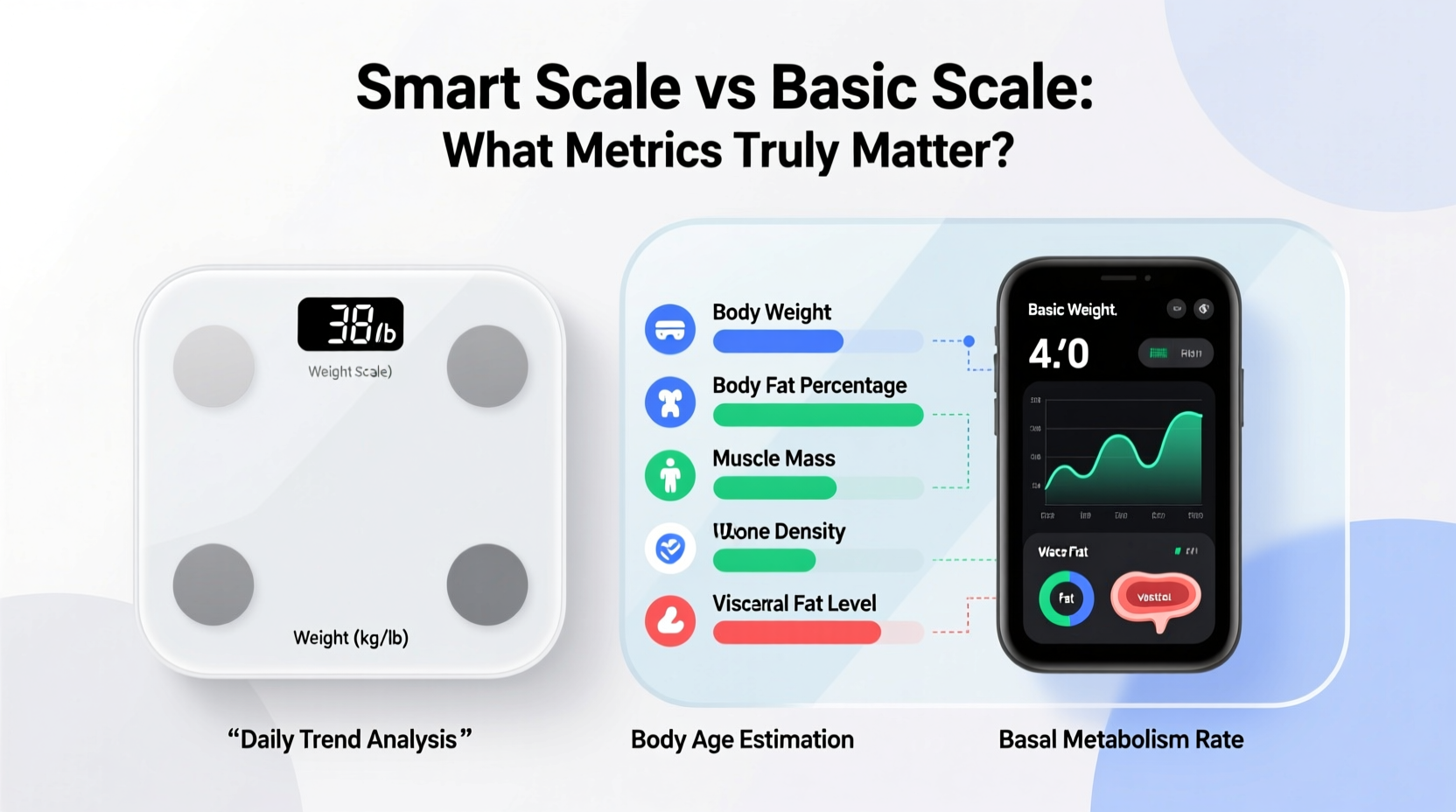
A basic weight scale measures only one thing: your total body mass in pounds or kilograms. It’s reliable, affordable, and straightforward. For many, that number alone is enough to track trends over time, especially when paired with visual cues like clothing fit or energy levels.
Smart scales go further. Using bioelectrical impedance analysis (BIA), they send a low-level electrical current through your body to estimate body fat percentage, muscle mass, water weight, bone density, and sometimes even visceral fat and metabolic age. These additional data points promise deeper insight into your physical condition.
But more information doesn’t always mean better decisions. In fact, inaccurate or misunderstood metrics can lead to frustration or misguided goals. The real value lies not in how many numbers a device provides, but in whether those numbers reflect meaningful, actionable health indicators.
Which Body Metrics Actually Matter?
Not all data from a smart scale are created equal. Some metrics are clinically useful; others are estimates with wide margins of error. Here’s a breakdown of the most commonly reported metrics and their real-world significance:
1. Body Weight
The cornerstone of any scale, body weight remains a valid starting point. When tracked consistently—same time of day, same conditions—it reveals trends in mass gain or loss. However, weight alone doesn’t distinguish between fat, muscle, or water, making it insufficient for assessing true body composition.
2. Body Fat Percentage
This is often the star metric on smart scales. A healthy body fat range varies by age, sex, and activity level. For men, 10–20% is typical; for women, 20–30%. Athletes may fall below these ranges. While smart scales estimate body fat using BIA, accuracy can vary significantly based on hydration, recent meals, or exercise. Still, tracking relative changes over time—rather than absolute values—can offer useful trends.
“Body fat percentage is more informative than weight alone, but consumer devices should be used for trend analysis, not diagnostic precision.” — Dr. Lena Patel, Sports Medicine Physician
3. Muscle Mass
Muscle is metabolically active tissue that supports strength, mobility, and calorie burning. Smart scales estimate total body muscle, often broken down by segment (arms, legs, trunk). Gaining muscle while losing fat—a process known as body recomposition—is a key goal for many fitness enthusiasts. However, BIA-based muscle estimates are less accurate than DEXA scans or hydrostatic weighing. Use this metric cautiously, focusing on gradual upward trends if strength training is part of your routine.
4. Body Water Percentage
Water makes up about 50–60% of body weight. Smart scales estimate hydration levels, which can fluctuate daily based on diet, exercise, and sodium intake. While chronic dehydration matters, daily water percentage readings are highly variable and best ignored unless consistently out of range. Sudden drops might signal dehydration; spikes could indicate water retention, especially around menstruation or high-sodium meals.
5. Bone Mass
Smart scales provide an estimated bone mineral content, usually in kilograms. This metric changes very slowly and is not sensitive enough to detect early osteoporosis. For individuals at risk, clinical testing (like DEXA) is far more reliable. For general users, this number is mostly informational and not a basis for action.
6. Visceral Fat
Visceral fat surrounds internal organs and is linked to higher risks of heart disease, type 2 diabetes, and metabolic syndrome. Some smart scales estimate visceral fat on a scale (e.g., 1–59). While not medically precise, rising trends can serve as a red flag, especially when combined with waist circumference measurements. A waist measurement above 35 inches for women or 40 inches for men typically indicates elevated visceral fat.
7. Basal Metabolic Rate (BMR)
BMR estimates how many calories your body burns at rest. Smart scales calculate this using weight, height, age, and estimated body composition. While useful for setting calorie targets, BMR calculations are only as good as the input data. Small errors in body fat estimation can skew results by hundreds of calories. Use it as a rough guide, not a definitive number.
8. Metabolic Age
This compares your BMR to the average for your chronological age group. A “younger” metabolic age suggests a faster metabolism, often due to higher muscle mass or lower body fat. While motivational, this metric is largely a marketing tool with limited clinical value.
Comparison: Smart Scale vs Basic Weight Scale
| Metric | Basic Scale | Smart Scale |
|---|---|---|
| Body Weight | ✅ Accurate | ✅ Accurate |
| Body Fat % | ❌ Not available | ⚠️ Estimated (moderate accuracy) |
| Muscle Mass | ❌ Not available | ⚠️ Estimated (low to moderate accuracy) |
| Water % | ❌ Not available | ⚠️ Highly variable, context-dependent |
| Bone Mass | ❌ Not available | ℹ️ Informative only, not diagnostic |
| Visceral Fat | ❌ Not available | ⚠️ Trend indicator, not precise |
| BMR | ❌ Not available | ℹ️ Useful estimate for planning |
| Metabolic Age | ❌ Not available | 🎯 Motivational, not clinical |
| Cost Range | $10–$30 | $50–$150+ |
| Best For | Weight trend tracking, simplicity | Body composition trends, fitness goals |
When a Smart Scale Adds Real Value
Smart scales are most beneficial when used intentionally. They’re not magic—they’re tools. Their power lies in consistency and interpretation.
For someone focused on fat loss, seeing body fat percentage decline while weight stays stable can be encouraging proof of body recomposition. For a strength trainee, a gradual increase in muscle mass—even without dramatic weight change—signals progress. For older adults, monitoring trends in muscle and bone mass can highlight the need for resistance training or dietary protein adjustments.
However, smart scales require disciplined use. Readings are affected by hydration, food intake, exercise, and even time of day. To get reliable trends:
- Weigh yourself first thing in the morning
- After using the bathroom, before eating or drinking
- Barefoot, on a hard, flat surface
- At least three times per week to smooth out daily noise
“I’ve had clients obsessed with their smart scale dropping muscle mass after a salty meal. It wasn’t muscle loss—it was water displacement. Context is everything.” — Marcus Reed, Certified Personal Trainer
Mini Case Study: Sarah’s Fitness Journey
Sarah, a 38-year-old office worker, started a new fitness routine combining strength training and cardio. She bought a smart scale hoping to see quick results. In the first two weeks, her weight increased by 3 pounds. Discouraged, she considered quitting.
Her trainer reviewed the full data: body fat percentage dropped from 32% to 30.5%, muscle mass increased slightly, and water percentage spiked after weekend workouts. The weight gain was due to muscle glycogen storage and temporary water retention—positive signs of adaptation.
By focusing on body composition trends instead of the scale number, Sarah stayed motivated. After eight weeks, she lost 5 pounds of fat, gained 2 pounds of muscle, and her clothes fit better than ever. The smart scale didn’t give perfect data—but it told a more complete story than weight alone ever could.
Step-by-Step Guide to Choosing and Using the Right Scale
- Define your goal: Are you tracking weight loss, muscle gain, or overall wellness? If it’s simple weight monitoring, a basic scale suffices.
- Assess your commitment: Smart scales require consistent habits. If you won’t weigh daily under controlled conditions, their advanced metrics lose value.
- Check compatibility: Ensure the smart scale syncs with apps you use (Apple Health, Google Fit, MyFitnessPal).
- Set up proper conditions: Place the scale on a hard floor, not carpet. Use it barefoot, at the same time each day.
- Track trends, not single readings: Look at weekly averages. Ignore day-to-day swings caused by hydration or digestion.
- Combine with other tools: Use waist measurements, progress photos, and strength benchmarks alongside scale data.
- Re-evaluate every 3 months: Are the metrics helping you make better decisions? If not, simplify.
Checklist: What to Consider Before Buying a Smart Scale
- ✔️ Does it measure body fat percentage using BIA?
- ✔️ Can it differentiate between multiple user profiles?
- ✔️ Does it sync with your preferred health app ecosystem?
- ✔️ Is the display easy to read?
- ✔️ Does it estimate visceral fat or BMR?
- ✔️ Is it compatible with medical conditions? (Note: People with pacemakers should avoid BIA scales.)
- ✔️ Is the price justified by your actual needs?
Frequently Asked Questions
Can smart scales be inaccurate?
Yes. Bioelectrical impedance is influenced by hydration, food intake, and skin temperature. A dehydrated person may appear to have higher body fat, while someone post-workout may show inflated muscle readings. Accuracy improves with consistent usage patterns, but they should not be used for medical diagnosis.
Is a smart scale worth it for weight loss?
It depends. If you're prone to fixating on the scale number, extra metrics might add confusion. But if you understand that fat loss and muscle gain happen simultaneously, the added context can prevent discouragement during plateaus. Pair it with non-scale victories like improved stamina or clothing fit.
Who should avoid using a smart scale?
Individuals with electronic implants like pacemakers or defibrillators should not use BIA-based smart scales, as the electrical current—though minimal—could interfere with device function. Pregnant women may also get unreliable readings due to fluid shifts.
Conclusion: Choose the Right Tool for Your Journey
The debate between smart scales and basic weight scales isn’t about which is better—it’s about which is better for you. If your priority is simplicity and cost, a basic scale delivers reliable weight tracking without distraction. If you're actively working to change body composition and want additional context, a smart scale can provide motivational insights—provided you understand its limitations.
The most important metric isn’t found on any screen: it’s consistency. Whether you track one number or ten, what matters is showing up, interpreting data wisely, and making sustainable choices. Health is not a single measurement—it’s a pattern of behavior over time.




 浙公网安备
33010002000092号
浙公网安备
33010002000092号 浙B2-20120091-4
Comments
No comments yet. Why don't you start the discussion?