
Tracking body composition is a cornerstone of health and fitness journeys. Among the most common tools are smart scales and manual BMI calculators. While both aim to assess body mass index (BMI), they differ significantly in methodology, precision, user experience, and psychological impact. Understanding these differences helps individuals choose the right tool—not just for accuracy, but for sustained motivation and meaningful progress.
BMI remains a widely used metric because it offers a quick snapshot of weight relative to height. However, how that number is obtained—whether through a connected smart scale or a basic manual calculation—can influence not only its reliability but also how users perceive and respond to their results over time.
How Smart Scales Measure and Estimate BMI
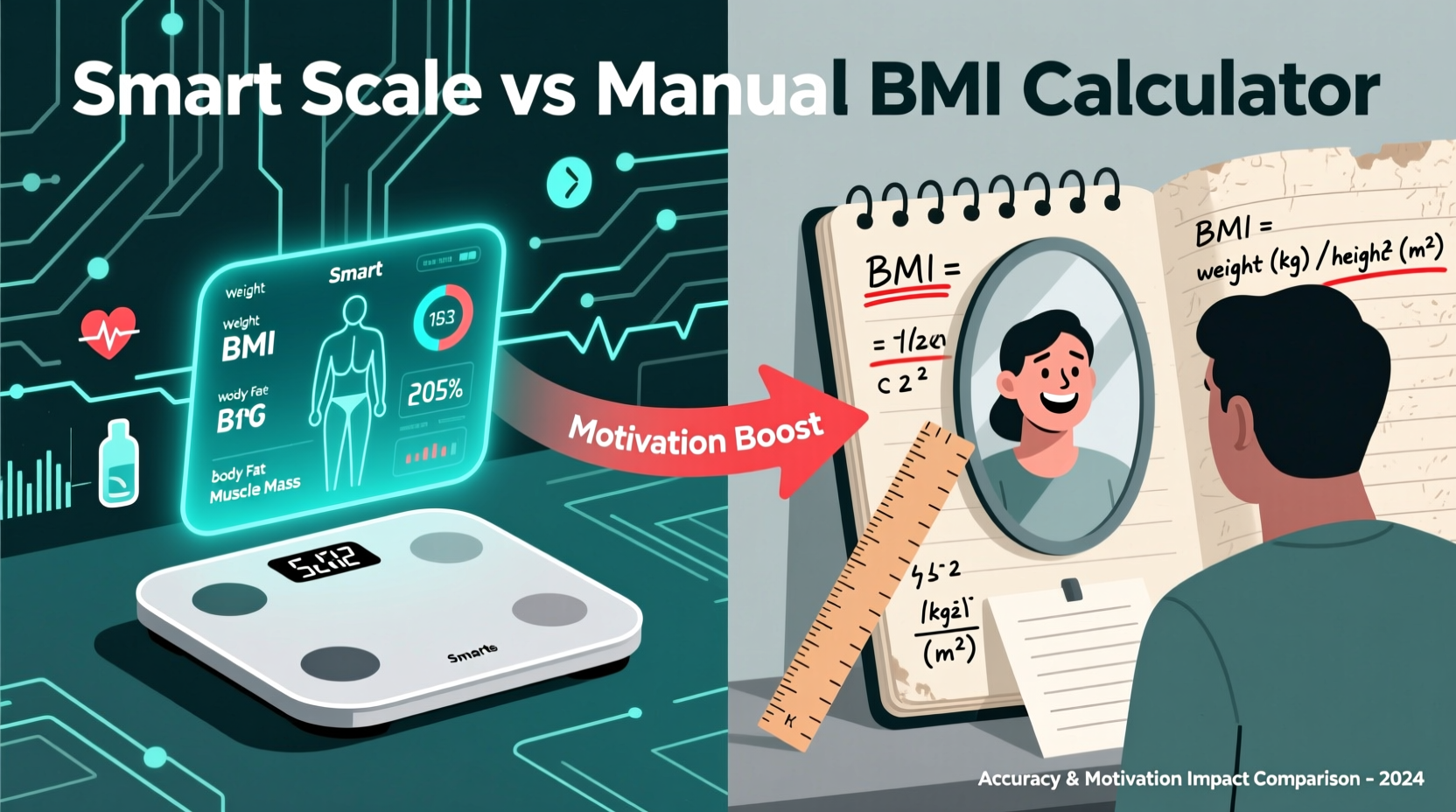
Smart scales use bioelectrical impedance analysis (BIA) to estimate body composition. When you step on the scale, a low-level electrical current passes through your body. Since fat tissue conducts electricity differently than muscle or water, the device calculates body fat percentage, lean mass, and water content based on resistance. From there, many smart scales automatically compute BMI using your height (pre-entered into the app) and measured weight.
This automation is convenient. Data syncs wirelessly to smartphone apps, charts progress over time, and often integrates with fitness trackers like Apple Watch or Fitbit. Some models even distinguish between multiple users via saved profiles, making them ideal for households.
However, BIA technology has limitations. Accuracy can be affected by hydration levels, recent physical activity, food intake, and even the time of day. A person who just finished a workout may show higher body fat due to temporary fluid loss, while someone well-hydrated might appear leaner without actual changes in composition.
“While smart scales offer convenience and trend tracking, they should not be considered medical-grade devices. Their value lies more in consistency than absolute precision.” — Dr. Lena Torres, Clinical Nutritionist and Biometrics Researcher
Manual BMI Calculators: Simplicity and Control
A manual BMI calculator requires two inputs: height and weight. The formula—weight in kilograms divided by height in meters squared (kg/m²)—is standardized and mathematically sound. Users typically weigh themselves on a standard digital or mechanical scale and input the data into an online calculator or perform the math manually.
The advantage here is transparency. There are no hidden algorithms estimating body fat or water content. The result reflects only what the BMI formula was designed to measure: weight-to-height ratio. This makes manual calculations inherently more reliable in terms of mathematical accuracy, assuming correct input.
Moreover, the act of recording weight and calculating BMI by hand fosters mindfulness. It creates a deliberate checkpoint where users engage directly with their data, potentially increasing awareness and accountability. Unlike smart scales that deliver instant, passive feedback, manual entry forces a moment of reflection.
That said, manual methods lack automatic trend analysis. Tracking changes over weeks or months requires spreadsheets or journals, which some find cumbersome. Without visual graphs or app notifications, it’s easier to lose momentum or overlook patterns.
Accuracy Comparison: Technology vs. Tradition
When comparing accuracy, it's essential to distinguish between *precision* and *consistency*. Precision refers to how close a measurement is to the true value; consistency refers to how reliably a tool produces the same result under similar conditions.
| Metric | Smart Scale | Manual BMI Calculator |
|---|---|---|
| Mathematical Accuracy | Moderate (depends on algorithm) | High (standardized formula) |
| Daily Fluctuation Sensitivity | High (affected by hydration, etc.) | Low (only measures weight) |
| User Input Required | Minimal (after setup) | Moderate (weigh + calculate) |
| Trend Tracking Capability | Excellent (automated graphs) | Fair (requires manual logging) |
| Body Composition Insight | Yes (estimates fat, water, muscle) | No (only BMI) |
Studies have shown that smart scales can deviate by as much as 5–8% in body fat estimation compared to DEXA scans—the gold standard in body composition analysis. While this margin doesn’t invalidate their usefulness, it underscores that smart scale numbers should be interpreted as trends rather than exact values.
In contrast, manual BMI calculations are mathematically accurate if inputs are correct. But they also carry risks: inaccurate self-reported height, inconsistent weighing times, or faulty scales can skew results. Still, when paired with a high-quality bathroom scale and disciplined habits, manual methods provide a dependable baseline.
Motivational Impact: Which Tool Keeps You Engaged?
Motivation plays a critical role in long-term success. Even the most accurate tool fails if it discourages continued use. Here, smart scales often have an edge due to their seamless integration into modern lifestyles.
Receiving real-time updates, seeing color-coded progress bars, and syncing data across platforms taps into behavioral psychology principles like immediate feedback and gamification. These features can boost adherence, especially for tech-savvy users or those already invested in wearable ecosystems.
On the flip side, constant access to fluctuating metrics—especially body fat percentage—can lead to obsession or misinterpretation. A single “bad” reading might trigger disengagement, particularly if users don’t understand natural daily variations. This phenomenon, known as \"scale anxiety,\" affects both smart and traditional scale users but is amplified when multiple metrics are displayed simultaneously.
Manual tracking, while less flashy, promotes a slower, more reflective approach. Writing down numbers, calculating BMI, and reviewing logs weekly encourages a mindset focused on patterns rather than daily noise. This method suits individuals who benefit from cognitive engagement and emotional distance from short-term fluctuations.
“I’ve had clients become so fixated on their smart scale’s body fat number that they’d skip meals trying to ‘beat’ yesterday’s score. Sometimes simplicity protects mental health.” — Marcus Reed, Certified Health Coach
Mini Case Study: Sarah’s Fitness Journey
Sarah, a 34-year-old office worker, began her weight loss journey using a smart scale. Initially thrilled by the detailed breakdowns—body fat, muscle mass, bone density—she checked it twice daily. After two weeks, stress set in when her body fat percentage rose despite consistent workouts and healthy eating. Confused and discouraged, she nearly quit.
Her coach suggested switching to a basic digital scale and manual BMI tracking once per week. Sarah recorded her weight every Monday morning, calculated her BMI using an online tool, and plotted the data in a notebook. Within a month, she noticed a steady downward trend. More importantly, she felt less anxious and more in control.
After three months, a DEXA scan revealed her body fat had indeed decreased by 4.2%, validating her progress. The smart scale had been misleading due to hydration shifts from increased water intake and strength training. By simplifying her tracking method, Sarah maintained motivation and achieved sustainable results.
Choosing the Right Tool: A Step-by-Step Guide
Selecting between a smart scale and manual BMI tracking depends on individual goals, personality, and lifestyle. Follow this timeline to make an informed decision:
- Week 1: Self-Assessment – Ask yourself: Are you prone to anxiety around numbers? Do you prefer automated systems or hands-on control? Is long-term consistency more important than detailed data?
- Week 2: Trial Phase – If possible, test both methods. Use a smart scale for one week (record all outputs), then switch to manual tracking the next week using a reliable scale and a spreadsheet.
- Week 3: Evaluate Experience – Reflect on which method felt more empowering. Did one cause stress or confusion? Which made you more likely to stay consistent?
- Week 4: Decide and Optimize – Choose the method that best supports your mental well-being and adherence. If using a smart scale, commit to checking it no more than 2–3 times per week. If using manual tracking, set a fixed day/time and use reminders.
- Ongoing: Reassess Monthly – Every 30 days, ask whether your chosen method still serves your goals. Adjust as needed—flexibility is key to sustainability.
Checklist: Best Practices for Accurate and Motivating Tracking
- ✅ Weigh yourself at the same time each day (morning is ideal)
- ✅ Wear minimal clothing or none for consistency
- ✅ Stay hydrated normally—don’t dehydrate to “look better” on the scale
- ✅ Track weekly averages instead of daily spikes
- ✅ Combine BMI data with other indicators (energy levels, clothing fit, photos)
- ✅ Avoid obsessive checking—limit measurements to 1–3 times per week
- ✅ Calibrate your smart scale regularly and ensure firmware updates
- ✅ Record non-scale victories alongside numerical data
Frequently Asked Questions
Can smart scales be wrong about BMI?
Yes. While smart scales calculate BMI correctly based on entered height and measured weight, the weight itself—and any derived body composition estimates—can vary due to hydration, temperature, and foot contact. The BMI number is mathematically sound if weight is accurate, but the overall context may be misleading if body fat or water levels fluctuate abnormally.
Is manual BMI tracking outdated?
No. Manual tracking remains scientifically valid and psychologically beneficial for many users. It avoids the pitfalls of over-reliance on technology and encourages active participation in health monitoring. When combined with consistent weighing practices, it provides reliable trend data without unnecessary complexity.
Which method leads to better long-term results?
Research suggests that consistency matters more than the tool. A 2022 study published in the Journal of Behavioral Medicine found that participants who tracked weight regularly—regardless of method—were twice as likely to maintain weight loss over 12 months. The key factor was adherence, not technological sophistication.
Final Thoughts: Accuracy Meets Motivation
The debate between smart scales and manual BMI calculators isn’t about which is objectively superior—it’s about alignment with personal needs. Smart scales excel in automation, trend visualization, and integration, making them ideal for data-driven individuals who won’t be derailed by daily fluctuations. Manual methods offer clarity, reduce information overload, and foster mindful engagement, benefiting those seeking simplicity and emotional resilience.
Ultimately, the best tool is the one you’ll use consistently and interpret wisely. Whether you rely on Bluetooth-synced insights or pen-and-paper records, remember that BMI is just one piece of a larger puzzle. True progress includes energy, strength, mood, and confidence—metrics no scale can capture.




 浙公网安备
33010002000092号
浙公网安备
33010002000092号 浙B2-20120091-4
Comments
No comments yet. Why don't you start the discussion?