
In the pursuit of better health, monitoring your body’s metrics is a foundational step. One of the most common tools for this is the bathroom scale. But not all scales are created equal. While the traditional manual scale has been a household staple for decades, smart scales have emerged as high-tech alternatives promising more than just weight numbers. They claim to deliver actionable health insights—data that can guide decisions about diet, exercise, and overall wellness. But do they truly outperform their analog counterparts? And what exactly makes data “actionable”? This article breaks down the differences between smart and manual scales, evaluates their utility, and helps you determine which one aligns with your health goals.
Understanding the Core Differences
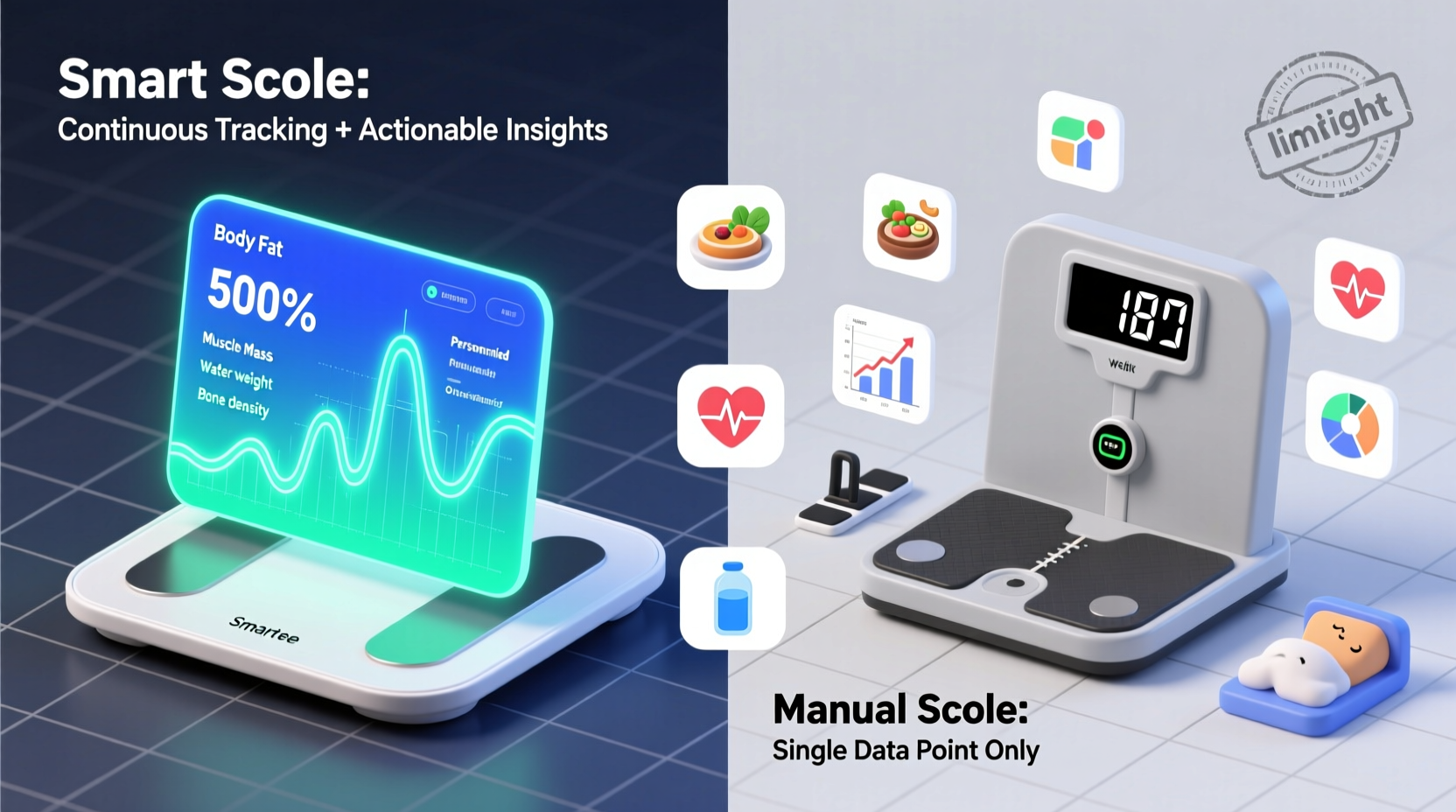
The fundamental distinction between smart and manual scales lies in how they collect, process, and present data. A manual scale—typically analog or basic digital—measures only body weight. It provides a single number with no context, history, or additional metrics. In contrast, a smart scale uses bioelectrical impedance analysis (BIA) to estimate body composition, including body fat percentage, muscle mass, bone density, water weight, and even visceral fat levels. These readings are then synced via Bluetooth or Wi-Fi to a smartphone app, where trends are visualized over time.
This technological leap transforms the scale from a passive measuring device into an active health tracking tool. However, increased functionality doesn’t automatically equate to greater value. The usefulness of a smart scale depends on how well its data translates into meaningful actions.
What Makes Health Data Actionable?
Actionable health insights go beyond raw numbers. They offer context, trends, and personalized feedback that empower users to adjust habits effectively. For example, seeing your weight fluctuate by two pounds over a week may cause concern—but if a smart scale reveals that the change is due to increased water retention after a salty meal, the insight becomes less alarming and more informative.
Truly actionable data should be:
- Accurate enough to trust: Consistent and reliable within reasonable margins.
- Trend-oriented: Shows progress over time rather than isolated snapshots.
- Personalized: Tailored to individual goals like fat loss, muscle gain, or hydration balance.
- Integrated: Works alongside other health data such as activity levels, sleep, and nutrition.
Data Depth: What Each Scale Measures
To assess which scale offers more actionable insights, it's essential to compare what each one actually measures.
| Metric | Manual Scale | Smart Scale |
|---|---|---|
| Body Weight | ✔️ | ✔️ |
| Body Fat % | ❌ | ✔️ (via BIA) |
| Muscle Mass | ❌ | ✔️ |
| Bone Mass | ❌ | ✔️ |
| Water Percentage | ❌ | ✔️ |
| Visceral Fat Level | ❌ | ✔️ |
| BMR (Basal Metabolic Rate) | ❌ | ✔️ (estimated) |
| Data Sync & Trend Tracking | ❌ | ✔️ (via app integration) |
The table illustrates a clear advantage for smart scales in terms of data breadth. But more data isn't always better—especially if it's inconsistent or misinterpreted. Manual scales win in simplicity and reliability for one metric: total body weight. For individuals focused solely on weight management without interest in composition, a manual scale remains sufficient and cost-effective.
Accuracy and Consistency: Are Smart Scales Trustworthy?
A major concern with smart scales is the accuracy of body composition estimates. Bioelectrical impedance sends a weak electrical current through the body and calculates resistance to estimate fat and muscle content. However, results can vary based on hydration levels, recent physical activity, time of day, and even foot moisture.
Studies show that while smart scales provide reasonably consistent trend data when used under similar conditions, absolute values—like claiming 22.4% body fat—can deviate significantly from clinical methods such as DEXA scans or hydrostatic weighing.
“Consumer-grade smart scales are best used for tracking relative changes, not diagnosing precise body composition.” — Dr. Lena Patel, Sports Medicine Researcher at Stanford University
That said, consistency in measurement technique can mitigate variability. Using the scale first thing in the morning, barefoot, after using the restroom, and before eating or drinking improves reliability. Over time, these consistent measurements reveal patterns that are far more valuable than any single reading.
In contrast, manual scales offer high repeatability for weight alone. Digital versions often have precision up to 0.1 lbs or 0.05 kg, making them excellent for detecting small shifts. However, they lack the ability to explain why those shifts occur—was it fat loss, muscle gain, or fluid retention?
Real-World Example: Sarah’s Fitness Journey
Sarah, a 34-year-old office worker, began a strength training program aimed at building lean muscle while reducing body fat. She started with a manual scale and noticed her weight increased slightly over eight weeks. Frustrated, she nearly quit—believing she was gaining fat.
After switching to a smart scale, she discovered her body fat had decreased by 4%, while muscle mass rose by 3.5 lbs. The weight gain was due to muscle development, not fat accumulation. This insight transformed her motivation. Instead of focusing on the number on the scale, she began tracking composition trends and adjusted her nutrition to support muscle growth.
This case highlights a key limitation of manual scales: they can mislead when used in isolation. Without context, weight gain during fitness improvement may appear counterproductive. Smart scales provided Sarah with the deeper understanding needed to stay on course.
Integration and Long-Term Behavior Change
One of the strongest arguments for smart scales is their ability to integrate into broader health ecosystems. Most models sync with popular apps like Apple Health, Google Fit, MyFitnessPal, or Fitbit. This allows users to correlate weight and body composition trends with steps taken, calories burned, sleep quality, and food intake.
For instance, if your smart scale detects a sudden increase in water weight, checking your sleep data might reveal poor rest the previous night—a known contributor to fluid retention. Or, if muscle mass plateaus despite consistent workouts, reviewing calorie logs could expose insufficient protein intake.
This interconnectedness fosters holistic awareness. Rather than reacting emotionally to a higher weight, users can investigate contributing factors and make informed adjustments. Over time, this promotes sustainable behavior change rooted in data literacy.
Step-by-Step Guide to Maximizing Insights from Any Scale
Whether you use a smart or manual scale, the way you engage with the data determines its actionability. Follow this sequence to extract maximum value:
- Set a consistent routine: Weigh yourself at the same time each day (preferably morning), under the same conditions.
- Track trends weekly: Record measurements in a journal or app. Look at averages over 7–14 days instead of daily spikes.
- Pair with other indicators: Note energy levels, clothing fit, workout performance, and photos to complement numerical data.
- Define your goal metric: Is it fat loss? Muscle gain? Better hydration? Choose one primary outcome to track.
- Adjust based on patterns: If weight stalls but body fat drops, maintain course. If water % fluctuates wildly, examine sodium and alcohol intake.
When a Manual Scale Might Be the Better Choice
Despite the advantages of smart technology, there are scenarios where a manual scale is not only sufficient but preferable:
- For individuals with pacemakers or implanted devices: BIA technology uses electrical currents that can interfere with medical implants.
- Older adults focused on stability: Simple weight tracking can help monitor unintended weight loss, a risk factor for frailty.
- Minimalists or tech-averse users: Some prefer avoiding apps, notifications, and data privacy concerns.
- Budget constraints: Quality manual scales cost $20–$40; smart scales range from $60 to over $200.
In clinical settings, healthcare providers often rely on basic weight measurements because they’re standardized and easy to interpret. For many people, especially those managing chronic conditions like heart failure (where daily weight checks detect fluid buildup), a simple, dependable manual scale is ideal.
Checklist: Choosing the Right Scale for Your Needs
Ask yourself the following before deciding:
- ✅ Do I want to track more than just weight?
- ✅ Am I comfortable using a companion app and syncing data?
- ✅ Do I have any medical implants that contraindicate BIA?
- ✅ Will I use the additional metrics, or will they overwhelm me?
- ✅ Can I commit to consistent, daily use under controlled conditions?
- ✅ Is long-term trend tracking important to my health goals?
If most answers are “yes,” a smart scale is likely worth the investment. If not, a reliable manual scale may serve you better.
Frequently Asked Questions
Can smart scales measure visceral fat accurately?
Smart scales estimate visceral fat using algorithms based on BIA and user inputs (height, age, gender). While they cannot match imaging techniques like MRI, they can identify trends. A rising visceral fat score over months—especially with stable weight—may signal increasing abdominal fat, prompting lifestyle changes.
Why does my smart scale give different readings throughout the day?
Hydration status greatly affects BIA readings. Dehydration increases resistance, leading to higher fat estimates. For consistency, measure first thing in the morning after using the bathroom and before consuming fluids.
Are manual scales obsolete?
No. Manual scales remain highly accurate for weight measurement and are essential for certain populations. They’re also immune to connectivity issues, software bugs, and obsolescence due to discontinued app support—common risks with smart devices.
Conclusion: Insight Depends on Use, Not Just Technology
The debate between smart and manual scales isn’t about which is objectively better—it’s about which is more effective for your personal health journey. A smart scale offers richer data and powerful integrations, enabling deeper insights when used correctly. But without discipline in usage and interpretation, its advanced features can become noise rather than guidance.
Conversely, a manual scale demands more user intuition but rewards simplicity and reliability. When paired with observational awareness—how clothes fit, energy levels, mirror reflections—it can still drive meaningful progress.
The most actionable insights come not from the device itself, but from how thoughtfully you engage with the information it provides. Whether you choose high-tech or low-tech, consistency, context, and clarity matter most.




 浙公网安备
33010002000092号
浙公网安备
33010002000092号 浙B2-20120091-4
Comments
No comments yet. Why don't you start the discussion?