
In the pursuit of better health and fitness, tracking body composition has become as routine as stepping on a bathroom scale. But not all scales are created equal. While the classic manual scale simply measures weight, smart scales claim to deliver detailed insights—body fat percentage, muscle mass, water levels, and even bone density. With such promises, it’s natural to wonder: which type of scale actually provides more accurate body metrics?
The answer isn’t straightforward. Accuracy depends on what metric you're measuring, how consistently you use the device, and your understanding of each tool’s strengths and limitations. This article breaks down the differences between smart and manual scales, evaluates their precision across key health indicators, and helps you make an informed decision based on your goals.
Understanding the Core Differences
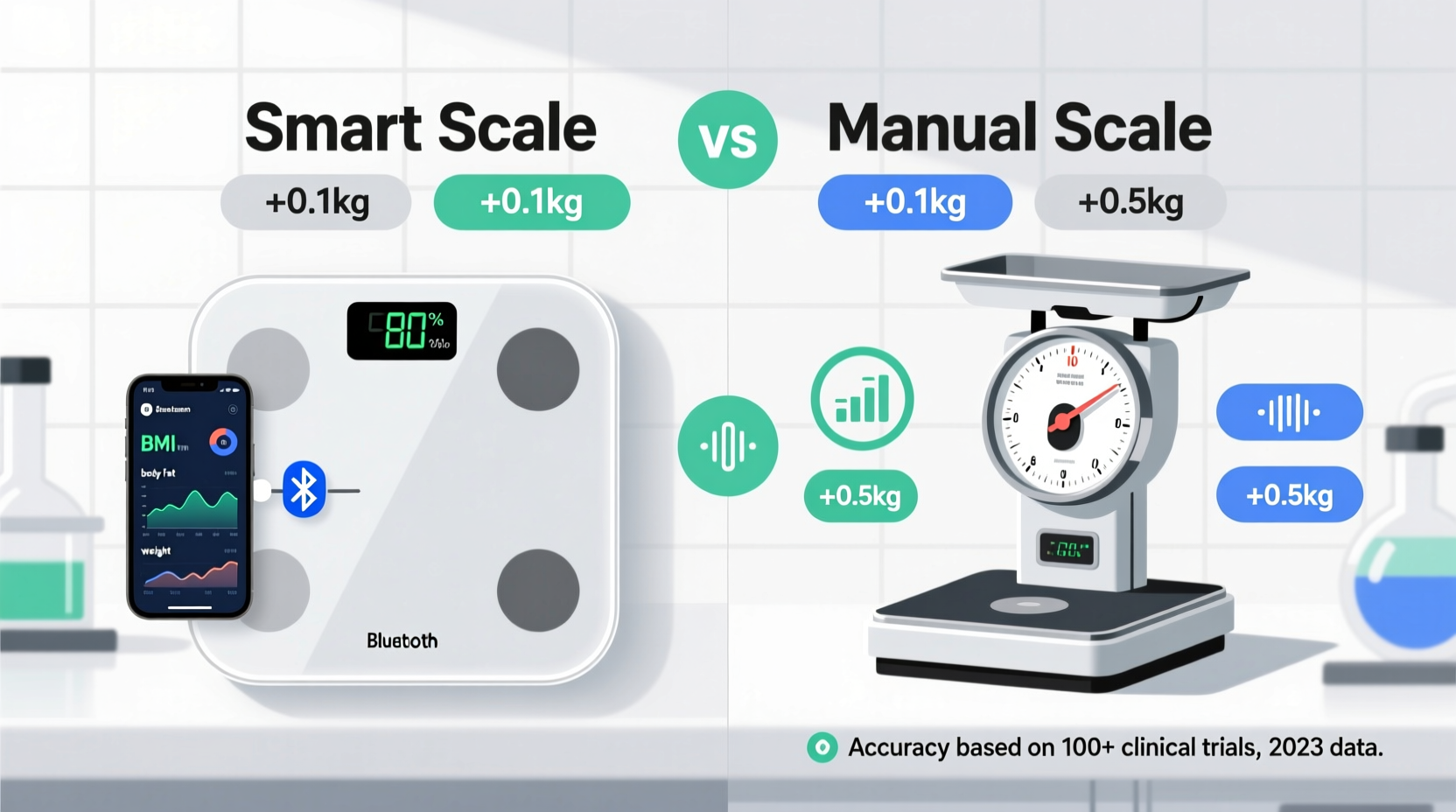
The most fundamental distinction lies in what each scale measures and how it gathers data.
- Manual scales (also known as mechanical or analog scales) rely on springs or levers to measure total body weight. They provide a single number with no additional analysis.
- Smart scales, by contrast, use bioelectrical impedance analysis (BIA) to estimate body composition. A small, safe electrical current passes through the body via metal electrodes on the scale's surface. Based on how quickly the current travels, the scale estimates fat, muscle, and water content using proprietary algorithms.
This technological leap allows smart scales to generate multiple data points—but introduces variables that can affect accuracy. Manual scales avoid those complexities but offer minimal insight beyond weight.
Accuracy in Weight Measurement: The Baseline Metric
When it comes to measuring total body weight, manual scales have long been considered reliable—if properly calibrated. High-quality mechanical models used in clinics often match digital counterparts within a margin of ±0.5 pounds.
Smart scales, being digital, typically offer higher precision in weight measurement, often displaying results to the tenth of a pound or kilogram. However, their weight readings depend on battery strength, sensor calibration, and surface stability. Uneven flooring or low batteries can skew results.
That said, many modern smart scales undergo rigorous testing and calibration during manufacturing. In controlled conditions, they are just as accurate as manual scales for weight—sometimes more so due to finer granularity.
“Digital scales, including smart models, generally outperform older mechanical ones in repeatability and resolution.” — Dr. Alan Reeves, Biomedical Engineer & Health Device Analyst
Body Composition Metrics: Where Smart Scales Shine (and Fall Short)
The true debate begins when we move beyond weight. Smart scales promise to measure:
- Body fat percentage
- Muscle mass
- Bone mass
- Water weight
- Visceral fat level
- BMR (Basal Metabolic Rate)
While these features sound impressive, their accuracy varies significantly. BIA-based estimates are influenced by hydration levels, recent food intake, exercise, and even skin temperature. For example, stepping on a smart scale after a workout or a large meal can yield misleadingly low body fat percentages due to fluid shifts.
A 2020 study published in the Journal of Sports Science & Medicine compared consumer smart scales against DEXA scans—the gold standard for body composition analysis. Results showed that while smart scales could track trends over time, their absolute measurements of body fat varied by up to 8% from DEXA readings.
Manual scales, of course, offer none of these metrics. But in doing so, they avoid the pitfalls of estimation altogether. If your primary goal is monitoring weight change over time, a well-maintained manual scale may be more dependable than relying on fluctuating smart scale data.
Limitations of Bioelectrical Impedance Analysis (BIA)
BIA assumes a standardized body model, which doesn't account for individual differences in anatomy, ethnicity, or fitness level. Athletes, for instance, often receive inaccurate readings because their high muscle mass and low body fat disrupt algorithmic assumptions.
Additionally, BIA sends current primarily through the lower body when standing barefoot on a scale. This means upper-body composition is estimated rather than measured, reducing reliability for people with significant muscle imbalances.
Comparative Overview: Smart Scale vs Manual Scale
| Metric | Manual Scale | Smart Scale |
|---|---|---|
| Total Body Weight | ✅ High accuracy (if calibrated) | ✅ High accuracy (digital precision) |
| Body Fat Percentage | ❌ Not available | ⚠️ Moderate accuracy; best for trend tracking |
| Muscle Mass | ❌ Not available | ⚠️ Estimated only; prone to hydration bias |
| Hydration Tracking | ❌ No | ⚠️ Indirect estimate; easily skewed |
| Long-Term Trend Reliability | ✅ Good (with consistent use) | ✅ Excellent for spotting patterns |
| User Variability Impact | Low | High (hydration, timing, posture) |
| Cost Range | $10–$30 | $30–$200+ |
Real-World Example: Two Users, Two Outcomes
Consider two individuals tracking their fitness progress over three months:
User A – Uses a Manual Scale
Jamie weighs in every Monday morning under consistent conditions. Over 12 weeks, Jamie observes a steady decline from 176 lbs to 168 lbs—a clear 8-pound loss. While Jamie doesn’t know how much was fat versus muscle, the directional trend is unambiguous and motivating.
User B – Uses a Smart Scale
Riley uses a smart scale daily and tracks body fat percentage, muscle mass, and water weight. Week-to-week numbers fluctuate widely—body fat drops from 24% to 21%, then jumps to 25% unexpectedly. Confused, Riley consults a trainer who explains that dehydration from weekend hiking likely caused the spike. When averaged over time, however, the trend shows gradual improvement.
This case illustrates a key principle: smart scales excel at revealing long-term patterns, but short-term noise can mislead without context. Manual scales lack detail but deliver stable, interpretable data.
“The value of a smart scale isn’t in its daily number—it’s in the trend line over weeks. Don’t react to one reading; watch the curve.” — Lena Patel, Registered Dietitian & Fitness Coach
Step-by-Step Guide to Getting Reliable Data from Either Scale
Whether you own a $15 manual scale or a $150 smart model, consistency is the foundation of accuracy. Follow this routine:
- Choose a fixed time of day – First thing in the morning is ideal, after using the restroom and before eating or drinking.
- Use the same location – Place the scale on a hard, flat surface (not carpet).
- Wear minimal clothing – Ideally, go barefoot and wear similar lightweight attire each time.
- Stay hydrated normally – Avoid extreme dehydration or excessive water intake before weighing.
- Record your results – Use a notebook or app to log data weekly. Look for trends, not daily fluctuations.
- Calibrate regularly – Reset your smart scale per manufacturer instructions; check manual scales for balance issues.
Checklist: Choosing the Right Scale for Your Needs
Ask yourself these questions to determine which scale suits your lifestyle and goals:
- ✅ Do I need more than just weight? → Yes = Smart scale
- ✅ Am I consistent with routines? → Inconsistent users may benefit from automated tracking
- ✅ Do I understand the limitations of BIA? → If not, you may misinterpret smart scale data
- ✅ Is budget a concern? → Manual scales are far cheaper
- ✅ Will I use it long-term? → Smart scales require ongoing engagement to justify cost
- ✅ Do I train intensely or have atypical body composition? → Smart scales may be less accurate for athletes
Frequently Asked Questions
Can a smart scale be accurate without being medically certified?
Most consumer smart scales are not medical devices and are not FDA-cleared for diagnostic use. While they can provide useful estimates, they should not replace clinical assessments like DEXA, hydrostatic weighing, or Bod Pod testing for precise body composition.
Why does my smart scale give different results throughout the day?
Hydration, food intake, exercise, and even hormonal cycles affect bioelectrical impedance. These factors alter how current moves through your body, leading to variations in body fat and water readings—even if your actual composition hasn’t changed.
Is a manual scale better for weight loss tracking?
For simple weight loss monitoring, yes. If your goal is purely to track pounds lost or gained, a manual scale eliminates complexity and reduces the risk of misinterpreting secondary metrics. Its simplicity supports focus on the primary objective.
Final Verdict: Which Gives More Accurate Body Metrics?
When evaluating “accuracy,” we must distinguish between precision of measurement and usefulness of data.
In terms of raw weight accuracy, both types perform similarly when used correctly. High-end digital sensors in smart scales may offer slight advantages in resolution, but a well-made manual scale remains highly dependable.
For body composition metrics—body fat, muscle, water—smart scales provide data that is trend-accurate but not always absolutely accurate. They are best used to observe directional changes over weeks, not to determine exact percentages. Manual scales offer no such metrics, so they cannot compete in this category.
Ultimately, the “more accurate” tool depends on your purpose:
- If you want **simple, reliable weight tracking** with minimal variables, a manual scale is accurate and sufficient.
- If you seek **insight into body composition trends** and are willing to manage usage conditions carefully, a smart scale offers valuable, albeit estimated, metrics.
No scale—smart or manual—can replace professional assessment when medical or athletic precision is required. But for everyday health monitoring, both have roles to play.
Take Control of Your Health Journey Today
Your choice of scale should align with your goals, habits, and expectations. If you’re new to tracking or prefer simplicity, start with a manual scale and build consistency. If you're tech-savvy and motivated by data, a smart scale can enhance awareness—so long as you interpret results wisely.
Remember: no number on any scale defines your health entirely. What matters most is how you feel, how you move, and whether your habits support long-term well-being. Use tools as guides, not judges.




 浙公网安备
33010002000092号
浙公网安备
33010002000092号 浙B2-20120091-4
Comments
No comments yet. Why don't you start the discussion?