
Camellia earrings—whether crafted from enamel, porcelain, resin, or precious metals—embody elegance and timeless beauty. Often inspired by the symmetry and softness of the camellia flower, these pieces are frequently detailed with layered petals, subtle gradients, and polished finishes that catch the light. But their intricate design also makes them vulnerable to scratches, tarnishing, and structural weakening if not stored properly. Without intentional care, even occasional wear can dull their luster or compromise their shape. The key to preserving both aesthetic appeal and longevity lies in adopting smart, tailored storage practices that protect against environmental and physical stressors.
Why Camellia Earrings Need Specialized Storage
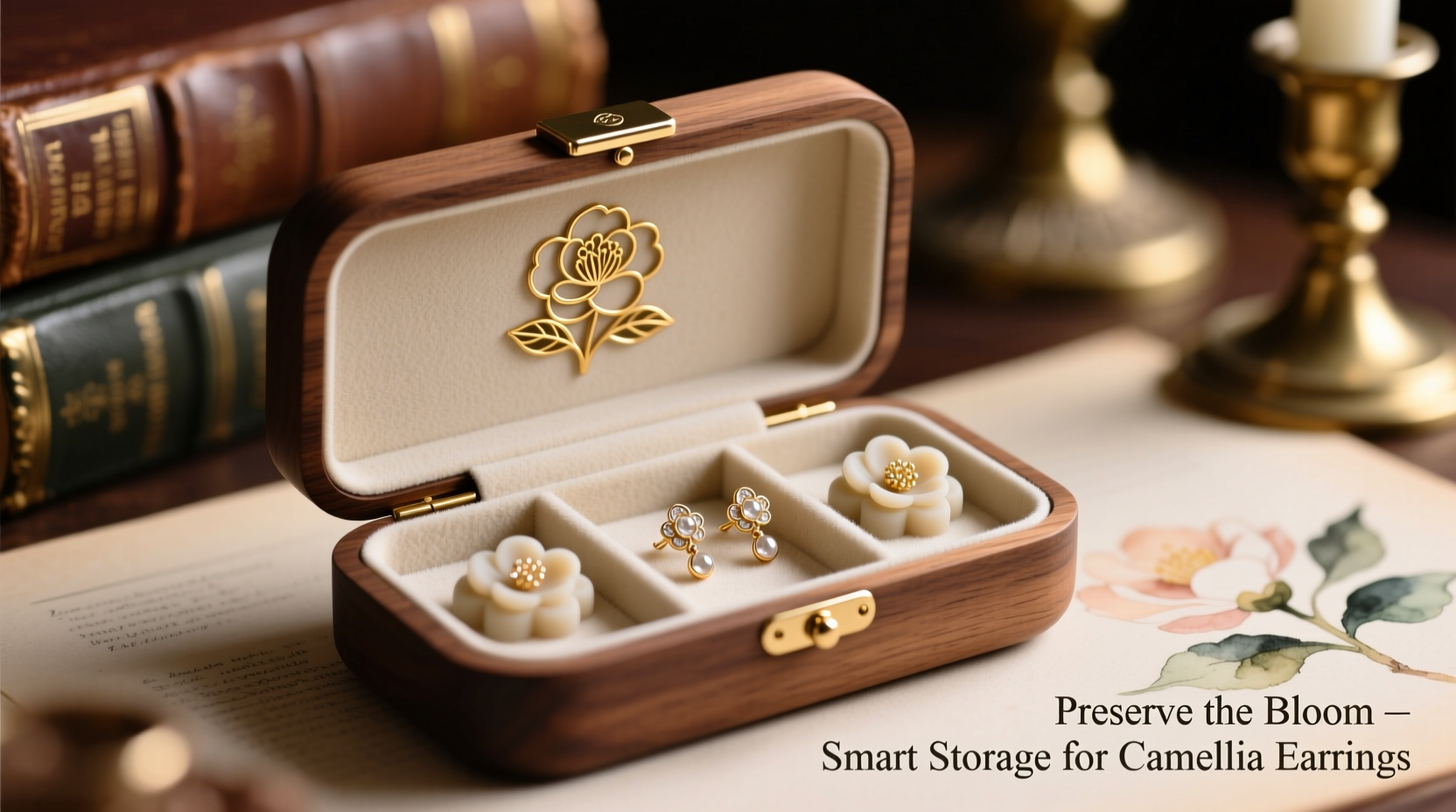
The architectural nature of camellia earrings sets them apart from simpler studs or hoops. Their multi-layered construction often includes fine wires, glued components, and protruding elements that can snag or bend. Materials like enamel are especially prone to chipping when jostled, while metal accents may tarnish due to humidity or skin oils left after wear. Additionally, exposure to air pollutants or direct sunlight can cause discoloration in pigmented resins or fade painted details.
Unlike minimalist jewelry, camellia earrings demand a balance between accessibility and protection. They’re often statement pieces worn for special occasions, meaning they may sit unused for weeks or months. During these dormant periods, improper storage accelerates deterioration. A single misplaced earring tossed into an open tray can end up rubbing against harder items, leading to micro-scratches that degrade surface clarity and brilliance over time.
“Ornamental earrings with floral motifs require more than just space—they need isolation, cushioning, and climate control to retain their original condition.” — Lila Nguyen, Jewelry Preservation Specialist at Heritage Adornments Institute
Essential Features of Ideal Camellia Earring Storage
Effective storage isn’t about luxury alone; it’s about function. The right solution addresses five core risks: friction, pressure, moisture, oxidation, and misplacement. Consider the following features when selecting or designing a storage system:
- Individual compartments: Prevent contact between earrings and other jewelry.
- Soft lining: Use materials like velvet, suede, or microfiber to minimize abrasion.
- Air-tight seals: Limit exposure to humidity and airborne contaminants.
- Vertical or upright positioning: Support three-dimensional shapes and reduce strain on posts or hinges.
- Opacity: Block UV light that can degrade dyes and resins.
Top 5 Smart Storage Solutions
Not all jewelry cases are created equal. For camellia earrings, consider these purpose-built options that combine innovation with practicality.
- Dedicated Earring Organizer with Cushioned Trays
Choose a box with removable foam inserts or padded slots sized specifically for ornate earrings. Adjustable dividers let you customize spacing, ensuring no movement during transport or drawer storage. - Hanging Earring Display with Individual Hooks
Ideal for frequent wearers, this vertical solution suspends each earring by its post or back, eliminating surface contact. Opt for models lined with anti-tarnish fabric. -
These small, sealed enclosures act like curio cabinets for prized pairs. With a hinged lid and felt base, they offer visibility without vulnerability—perfect for collectors. - Magnetic Silicone Pads in Drawer Inserts
Place adhesive silicone mats inside drawers so earrings stay anchored in place. The slight tackiness holds lightweight designs securely without residue. - Travel Case with Snap Compartments and Locking Lid
For those on the move, rigid travel cases with individual snap domes protect against impact. Look for ones with TSA-approved locks and interior padding.
Step-by-Step: How to Prepare and Store Camellia Earrings
Proper storage begins the moment you take the earrings off. Follow this routine to maximize preservation:
- Remove gently: Hold the earring by the post or back, not the decorative element, to avoid bending.
- Clean lightly: Wipe with a dry, lint-free cloth to remove oils or makeup residue. Avoid liquids unless specified by the manufacturer.
- Inspect for damage: Check glue joints, plating integrity, and clasp function before storing.
- Select compartment: Choose a slot slightly larger than the earring but snug enough to limit shifting.
- Position upright: Place the earring so its center faces up and petals aren’t compressed.
- Seal container: Close the case or drawer promptly to reduce air exposure.
- Store in a dark, dry cabinet: Avoid bathrooms or windowsills where temperature and humidity fluctuate.
| Action | Do | Don't |
|---|---|---|
| Cleaning | Use a soft cotton cloth | Soak in alcohol or cleaners |
| Storage Position | Lay flat or hang vertically | Stack or pile loosely |
| Environment | Cool, dry, dark space | Bathroom or car glovebox |
| Container Type | Felt-lined, lidded box | Open dish or plastic bag |
Mini Case Study: Preserving a Heirloom Pair
Sophie Chen inherited a pair of vintage gold-plated camellia earrings from her grandmother, adorned with hand-painted porcelain petals. Though beautiful, the earrings showed minor tarnish and one petal had begun to lift at the edge. After consulting a conservator, she implemented a strict storage protocol: placing them in a zippered velvet pouch inside a cedar-lined jewelry chest away from direct light. She also began using anti-tarnish strips nearby and handling the earrings only with clean hands. Within six months, further degradation halted entirely. Two years later, the earrings remain in near-original condition and were safely worn at her wedding. This case underscores how consistent, intelligent storage can halt decline—even in already compromised pieces.
Jewelry Care Checklist for Camellia Earrings
- ✅ Clean earrings after each wear with a dry microfiber cloth
- ✅ Inspect for loose parts or lifting layers monthly
- ✅ Store in a closed, padded container with minimal internal movement
- ✅ Keep away from perfumes, lotions, and hair products
- ✅ Use anti-tarnish paper if storing silver or plated components
- ✅ Rotate wear to prevent prolonged exposure to body oils
- ✅ Label storage compartments to avoid confusion or mishandling
Frequently Asked Questions
Can I store camellia earrings in a regular jewelry box?
You can, provided the box has individual compartments with soft lining. Standard trays with open sections risk tangling and scratching. If your current box lacks dividers, insert DIY separators made from folded felt or use earring cards to elevate each piece.
How often should I deep-clean my camellia earrings?
Deep cleaning is rarely recommended for ornamental earrings due to material sensitivity. Instead, stick to gentle wiping after wear. If buildup occurs, consult the manufacturer. Most experts advise professional cleaning every 12–18 months for intricate designs.
Is it safe to store camellia earrings in the plastic bags they came in?
Only temporarily. Many retail bags are made of PVC or low-grade plastic that emits gases over time, accelerating tarnish and degrading adhesives. Transfer them to archival-safe polyethylene bags or fabric pouches for long-term storage.
Protect Beauty Through Intentional Habits
The enduring charm of camellia earrings lies in their delicate balance of form and fragility. Their value extends beyond monetary worth—it’s tied to memory, craftsmanship, and personal expression. By investing in thoughtful storage solutions, you’re not merely protecting an object; you’re honoring its story and ensuring it continues to shine across seasons and generations. Whether your pair is a modern accessory or a cherished heirloom, the habits you adopt today will determine how brilliantly they endure tomorrow.




 浙公网安备
33010002000092号
浙公网安备
33010002000092号 浙B2-20120091-4
Comments
No comments yet. Why don't you start the discussion?