
Folding a fitted sheet is one of those household tasks that seems simple in theory but often ends in a crumpled ball of fabric and mild irritation. Unlike flat sheets or pillowcases, fitted sheets come with elastic edges and deep pockets designed to hug mattresses, making them notoriously difficult to fold neatly. Yet mastering this skill can save space in your linen closet, reduce clutter, and make laundry day more efficient. The good news: with the right approach, anyone can learn to fold fitted sheets cleanly and consistently—without wrestling or guesswork.
The key isn’t brute force; it’s technique. By understanding the structure of the sheet and applying deliberate, repeatable steps, you can transform what feels like a chore into a satisfying routine. This guide breaks down proven methods, shares practical tools, and offers insights from textile care experts to help you achieve crisp, compact folds every time.
Why Fitted Sheets Are So Difficult to Fold
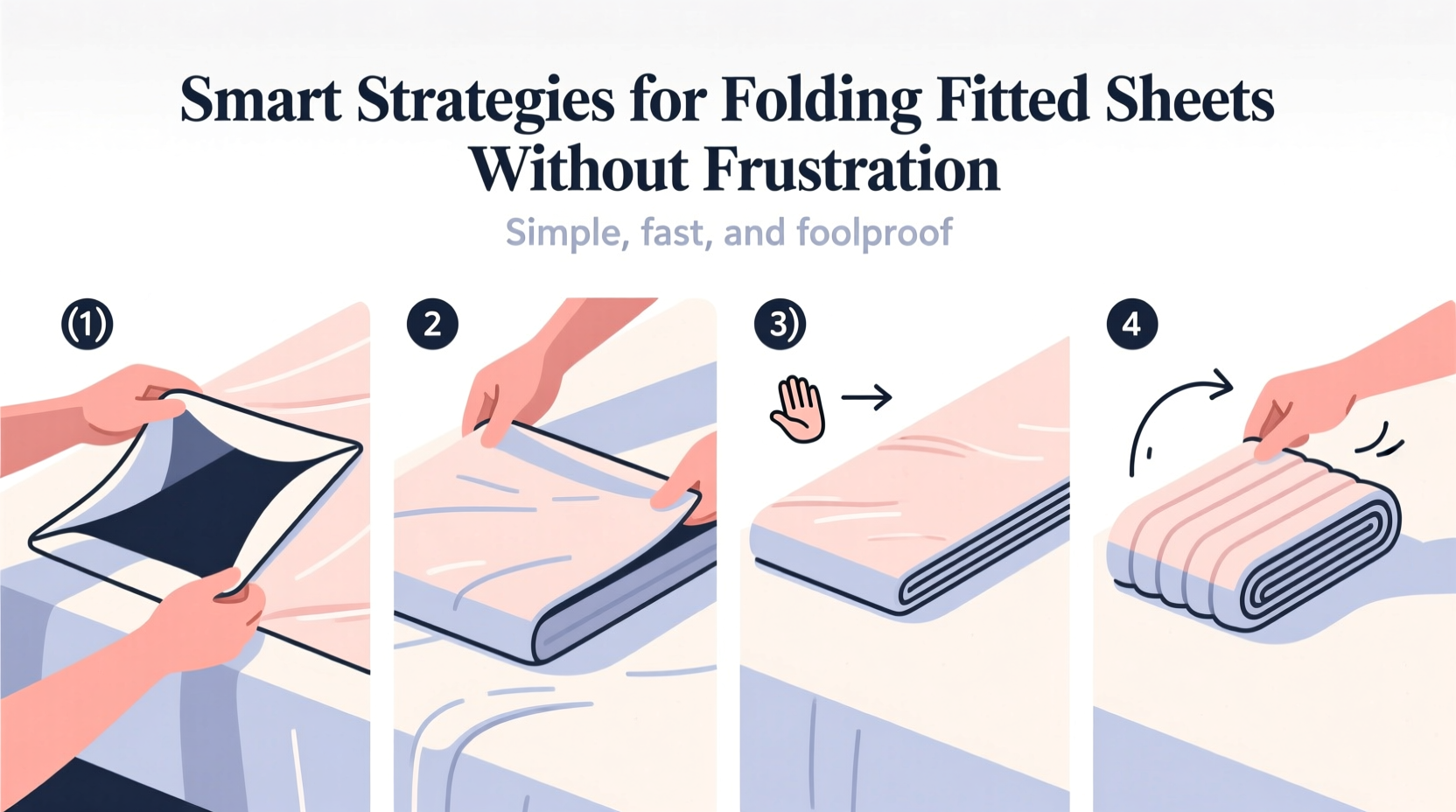
The challenge begins with design. Fitted sheets are engineered for function, not storage. Their four elasticated corners stretch over mattress edges, creating a snug fit that prevents slipping during use. But once removed, those same corners lose their anchor points, flopping outward and resisting alignment. Without clear straight edges or symmetry, traditional folding techniques don’t apply directly.
Additionally, most people attempt to fold fitted sheets while they’re still “inside out” in terms of orientation—meaning the outer surface (the side facing up on the bed) is hidden inside the fold. This makes it harder to see seams, corners, and edges clearly, leading to misalignment and uneven results.
Another factor is inconsistency in material. Cotton, microfiber, linen, and blended fabrics behave differently when folded. Lightweight materials may slip easily, while thicker jersey knits hold shape better but take up more space if not folded precisely.
Step-by-Step Guide: The Inside-Out Corner Matching Method
This widely praised method works by aligning the corners first, turning the chaotic shape into a manageable rectangle. It requires no special tools and takes less than two minutes with practice.
- Hold the sheet by two adjacent corners — Grasp one hand in each of two connected corners (e.g., top-left and top-right). Make sure the outer face of the sheet is facing inward—this keeps stains and wear on the inside of the final fold.
- Turn one corner inside the other — Slide one hand (with its corner) into the opposite corner so both are nested together. You should now feel both elastic edges touching inside the doubled corner.
- Repeat with the remaining two corners — Move to the bottom edge and do the same: grab the two lower corners and tuck one inside the other until all four corners are paired into two double corners.
- Lay the sheet flat on a surface — Place it gently on a bed or table, ensuring the elastic edges are aligned at the top and bottom. Smooth out any major wrinkles with your hands.
- Fold horizontally into thirds — Bring one side toward the center, then fold the other side over it, like folding a letter. This creates a long rectangle.
- Fold vertically into a compact square — Starting from the bottom, fold upward in even increments—halves, then halves again—until you have a neat stack about the size of a dinner napkin.
This technique transforms the irregular shape into an organized bundle that stacks well and resists unraveling. With repetition, it becomes muscle memory.
Alternative Folding Techniques for Different Skill Levels
Not everyone finds the inside-out method intuitive. Fortunately, there are alternative approaches tailored to different preferences and experience levels.
The Flat-Lay Triangle Fold (Beginner-Friendly)
Ideal for those new to folding fitted sheets, this method uses gravity and surface area to maintain control.
- Lay the sheet completely flat on a large surface, outer side down.
- Locate all four corners visually and bring the top two together in the center, forming a triangle at the top edge.
- Do the same with the bottom two corners, bringing them up to meet the top pair.
- Tuck the gathered corners beneath each other to secure.
- Fold the resulting rectangle as usual.
The Roll-and-Tuck Method (For Space-Saving)
Popular among travelers and small-space dwellers, rolling minimizes air pockets and reduces volume.
- Pair opposite corners as in the standard method.
- After smoothing the sheet into a rectangle, begin tightly rolling from one short end to the other.
- Once rolled, tuck the final edge under to prevent unrolling.
- Store vertically in a drawer or basket.
Do’s and Don’ts of Fitted Sheet Storage
Even a perfectly folded sheet can become messy again if stored incorrectly. Follow these guidelines to preserve your work.
| Do | Avoid |
|---|---|
| Store folded sheets in a cool, dry, ventilated area | Piling heavy items on top of folded sets |
| Keep matching sets together using shelf dividers or cloth bags | Storing damp or slightly moist sheets |
| Fold along original crease lines when possible | Using plastic bins that trap moisture |
| Label shelves or containers by bed size (twin, queen, king) | Overstuffing linen closets, causing crushed folds |
| Refresh folds monthly to prevent permanent creasing | Exposing linens to direct sunlight for long periods |
Proper storage extends the life of your sheets and ensures they remain presentable and usable for years. Cotton fibers weaken when creased too sharply for extended periods, so occasional unfolding and re-folding helps maintain fabric integrity.
Expert Insight: What Professionals Know About Linen Care
Laundry professionals and textile conservators emphasize consistency and gentleness in handling household linens. Their routines prioritize preservation over speed.
“Most people underestimate how much stress improper folding places on fabric seams. Repeated misaligned folds create weak spots near the corners, where elastic is already under tension.” — Lena Peterson, Textile Preservation Specialist, National Home Care Institute
Peterson recommends folding fitted sheets within 10 minutes of removal from the dryer, before fibers fully cool and set into random shapes. She also advises against forcing sharp creases with ironing unless absolutely necessary, as high heat can degrade elastic threads over time.
“The goal isn’t perfection—it’s consistency. A uniform fold, even if slightly imperfect, protects the sheet better than a tight but jagged crease.” — James Wu, Master Dry Cleaner & Owner of Urban Linen Co.
Mini Case Study: How One Household Reduced Linen Clutter by 60%
The Rivera family of Portland, Oregon, struggled with overflowing linen cabinets. With three children and multiple guest rooms, they cycled through seven sets of bedding weekly. Socks, scarves, and mismatched pillowcases were buried under tangled sheets.
They implemented a monthly linen audit and adopted standardized folding across all household members. Using the inside-out corner method, they trained their teenage kids via a 10-minute demonstration. Each person practiced five times until confident.
Within six weeks, they introduced labeled canvas bins for each bedroom and rotated seasonal sets into vacuum-sealed bags. They also began storing sets with corresponding pillowcases tucked inside the folded sheet.
Result: Their linen closet footprint shrank from three shelves to one. Retrieval time dropped from nearly two minutes per set to under 15 seconds. According to Maria Rivera, “It sounds small, but not dreading opening that cabinet has genuinely improved our morning routine.”
Checklist: Mastering Fitted Sheet Folding in 7 Steps
Use this checklist each time until the process becomes automatic:
- ☐ Remove the sheet from the dryer promptly
- ☐ Identify the top and bottom edges (check tags or stitching patterns)
- ☐ Pair two adjacent corners, turning one inside the other
- ☐ Repeat with the opposite two corners
- ☐ Lay flat on a clean surface, smoothing out wrinkles
- ☐ Fold horizontally into thirds, then vertically into a square
- ☐ Store immediately with matching set components
Hang this list near your laundry area or save it digitally for quick reference. After ten successful folds, revisit the list only as needed.
Frequently Asked Questions
Can I fold a king-sized fitted sheet the same way as a twin?
Yes—the technique remains identical regardless of size. However, larger sheets benefit from being folded on a bigger surface like a bed or dining table to maintain control. You may need an extra smoothing step due to increased fabric drape.
What should I do if my sheet won’t stay folded?
If the fold keeps coming undone, check whether you’ve fully nested the corners. Loose corners create instability. Also, consider fabric type: silky or slippery materials may require tighter rolling or placement in a storage container with sides. Avoid over-drying, which can reduce static cling that naturally holds folds together.
Is it okay to store fitted sheets unfolded?
While possible, long-term unfolded storage leads to deep creases, inefficient space use, and difficulty identifying matching sets. If you must store loosely (e.g., in a suitcase), place tissue paper between layers to prevent abrasion. For optimal condition, fold properly before extended storage.
Conclusion: Turn Frustration Into Confidence
Folding fitted sheets doesn’t require special talent—just a reliable system and a few minutes of focused attention. Once mastered, this skill eliminates one of the most common minor frustrations in home maintenance. No longer will you shove crumpled linens into drawers or waste time untangling mismatched sets.
Start today: pull one fitted sheet from your laundry pile and walk through the steps slowly. Practice three times this week. Share the method with someone else in your household. Over time, neat folds will become second nature, contributing to a more organized, calmer living environment.




 浙公网安备
33010002000092号
浙公网安备
33010002000092号 浙B2-20120091-4
Comments
No comments yet. Why don't you start the discussion?